
BuddhistCatholicContemplativeEvangelicalGeneral ChristianHinduJewishLatter-day SaintMuslimNew VisionsProgressive Christian
Beliefs
- Buddhist
- Catholic
- Contemplative
- Evangelical
- General Christian
- Hindu
- Jewish
- Latter-day Saint
- More Voices
- Muslim
- New Visions
- Pagan
- Progressive Christian
Topics
- Religion News
- Food and Religion
- Sports and Religion
- Religious Art
- Religious Music and Entertainment
- Religious Events
- History and Religion
- Style and Religion
- Politics and Religion
- Women in Religion
- Recreation Outdoors and Religion
- Business Finance and Religion
- Careers Workplace and Religion
- Education and Religion
- Family Parenting and Religion
- Health Fitness and Religion
- Home and Religion
- Relationships and Religion
- Technology and Religion
- Travel and Religion
Columnists
- Buddhist Columnists
- Business Finance and Religion Columnists
- Careers Workplace and Religion Columnists
- Catholic Columnists
- Contemplative Columnists
- Education and Religion Columnists
- Evangelists Columnists
- Family Parenting and Religion Columnists
- General Christian Columnists
- Health Fitness and Religion Columnists
- Hindu Columnists
- History and Religion Columnists
- Home and Religion Columnists
- Jewish Columnists
- More Voices Columnists
- Latter Day Columnists
- Muslim Columnists
- New Visions Columnists
- Nonreligious Columnists
- Pagan Columnists
- Politics and Religion Columnists
- Progressive Columnists
- Recreation Outdoors and Religion Columnists
- Relationships and Religion Columnists
- Religion News Columnists
- Religious Art Columnists
- Religious Events Columnists
- Religious Music and Entertainment Columnists
- Sports and Religion Columnists
- Style and Religion Columnists
- Technology and Religion Columnists
- Travel and Religion Columnists
- Women in Religion Columnists
Resource Library
- 2026 Calendar
- Library of World Religions
- The 100 Most Holy Places on Earth
- Patheos Answers
- Podcasts
- Videos
- Faith Leaders Database
- Anglican Episcopalian
- Bahai
- Baptist
- Buddhism
- Christianity
- Confucianism
- Eastern Orthodoxy
- Hinduism
- Holiness and Pentecostal
- ISKCON
- Islam
- Judaism
- Lutheran
- Methodist
- The Church of Jesus Christ of Latter-day Saints
- New Age
- Paganism
- Presbytarian and Reformed
- Protestantism
- Religion Behind the Scenes
- Roman Catholic
- Scientology
- Shia Islam
- Sikhism
- Sufism
- Sunni Islam
- Taoism
- Zen
- See all religions
Research Tools
 Ad-Free & Subscriber Log-In Subscription Support
Ad-Free & Subscriber Log-In Subscription Support
Follow Patheos 

- Trending:
- Forgiveness
- |
- Marriage
- |
- Consciousness
- |
- Death Penalty
- |
- Election
- |
- Halloween
 Catholic News
- Home
- Catholic
- Religion News
- In India, this Marian devotion uses coconut oil – and draws quite a crowd
In India, this Marian devotion uses coconut oil – and draws quite a crowd
Last updated on: April 22, 2016 at 6:08 am by CNA Daily News
In India, this Marian devotion uses coconut oil – and draws quite a crowd 2016-04-22T06:08:00+00:00 CNA Daily News
Patheos Explore the world's faith through different perspectives on religion and spirituality! Patheos has the views of the prevalent religions and spiritualities of the world.

Panjim, India, Apr 22, 2016 / 12:08 am (CNA/EWTN News).- In a small town in India's Goa state, the Feast of Our Lady of Miracles draws devotees from multiple religions – and coconut oil plays a role in their observances.
“It’s a unique Marian devotion, where Catholics and devotees of other faiths, with their deep conviction of the presence of God, show their love and venerate our Blessed Mother,” Father Mario Saturnino Dias told CNA April 20.
Fr. Dias directs the center for missions for the Archdiocese of Goa and Daman.
He said the annual Feast of Our Lady of Miracles “draws people to a change of heart,” encouraging them to be “authentic witnesses of the new evangelization in sharing our faith and strengthening interreligious harmony.”
The feast takes place once a year on the Monday following the third Sunday after Easter.
The pilgrims to the shrine make acts of surrender and reconciliation, and place their prayers in the hands of the Virgin Mary. Fr. Dias said hundreds of people receive graces, find healing, and witness miracles.
The annual festivity starts with spiritual preparation of the faithful through novenas, catechesis, confession, adoration of the Blessed Sacrament, and several Masses. The devotees are undeterred by the hot summer weather, travelling for miles from distant villages. Many come on foot to venerate the Virgin Mary and to pour coconut oil over the statue.
Some place tokens of gratitude at the feet of the statue of Our Lady of Miracles in thanksgiving for healings, the gift of a child, and other answered prayers. The week-long festivities also attract a street fair with vendors selling traditional goods and handcrafts.
Fr. Simon Rico Fernandes, O.F.M. Cap., presided at the solemn thanksgiving Mass April 11 with a large number of concelebrant priests, religious, and hundreds of faithful. They gathered at the Church of Saint Jerome in the Mapusa, located nearly 10 miles north of Panjim, capital of Goa.
The Franciscans built the Church of St. Jerome in 1594 in Mapusa. On its main altar is the statue of Our Lady of Miracles flanked by two smaller altars on either side, each with the statue of St. John the Baptist and St. Jerome.
At the end of the Mass the faithful held a colorful procession. They carried the statue of Our Lady of Miracles and sang Marian hymns of praise. They lined up to venerate the statue, presenting flowers and candles, and pouring coconut oil over the statue.
According to Fr. Dias, the custom of pouring oil is devotees’ humblest way to express their gratitude. It’s a version of anointing, which has been a common custom as a mark of hospitality and a token of honor and gratitude. It is also a practice in the consecration of priests and monarchs in the ancient cultures of the Romans, Egyptians, Greeks, Arabs, Indians, and others.
The use of oil and anointing is also found in many places in the Bible.
“Many instances in the Bible show the ancient Hebrews observed the practice in the anointing of Aaron as high priest. The Prophet Samuel anointed both Saul and David,” Fr. Dias added.
Oil has long been considered a valuable product. At times it was the only form of wealth poor people could offer in Churches and temples for the lighting of lamps.
One Marian devotee, Laura D’Souza, reflected on the devotions.
“It’s difficult to understand the soulful expression of religiosity by our people with the eyes of intellect or with theological understanding,” she said.
“Only a person touched by a faith encounter will understand a devotee,” she said, “If there were no felt presence of our Blessed Mother, how can people be drawn in the thousands without force or invitation?”
Fr. Dias reflected that in Goa, “People converted to Christianity under the Portuguese colonial era. They may still carry some traditional influences where some popular devotions may need purification.”
“But,” he added, “we need to study and educate and catechize people before introducing changes, because popular devotions sustain the religiosity of our people and lead them to the Eucharist.”
Previous Post

April 22, 2016
Were profits made in aborted tissue transfer?
Next Post
April 22, 2016 UK should act against IS genocide after parliament vote, bishop urges
Browse Our Archives
Select a Category Americas Asia - Pacific Europe Middle East - Africa Uncategorized US Vatican
Select a Month November 2017 October 2017 September 2017 August 2017 July 2017 June 2017 May 2017 April 2017 March 2017 February 2017 January 2017 December 2016 November 2016 October 2016 September 2016 August 2016 July 2016 June 2016 May 2016 April 2016 March 2016 February 2016 January 2016 December 2015 November 2015 October 2015 September 2015 August 2015 July 2015 June 2015 May 2015 April 2015 March 2015 February 2015 January 2015 December 2014 November 2014 October 2014 September 2014 August 2014 July 2014 June 2014 May 2014 April 2014 March 2014 February 2014 January 2014 December 2013 November 2013 October 2013 September 2013 August 2013 July 2013 June 2013 May 2013 April 2013 March 2013 February 2013 January 2013 December 2012 November 2012 October 2012 September 2012 August 2012 July 2012 June 2012 May 2012
TAKE THE
Religious Wisdom Quiz
What does "Pentecost" mean in Greek?
Select your answer to see how you score.
Fire from Heaven Harvest Fiftieth Holy Day
Related posts from Catholic News

Filipino Bishops begin rosary campaign against violent drug...

Filipino seminarians to drug war victims: we remember...

China's president seeks more control over religion
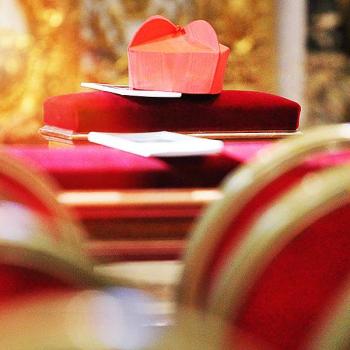
Cardinal Vidal Remembered as a Peacemaker, Pastor
TRENDING AT PATHEOS Catholic

Creation, Preservation, and Teleology in Catholic Theology
As I write this, it is very early Monday morning. Like millions...

The Parable Of The Sower And The Word...
One of Christ’s most famous parables is that of the sower who...

Rejecting Doom: Christian Hope And Human Action
Christianity is a religion of hope. We are to have hope and...

Why I Choose the Eucharist Over the Sermon
Choose the Eucharist, Not the Sermon What are we supposed to get...

5 Design Elements Found in Spiritually Rooted Homes
Putting Spirituality Into Home Decor Our homes are more than our living...

Credo: A Story of God Told with the...
About 10 years ago, I began to imagine a personal "Credo" that...
view all Catholic blogs
Ad-Free & Subscriber Log-In Subscription Support
- About Us
- 2026 Calendar
- Videos
- Podcasts
- Library of World Religions
- Faith In Media Tracker
- Advertise With Us
- Write for Us
- Privacy Policy
- Terms of Service
- Do Not Sell My Data
- Contact Us
- Radiant Digital
- Manage Newsletter Subscriptions
- Unsubscribe From Notifications
- Sitemap
Copyright 2008-2026, Patheos. All rights reserved.
Subscription Support Ad-Free & Subscriber Log-In
Follow Patheos