
BuddhistCatholicContemplativeEvangelicalGeneral ChristianHinduJewishLatter-day SaintMuslimNew VisionsProgressive Christian
Beliefs
- Buddhist
- Catholic
- Contemplative
- Evangelical
- General Christian
- Hindu
- Jewish
- Latter-day Saint
- More Voices
- Muslim
- New Visions
- Pagan
- Progressive Christian
Topics
- Religion News
- Food and Religion
- Sports and Religion
- Religious Art
- Religious Music and Entertainment
- Religious Events
- History and Religion
- Style and Religion
- Politics and Religion
- Women in Religion
- Recreation Outdoors and Religion
- Business Finance and Religion
- Careers Workplace and Religion
- Education and Religion
- Family Parenting and Religion
- Health Fitness and Religion
- Home and Religion
- Relationships and Religion
- Technology and Religion
- Travel and Religion
Columnists
- Buddhist Columnists
- Business Finance and Religion Columnists
- Careers Workplace and Religion Columnists
- Catholic Columnists
- Contemplative Columnists
- Education and Religion Columnists
- Evangelists Columnists
- Family Parenting and Religion Columnists
- General Christian Columnists
- Health Fitness and Religion Columnists
- Hindu Columnists
- History and Religion Columnists
- Home and Religion Columnists
- Jewish Columnists
- More Voices Columnists
- Latter Day Columnists
- Muslim Columnists
- New Visions Columnists
- Nonreligious Columnists
- Pagan Columnists
- Politics and Religion Columnists
- Progressive Columnists
- Recreation Outdoors and Religion Columnists
- Relationships and Religion Columnists
- Religion News Columnists
- Religious Art Columnists
- Religious Events Columnists
- Religious Music and Entertainment Columnists
- Sports and Religion Columnists
- Style and Religion Columnists
- Technology and Religion Columnists
- Travel and Religion Columnists
- Women in Religion Columnists
Resource Library
- 2026 Calendar
- Library of World Religions
- The 100 Most Holy Places on Earth
- Patheos Answers
- Podcasts
- Videos
- Faith Leaders Database
- Anglican Episcopalian
- Bahai
- Baptist
- Buddhism
- Christianity
- Confucianism
- Eastern Orthodoxy
- Hinduism
- Holiness and Pentecostal
- ISKCON
- Islam
- Judaism
- Lutheran
- Methodist
- The Church of Jesus Christ of Latter-day Saints
- New Age
- Paganism
- Presbytarian and Reformed
- Protestantism
- Religion Behind the Scenes
- Roman Catholic
- Scientology
- Shia Islam
- Sikhism
- Sufism
- Sunni Islam
- Taoism
- Zen
- See all religions
Research Tools
 Ad-Free & Subscriber Log-In Subscription Support
Ad-Free & Subscriber Log-In Subscription Support
Follow Patheos 

- Trending:
- Forgiveness
- |
- Marriage
- |
- Consciousness
- |
- Death Penalty
- |
- Election
- |
- Halloween
 The Catholic Book Blogger
-
More
-
2015 Book Reviews
-
- Home
- Catholic
- CBB Interview with Stacy Trasancos
CBB Interview with Stacy Trasancos
Last updated on: October 17, 2016 at 1:00 am by Pete Socks
CBB Interview with Stacy Trasancos 2016-10-16T14:10:32-05:00 Pete Socks
Patheos Explore the world's faith through different perspectives on religion and spirituality! Patheos has the views of the prevalent religions and spiritualities of the world.
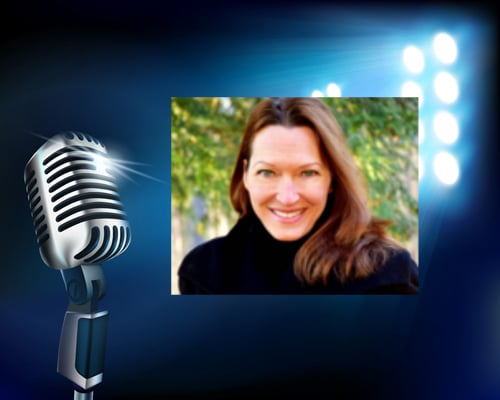
Stacy A. Trasancos is a Catholic writer, scientist, teacher, and editor. She earned a bachelor’s degree in science from East Texas State University, a doctorate in chemistry from Penn State University and a master’s degree in dogmatic theology (summa cum laude) from Holy Apostles College and Seminary. She worked as research chemist for DuPont before becoming a full-time homemaker in 2003. Trasancos designed and was editor-in-chief of Ignitum Today (2011-2014) and serves as editor emeritus of Catholic Stand, which she cofounded. She is a contributor to Integrated Catholic Life and Strange Notions. Trasancos is an adjunct professor at Seton Hall University and at Holy Apostles, where she also serves as alumni association president. She teaches chemistry and physics classes at Kolbe Academy, where she also serves as department chair. She is the author of Science Was Born of Christianity: The Teaching of Fr. Stanley L. Jaki. Trasancos is a board member for the Institute for Theological Encounter with Science and Technology (ITEST) and a member of the Fellowship of Catholic Scholars.
She and her husband, Jose, have seven children and three grandchildren and live in the Adirondack mountains in New York.
This week Julie had a chance to chat with Stacy about her new book Particles of Faith: A Catholic Guide to Navigating Science
JULIE: Thank you for writing Particles of Faith. I decided to read your book because of all the mixed messages sent out about creationism, evolution, and intelligent design. One of my sons is a junior in our local high school and absolutely loves science and is doing exceptionally well in all his AP sciences. He wants to be a scientist and I have no idea how to help him navigate science in light of his Catholic faith. Your book really helped me put my thoughts together. What was the catalyst for writing this book now?
STACY TRASANCOS: Thank you for reading it and for writing a review. The main motivation was to clear up the confusion people have about the relationship between faith and science, for parents, for students, for educators, for anyone who wants a guide to get started.
The book itself is meant to be a catalyst of sorts. Some catalysts work by providing a surface for a reaction to take place. For example, catalytic converters work by adsorbing toxic exhaust gases like carbon monoxide and various nitrogen oxides to the surface of platinum metal to convert them to safe molecules. The molecules stick to the surface of platinum, less energy is then required for the reaction to occur, and the reaction speeds up. The products—gases found in clean air, carbon dioxide, water vapor, and oxygen—then go back out into the atmosphere. When I wrote the book, I pictured the book like the catalyst where the reader and I can sit down together. Then I can address whatever damaging ideas are floating out there about the faith and science relationship and explain how to navigate the issues more easily. My hope is that the reader can go back out into the world to evangelize with a fresh, healthy, confident view of science in the light of faith.
JULIE: You told your readers to “have the right outlook,” “find out what the church teaches,” “begin to learn the science,” and “sort out the system of wills.” Although I was refreshed by your boldness, I also sensed a touch of frustration. Is that all in my imagination or are you feeling that?
STACY TRASANCOS: I am frustrated with those who confuse people trying to lead a life of faith. In this age of cyberspace, anyone can write an opinion about science or religion despite not knowing much about one or either. One on side, the atheists make it sound like you’re a nut if you believe in God even though they have no fundamental reason to explain their own ability to reason or to account for the intelligibility in the natural world. On the other side, groups of Christians have reacted to atheism. The fundamentalists reject scientific theories if they seem to contradict faith (key phrase is ‘seem to’), and the Intelligent Design community plays the atheists’ game. If atheists say, “God did not create this,” they reply, “No, nature could not have done this!” The false dichotomy they set up is one between nature and Creation, as if God did not create nature, and they take too narrow of a view by not calling everything intelligently designed, as if God did not do such a good job on some of creation. All of these short-sighted extremes are toxic.
The healthier view is to pray the Creed and mean it. If we are people of reason and faith who would die before denying Christ, then it makes no sense at all to grant assent of the intellect and will to the tenets of faith—to accept the gift of faith—and then to doubt whether God could have created matter and energy to change exactly as He intended it. Christians have the fuller logic, the advantageous worldview that informs us God created heaven and earth, and that Christ came to redeem us. The total system of reality fits beautifully into place for us, the spiritual, the physical, miracles, free will, intellect, faith, hope, and love. We ought to love science more than anyone. Science is the study of the handiwork of God.
When I explain the order of the periodic table, how all the elements that make up our world are ordered one increasing proton at a time, and how the electron configurations derived from quantum mechanics explain how the elements are God’s building blocks for all matter around us, and when it hits my students that electrons and protons and other subatomic particles and forces are following laws of physics beyond human comprehension right at this instant to hold them in existence . . . well, chemistry and physics comes to life for them. They know why I say the periodic table ought to make a person of faith get down on his or her knees and weep for joy. I hope such a clear-sighted vision will inoculate them from the confusions that run amuck in the air of this age.
JULIE: We are both moms that educate our children at home. As I have progressed through the years with my kids the premier home school science program on the market is not a Catholic one. Do you have any aspirations of writing a Catholic science curriculum?
STACY TRASANCOS: It’s done! Our kids are enrolled at Kolbe Academy. Three years ago when Kolbe Academy was beginning its online program, I began teaching chemistry online as a way to keep myself occupied while the kids were working on their lessons. As the kids got older, I found that I was not competent to teach them the courses they need for a classical education. So when Megan Lengyel, the Director of Kolbe Academy’s online program, asked me if I was interested in teaching more classes (including physics) and then leading the science department as chair, it was a win for all involved, for my kids because I could help build the “classical education at home” I wanted for them, for me to grow as an instructor, and hopefully for the families of Kolbe Academy because I truly love to pass on my passion for science.
Kolbe has an entire classical curriculum online for junior high (which our two oldest students are enrolled in) and high school. Specifically, to answer your question, the science department offers 2 junior high classes, 4 core high school classes, and 5 advance placement (AP® College Board approved) and honors classes in biology, chemistry, and physics. We use secular textbooks, but we pray before and after every class, and we teach science rigorously in the light of faith. You can find more information at our website here. The curriculum is not just written; it is happening. I have a stack of college reference letters on my desk right now that I’m writing for past students.
JULIE: Time for our signature ending question. This is a blog about books. What books are currently on your bookshelf to read?
STACY TRASANCOS: I read a lot of books at a time; some I finish; some I study; some I check out and leave behind.
I read the Douay-Rheims Latin/English Holy Bible from Baronius Press, and Heinrich Denzinger Compendium of Creeds, Definitions, and Declarations on Matters of Faith and Morals from Ignatius Press (both gifts from mentors), and the Summa Theologiæ Latin/English Edition from the Aquinas Institute for the Study of Sacred Doctrine (the full set a gift from my husband) from my actual bookshelf in my study. (My study is a tiny room my husband set up for me with shelves, a window, a desk, a collection of fountain pens, and a locking door.) My collection of Fr. Stanley L. Jaki’s books and other theology and science texts are kept there as well.
On my phone while walking my dog each day, I am currently ‘listening’ to J. R. R Tolkien’s The Hobbit (a first) and Richard Rhodes’ The Making of the Atomic Bomb. I recently finished Albert Camus’ The Stranger.
On my Kindle Paperwhite for nighttime/morning reading, I recently finished Leila Miller’s Raising Chaste Catholic Men: Practical Advice Mom to Mom, and John Farrell’s The Day Without Yesterday: Lemaître, Einstein, and the Birth of Modern Cosmology (both good friends). I just started F. C. Copleston’s Aquinas: An Introduction to the Life and Work of the Great Medieval Thinker, at the suggestion of another good friend.
Previous Post
October 16, 2016
Christ at Jacob's head; Angels: Day 087
Next Post
October 17, 2016 Angels ascending and descending; Angels: Day 088
Browse Our Archives
Select a Category A Year with Mary A Year with the Angels A Year with the Church Fathers Book News Children's Review Featured CD Giveaway Guest Post Interview Linked Review Media review Movie Review New Releases Off the Shelf Review speakers Teen Review The Clergy Speaks The Laity Speaks The Open Book Podcast Uncategorized
Select a Month October 2018 September 2018 August 2018 July 2018 June 2018 May 2018 April 2018 March 2018 February 2018 January 2018 December 2017 November 2017 October 2017 September 2017 August 2017 July 2017 June 2017 May 2017 April 2017 March 2017 February 2017 January 2017 December 2016 November 2016 October 2016 September 2016 August 2016 July 2016 June 2016 May 2016 April 2016 March 2016 February 2016 January 2016 December 2015 November 2015 October 2015 September 2015 August 2015 July 2015 June 2015 May 2015 April 2015 March 2015 February 2015 January 2015 December 2014 November 2014 October 2014 September 2014 August 2014 July 2014 June 2014 May 2014 April 2014 March 2014 February 2014 January 2014 December 2013 November 2013 October 2013 September 2013 August 2013 July 2013 June 2013 May 2013 April 2013 March 2013 February 2013 January 2013 December 2012 November 2012
Follow Us!
TAKE THE
Religious Wisdom Quiz
What is the Christian holy day typically observed with rest and worship?
Select your answer to see how you score.
Saturday Friday Sunday Monday
Related posts from The Catholic Book Blogger
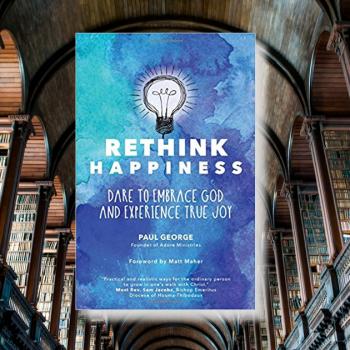
It's time to rethink happiness
Rethink Happiness on Off the Shelf Episode 081
Rebuilt - Off the Shelf 072 with Fr....
From Millennials to the Young at Heart -...
TRENDING AT PATHEOS Catholic

Rejecting Doom: Christian Hope And Human Action
Christianity is a religion of hope. We are to have hope and...

It’s What Comes From Within Which Matters
One of the most difficult things for us to understand is why...

Why I Choose the Eucharist Over the Sermon
Choose the Eucharist, Not the Sermon What are we supposed to get...

5 Design Elements Found in Spiritually Rooted Homes
Putting Spirituality Into Home Decor Our homes are more than our living...

Credo: A Story of God Told with the...
About 10 years ago, I began to imagine a personal "Credo" that...

The Anatomy of Divine Revelation in Catholic Thought
The claim that God has made Himself known to human beings is...
view all Catholic blogs
Ad-Free & Subscriber Log-In Subscription Support
- About Us
- 2026 Calendar
- Videos
- Podcasts
- Library of World Religions
- Faith In Media Tracker
- Advertise With Us
- Write for Us
- Privacy Policy
- Terms of Service
- Do Not Sell My Data
- Contact Us
- Radiant Digital
- Manage Newsletter Subscriptions
- Unsubscribe From Notifications
- Sitemap
Copyright 2008-2026, Patheos. All rights reserved.
Subscription Support Ad-Free & Subscriber Log-In
Follow Patheos