
BuddhistCatholicContemplativeEvangelicalGeneral ChristianHinduJewishLatter-day SaintMuslimNew VisionsProgressive Christian
Beliefs
- Buddhist
- Catholic
- Contemplative
- Evangelical
- General Christian
- Hindu
- Jewish
- Latter-day Saint
- More Voices
- Muslim
- New Visions
- Pagan
- Progressive Christian
Topics
- Religion News
- Food and Religion
- Sports and Religion
- Religious Art
- Religious Music and Entertainment
- Religious Events
- History and Religion
- Style and Religion
- Politics and Religion
- Women in Religion
- Recreation Outdoors and Religion
- Business Finance and Religion
- Careers Workplace and Religion
- Education and Religion
- Family Parenting and Religion
- Health Fitness and Religion
- Home and Religion
- Relationships and Religion
- Technology and Religion
- Travel and Religion
Columnists
- Buddhist Columnists
- Business Finance and Religion Columnists
- Careers Workplace and Religion Columnists
- Catholic Columnists
- Contemplative Columnists
- Education and Religion Columnists
- Evangelists Columnists
- Family Parenting and Religion Columnists
- General Christian Columnists
- Health Fitness and Religion Columnists
- Hindu Columnists
- History and Religion Columnists
- Home and Religion Columnists
- Jewish Columnists
- More Voices Columnists
- Latter Day Columnists
- Muslim Columnists
- New Visions Columnists
- Nonreligious Columnists
- Pagan Columnists
- Politics and Religion Columnists
- Progressive Columnists
- Recreation Outdoors and Religion Columnists
- Relationships and Religion Columnists
- Religion News Columnists
- Religious Art Columnists
- Religious Events Columnists
- Religious Music and Entertainment Columnists
- Sports and Religion Columnists
- Style and Religion Columnists
- Technology and Religion Columnists
- Travel and Religion Columnists
- Women in Religion Columnists
Resource Library
- 2026 Calendar
- Library of World Religions
- The 100 Most Holy Places on Earth
- Patheos Answers
- Podcasts
- Videos
- Faith Leaders Database
- Anglican Episcopalian
- Bahai
- Baptist
- Buddhism
- Christianity
- Confucianism
- Eastern Orthodoxy
- Hinduism
- Holiness and Pentecostal
- ISKCON
- Islam
- Judaism
- Lutheran
- Methodist
- The Church of Jesus Christ of Latter-day Saints
- New Age
- Paganism
- Presbytarian and Reformed
- Protestantism
- Religion Behind the Scenes
- Roman Catholic
- Scientology
- Shia Islam
- Sikhism
- Sufism
- Sunni Islam
- Taoism
- Zen
- See all religions
Research Tools
 Ad-Free & Subscriber Log-In Subscription Support
Ad-Free & Subscriber Log-In Subscription Support
Follow Patheos 

- Trending:
- Forgiveness
- |
- Marriage
- |
- Consciousness
- |
- Death Penalty
- |
- Election
- |
- Halloween
 The Catholic Book Blogger
-
More
-
2015 Book Reviews
-
- Home
- Catholic
- CBB Interview with Stephen P. White
CBB Interview with Stephen P. White
Last updated on: August 1, 2016 at 1:00 am by Pete Socks
CBB Interview with Stephen P. White 2016-07-23T06:07:28-05:00 Pete Socks
Patheos Explore the world's faith through different perspectives on religion and spirituality! Patheos has the views of the prevalent religions and spiritualities of the world.
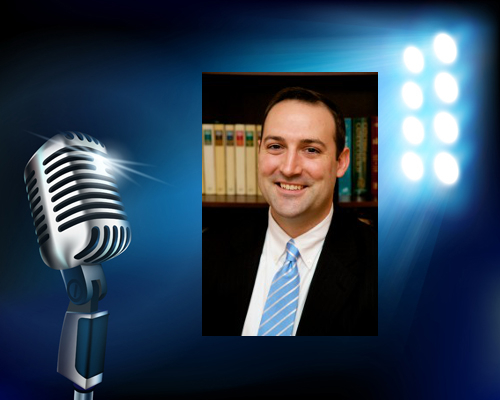
Stephen P. White is a fellow in the Catholic Studies Program at the Ethics and Public Policy Center. His work focuses on the application of Catholic social teaching to contemporary political and cultural issues. His writing has appeared in outlets such as the National Review Online, Huffington Post, America Magazine, and The Catholic Herald (UK). He is a regular contributor at CatholicVote.org. Since 2005, he has been coordinator of an annual seminar on Catholic social thought in Krakow, Poland.
Recently Stephen and I discussed his essential guide to Catholic citizenship, Red, White, Blue, and Catholic
PETE: It seems the political arena in the past 20 years has descended into a he-said, she-said environment. I have seen this at all levels from national to local politics. How have we gotten here?
STEPHEN P. WHITE: The answer to that question is very long and complicated. I doubt anyone has a complete answer. One factor (and it is just one factor) has been the sorting out of our political parties along the same fault lines which have defined the “culture wars.” These division have a way of self-reinforcing as each party appeals more and more to its base, and defines itself more and more in opposition to the other party.
There’s plenty of blame to go around for the coarseness of our politics and the lack of civility. Lamentable as this is, it’s also worth noting that the cultural divisions underlying our political polarization are real and substantial. If I had to give a name to the underlying crisis it would be the problem of freedom—what is it for, where does it come from, and how ought it to be used. Pope John Paul II (and Benedict XVI and Francis, in turn) identified this problem as an “anthropological” problem, a misunderstanding or disagreement about the very nature of the human person.
Disagreements on such a fundamental level are very tough to work through and, as often as not, people end up talking past one another. We often miss the real depth of our disagreement and easily ascribe ignorance or ill-will to our interlocutors rather than acknowledging what is actually happening: a profound disagreement about who we are and what the purpose of our common life ought to be.
PETE: What responsibility as Catholics do we have in the process of building our communities beyond un-necessary political squabbling?
STEPHEN P. WHITE: Christians in general, and Catholics in particular, have an irreplaceable role to play both in relativizing politics and at the same time elevating the importance of political life. That might sound confusing, or even contradictory, but here’s what I mean.
When politics is elevated too high—when it becomes the highest good and the measure of all the rest of human life—two things happen: First, we demand of politics something it cannot possibly provide, namely, ultimate meaning. Second, because such a misconception of politics inevitably disappoints, we can easily become cynical, disillusioned, and despair of the possibilities of actually making our common lives better.
Because we know politics isn’t the ultimate horizon of human reality, Catholics don’t have to be discouraged by its frustrations and inadequacies. We have a Savior, and he’s not running for office. At the same time, because we know that what we do in this life matters—indeed, matters for eternity—we know better than to view politics through a cynical, even nihilistic lens. How we organize our lives together matters. The work of citizenship matters. Love of neighbor matters. Participating in our common life matters.
All of this is to say that no matter how divisive or frustrating political life can become—and it can get much, much worse that it is now—Catholics know that good citizenship remains a necessary and worthwhile dimension of our vocation as Christian disciples. We’re called to love the world as we find it, not the world as we wish it would be. To paraphrase St. Thomas More, we’re always called to be the king’s good servants precisely by being God’s first.
PETE: What can we do as Catholics during what appears to become a highly contentious presidential election cycle this year?
STEPHEN P. WHITE: Pray. Pray for peace and understanding, wisdom, patience and charity. Pray for the courage to speak the truth, to not be cowed by voices that are louder than our own. And live lives of sanctity! If good discipleship manifests itself in good citizenship, then the best thing we can do for our country—and ourselves, our families, our neighbors, and even our enemies—is to strive to live lives of holiness. This is the simplest and most difficult answer to the question, and the sine qua non of Catholic citizenship.
PETE: Going beyond this election cycle how can we as Catholics drive positive change in our communities?
STEPHEN P. WHITE: We shouldn’t kid ourselves by thinking that government has a monopoly on shaping the way we live together, for better or for worse. If we’re waiting for politicians to pass the kinds of laws that will make us better citizens, we’re going to be waiting a very, very long time. Our laws shape us and our communities, for both good and ill, but even good laws cannot make us good.
One of the things I focus on in my book are those social spaces where most of our lives happen —families, parishes, schools, neighborhoods, places of business, etc. If most of our common life happens in these places, then these are the places where most of the work of citizenship needs to be done. Working to build the common good is not simply something we do on Election Day. Solidarity can’t be enforced from the top down. Real solidarity springs from the personal relationships we form in everyday life and wells up from there. This means we have to be involved locally, and care for our communities and our personal relationships, beginning in our marriages and families. It means living lives of service in our communities and being generous with our time and treasure. It also means we have to work to see that these fragile institutions are protected, defended, and given the freedom to flourish in a way that allows them to be sources of solidarity.
In my book I describe the challenge of learning to live freedom well to learning to play an instrument. It takes practice, it takes discipline, it takes work. We need virtuoso citizens; we need citizen saints. That road is always open to us, even in the most dysfunctional political environments.
PETE: I particularly was interested in your statement about looking for disagreement. I have dealt with this first hand as a local elected official. When certain individuals do not get their way, things tend to descend into name calling and an environment of constant gotcha moments. What advice do you have for Catholic, elected officials who find themselves on the receiving end of this?
STEPHEN P. WHITE: Resisting the urge to respond in kind is important. One of the curious things about sin is that the burden of reconciliation often falls heaviest on the one who has been hurt. This is true in politics as much as anywhere else.
As I mentioned, it is often easier to accuse our opponents of ignorance or ill-will than it is to take the time to work through them and discover the heart of our disagreements. “Achieving disagreement” doesn’t mean simply agreeing to disagree, rather, it means striving to understand someone else’s position as they understand it, engaging their best arguments rather than their worst. If we can’t even be bothered to figure out why and how we disagree, then persuasion and compromise are all but impossible. All that’s left is assertion, and a politics built on the force of assertion gets ugly very quickly.
PETE: Time for my signature ending question. This is a blog about books. What books are currently on your bookshelf to read?
STEPHEN P. WHITE: I’m writing this from Poland, where I’m spending a month for work, so I’ll tell you what I brought with me. I recently gave a lecture on Laudato Si’ and what Pope Francis calls the “technocratic paradigm,” so I’ve got Romano Guardini’s Letters from Lake Cuomo (Kindle), and George Grant’s Technology and Empire; for the airplane, I brought (and strongly recommend) my EPPC colleague Yuval Levin’s new book on the deep divisions we see in our current politics, A Fractured Republic; I’m working through Cicero’s *De Officiis (*e-book); C.C. Pecknold’s nifty little primer, Christianity and Politics: A Brief Guide to the History, made the trip in my suitcase, but I’ve already read it. I left at home my copy of Stephen Ambrose’ *Undaunted Courage—*about the Lewis and Clark Expedition—which I’ve been rereading. As for fiction (which I’m saving for the beach later this summer) the final novel in Patrick O’Brien’s great Aubrey-Maturin series: The Unknown Shore, and Walker Percy’s The Second Coming. Oh, and I’ve started Robert Hugh Benson’s Lord of the World twice—let’s hope third time is the charm.
_______________________________________________________________________________
Previous Post

July 31, 2016
How the Bible describes angels; Angels: Day 010
Next Post
August 1, 2016 The orders of angels; Angels: Day 011
Browse Our Archives
Select a Category A Year with Mary A Year with the Angels A Year with the Church Fathers Book News Children's Review Featured CD Giveaway Guest Post Interview Linked Review Media review Movie Review New Releases Off the Shelf Review speakers Teen Review The Clergy Speaks The Laity Speaks The Open Book Podcast Uncategorized
Select a Month October 2018 September 2018 August 2018 July 2018 June 2018 May 2018 April 2018 March 2018 February 2018 January 2018 December 2017 November 2017 October 2017 September 2017 August 2017 July 2017 June 2017 May 2017 April 2017 March 2017 February 2017 January 2017 December 2016 November 2016 October 2016 September 2016 August 2016 July 2016 June 2016 May 2016 April 2016 March 2016 February 2016 January 2016 December 2015 November 2015 October 2015 September 2015 August 2015 July 2015 June 2015 May 2015 April 2015 March 2015 February 2015 January 2015 December 2014 November 2014 October 2014 September 2014 August 2014 July 2014 June 2014 May 2014 April 2014 March 2014 February 2014 January 2014 December 2013 November 2013 October 2013 September 2013 August 2013 July 2013 June 2013 May 2013 April 2013 March 2013 February 2013 January 2013 December 2012 November 2012
Follow Us!
TAKE THE
Religious Wisdom Quiz
Who saw a vision of a valley full of dry bones?
Select your answer to see how you score.
Amos Daniel Micah Ezekiel
Related posts from The Catholic Book Blogger
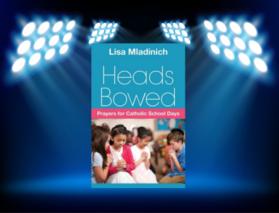
A prayer resource for the upcoming school year

CBB Interview with Sonja Corbitt
TRENDING AT PATHEOS Catholic

Rejecting Doom: Christian Hope And Human Action
Christianity is a religion of hope. We are to have hope and...

It’s What Comes From Within Which Matters
One of the most difficult things for us to understand is why...

Why I Choose the Eucharist Over the Sermon
Choose the Eucharist, Not the Sermon What are we supposed to get...

5 Design Elements Found in Spiritually Rooted Homes
Putting Spirituality Into Home Decor Our homes are more than our living...

Credo: A Story of God Told with the...
About 10 years ago, I began to imagine a personal "Credo" that...

The Anatomy of Divine Revelation in Catholic Thought
The claim that God has made Himself known to human beings is...
view all Catholic blogs
Ad-Free & Subscriber Log-In Subscription Support
- About Us
- 2026 Calendar
- Videos
- Podcasts
- Library of World Religions
- Faith In Media Tracker
- Advertise With Us
- Write for Us
- Privacy Policy
- Terms of Service
- Do Not Sell My Data
- Contact Us
- Radiant Digital
- Manage Newsletter Subscriptions
- Unsubscribe From Notifications
- Sitemap
Copyright 2008-2026, Patheos. All rights reserved.
Subscription Support Ad-Free & Subscriber Log-In
Follow Patheos