
BuddhistCatholicContemplativeEvangelicalGeneral ChristianHinduJewishLatter-day SaintMuslimNew VisionsProgressive Christian
Beliefs
- Buddhist
- Catholic
- Contemplative
- Evangelical
- General Christian
- Hindu
- Jewish
- Latter-day Saint
- More Voices
- Muslim
- New Visions
- Pagan
- Progressive Christian
Topics
- Religion News
- Food and Religion
- Sports and Religion
- Religious Art
- Religious Music and Entertainment
- Religious Events
- History and Religion
- Style and Religion
- Politics and Religion
- Women in Religion
- Recreation Outdoors and Religion
- Business Finance and Religion
- Careers Workplace and Religion
- Education and Religion
- Family Parenting and Religion
- Health Fitness and Religion
- Home and Religion
- Relationships and Religion
- Technology and Religion
- Travel and Religion
Columnists
- Buddhist Columnists
- Business Finance and Religion Columnists
- Careers Workplace and Religion Columnists
- Catholic Columnists
- Contemplative Columnists
- Education and Religion Columnists
- Evangelists Columnists
- Family Parenting and Religion Columnists
- General Christian Columnists
- Health Fitness and Religion Columnists
- Hindu Columnists
- History and Religion Columnists
- Home and Religion Columnists
- Jewish Columnists
- More Voices Columnists
- Latter Day Columnists
- Muslim Columnists
- New Visions Columnists
- Nonreligious Columnists
- Pagan Columnists
- Politics and Religion Columnists
- Progressive Columnists
- Recreation Outdoors and Religion Columnists
- Relationships and Religion Columnists
- Religion News Columnists
- Religious Art Columnists
- Religious Events Columnists
- Religious Music and Entertainment Columnists
- Sports and Religion Columnists
- Style and Religion Columnists
- Technology and Religion Columnists
- Travel and Religion Columnists
- Women in Religion Columnists
Resource Library
- 2026 Calendar
- Library of World Religions
- The 100 Most Holy Places on Earth
- Patheos Answers
- Podcasts
- Videos
- Faith Leaders Database
- Anglican Episcopalian
- Bahai
- Baptist
- Buddhism
- Christianity
- Confucianism
- Eastern Orthodoxy
- Hinduism
- Holiness and Pentecostal
- ISKCON
- Islam
- Judaism
- Lutheran
- Methodist
- The Church of Jesus Christ of Latter-day Saints
- New Age
- Paganism
- Presbytarian and Reformed
- Protestantism
- Religion Behind the Scenes
- Roman Catholic
- Scientology
- Shia Islam
- Sikhism
- Sufism
- Sunni Islam
- Taoism
- Zen
- See all religions
Research Tools
 Ad-Free & Subscriber Log-In Subscription Support
Ad-Free & Subscriber Log-In Subscription Support
Follow Patheos 

- Trending:
- Forgiveness
- |
- Marriage
- |
- Consciousness
- |
- Death Penalty
- |
- Election
- |
- Halloween
 The Catholic Book Blogger
-
More
-
2015 Book Reviews
-
- Home
- Catholic
- CBB Interview with Jeff Cavins
CBB Interview with Jeff Cavins
Last updated on: May 1, 2016 at 5:30 pm by Pete Socks
CBB Interview with Jeff Cavins 2016-05-01T13:55:14-05:00 Pete Socks
Patheos Explore the world's faith through different perspectives on religion and spirituality! Patheos has the views of the prevalent religions and spiritualities of the world.
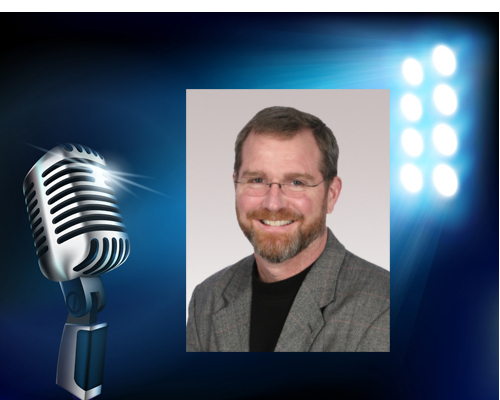
Jeff Cavins is recognized both nationally and internationally as one of the most effective and engaging speakers In the Church today. Few can communicate their love for Jesus Christ with as much zeal, clarity, and enthusiasm as Jeff Cavins. In addition to his outstanding presentations related to Catholic Bible study, Jeff is available to speak on a variety of other faith-formation topics.
After twelve years as a Protestant pastor, Jeff returned to the Catholic Church under the guidance of Bishop Paul Dudley. His conversion story, one of the best known and inspiring stories of its kind, is chronicled in the best-selling book, My Life on the Rock.
Jeff has been a leading figure in Catholic media for over two decades and has appeared as a guest or host on Catholic radio and television hundreds of times.
Jeff and I recently had an opportunity to discuss suffering and his book When You Suffer.
________________________________________________________________________________
PETE: As painful as suffering is it must be equally difficult to write about this topic. How did you come to write When You Suffer: Biblical Keys for Hope and Understanding?
JEFF CAVINS: I wrote the book out of a need to understand it. In 2002 I had a severe neck injury and it caused such pain for 9 months that I needed to go beyond knowing that I should offer it up and needed to go into why. How does this actually work? I wrote the book because I discovered the key to suffering. I discovered the treasure that is there if you are in Christ and I really wanted to share this with other people because it is THE question that everybody asks. Whether they do it consciously or not that do ask why? If God is good and he loves me why am I suffering? I wanted to go beyond the theological lesson and get to more practical answers for people.
PETE: For those not familiar with this book how can the Bible help one cope with suffering?
JEFF CAVINS: The Bible is the narrative of salvation history it tells the story from the beginning, the Fall and our first parents, to the answer for suffering. All throughout this story of the Bible suffering is a key subject. We see all kinds of suffering in the Bible. It doesn’t have a lot of meaning unless we attach it to Christ and what He did. We find the meaning of suffering in Jesus’ suffering. The Bible provides us with real life situations of peoples suffering and finding meaning. It also tells us a lot about love which is what Jesus does with His suffering. He so loved the world that he died for the world. You can’t find anybody in the Bible that has not been touched by suffering and that goes for us today as well. I don’t know anybody that hasn’t gone through physical suffering or moral suffering which is the suffering of the heart.
PETE: People ask this question all the time so what are your thoughts? What is the point of suffering and why does God allow it to happen?
JEFF CAVINS: Suffering is the result of sin, the result of the Fall of Adam and Eve. It is a part of reality, a part of life that there is suffering on this side of heaven. Since suffering is part of the Fall is not so much a question of ‘does God allow it’. He allows us to have a free will and what we do with that free will can land us in suffering in our lives. There is that question that if God loves me and He really cares about me than he wants me to be happy and yet he allows me to suffer.
When Jesus came to deal with sin He engaged the topic of suffering. There are two kinds of suffering there is physical suffering and there is moral suffering, suffering of the heart. There are also two types, temporal suffering and also what John Paul II called definitive suffering. Definitive suffering is to be without God forever and ever and ever in total darkness, with no hope, you are without Him and completely lost. Jesus came to pay the price for our sin and in doing that He endured suffering which was predicted in Genesis 3:15. The seed of the woman would crush the head of the enemy but there would be a deep bruising in the seed of the woman, Jesus. So we know that his act of love and his act of redemption entails suffering.
The question is why would we be allowed to suffer? The quick answer to that is we are allowed to suffer because we are invited to love. When Jesus redeemed us He loved us and it involved suffering. Just because He redeemed us and suffered for us doesn’t mean that we don’t share in that now. This is one of the great problems with peoples understanding of what it means to be the body of Christ. There are those who believe that Jesus did everything. He is the intercessor between God and man, He is the King, He is the physician, He is the healer, He is the one who suffered for the sins of the world and He is the one who died for the sins of the world. They believe all we have to do is just receive, receive, receive the benefits. The problem with that is that it’s not biblical. What we see in the Bible is that He did all those things BUT he shares all of that with us. For example, we pray for others in His name, we intercede for others in His name, we bring comfort, we bring healing to people and we suffer with Him.
Paul wrote in Colossians 1:24 “I rejoice in my suffering for your sake and I fill up in my body that which is lacking in the sufferings of Christ.” So what could possibly be lacking in the sufferings of Christ? Nothing, but, you might come to know His love and how He loves. He has made room in His suffering for you to participate. Suffering is not actually the end or “worst thing” that we are called to do. The worst is we have been called also to die. We die to ourselves, we die daily as Paul said. Whether its dying, suffering, healing, encouraging, interceding, whatever it is in Jesus’ ministry He shares all that with his Body the Church.
The question was, why would he allow us to suffer? Number one it is the result of free will, it is the result of the Fall but He also makes our suffering new, He redeems it, and gives us the possibility of loving as He loved which is more important than simply going without pain or discomfort.
PETE: It’s obvious we are going to have to deal with suffering either directly or indirectly through those that suffer around us. What can one do with that suffering?
JEFF CAVINS: The answer is first what do we not do? We don’t run, we don’t blame other people, we don’t self-medicate or hide. We embrace the suffering that we are experiencing and we do have somewhere to go with it and that is to Christ. We offer our suffering up in union with Jesus. In other words, by an act of the will we willingly contribute to His work by offering up our suffering. If we are in Christ, which we are, then our suffering is changed, it’s new, and it is powerful. I call it heavenly cash, we can actually spend it on other people and that’s what John Paul II said. He said you can actually apply this to loved ones and friends. Jesus paid the entire price but He allows us to participate with Him and he leaves rooms for us to participate. So what we do with it is we offer suffering up in union with Christ so that it means something.
One of the biggest problems that people face today is the problem of suffering but not finding any meaning in it. If you can’t find meaning to attach to your suffering, you can go into despair. If you can attach meaning to it, you can go through anything. Typically, it entails loving.
We see this at the natural level where a seven-year old son has leukemia. That’s always the hardest to explain is childhood suffering. It is very natural for the parents to say I would gladly take his place. That is natural, that’s what parents do, that’s love. We didn’t make that up, we didn’t get that on our own. We got that because we are made after the image and likeness of one that actually did it. He actually said I will change places with you, I will suffer for you because I love you so much. What we do at the natural level has a super-natural level to it which is God’s kind of love. Super-natural suffering and that is what we have been called to join him in.
Archbishop Fulton Sheen said one time that “Hospitals are filled with wasted suffering”. How do we waste our suffering? By complaining, and drawing attention to ourselves and pitying ourselves. Our suffering is wasted. We could have done something with that but we just drew the attention onto ourselves and we wasted the opportunity.
PETE: Is there anything you would like to add that I missed touching upon?
JEFF CAVINS: One thing I would add is that once we know the love of God we have no need to fear anymore. I’m not saying that suffering is fun but I don’t need to fear anymore because I am tasked with being like Christ and acting like Christ and suffering gives me an opportunity to do it. I think that the greatest fear of all is dying. That is the greatest fear that we have. We would rather have a broken leg, even live in a wheelchair but we don’t want to die. We have this ultimate fear of death. In the boo I bring up this great insight from Fulton Sheen. He said one of the reasons that we so fear death in the modern culture is that we don’t practice for it. By that he means that we mortify the flesh, we die to ourselves daily. I f we die to ourselves daily, if we walk in union with Christ, if we offer up our suffering and we die daily then when that day (the day of our death) finally comes it becomes kind of like ‘been there done that”. So it becomes I’m not unfamiliar with dying, I’ve never died at this level before but I have died daily and that is how we practice for death
What other projects do you have that you would like to tell my readers about?
JEFF CAVINS: We have our pilgrimages we lead to Israel every January and that’s exciting. I am working on a couple more books right now. My wife is very much involved with Gen2Rev Catholic. It’s a whole system for families reading the Bible as a story like The Great Adventure that I do but reading it to children so that children learn the narrative and the story. It is called the Gen2Rev Storybook and can be found at gen2revcatholic.com
PETE: It’s time for my signature ending question. This is a blog about books. What books are currently on your bookshelf to read?
JEFF CAVINS: That’s a massive bookshelf! I am reading a book on the history of the blues in light of suffering. It’s about the African-American community and their expression of suffering through the blues and how it affected British rock and American rock. I’m also reading a book on Jesus by N.T. Wright. I am also reading the definitive biography of Vincent Van Goh. I did my thesis on the spiritual dimensions of Van Goh in college. There has never been a definitive biography until recently.
The way I divvy up my day is I spend a third of my time reading about the Faith. Then I spend a third reading about people. That is trying to figure out women, men, menopause, teenagers, single moms, trying to find out about people and learn. People are fascinating. The other third is about subjects like science, astronomy, computers, anything you can imagine. This way when I get into a conversation with people or I give a talk I have a lot of real life stuff I can draw from that interest’s people. Rather than studying the Faith all the time I try to figure out ways to bridge the gap between faith and everyday life.
Previous Post

May 1, 2016
Let the queen of glory come in!, Mary: Day 285
Next Post
May 2, 2016 The Blessed Trinity welcomes Mary to heaven, Mary: Day 286
Browse Our Archives
Select a Category A Year with Mary A Year with the Angels A Year with the Church Fathers Book News Children's Review Featured CD Giveaway Guest Post Interview Linked Review Media review Movie Review New Releases Off the Shelf Review speakers Teen Review The Clergy Speaks The Laity Speaks The Open Book Podcast Uncategorized
Select a Month October 2018 September 2018 August 2018 July 2018 June 2018 May 2018 April 2018 March 2018 February 2018 January 2018 December 2017 November 2017 October 2017 September 2017 August 2017 July 2017 June 2017 May 2017 April 2017 March 2017 February 2017 January 2017 December 2016 November 2016 October 2016 September 2016 August 2016 July 2016 June 2016 May 2016 April 2016 March 2016 February 2016 January 2016 December 2015 November 2015 October 2015 September 2015 August 2015 July 2015 June 2015 May 2015 April 2015 March 2015 February 2015 January 2015 December 2014 November 2014 October 2014 September 2014 August 2014 July 2014 June 2014 May 2014 April 2014 March 2014 February 2014 January 2014 December 2013 November 2013 October 2013 September 2013 August 2013 July 2013 June 2013 May 2013 April 2013 March 2013 February 2013 January 2013 December 2012 November 2012
Follow Us!
TAKE THE
Religious Wisdom Quiz
True or False: James teaches that pure religion before God is to visit orphans and widows in their trouble.
Select your answer to see how you score.
FALSE TRUE
Related posts from The Catholic Book Blogger
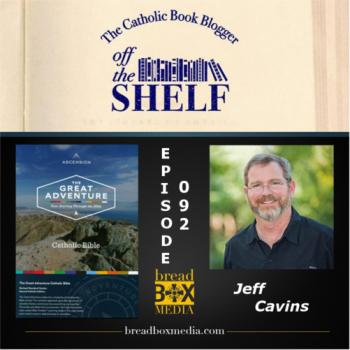
The Great Adventure Bible w/ guest Jeff Cavins...
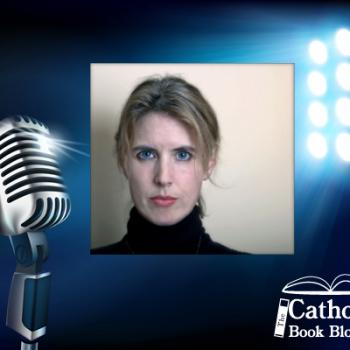

CBB Interview with Sonja Corbitt
TRENDING AT PATHEOS Catholic

Creation, Preservation, and Teleology in Catholic Theology
As I write this, it is very early Monday morning. Like millions...

The Parable Of The Sower And The Word...
One of Christ’s most famous parables is that of the sower who...

Rejecting Doom: Christian Hope And Human Action
Christianity is a religion of hope. We are to have hope and...

Why I Choose the Eucharist Over the Sermon
Choose the Eucharist, Not the Sermon What are we supposed to get...

5 Design Elements Found in Spiritually Rooted Homes
Putting Spirituality Into Home Decor Our homes are more than our living...

Credo: A Story of God Told with the...
About 10 years ago, I began to imagine a personal "Credo" that...
view all Catholic blogs
Ad-Free & Subscriber Log-In Subscription Support
- About Us
- 2026 Calendar
- Videos
- Podcasts
- Library of World Religions
- Faith In Media Tracker
- Advertise With Us
- Write for Us
- Privacy Policy
- Terms of Service
- Do Not Sell My Data
- Contact Us
- Radiant Digital
- Manage Newsletter Subscriptions
- Unsubscribe From Notifications
- Sitemap
Copyright 2008-2026, Patheos. All rights reserved.
Subscription Support Ad-Free & Subscriber Log-In
Follow Patheos