
BuddhistCatholicContemplativeEvangelicalGeneral ChristianHinduJewishLatter-day SaintMuslimNew VisionsProgressive Christian
Beliefs
- Buddhist
- Catholic
- Contemplative
- Evangelical
- General Christian
- Hindu
- Jewish
- Latter-day Saint
- More Voices
- Muslim
- New Visions
- Pagan
- Progressive Christian
Topics
- Religion News
- Food and Religion
- Sports and Religion
- Religious Art
- Religious Music and Entertainment
- Religious Events
- History and Religion
- Style and Religion
- Politics and Religion
- Women in Religion
- Recreation Outdoors and Religion
- Business Finance and Religion
- Careers Workplace and Religion
- Education and Religion
- Family Parenting and Religion
- Health Fitness and Religion
- Home and Religion
- Relationships and Religion
- Technology and Religion
- Travel and Religion
Columnists
- Buddhist Columnists
- Business Finance and Religion Columnists
- Careers Workplace and Religion Columnists
- Catholic Columnists
- Contemplative Columnists
- Education and Religion Columnists
- Evangelists Columnists
- Family Parenting and Religion Columnists
- General Christian Columnists
- Health Fitness and Religion Columnists
- Hindu Columnists
- History and Religion Columnists
- Home and Religion Columnists
- Jewish Columnists
- More Voices Columnists
- Latter Day Columnists
- Muslim Columnists
- New Visions Columnists
- Nonreligious Columnists
- Pagan Columnists
- Politics and Religion Columnists
- Progressive Columnists
- Recreation Outdoors and Religion Columnists
- Relationships and Religion Columnists
- Religion News Columnists
- Religious Art Columnists
- Religious Events Columnists
- Religious Music and Entertainment Columnists
- Sports and Religion Columnists
- Style and Religion Columnists
- Technology and Religion Columnists
- Travel and Religion Columnists
- Women in Religion Columnists
Resource Library
- 2026 Calendar
- Library of World Religions
- The 100 Most Holy Places on Earth
- Patheos Answers
- Podcasts
- Videos
- Faith Leaders Database
- Anglican Episcopalian
- Bahai
- Baptist
- Buddhism
- Christianity
- Confucianism
- Eastern Orthodoxy
- Hinduism
- Holiness and Pentecostal
- ISKCON
- Islam
- Judaism
- Lutheran
- Methodist
- The Church of Jesus Christ of Latter-day Saints
- New Age
- Paganism
- Presbytarian and Reformed
- Protestantism
- Religion Behind the Scenes
- Roman Catholic
- Scientology
- Shia Islam
- Sikhism
- Sufism
- Sunni Islam
- Taoism
- Zen
- See all religions
Research Tools
 Ad-Free & Subscriber Log-In Subscription Support
Ad-Free & Subscriber Log-In Subscription Support
Follow Patheos 

- Trending:
- Forgiveness
- |
- Marriage
- |
- Consciousness
- |
- Death Penalty
- |
- Election
- |
- Halloween
 The Catholic Book Blogger
-
More
-
2015 Book Reviews
-
- Home
- Catholic
- CBB Interview with Stephen Binz
CBB Interview with Stephen Binz
Last updated on: March 27, 2016 at 3:30 am by Pete Socks
CBB Interview with Stephen Binz 2016-03-23T11:15:24-05:00 Pete Socks
Patheos Explore the world's faith through different perspectives on religion and spirituality! Patheos has the views of the prevalent religions and spiritualities of the world.
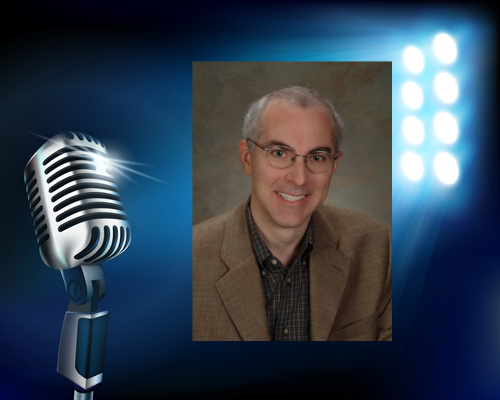 Stephen J. Binz is a biblical scholar, award-winning author of over 40 books, psychotherapist, and popular speaker, offering keynotes, seminars, and workshops at national and regional conferences and churches. Following graduate degrees at the Gregorian University, the Pontifical Biblical Institute in Rome, and Hebrew University in Jerusalem, he has developed Bible studies in the church for three decades and has offered numerous study trips and pilgrimages. His work is focused on biblical theology, Christian spirituality, and psycho-social issues of personal development. His books have earned top publishing awards from the Association of Catholic Publishers and the Catholic Press Association. He lives with his wife Pamela in Baton Rouge, Louisiana. Information about his work is found a www.Bridge-B.com.
PETE: What inspired you to combine East and West and make this incredible meditation resource Transformed by Gods Word?
STEPHEN BINZ: I have been writing and teaching about lectio divina for several years, showing how reading Scripture as God’s inspired word can be a transforming experience for a believer. I have also been fascinated for a long time by the spirituality of Eastern Christianity that is expressed in icons. But only recently, while teaching about the power of words and images in our Christian faith, did I discover that Scripture and icons are a perfect combination for deep and reflective meditation on God’s word. So I decided to publish something on this experience that has made such a difference both in my own prayer and in the life of those I teach.
PETE: Is it a coincidence that the twenty meditations in this book are based on the mysteries of the rosary?
STEPHEN BINZ: The twenty icons are found in the chapel of the Mary of Nazareth International Center, right across the street from the Basilica of the Annunciation in Nazareth. I discovered them while leading Holy Land pilgrimages, and I decided that they would be the perfect set of icons to include in this book. And yes, they correspond to the joyful, luminous, sorrowful, and glorious mysteries. They express the highlights of the gospels and some of the major feasts of Eastern Christianity.
PETE: Why is this style of meditation (lectio and visio) so important for one’s prayer life?
STEPHEN BINZ: The early Christians expressed the good news of Jesus Christ both in writing and in imagery. The words were written in ink on parchment in order to be proclaimed in the church’s liturgy. The images were painted on wood and plaster in order to form the sacred space for worship in house churches, shrines, and catacombs. This impulse of the early Christians to express God’s living word in both texts and images can enrich our own encounter with God in the inspired Scriptures. Pairing sacred texts and holy icons in our meditation and prayer can double the intensity and fruitfulness of that encounter.
PETE: What words of advice do you have for someone who might by intimidated by these odd Latin words lectio and visio? How can they begin their prayer journey?
STEPHEN BINZ: I decided to retain the Latin terms because they are not easily translated into English. Although lectio means reading, it is no ordinary reading. It is also listening carefully, using the words of St. Benedict, with “the ear of the heart.” And although visio means seeing, is it not just looking as spectators. It is gazing upon an image, as Paul says in Ephesians 1:18, with “the eyes of the heart,” quietly allowing the image to reveal its full meaning. I think the ancient Latin terminology is a reminder that we must not approach God’s living word in the same way we encounter written information or visual phenomena today. We must place ourselves outside of our contemporary culture to encounter ancient wisdom.
PETE: I thoroughly enjoyed this book and found it very helpful for daily prayer. Will there be a follow up containing different meditations perhaps?
STEPHEN BINZ: I hope so. We’ll see what kind of response this book receives. Currently I am working on a book that combines sacred Scripture and sacred music for prayerful meditation. The texts of Scripture have been put to music through the ages, but I am drawing upon the ancient traditions to show people how to encounter God’s word through both text and score, word and music.
PETE: This is your first time here at CBB and it is time for my popular signature ending question. This is a blog about books. What is currently on your bookshelf to read?
STEPHEN BINZ: I am trying to discern what I can contribute to the work of ecumenism, especially in light of the upcoming 500th anniversary of the Protestant Reformation in 2017. So I’m preparing to read Justification, by N.T. Wright, Getting the Reformation Wrong, by James R. Payton, Here I Stand, a biography of Luther by Roland H. Bainton, and collections by Timothy George called Evangelicals and Nicene Faith and Reading Scripture with the Reformers. While we Catholics believe that Protestants don’t understanding our beliefs and practices, I believe that the opposite is also true. When dealing with Protestant beliefs, we set up too many straw man arguments. In order to work toward unity, which we must if we follow Jesus, we’ve got to try to genuinely understand one another. As we work toward unity of Eastern and Western Christianity, we must also seek to unify the tragically splintered Christianity of the West.
Previous Post

March 26, 2016
Jesus gave you Mary as your mother, Mary: Day 249
Next Post
March 27, 2016 Mary receives the body of Jesus, Mary: Day 250
Browse Our Archives
Select a Category A Year with Mary A Year with the Angels A Year with the Church Fathers Book News Children's Review Featured CD Giveaway Guest Post Interview Linked Review Media review Movie Review New Releases Off the Shelf Review speakers Teen Review The Clergy Speaks The Laity Speaks The Open Book Podcast Uncategorized
Select a Month October 2018 September 2018 August 2018 July 2018 June 2018 May 2018 April 2018 March 2018 February 2018 January 2018 December 2017 November 2017 October 2017 September 2017 August 2017 July 2017 June 2017 May 2017 April 2017 March 2017 February 2017 January 2017 December 2016 November 2016 October 2016 September 2016 August 2016 July 2016 June 2016 May 2016 April 2016 March 2016 February 2016 January 2016 December 2015 November 2015 October 2015 September 2015 August 2015 July 2015 June 2015 May 2015 April 2015 March 2015 February 2015 January 2015 December 2014 November 2014 October 2014 September 2014 August 2014 July 2014 June 2014 May 2014 April 2014 March 2014 February 2014 January 2014 December 2013 November 2013 October 2013 September 2013 August 2013 July 2013 June 2013 May 2013 April 2013 March 2013 February 2013 January 2013 December 2012 November 2012
Follow Us!
TAKE THE
Religious Wisdom Quiz
Which Christian principle is shown by the story of the widow's mite?
Select your answer to see how you score.
Generosity from the heart Never give Give to be seen Give only if rich
Related posts from The Catholic Book Blogger
It's time to rethink happiness
Rethink Happiness on Off the Shelf Episode 081
Rebuilt - Off the Shelf 072 with Fr....
From Millennials to the Young at Heart -...
TRENDING AT PATHEOS Catholic

Rejecting Doom: Christian Hope And Human Action
Christianity is a religion of hope. We are to have hope and...

It’s What Comes From Within Which Matters
One of the most difficult things for us to understand is why...

Why I Choose the Eucharist Over the Sermon
Choose the Eucharist, Not the Sermon What are we supposed to get...

5 Design Elements Found in Spiritually Rooted Homes
Putting Spirituality Into Home Decor Our homes are more than our living...

Credo: A Story of God Told with the...
About 10 years ago, I began to imagine a personal "Credo" that...

The Anatomy of Divine Revelation in Catholic Thought
The claim that God has made Himself known to human beings is...
view all Catholic blogs
Ad-Free & Subscriber Log-In Subscription Support
- About Us
- 2026 Calendar
- Videos
- Podcasts
- Library of World Religions
- Faith In Media Tracker
- Advertise With Us
- Write for Us
- Privacy Policy
- Terms of Service
- Do Not Sell My Data
- Contact Us
- Radiant Digital
- Manage Newsletter Subscriptions
- Unsubscribe From Notifications
- Sitemap
Copyright 2008-2026, Patheos. All rights reserved.
Subscription Support Ad-Free & Subscriber Log-In
Follow Patheos