
BuddhistCatholicContemplativeEvangelicalGeneral ChristianHinduJewishLatter-day SaintMuslimNew VisionsProgressive Christian
Beliefs
- Buddhist
- Catholic
- Contemplative
- Evangelical
- General Christian
- Hindu
- Jewish
- Latter-day Saint
- More Voices
- Muslim
- New Visions
- Pagan
- Progressive Christian
Topics
- Religion News
- Food and Religion
- Sports and Religion
- Religious Art
- Religious Music and Entertainment
- Religious Events
- History and Religion
- Style and Religion
- Politics and Religion
- Women in Religion
- Recreation Outdoors and Religion
- Business Finance and Religion
- Careers Workplace and Religion
- Education and Religion
- Family Parenting and Religion
- Health Fitness and Religion
- Home and Religion
- Relationships and Religion
- Technology and Religion
- Travel and Religion
Columnists
- Buddhist Columnists
- Business Finance and Religion Columnists
- Careers Workplace and Religion Columnists
- Catholic Columnists
- Contemplative Columnists
- Education and Religion Columnists
- Evangelists Columnists
- Family Parenting and Religion Columnists
- General Christian Columnists
- Health Fitness and Religion Columnists
- Hindu Columnists
- History and Religion Columnists
- Home and Religion Columnists
- Jewish Columnists
- More Voices Columnists
- Latter Day Columnists
- Muslim Columnists
- New Visions Columnists
- Nonreligious Columnists
- Pagan Columnists
- Politics and Religion Columnists
- Progressive Columnists
- Recreation Outdoors and Religion Columnists
- Relationships and Religion Columnists
- Religion News Columnists
- Religious Art Columnists
- Religious Events Columnists
- Religious Music and Entertainment Columnists
- Sports and Religion Columnists
- Style and Religion Columnists
- Technology and Religion Columnists
- Travel and Religion Columnists
- Women in Religion Columnists
Resource Library
- 2026 Calendar
- Library of World Religions
- The 100 Most Holy Places on Earth
- Patheos Answers
- Podcasts
- Videos
- Faith Leaders Database
- Anglican Episcopalian
- Bahai
- Baptist
- Buddhism
- Christianity
- Confucianism
- Eastern Orthodoxy
- Hinduism
- Holiness and Pentecostal
- ISKCON
- Islam
- Judaism
- Lutheran
- Methodist
- The Church of Jesus Christ of Latter-day Saints
- New Age
- Paganism
- Presbytarian and Reformed
- Protestantism
- Religion Behind the Scenes
- Roman Catholic
- Scientology
- Shia Islam
- Sikhism
- Sufism
- Sunni Islam
- Taoism
- Zen
- See all religions
Research Tools
 Ad-Free & Subscriber Log-In Subscription Support
Ad-Free & Subscriber Log-In Subscription Support
Follow Patheos 

- Trending:
- Forgiveness
- |
- Marriage
- |
- Consciousness
- |
- Death Penalty
- |
- Election
- |
- Halloween
 The Catholic Book Blogger
-
More
-
2015 Book Reviews
-
- Home
- Catholic
- CBB Interview with Steven Hemler
CBB Interview with Steven Hemler
Last updated on: September 20, 2015 at 5:30 pm by Pete Socks
CBB Interview with Steven Hemler 2015-09-16T11:29:30-05:00 Pete Socks
Patheos Explore the world's faith through different perspectives on religion and spirituality! Patheos has the views of the prevalent religions and spiritualities of the world.
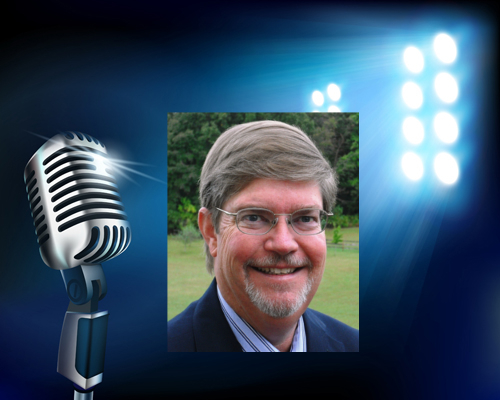 Steven R. Hemler is President of the Catholic Apologetics Institute of North America (CAINA). Steve has a Master of Pastoral Studies degree from Loyola University of Chicago, as well as Bachelor’s and Master’s degrees in Civil/Structural Engineering from Virginia Tech. He also has a Certificate in the Catechism of the Catholic Church from Catholic Distance University (see www.cdu.edu) and a Certificate in Advanced Youth Ministry Studies from the Center for Ministry Development. Steve is certified as an Advanced Catechist by the Catholic Diocese of Arlington, Virginia, and is on the official diocesan Speaker’s Bureau.
After a 33-year professional engineering career, including 13 years in the Middle East, Steve took early retirement in 2011 to follow a calling to serve God and the Church full time. He has been actively involved in adolescent and adult religious education for over 30 years, including developing and teaching several 3-week-long online apologetics seminars for Catholic Distance University that are offered for undergraduate and graduate college credit.
Steve’s articles have been published in several leading Catholic and secular magazines, including America, Liguorian, and National Review. He also writes the “Life’s Little Learnings” column for the Holy Spirit Interactive website, as well as writing for Catholic365.com and StrangeNotions.com.
I had a chance to meet Steven at this summer’s Defending the Faith Conference in Stuebenville, OH. We had a great chat about his work and his book The Reality of God. Recently I had an opportunity to formally ask him some questions. Here is what he had to say.
____________________________________________________________________________
PETE: For those who have not read your book The Reality of God, can you tell readers what its procedure?
STEVEN HEMLER: This book provides an introductory overview of compelling evidence of God’s existence to help answer for ourselves and others the key question in life; namely, “Does God exist?” While many people have subjective (personal) reasons for belief in God, this book provides objective (scientific and philosophical) reasons that validate God’s existence. As such, this unique book provides a clear and concise overview of key scientific evidence, philosophical reasons, and insights drawn from human nature itself demonstrating God’s existence. Catholics and others will appreciate this easy-to-read book as an opportunity to address any of their own doubts about God’s existence and to develop persuasive reasons for belief, valuable for sharing with family and friends who may have questions about God’s existence.
PETE: What inspired you to write this book?
STEVEN HEMLER: Like most Catholics, I know people who were raised Catholic but no longer believe in God. In fact, surveys show that one-third of those raised Catholic no longer consider themselves Catholic. Given our increasingly secular society and the atheistic worldview often promoted by the mainstream media and academic/scientific establishment, the need to strengthen the faith of Catholics and equip them to better explain and defend our faith has never been greater. This need is clearly evident in the increasing number of young people who are leaving the Church, especially during and after college. To help address this need, this book provides an introductory overview of key scientific evidence, philosophical reasons, and insights drawn from human nature demonstrating God’s existence.
PETE: Can you tell us a little about your background and what you qualified to write this book?
STEVEN HEMLER: In addition to my educational credentials and catechetical experiences, for many years I have felt called to help address the above concern regarding the many Catholics who are leaving the Faith. Therefore, I developed and since 2005 have been giving Power-Point and video-based apologetics presentations to adults and youth, including on the scientific and inner/human evidence of God’s existence and evolution/creation. I took early retirement in 2011 to pursue this calling full-time. These presentations are now being offered under the auspices of the Catholic Apologetics Institute of North America (CAINA), specifically the “Faith and the Big Questions” program (see www.cainaweb.org). There are several recommendation letters and some attendee feedback on the CAINA home page attesting to how much the faith of Catholics is strengthened by learning this “rest of the story,” which is rarely taught in schools or shown on TV. See Attendee Feedback on “Faith and the Big Questions” on the CAINA website (http://cainaweb.org/testimonials/).
After hearing of the success of CAINA’s apologetics presentations, Catholic Distance University (CDU) asked me to develop and conduct an online apologetics seminar on the existence of God. In addition to offering this seminar for personal development and continuing education, it has also been offered for graduate and undergraduate college credit. The first seminar in July 2012 was so popular and well-received that CDU asked me repeat it again the following summer. See http://www.cdu.edu/catalog/127-online-seminars/287-apologetics-evidence-for-the-existence-of-god. Some feedback from participants in these two seminars is at:
- http://cainaweb.org/wp-content/uploads/2012/11/CDU_Seminar1_Evaluation_Comments.pdf
- http://cainaweb.org/wp-content/uploads/2013/08/CDU_Seminar2_Evaluation_Comments.pdf
We anticipate the same excitement and enthusiastic response experienced when giving CAINA’s apologetics presentations, and as is evident in the above feedback from these two CDU seminars, will greet the publication of this much-needed book.
PETE: Who is your target audience for this book?
STEVEN HEMLER: The clarity and conciseness of this book makes it more readable and accessible to a wider audience than most books on this subject. This book is written for the average person and is intended to help anyone seeking to answer the question “Does God exist?” for themselves or in discussions with others. As such, this book will help those seeking answers to questions about why they believe in God, including parents and grandparents who are looking for more objective reasons for belief to share with their questioning children and grandchildren. It is ideal for use in parish youth ministry and adolescent catechesis programs, Catholic high school religion/theology classes, parish high-school-age Confirmation preparation programs, college campus ministries, young adult ministries, RCIA programs, parish adult education and faith formation programs, parish Bible studies and faith sharing groups, and in homeschooling and by military chaplains. In short, anyone (young or old) seeking objective and compelling reasons for belief in God will want to read this book.
PETE: What scientific findings do you cover in this book and why do you consider this to be persuasive and compelling evidence of God’s existence?
STEVEN HEMLER: First, from Cosmology is the theory of the Big Bang origin of the universe. Something just doesn’t come from nothing. Whatever begins to exist must have a cause of its existence. And, science has discovered that the Big Bang is when our universe began to exist. Therefore, the universe must have a cause of its existence. The Big Bang is evidence for a transcendent Creator beyond space and time and therefore non-physical and immaterial, who created the universe out of nothing and brought it into being.
Second, from Physics are the mathematically elegant and intelligible laws of nature. After such a violent and explosive beginning at the Big Bang, it seems reasonable to expect that the universe would behave in a random, chaotic, and unpredictable manner. However, our universe is surprisingly well-ordered and predictable, governed by the laws of nature. This begs the question: Where did the laws of nature come from? In other words, what “breathed reality” into the laws of physics that govern our universe? The harmony, order, and elegance found in the governing laws of physics, based on mathematical concepts that take the greatest efforts of the finest human minds to unlock and understand, must have come from a Mind far greater.
Third is the fine tuning of our universe and our solar system for life. One of the most striking and unexpected discoveries of modern science is that the values of the fixed constants found in the mathematical expression of the laws of physics are “finely tuned” and need to be delicately balanced “just so” as they are in order for life to exist. For example, even an infinitesimally small change in the gravitational force constant would make the existence of stars like our sun, and hence life on earth, impossible. And, from astronomy and planetary geology, scientists have also discovered the “local fine tuning” of many factors that are “just right” for life on earth. This includes the earth’s life-sustaining magnetic field, oxygen-rich atmosphere, and large moon. All of these recent scientific discoveries offer compelling evidence of the “fingerprint of God” in the cosmos. These many “cosmic coincidences” leave one with the overwhelming impression that the amazingly precise fine tuning of our universe was built in by a “Fine-Tuner”―God the Creator.
Fourth, from biology is the realization that an intelligent cause is a valid explanation of the genetic information found in DNA. The specifically arranged and functionally significant sequences of nucleotide bases in DNA―the encoded information―implies the past action of an intelligent cause, even if such an intelligence cannot be directly observed today. Thus, information-rich biological systems, such as DNA, provide compelling evidence for an intelligent cause of life.
PETE: Time for my signature ending question. This is a blog about books. What books are you currently on your bookshelf to read?
STEVEN HEMLER: I am currently reading Why Be Catholic?: Ten Answers to a Very Important Question by Patrick Madrid and Made for More: Isn’t it Time you Discover the Life God Created you to Live? by Curtis Martin. Here are some more on my reading backlist. Introduction to the Devout Life by St. Francis De Sales and 30 Minute Read: Hope for Hard Times by Scott Hahn.
__________________________________________________________________________________________
Previous Post

September 20, 2015
Brought to confession by Mary, Mary: Day 061
Next Post
September 21, 2015 Call on Mary in temptation, Mary: Day 062
Browse Our Archives
Select a Category A Year with Mary A Year with the Angels A Year with the Church Fathers Book News Children's Review Featured CD Giveaway Guest Post Interview Linked Review Media review Movie Review New Releases Off the Shelf Review speakers Teen Review The Clergy Speaks The Laity Speaks The Open Book Podcast Uncategorized
Select a Month October 2018 September 2018 August 2018 July 2018 June 2018 May 2018 April 2018 March 2018 February 2018 January 2018 December 2017 November 2017 October 2017 September 2017 August 2017 July 2017 June 2017 May 2017 April 2017 March 2017 February 2017 January 2017 December 2016 November 2016 October 2016 September 2016 August 2016 July 2016 June 2016 May 2016 April 2016 March 2016 February 2016 January 2016 December 2015 November 2015 October 2015 September 2015 August 2015 July 2015 June 2015 May 2015 April 2015 March 2015 February 2015 January 2015 December 2014 November 2014 October 2014 September 2014 August 2014 July 2014 June 2014 May 2014 April 2014 March 2014 February 2014 January 2014 December 2013 November 2013 October 2013 September 2013 August 2013 July 2013 June 2013 May 2013 April 2013 March 2013 February 2013 January 2013 December 2012 November 2012
Follow Us!
TAKE THE
Religious Wisdom Quiz
Who confronted David about his sin with Bathsheba?
Select your answer to see how you score.
Nathan Joab Gad Samuel
Related posts from The Catholic Book Blogger

Learn persuasion from the Lord; Church Fathers: Day...
Pray for conversions; Church Fathers: Day 348

Welcome the straying when they turn back; Church...
Pray for the straying; Church Fathers: Day 346
TRENDING AT PATHEOS Catholic

Rejecting Doom: Christian Hope And Human Action
Christianity is a religion of hope. We are to have hope and...

It’s What Comes From Within Which Matters
One of the most difficult things for us to understand is why...

Why I Choose the Eucharist Over the Sermon
Choose the Eucharist, Not the Sermon What are we supposed to get...

5 Design Elements Found in Spiritually Rooted Homes
Putting Spirituality Into Home Decor Our homes are more than our living...

Credo: A Story of God Told with the...
About 10 years ago, I began to imagine a personal "Credo" that...

The Anatomy of Divine Revelation in Catholic Thought
The claim that God has made Himself known to human beings is...
view all Catholic blogs
Ad-Free & Subscriber Log-In Subscription Support
- About Us
- 2026 Calendar
- Videos
- Podcasts
- Library of World Religions
- Faith In Media Tracker
- Advertise With Us
- Write for Us
- Privacy Policy
- Terms of Service
- Do Not Sell My Data
- Contact Us
- Radiant Digital
- Manage Newsletter Subscriptions
- Unsubscribe From Notifications
- Sitemap
Copyright 2008-2026, Patheos. All rights reserved.
Subscription Support Ad-Free & Subscriber Log-In
Follow Patheos