
BuddhistCatholicContemplativeEvangelicalGeneral ChristianHinduJewishLatter-day SaintMuslimNew VisionsProgressive Christian
Beliefs
- Buddhist
- Catholic
- Contemplative
- Evangelical
- General Christian
- Hindu
- Jewish
- Latter-day Saint
- More Voices
- Muslim
- New Visions
- Pagan
- Progressive Christian
Topics
- Religion News
- Food and Religion
- Sports and Religion
- Religious Art
- Religious Music and Entertainment
- Religious Events
- History and Religion
- Style and Religion
- Politics and Religion
- Women in Religion
- Recreation Outdoors and Religion
- Business Finance and Religion
- Careers Workplace and Religion
- Education and Religion
- Family Parenting and Religion
- Health Fitness and Religion
- Home and Religion
- Relationships and Religion
- Technology and Religion
- Travel and Religion
Columnists
- Buddhist Columnists
- Business Finance and Religion Columnists
- Careers Workplace and Religion Columnists
- Catholic Columnists
- Contemplative Columnists
- Education and Religion Columnists
- Evangelists Columnists
- Family Parenting and Religion Columnists
- General Christian Columnists
- Health Fitness and Religion Columnists
- Hindu Columnists
- History and Religion Columnists
- Home and Religion Columnists
- Jewish Columnists
- More Voices Columnists
- Latter Day Columnists
- Muslim Columnists
- New Visions Columnists
- Nonreligious Columnists
- Pagan Columnists
- Politics and Religion Columnists
- Progressive Columnists
- Recreation Outdoors and Religion Columnists
- Relationships and Religion Columnists
- Religion News Columnists
- Religious Art Columnists
- Religious Events Columnists
- Religious Music and Entertainment Columnists
- Sports and Religion Columnists
- Style and Religion Columnists
- Technology and Religion Columnists
- Travel and Religion Columnists
- Women in Religion Columnists
Resource Library
- 2026 Calendar
- Library of World Religions
- The 100 Most Holy Places on Earth
- Patheos Answers
- Podcasts
- Videos
- Faith Leaders Database
- Anglican Episcopalian
- Bahai
- Baptist
- Buddhism
- Christianity
- Confucianism
- Eastern Orthodoxy
- Hinduism
- Holiness and Pentecostal
- ISKCON
- Islam
- Judaism
- Lutheran
- Methodist
- The Church of Jesus Christ of Latter-day Saints
- New Age
- Paganism
- Presbytarian and Reformed
- Protestantism
- Religion Behind the Scenes
- Roman Catholic
- Scientology
- Shia Islam
- Sikhism
- Sufism
- Sunni Islam
- Taoism
- Zen
- See all religions
Research Tools
 Ad-Free & Subscriber Log-In Subscription Support
Ad-Free & Subscriber Log-In Subscription Support
Follow Patheos 

- Trending:
- Forgiveness
- |
- Marriage
- |
- Consciousness
- |
- Death Penalty
- |
- Election
- |
- Halloween
 The Catholic Book Blogger
-
More
-
2015 Book Reviews
-
- Home
- Catholic
- CBB Interview with Father Mitch Pacwa
CBB Interview with Father Mitch Pacwa
Last updated on: July 12, 2015 at 5:30 pm by Pete Socks
CBB Interview with Father Mitch Pacwa 2015-07-05T06:32:47-05:00 Pete Socks
Patheos Explore the world's faith through different perspectives on religion and spirituality! Patheos has the views of the prevalent religions and spiritualities of the world.
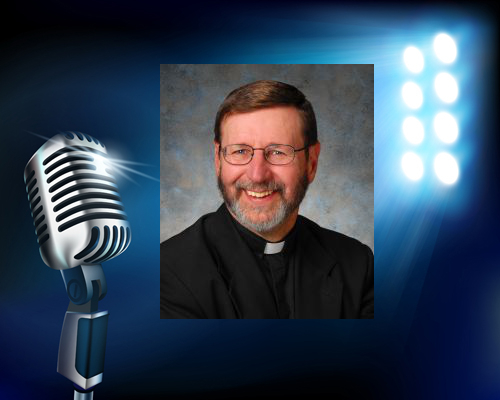 You likely know my guest this week here at The Catholic Book Blogger for his numerous shows on EWTN and as being host of EWTN Live. Father Mitch Pacwa has recently released a new book titled Praying the Gospels with Father Mitch Pacwa: Jesus Launches His Ministry. You can find my review of that book here. I had an opportunity to conduct an interview with Father Mitch about this book, Ignatian spirituality and future book plans. Here is what he had to say:
PETE: Your most recent books focus on bible study. Why is the study of Scripture so important to the faith life of Catholics?
FATHER MITCH PACWA: Moses said to Israel, “Man does not live by bread alone but by every word that comes from the mouth of God.” Jesus Christ our Lord endorsed this teaching right to Satan’s face. Later in the Old Testament the Prophet Amos said: “Behold, the days are coming,” says the Lord GOD, “when I will send a famine on the land; not a famine of bread, nor a thirst for water, but of hearing the words of the LORD.” (Amo 8:11 RSV) Such passages about the Word of God as food led Vatican II to consider the pulpit the “table” of God’s Word, just as the altar was the “table” of the Bread of Life, Jesus Christ.
The meaning of life is not available to us from modern entertainment, the news or many other sources. God’s Word gives us the meaning of being human, our origin from God the Creator and our destiny in eternal life in heaven. The Word tells us we can be redeemed from sin and teaches us how to live in a redeemed way. Such wisdom is absent from the modern world, and it is no wonder that our families languish, morals decrease, and purposefulness gives way to aimlessness.
PETE: As a priest of the Jesuit order you obviously take some influence from St. Ignatius. How does Ignatian thought influence your approach to Scripture and in turn how you teach Scripture through your books?
FATHER MITCH PACWA: Certainly, Ignatian spirituality forms the very way I approach Scripture and the rest of life. In the case of Scripture, the first step is to accept from St. Ignatius’ Rules for Discernment of Spirits that we must think with the Church. We consult the Magisterium in order to understand the meaning of Sacred Scripture within the context of the rule of Faith; we do not approach the text in a vacuum and create our own interpretations.
Secondly, St. Ignatius teaches us to imaginatively apply our senses to the scenes in the Gospel and place ourselves within the events of our salvation. In this way we allow the Holy Spirit to convict our minds and souls about the ways in which we do not think like Jesus Christ or love like him. That approach to the Gospels lies behind this book and the next books I plan to write in this series of reflections.
PETE: I really enjoyed this study and took a lot of notes. In this interview medium we couldn’t possibly cover all my questions but I would like to focus on one. In Meditation 2, Jesus’ Journey to the Jordan you touch upon the hidden life of Jesus’ youth. It seems people have a desire to fill that void with stories, as you mention, such as how Jesus developed his “powers”. In a sense they foist a teenage Clark Kent becoming Superman mentality on those years. Why do you think people can be so intent upon discovering this period of Jesus’ life when perhaps He never wanted it revealed to begin with?
FATHER MITCH PACWA: I am convinced that people want to find themselves in their depiction of Jesus’ youth. They want him to be like they are, or they want him to use methods of spiritual empowerment they can emulate. By positing that Jesus went to Tibet to learn Buddhism, or to India to learn yoga, or to Egypt to learn the secrets of the Egyptian priests, then modern people can do the same and do exactly what Jesus did by using humanly accessible spiritual or occult techniques. This also means that Jesus is merely human, like these theorists, and therefore much more manageable a character than would his fully divine nature in the hypostatic union with his fully human nature might allow them.
PETE: Can you tell us about any future writing projects you have in the works?
FATHER MITCH PACWA: I have a lot of writing and production projects in the works. I plan to finish volume 2 of this series, which will treat the miracles of Jesus during his Galilean ministry. I am also just finishing another Bible Study for Catholics for Our Sunday Visitor, which will be on the Holy Spirit; the volume on Mercy just came out for the upcoming Year of Mercy. Then I will finish a manuscript on comparing our present cultural situation to the deterioration and collapse of Roman Empire and the barbarian invasions of the late 4th through the early 7th centuries. I also have written a detailed outline of four Bible Studies on the Psalms for the Catholic Scripture Study series. The Psalms studies will be organized around the themes of St. Ignatius’ Spiritual Exercises.
PETE: Time for my signature ending question. This is a blog about books. What books are currently on your bookshelf to read?
FATHER MITCH PACWA: I am presently enjoying the pre-publication copy of Fr. Frank Pavone’s new book, Abolishing Abortion, the absolutely wonderful book by Drs. Scott Hahn and Ben Wiker, Politicizing the Bible, and the very interesting philosophical demonstration of the existence of God, Who Designed the Designer? by Michael Augros.
God bless you,
Fr. Mitch Pacwa, SJ
____________________________________________________________________________________________________
Other Books by this author:
Winning the Battle Against Sin: Hope-Filled Lessons from the Bible

Mercy: A Bible Study Guide for Catholics

How to Listen When God Is Speaking: A Guide for Modern-Day Catholics

Previous Post

July 12, 2015
Show reverence to what is sacred, Church Fathers: Day 356
Next Post
July 13, 2015 Rely on the prayers of the saints, Church Fathers: Day 357
Browse Our Archives
Select a Category A Year with Mary A Year with the Angels A Year with the Church Fathers Book News Children's Review Featured CD Giveaway Guest Post Interview Linked Review Media review Movie Review New Releases Off the Shelf Review speakers Teen Review The Clergy Speaks The Laity Speaks The Open Book Podcast Uncategorized
Select a Month October 2018 September 2018 August 2018 July 2018 June 2018 May 2018 April 2018 March 2018 February 2018 January 2018 December 2017 November 2017 October 2017 September 2017 August 2017 July 2017 June 2017 May 2017 April 2017 March 2017 February 2017 January 2017 December 2016 November 2016 October 2016 September 2016 August 2016 July 2016 June 2016 May 2016 April 2016 March 2016 February 2016 January 2016 December 2015 November 2015 October 2015 September 2015 August 2015 July 2015 June 2015 May 2015 April 2015 March 2015 February 2015 January 2015 December 2014 November 2014 October 2014 September 2014 August 2014 July 2014 June 2014 May 2014 April 2014 March 2014 February 2014 January 2014 December 2013 November 2013 October 2013 September 2013 August 2013 July 2013 June 2013 May 2013 April 2013 March 2013 February 2013 January 2013 December 2012 November 2012
Follow Us!
TAKE THE
Religious Wisdom Quiz
How many books are named after prophets in the Old Testament?
Select your answer to see how you score.
17 5 21 12
Related posts from The Catholic Book Blogger

CBB Interview with Stacy Trasancos
CBB Interview with Mosongo Osong
CBB Interview with Father Frank Pavone
CBB Interview with Stephen P. White
TRENDING AT PATHEOS Catholic

Creation, Preservation, and Teleology in Catholic Theology
As I write this, it is very early Monday morning. Like millions...

The Parable Of The Sower And The Word...
One of Christ’s most famous parables is that of the sower who...

Rejecting Doom: Christian Hope And Human Action
Christianity is a religion of hope. We are to have hope and...

Why I Choose the Eucharist Over the Sermon
Choose the Eucharist, Not the Sermon What are we supposed to get...

5 Design Elements Found in Spiritually Rooted Homes
Putting Spirituality Into Home Decor Our homes are more than our living...

Credo: A Story of God Told with the...
About 10 years ago, I began to imagine a personal "Credo" that...
view all Catholic blogs
Ad-Free & Subscriber Log-In Subscription Support
- About Us
- 2026 Calendar
- Videos
- Podcasts
- Library of World Religions
- Faith In Media Tracker
- Advertise With Us
- Write for Us
- Privacy Policy
- Terms of Service
- Do Not Sell My Data
- Contact Us
- Radiant Digital
- Manage Newsletter Subscriptions
- Unsubscribe From Notifications
- Sitemap
Copyright 2008-2026, Patheos. All rights reserved.
Subscription Support Ad-Free & Subscriber Log-In
Follow Patheos