
BuddhistCatholicContemplativeEvangelicalGeneral ChristianHinduJewishLatter-day SaintMuslimNew VisionsProgressive Christian
Beliefs
- Buddhist
- Catholic
- Contemplative
- Evangelical
- General Christian
- Hindu
- Jewish
- Latter-day Saint
- More Voices
- Muslim
- New Visions
- Pagan
- Progressive Christian
Topics
- Religion News
- Food and Religion
- Sports and Religion
- Religious Art
- Religious Music and Entertainment
- Religious Events
- History and Religion
- Style and Religion
- Politics and Religion
- Women in Religion
- Recreation Outdoors and Religion
- Business Finance and Religion
- Careers Workplace and Religion
- Education and Religion
- Family Parenting and Religion
- Health Fitness and Religion
- Home and Religion
- Relationships and Religion
- Technology and Religion
- Travel and Religion
Columnists
- Buddhist Columnists
- Business Finance and Religion Columnists
- Careers Workplace and Religion Columnists
- Catholic Columnists
- Contemplative Columnists
- Education and Religion Columnists
- Evangelists Columnists
- Family Parenting and Religion Columnists
- General Christian Columnists
- Health Fitness and Religion Columnists
- Hindu Columnists
- History and Religion Columnists
- Home and Religion Columnists
- Jewish Columnists
- More Voices Columnists
- Latter Day Columnists
- Muslim Columnists
- New Visions Columnists
- Nonreligious Columnists
- Pagan Columnists
- Politics and Religion Columnists
- Progressive Columnists
- Recreation Outdoors and Religion Columnists
- Relationships and Religion Columnists
- Religion News Columnists
- Religious Art Columnists
- Religious Events Columnists
- Religious Music and Entertainment Columnists
- Sports and Religion Columnists
- Style and Religion Columnists
- Technology and Religion Columnists
- Travel and Religion Columnists
- Women in Religion Columnists
Resource Library
- 2026 Calendar
- Library of World Religions
- The 100 Most Holy Places on Earth
- Patheos Answers
- Podcasts
- Videos
- Faith Leaders Database
- Anglican Episcopalian
- Bahai
- Baptist
- Buddhism
- Christianity
- Confucianism
- Eastern Orthodoxy
- Hinduism
- Holiness and Pentecostal
- ISKCON
- Islam
- Judaism
- Lutheran
- Methodist
- The Church of Jesus Christ of Latter-day Saints
- New Age
- Paganism
- Presbytarian and Reformed
- Protestantism
- Religion Behind the Scenes
- Roman Catholic
- Scientology
- Shia Islam
- Sikhism
- Sufism
- Sunni Islam
- Taoism
- Zen
- See all religions
Research Tools
 Ad-Free & Subscriber Log-In Subscription Support
Ad-Free & Subscriber Log-In Subscription Support
Follow Patheos 

- Trending:
- Forgiveness
- |
- Marriage
- |
- Consciousness
- |
- Death Penalty
- |
- Election
- |
- Halloween
 The Catholic Book Blogger
-
More
-
2015 Book Reviews
-
- Home
- Catholic
- Interview with Father John Bartunek
Interview with Father John Bartunek
Last updated on: April 19, 2015 at 5:30 pm by Pete Socks
Interview with Father John Bartunek 2015-04-18T06:25:23-05:00 Pete Socks
Patheos Explore the world's faith through different perspectives on religion and spirituality! Patheos has the views of the prevalent religions and spiritualities of the world.
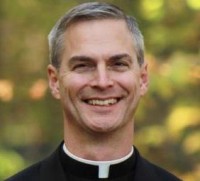 PETE: In A Guide to Christian Meditation you focus on a fundamental basic of faith and that is prayer. Why is prayer so important for the practicing Catholic?
FATHER JOHN BARTUNEK: To put it simply, a healthy prayer life assures ongoing spiritual growth. Spiritual growth depends primarily on a real, personal, faith-based relationship with God. That relationship is prayer. Don’t just take my word for it, take Pope Benedict XVI’s: “What matters most is that you develop your personal relationship with God. That relationship is expressed in prayer” (Yonkers, April 2008).
I should add that this conception of prayer is uniquely Christian. Only in Christ has God become man, and so only in Christ are we able to have such a personal, real, and intimate relationship with God. Prayer in other religious traditions is mostly about doing homage to the divinity (which Christian prayer also does, of course), but lacks a sense of being to grow in friendship with God. And yet, that friendship is what we were created for; it is where we find the fulfillment we yearn for. The only place to find it, in fact. Prayer is the very path of growth in that relationship.
PETE: For those who have not read this book yet what tips can you give for those unsure of how to begin a regular prayer habit?
FATHER JOHN BARTUNEK: I recommend the three D’s: Decide, Divide, and Develop. The first step is to make a firm – I mean VERY firm – decision that a growing prayer life is going to be my number one priority from now on. That may seem unrealistic. But it isn’t. We were made for lasting fulfillment and meaning (aka. Happiness). That can only be found in a living and growing relationship with God. Prayer is the primary expression and exercise of that relationship. Getting some spiritual direction, going on a spiritual retreat, or making a pilgrimage are excellent ways to dig down deep into the soul and plant this decision right in the bedrock of who we are.
That decision moves us logically to the next question: Okay, how do I follow through on that? Here is where the second D, divide, comes in. Divide your time. Divide your schedule. Carve out some God time every day. If you have never done this, start with 15 minutes at the most flexible time of time. Get a journal, a Bible, and a good spiritual book. Start your 15 minutes by writing down some things you are grateful for – an thank-you note to God. The more specific the better. Then ask God to bless this time that you will spend with him (you can do it in your own words, or with the sign of the cross, or an Our Father, or your favorite prayer…). Then open the Bible and/or the spiritual book and read a section, gently, slowly, looking for something that strikes you, that resonates. When you find that, stay with it, mull it over, absorb it, let it nourish your soul. Then go back and read some more… When a few minutes are left, write down the things you want to ask God for – maybe blessings for loved ones, a specific need you have, maybe something that flows out of what you were reading… Finish with a firm resolution to seek to follow Christ between now and your next God time. It’s as simple as that. Having a daily God-time is what you need to give space for God’s grace to work more and more in your life.
Finally, Develop. Look for opportunities to learn more about prayer. Our Catholic tradition is the richest of all. Listen to recorded talks on prayer. Read books on prayer. Go to hear speakers on prayer. Go on an annual retreat. Speak with a spiritual director… If you don’t think you have time for this, you are wrong. So many resources are available now, on so many platforms! Take for example my own online Spiritual Retreat Guides and do-it-yourself Retreat Guide DVDs (like Unleashing the Power of Pentecost, and A Cure for Discouragement). You don’t have to become an expert overnight. You just have to keep taking new steps, even little ones, to discover some of the many, many jewels in the vast treasure house of our Church’s tradition of prayer.
Decide, Divide, Develop – that’s how I recommend getting started on a path of ongoing growth in prayer.
PETE: Your book The Better Part is one I discovered about a year ago. It has become a staple of my own meditation life and certainly of others. You have 300 plus meditations in this fantastic book…quite an under taking. How long did it take to compile this book?
FATHER JOHN BARTUNEK: It depends on what you mean by compile. From when I sit down to write it to when I finished it was about five months. I wrote full time, about seven hours a day. But I wrote it after I had been ordained for a couple of years already. I was in seminary training in my religious order for ten years, then exercised my priesthood for four, and then I wrote that book. The experience was remarkable. It felt like God was giving me the chance to put on paper everything that he had shown me over those fourteen-plus years of discernment, formation, and ministry. I was simply sharing with others everything that had gone into my falling in love with Christ and his Church, and my getting to him and the wisdom of the Gospels.
PETE: We often hear from the clergy what we should be doing for own prayer lives. What does your prayer life as a priest consist of?
FATHER JOHN BARTUNEK: In the first place, every priest is required to pray the Liturgy of the Hours. This is an ancient prayer that weaves together psalms, Scripture passages, spiritual wisdom through the ages, and liturgical prayers. It is divided into different “hours” that we are required to pray at different times of the day. In this way, we keep our own hearts and minds constantly immersed in God’s Word. Altogether, this prayer (also known as the breviary or the Divine Office) will take anywhere between 45 minutes to an hour every day.
Every priest is also encouraged to engage in personal prayer. For me, this consists of an hour of mental prayer (Christian meditation and/or contemplation) each morning, daily Mass, a daily Rosary, two examinations of conscience, a little bit of spiritual reading, and daily adoration of the Eucharist for about half an hour (unless I am traveling and can’t get to adoration). These prayer commitments are shared by all members of my religious order. I also like to prayer the Divine Mercy Chaplet.
Priests are also required to make an annual retreat. For me, this consists of an eight-day silent retreat following the Spiritual Exercises of St. Ignatius of Loyola.
Priests are encouraged to go on retreats as well. I usually have at least one half-day retreat each month.
Those are my basic prayer activities. The whole idea behind these specific times of prayer is to cultivate such a dynamic relationship with God that we gradually begin to live every activity of the day with a more prayerful spirit, in God’s presence and more and more aware of that presence. In that way, as a Christian grows, prayer becomes more and more natural, kind of seamlessly united to everything we do.
PETE: Will you be working on any other books on prayer or are their other projects you will be focusing on?
FATHER JOHN BARTUNEK: Yes, I am hoping to publish a kind of sequel to The Better Part. It will contain meditations on the Acts of the Apostles. I am also hoping to publish soon a sequel to Seeking First the Kingdom: 30 Meditations on How to Love God with All Your Heart, Soul, Mind, and Strength. The sequel will be another 30 meditation book, but it will focus on the other great commandment, How to Love Your Neighbor as Yourself.
PETE: It has been a while since I asked you this question. This is a blog about books. What books are currently on your bookshelf to read?
FATHER JOHN BARTUNEK: I have a bunch of books on Catholic social teaching that I working through (it’s one of the areas of theology that I teach), including Reclaiming Catholic Social Teaching by Anthony Esolen. In the spiritual arena, I am about to dive into Fr Donald Haggerty’s Contemplative Provocations and Iain Matthews’ The Impact of God. In the history category, I am still working through the ten-volume Church history edited by Hubert Jedin. And for literary enrichment, I am just getting into William Blatty’s Legion, a novel that is a kind of sequel to his amazing book, The Exorcist.
____________________________________________________________________________________________________
Other books by Father John Bartunek
Seeking First the Kingdom: 30 Meditations on How to Love God with All Your Heart, Soul, Mind, and Strength

Answers: Catholic Advice for Your Spiritual Questions


Browse Our Archives
Select a Category A Year with Mary A Year with the Angels A Year with the Church Fathers Book News Children's Review Featured CD Giveaway Guest Post Interview Linked Review Media review Movie Review New Releases Off the Shelf Review speakers Teen Review The Clergy Speaks The Laity Speaks The Open Book Podcast Uncategorized
Select a Month October 2018 September 2018 August 2018 July 2018 June 2018 May 2018 April 2018 March 2018 February 2018 January 2018 December 2017 November 2017 October 2017 September 2017 August 2017 July 2017 June 2017 May 2017 April 2017 March 2017 February 2017 January 2017 December 2016 November 2016 October 2016 September 2016 August 2016 July 2016 June 2016 May 2016 April 2016 March 2016 February 2016 January 2016 December 2015 November 2015 October 2015 September 2015 August 2015 July 2015 June 2015 May 2015 April 2015 March 2015 February 2015 January 2015 December 2014 November 2014 October 2014 September 2014 August 2014 July 2014 June 2014 May 2014 April 2014 March 2014 February 2014 January 2014 December 2013 November 2013 October 2013 September 2013 August 2013 July 2013 June 2013 May 2013 April 2013 March 2013 February 2013 January 2013 December 2012 November 2012
Follow Us!
TAKE THE
Religious Wisdom Quiz
What food did God provide for Israel in the wilderness every morning?
Select your answer to see how you score.
Barley Olives Manna Quail
Related posts from The Catholic Book Blogger

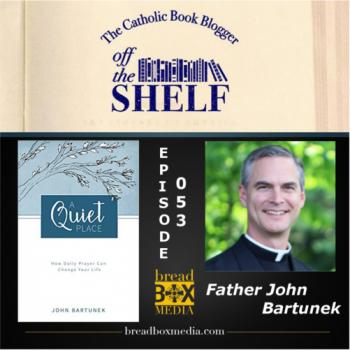
Off the Shelf 053 with Father John Bartunek...
Time to water that dry prayer life
TRENDING AT PATHEOS Catholic

The Parable Of The Sower And The Word...
One of Christ’s most famous parables is that of the sower who...

Rejecting Doom: Christian Hope And Human Action
Christianity is a religion of hope. We are to have hope and...

Why I Choose the Eucharist Over the Sermon
Choose the Eucharist, Not the Sermon What are we supposed to get...

5 Design Elements Found in Spiritually Rooted Homes
Putting Spirituality Into Home Decor Our homes are more than our living...

Credo: A Story of God Told with the...
About 10 years ago, I began to imagine a personal "Credo" that...

The Anatomy of Divine Revelation in Catholic Thought
The claim that God has made Himself known to human beings is...
view all Catholic blogs
Ad-Free & Subscriber Log-In Subscription Support
- About Us
- 2026 Calendar
- Videos
- Podcasts
- Library of World Religions
- Faith In Media Tracker
- Advertise With Us
- Write for Us
- Privacy Policy
- Terms of Service
- Do Not Sell My Data
- Contact Us
- Radiant Digital
- Manage Newsletter Subscriptions
- Unsubscribe From Notifications
- Sitemap
Copyright 2008-2026, Patheos. All rights reserved.
Subscription Support Ad-Free & Subscriber Log-In
Follow Patheos