
BuddhistCatholicContemplativeEvangelicalGeneral ChristianHinduJewishLatter-day SaintMuslimNew VisionsProgressive Christian
Beliefs
- Buddhist
- Catholic
- Contemplative
- Evangelical
- General Christian
- Hindu
- Jewish
- Latter-day Saint
- More Voices
- Muslim
- New Visions
- Pagan
- Progressive Christian
Topics
- Religion News
- Food and Religion
- Sports and Religion
- Religious Art
- Religious Music and Entertainment
- Religious Events
- History and Religion
- Style and Religion
- Politics and Religion
- Women in Religion
- Recreation Outdoors and Religion
- Business Finance and Religion
- Careers Workplace and Religion
- Education and Religion
- Family Parenting and Religion
- Health Fitness and Religion
- Home and Religion
- Relationships and Religion
- Technology and Religion
- Travel and Religion
Columnists
- Buddhist Columnists
- Business Finance and Religion Columnists
- Careers Workplace and Religion Columnists
- Catholic Columnists
- Contemplative Columnists
- Education and Religion Columnists
- Evangelists Columnists
- Family Parenting and Religion Columnists
- General Christian Columnists
- Health Fitness and Religion Columnists
- Hindu Columnists
- History and Religion Columnists
- Home and Religion Columnists
- Jewish Columnists
- More Voices Columnists
- Latter Day Columnists
- Muslim Columnists
- New Visions Columnists
- Nonreligious Columnists
- Pagan Columnists
- Politics and Religion Columnists
- Progressive Columnists
- Recreation Outdoors and Religion Columnists
- Relationships and Religion Columnists
- Religion News Columnists
- Religious Art Columnists
- Religious Events Columnists
- Religious Music and Entertainment Columnists
- Sports and Religion Columnists
- Style and Religion Columnists
- Technology and Religion Columnists
- Travel and Religion Columnists
- Women in Religion Columnists
Resource Library
- 2026 Calendar
- Library of World Religions
- The 100 Most Holy Places on Earth
- Patheos Answers
- Podcasts
- Videos
- Faith Leaders Database
- Anglican Episcopalian
- Bahai
- Baptist
- Buddhism
- Christianity
- Confucianism
- Eastern Orthodoxy
- Hinduism
- Holiness and Pentecostal
- ISKCON
- Islam
- Judaism
- Lutheran
- Methodist
- The Church of Jesus Christ of Latter-day Saints
- New Age
- Paganism
- Presbytarian and Reformed
- Protestantism
- Religion Behind the Scenes
- Roman Catholic
- Scientology
- Shia Islam
- Sikhism
- Sufism
- Sunni Islam
- Taoism
- Zen
- See all religions
Research Tools
 Ad-Free & Subscriber Log-In Subscription Support
Ad-Free & Subscriber Log-In Subscription Support
Follow Patheos 

- Trending:
- Forgiveness
- |
- Marriage
- |
- Consciousness
- |
- Death Penalty
- |
- Election
- |
- Halloween
 The Catholic Book Blogger
-
More
-
2015 Book Reviews
-
- Home
- Catholic
- CBB Interview with Daniel P. Horan
CBB Interview with Daniel P. Horan
Last updated on: February 1, 2015 at 5:30 pm by Pete Socks
CBB Interview with Daniel P. Horan 2015-02-01T11:12:22-05:00 Pete Socks
Patheos Explore the world's faith through different perspectives on religion and spirituality! Patheos has the views of the prevalent religions and spiritualities of the world.
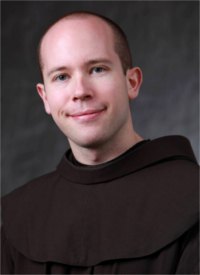 PETE: As a Franciscan friar, a number of your books have an obvious Franciscan theme running through them. When you approached this book on Merton, were you always planning on highlighting the influence of Francis of Assisi on Thomas Merton?
DANIEL P. HORAN: Yes, it was my intention to do precisely that – to highlight the Franciscan themes that ground and inform so much of Merton’s thought, writing, and personal life. I had the idea to write this book many years ago, but at the time none of my publishers were interested. I knew that there were so many ways the Franciscan theological and spiritual tradition shaped Merton’s thinking, but very few people knew about it and talked about it. So, a few years later when an editor at Ave Maria Press invited me to write a book for them, I knew it was the right time to do this. And perhaps that it came later than I had originally planned was the Spirit’s providential way of aligning its release near Thomas Merton’s 100th Birthday this year.
PETE: Thomas Merton is well loved and highly read. He is one of the most influential spiritual writers if not THE most influential in the 20th century. Why do you think his influence still looms large today?
DANIEL P. HORAN: I think one of the major reasons he is so influential, even nearly 50 years after his death, is that he was unabashedly human in his writing. He didn’t pretend to be some perfect, holy person in the way that most people – especially those in his day – view men and women in religious life. He embraced his own struggles, the challenges of prayer and contemplation, the temptations of pride and self-interest, the tension between the virtue of humility and the longing for success. His journey of religious life was wonderfully human, just like yours and mine, and because of that I believe people can easily relate to his experience and appreciate his wisdom.
PETE: What is it you want people to take away from this book? What do you want them to learn about Thomas Merton?
DANIEL P. HORAN: Perhaps there are two things (to keep it short) that I’d want people to take away from this book. The first is a renewed interest in reading Merton’s own writings. I hope my book inspires others to return to Merton’s texts, re-read them if you have before or pick them up for the first time if his work is new to you. The second is that Merton was an incredibly complex and brilliant thinker who was informed my so many diverse traditions and figures. One of the most influential sources for his own spiritual and theological writing was the Franciscan tradition. Almost every one of his major contributions to modern spirituality bears the imprint of some Franciscan influence, it’s exciting and illuminating to follow that line of thinking.
PETE: For those who have not read any of Thomas Merton’s works where do you recommend they start?
DANIEL P. HORAN: This is a great question and I often give three different answers depending on who is asking. The typical suggestion Merton fans give is to read The Seven Storey Mountain, Merton’s 1948 spiritual autobiography. That’s definitely a fine place to begin, but I have found that people today – especially younger people – have a hard time getting excited about the book’s length and style. If someone is looking for an excellent book on prayer, I highly recommend New Seeds of Contemplation, it’s wonderful! If someone is looking for more of Merton’s later reflections on social justice and living the Christian faith in the world, I recommend starting with Conjectures of a Guilty Bystander. In truth, you really can’t go wrong picking up anything of his that you’d find on the local bookstore shelf!
PETE: How has Thomas Merton influenced your own life?
DANIEL P. HORAN: Wow, I don’t know if there’s enough time or space to give that great question its full due. In short: in so many ways! I think that I find myself relating to him differently, but consistently, throughout my journey of life and faith. His struggles with prayer and religious life, his internal drive to write and teach, his wide-ranging interests in so many aspects of the Christian tradition, other faiths, and various other subjects reflect a little of my own experience. His commitment to the Gospel and taking its challenge seriously at each moment and stage of his journey of life, lived at times imperfectly like all of us, is inspiring to me. His example says to me, “hey, you don’t have to be perfect to serve God and your sisters and brothers.” In fact, nobody’s perfect, and that’s ok. God in Christ asks us to, “Come, and follow” Him. When we try to plan and control that journey, we’re bound to miss the point. Merton’s life and work helps me to see what it’s like to embrace an openness to the Spirit’s work in the world and my life.
PETE: I haven’t asked you my signature question lately. This is a blog about books. What is currently on your bookshelf to read?
DANIEL P. HORAN: Well, I’m afraid I have a very boring answer this time around. At the moment, I’m preparing to take my PhD comprehensive exams, so almost everything I’m reading at the moment is related to that. It includes such a variety of books from the Early Christians writers like Irenaeus of Lyon and Athansius, to medieval authors like Hugh of St. Victor, Bonaventure, and Thomas Aquinas, to modern theologians like Karl Rahner, Elizabeth Johnson, and Jürgen Moltmann, just to name a few. I look forward to just a few weeks from now when I may finally be able to pick up a non-comps book for the first time in a long time.
_____________________________________________________________________________________________________
Other Books by Daniel P. Horan:
The Last Words of Jesus: A Meditation on Love and Suffering

Dating God: Live and Love in the Way of St. Francis


The Franciscan Heart of Thomas Merton
Next Post

February 2, 2015 Church Fathers, Day 196: St. Irenaeus tells us to flee to the Church
Browse Our Archives
Select a Category A Year with Mary A Year with the Angels A Year with the Church Fathers Book News Children's Review Featured CD Giveaway Guest Post Interview Linked Review Media review Movie Review New Releases Off the Shelf Review speakers Teen Review The Clergy Speaks The Laity Speaks The Open Book Podcast Uncategorized
Select a Month October 2018 September 2018 August 2018 July 2018 June 2018 May 2018 April 2018 March 2018 February 2018 January 2018 December 2017 November 2017 October 2017 September 2017 August 2017 July 2017 June 2017 May 2017 April 2017 March 2017 February 2017 January 2017 December 2016 November 2016 October 2016 September 2016 August 2016 July 2016 June 2016 May 2016 April 2016 March 2016 February 2016 January 2016 December 2015 November 2015 October 2015 September 2015 August 2015 July 2015 June 2015 May 2015 April 2015 March 2015 February 2015 January 2015 December 2014 November 2014 October 2014 September 2014 August 2014 July 2014 June 2014 May 2014 April 2014 March 2014 February 2014 January 2014 December 2013 November 2013 October 2013 September 2013 August 2013 July 2013 June 2013 May 2013 April 2013 March 2013 February 2013 January 2013 December 2012 November 2012
Follow Us!
TAKE THE
Religious Wisdom Quiz
Who interpreted the "writing on the wall" for King Belshazzar?
Select your answer to see how you score.
Daniel Isaiah Jeremiah Ezekiel
Related posts from The Catholic Book Blogger



CBB Interview with Sonja Corbitt

CBB Interview with Robert Wicks
TRENDING AT PATHEOS Catholic

The Parable Of The Sower And The Word...
One of Christ’s most famous parables is that of the sower who...

Rejecting Doom: Christian Hope And Human Action
Christianity is a religion of hope. We are to have hope and...

Why I Choose the Eucharist Over the Sermon
Choose the Eucharist, Not the Sermon What are we supposed to get...

5 Design Elements Found in Spiritually Rooted Homes
Putting Spirituality Into Home Decor Our homes are more than our living...

Credo: A Story of God Told with the...
About 10 years ago, I began to imagine a personal "Credo" that...

The Anatomy of Divine Revelation in Catholic Thought
The claim that God has made Himself known to human beings is...
view all Catholic blogs
Ad-Free & Subscriber Log-In Subscription Support
- About Us
- 2026 Calendar
- Videos
- Podcasts
- Library of World Religions
- Faith In Media Tracker
- Advertise With Us
- Write for Us
- Privacy Policy
- Terms of Service
- Do Not Sell My Data
- Contact Us
- Radiant Digital
- Manage Newsletter Subscriptions
- Unsubscribe From Notifications
- Sitemap
Copyright 2008-2026, Patheos. All rights reserved.
Subscription Support Ad-Free & Subscriber Log-In
Follow Patheos