
BuddhistCatholicContemplativeEvangelicalGeneral ChristianHinduJewishLatter-day SaintMuslimNew VisionsProgressive Christian
Beliefs
- Buddhist
- Catholic
- Contemplative
- Evangelical
- General Christian
- Hindu
- Jewish
- Latter-day Saint
- More Voices
- Muslim
- New Visions
- Pagan
- Progressive Christian
Topics
- Religion News
- Food and Religion
- Sports and Religion
- Religious Art
- Religious Music and Entertainment
- Religious Events
- History and Religion
- Style and Religion
- Politics and Religion
- Women in Religion
- Recreation Outdoors and Religion
- Business Finance and Religion
- Careers Workplace and Religion
- Education and Religion
- Family Parenting and Religion
- Health Fitness and Religion
- Home and Religion
- Relationships and Religion
- Technology and Religion
- Travel and Religion
Columnists
- Buddhist Columnists
- Business Finance and Religion Columnists
- Careers Workplace and Religion Columnists
- Catholic Columnists
- Contemplative Columnists
- Education and Religion Columnists
- Evangelists Columnists
- Family Parenting and Religion Columnists
- General Christian Columnists
- Health Fitness and Religion Columnists
- Hindu Columnists
- History and Religion Columnists
- Home and Religion Columnists
- Jewish Columnists
- More Voices Columnists
- Latter Day Columnists
- Muslim Columnists
- New Visions Columnists
- Nonreligious Columnists
- Pagan Columnists
- Politics and Religion Columnists
- Progressive Columnists
- Recreation Outdoors and Religion Columnists
- Relationships and Religion Columnists
- Religion News Columnists
- Religious Art Columnists
- Religious Events Columnists
- Religious Music and Entertainment Columnists
- Sports and Religion Columnists
- Style and Religion Columnists
- Technology and Religion Columnists
- Travel and Religion Columnists
- Women in Religion Columnists
Resource Library
- 2026 Calendar
- Library of World Religions
- The 100 Most Holy Places on Earth
- Patheos Answers
- Podcasts
- Videos
- Faith Leaders Database
- Anglican Episcopalian
- Bahai
- Baptist
- Buddhism
- Christianity
- Confucianism
- Eastern Orthodoxy
- Hinduism
- Holiness and Pentecostal
- ISKCON
- Islam
- Judaism
- Lutheran
- Methodist
- The Church of Jesus Christ of Latter-day Saints
- New Age
- Paganism
- Presbytarian and Reformed
- Protestantism
- Religion Behind the Scenes
- Roman Catholic
- Scientology
- Shia Islam
- Sikhism
- Sufism
- Sunni Islam
- Taoism
- Zen
- See all religions
Research Tools
 Ad-Free & Subscriber Log-In Subscription Support
Ad-Free & Subscriber Log-In Subscription Support
Follow Patheos 

- Trending:
- Forgiveness
- |
- Marriage
- |
- Consciousness
- |
- Death Penalty
- |
- Election
- |
- Halloween
 The Catholic Book Blogger
-
More
-
2015 Book Reviews
-
- Home
- Catholic
- CBB Interview with Kevin Vost
CBB Interview with Kevin Vost
Last updated on: May 4, 2014 at 3:30 pm by Pete Socks
CBB Interview with Kevin Vost 2014-04-29T11:25:29-05:00 Pete Socks
Patheos Explore the world's faith through different perspectives on religion and spirituality! Patheos has the views of the prevalent religions and spiritualities of the world.
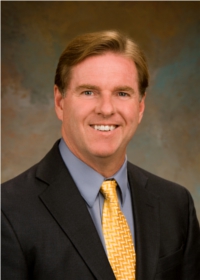 PETE: Your book The One Minute Aquinas: The Doctor’s Quick Answers to Fundamental Questions is quite an ambitious project. How were you able to whittle Aquinas’ thought down to bite size pieces?
KEVIN VOST: My first piece of writing that ever made it to print was an essay for a college English course on Benjamin Franklin’s famous saying, “A penny saved is a penny earned.” It just so happened that I had actually saved and collected many thousands of pennies as a child and a teen, but my twist was to argue that an even more important maxim would be “a minute saved is a minute earned,” since most of us waste plenty of minutes and they’re probably worth more than a penny! (That’s only 60 cents per hour!) I was very intrigued then in 2013 when Charlie McKinney of Sophia Institute Press suggested this new addition to their “One-Minute” series (i.e., The One-Minute Philosopher by Montague Brown & The One-Minute Apologist by Dave Armstrong)
My technique for whittling Aquinas’ thought took its cue in part from those two books, because I originally wrote this book spending exactly one page on each key topic, as in Brown’s book, while occasionally using two facing pages for especially complex issues, as was done in Armstrong’s book.
So, there was my challenge for bite-sizing St. Thomas’s thought. I strove, for most important topics, to address them within one page that would typically include a brief quotation from St. Thomas Aquinas himself, a summary of his explanation, and my own commentary for modern readers. One-to-two page summary charts and diagrams provided another way to bite-size his ideas. My own favorite is a five-pointed star diagram that summarizes St. Thomas’s famous “five ways” to God.
PETE: A second part to the previous question. Thomas Aquinas had some 3000 writings in all. How difficult was the process in selecting your source material from such a wide range of topics available?
KEVIN VOST: St. Thomas wrote an amazing amount of material in his 49 or so years of life on earth. His masterwork, the Summa Theologica, (some prefer to call it the perhaps more accurate Summa Theologiae, but I use the more popular rendering), weighs in at over a million-and-a-half words, or more than 3,000 pages in double-column print — and he never did quite finish it! That book was the source of the great majority of the material in The One-Minute Aquinas, and even though the Summa Theologica is so massive, (over 20 times as many words as in the The One-Minute Aquinas), because St. Thomas was such an amazingly organized writer, in some ways my task was not so difficult. The ST is divided into 38 treatises, each a book in itself by modern standards. I just basically made my way through all of those treatises, condensing the most fundamental material into brief 5-6 page chapters. Since a few of his treatises cover such a vast amount of material, we broke a few up to keep with our one-minute theme, and that’s why The One-Minute Aquinas has 42 bite-sized chapters.
PETE: In your opinion what makes Thomas Aquinas relevant and important to us still today?
KEVIN VOST: Some many reasons, so little time! St. Thomas addresses timeless questions and answers them exceptionally well. The material in Part I of his Summa Theologica, including his logical proofs of God’s existence, though little-understood today, remain as valid as they were in the 13th century. His more extensive treatment of the attributes of God and of the Holy Trinity are and will always be sublime and beautiful.
The material in Part II on human nature, virtue, grace, the gifts of the Holy Spirit, and more floored me as a psychologist, helped lead me to read the first Part, and actually drew me back to Christ and the Church after 25 years as an atheist. Anyone today who thinks belief in God is silly, old-fashioned, or “delusional,” should really dig in and ponder St. Thomas’s writings in all parts of the Summa Theologica.
The material in Part III on Christ, his Church, and his sacraments, are a great blessing for all Catholics, since they are so rich in their respect for Christ and in the way they mine the teachings of Church Fathers, popes, and Councils, to give the reader one “a ha!” experience after the other, showing the origins, development, and reasonableness of the teachings, not to mention their beauty, and how they illustrate God’s boundless generosity and love for us. His writings are also surprisingly practical. Would you like to know how to become a better person, more brave, more caring, happier? Go to Thomas!
PETE: Who do you hope will benefit from this book? Who was your target audience?
KEVIN VOST: I hope everyone will benefit from this book, since it primarily directs readers to the thoughts of the Angelic and Common Doctor of the entire Catholic Church. All of my previous books borrowed in some way from St. Thomas’s thought and I was often asked when doing talks, what book I would recommend to introduce people to St. Thomas. Now, there are a lot of great biographies and introductions out there. I know because one of my hobbies is reading every one I can get my hands on. Still, they tend to either focus on just a relative few of his ideas, or, if summaries, are still so long they tend to be daunting to some readers. So, I hoped to target anyone who was curious to get a nice sample of the vast range of St. Thomas’s thought within about 300 pages or so and in simple, straightforward language.
I can also tell you exactly who one element of the target audience was because I kept the email from my editor, Duncan Maxwell Anderson, from March of 2013, and I don’t think he’ll mind me sharing this: “Guiding theme: We take as our imagined audience a group of 30 middle-school boys who have been herded forcibly into a gym for a 1-hour lecture. What will you say or ask them first to get their attention, and how will you keep it? I leave it to you to decide if they will be texting each other. And whether you will confiscate and stomp on their phones.”
So, it was partly with that poor imaginary captive audience in mind, that we incorporated several features to make the book more inviting, light-hearted, and easy to understand, not only for middle-school boys, but for adults of all ages. Here are a few:
- We started off with the question “Who is the world’s smartest man?” to capture readers’ interest, to lay out some top contenders, to introduce St. Thomas, and to show how it’s not much use to be smart unless you are also wise.
- We re-arranged the order of the “parts” of the Summa Theologica to start with the easier material on human nature, before we dove into the heavy, heady stuff on the nature of God.
- We included a dozen “Dumb Ox Boxes” (building on St. Thomas’s nickname as a student – some of his classmates were not aware that this large, quiet young man had so much going on upstairs!) We use many of these to show how St. Thomas addressed some interesting topics you might not expect to find in his writings and might be surprised by his answers (e.g., “Is is a sin to be boring? Is it a sin to love wine? Is it a sin to be curious? Is it a sin to put yourself down? Is it fair to lay ambush in war? Was it fitting that Eve was made from Adam’s rib? etc.)
PETE: Are there any of Thomas Aquinas’ writings you would recommend for those looking to continue their study on this great saints thought?
KEVIN VOST: Yes, all of them. In the introduction of my book I give brief descriptions of some of his major writings. A reader of The One-Minute Aquinas could use the book as a direct stepping stone into the Summa Theologica. I use over 300 direct quotations and footnotes with their exact location, so if someone finds something of interest he or she can look it up on the Summa itself, which is available free online, at a small fee on electronic readers, and in some beautiful paperback and hardback editions.
Here’s one suggestion if you’d like to start with something practical, intriguing, and most useful for every Christian. Read the bite-sized chapter 13, “Charity: To Love God through our Neighbor,” in The One-Minute Aquinas (only four pages), and then dig into the 100+ page feast on Christian love and charity in the Summa Theologica, Second Part of the Second Part (II-II), Questions 23-46. (Its over-arching theme is how God has called us to be his friends.)
If you’d like to see examples of St. Thomas’s saintly devotion and beautiful literary skill as well, check out his prayers in The Aquinas Prayerbook (Sophia Institute Press.) If you’d like to sample some amazingly deep biblical commentary, dig into his Commentaries on St. John or St. Matthew sometime.
PETE: Time for my signature ending question. This is a blog about books. What is currently on your bookshelf to read?
KEVIN VOST: I love this question, because if there is one thing I love more than writing books, it’s reading them, and I’m always reading several at once. Right now, books I am reading as research for future books I plan to write include St. Thomas Aquinas’s Commentary On the Gospel of John (Aquinas Institute), a very handsome two-volume set just published last year. It will help me write a new memory book, Memorize the Gospels! I have also just started Daniel Schwartz’s Aquinas on Friendship, (Oxford Press), because I have a book on several different classical pagan and Christian views on friendship in mind. I’m also re-reading Seneca’s *Letters (*Loeb Classical Library again for a book I have in mind on Stoic philosophy and Christian thought.
As for books for sheer enjoyment and edification, the next three on my list are Shane Kapler’s *Through, With, In: The Prayer Life of Jesus and How to Make it Our Own (*Angelico Press, 2014), Fr. Dwight Longenecker’s The Romance of Religion: Fighting for Goodness, Truth, and Beauty (Thomas Nelson, 2014), (which I actually came across in a recent Catholic Book Blogger Review!), and Mitchell Kalpakgian’s Virtues We Need Again: 21 Life Lessons from the Great Books of the West (Crossroads Publishing, 2012). (Come to think of it, over the years I’ve had dinner with those three authors. Would that I could with St. Thomas and Seneca!)
And lest I forget, another book I’ll be reading soon when it’s released is Jared Zimmerer’s Man Up! Becoming the New Catholic Renaissance Man (Bezalel Books, 2014). Jared has assembled an all-star cast of a dozen great Catholic authors and I had the honor of writing one of the chapters on the intellectual life for the modern Catholic man.
_____________________________________________________________________________________________
You can learn more about Kevin’s work at his website www.drvost.com/
Previous Post

May 1, 2014
Weekly Giveaway: The One-Minute Aquinas
Next Post
May 7, 2014 CBB Review - Jesus: A Pilgrimage
Browse Our Archives
Select a Category A Year with Mary A Year with the Angels A Year with the Church Fathers Book News Children's Review Featured CD Giveaway Guest Post Interview Linked Review Media review Movie Review New Releases Off the Shelf Review speakers Teen Review The Clergy Speaks The Laity Speaks The Open Book Podcast Uncategorized
Select a Month October 2018 September 2018 August 2018 July 2018 June 2018 May 2018 April 2018 March 2018 February 2018 January 2018 December 2017 November 2017 October 2017 September 2017 August 2017 July 2017 June 2017 May 2017 April 2017 March 2017 February 2017 January 2017 December 2016 November 2016 October 2016 September 2016 August 2016 July 2016 June 2016 May 2016 April 2016 March 2016 February 2016 January 2016 December 2015 November 2015 October 2015 September 2015 August 2015 July 2015 June 2015 May 2015 April 2015 March 2015 February 2015 January 2015 December 2014 November 2014 October 2014 September 2014 August 2014 July 2014 June 2014 May 2014 April 2014 March 2014 February 2014 January 2014 December 2013 November 2013 October 2013 September 2013 August 2013 July 2013 June 2013 May 2013 April 2013 March 2013 February 2013 January 2013 December 2012 November 2012
Follow Us!
TAKE THE
Religious Wisdom Quiz
Which prophet's book names the birthplace of the Messiah?
Select your answer to see how you score.
Amos Micah Jonah Obadiah
Related posts from The Catholic Book Blogger
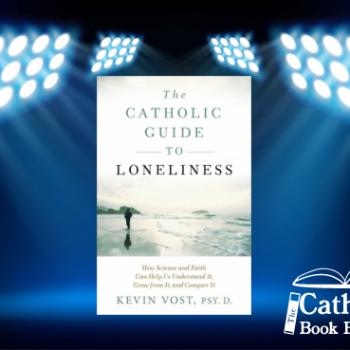
The Catholic Guide to Loneliness
CBB Review - The Seven Gifts of the...
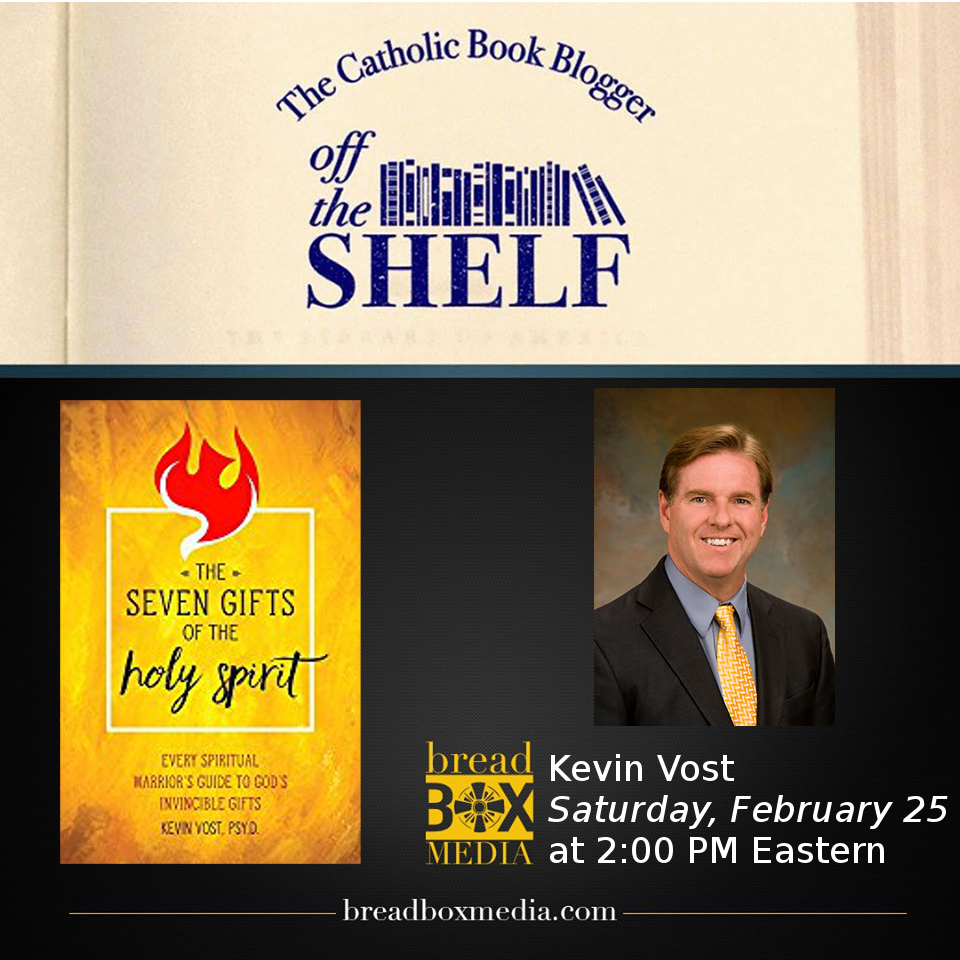
Off the Shelf with guest Kevin Vost
TRENDING AT PATHEOS Catholic

Rejecting Doom: Christian Hope And Human Action
Christianity is a religion of hope. We are to have hope and...

It’s What Comes From Within Which Matters
One of the most difficult things for us to understand is why...

Why I Choose the Eucharist Over the Sermon
Choose the Eucharist, Not the Sermon What are we supposed to get...

5 Design Elements Found in Spiritually Rooted Homes
Putting Spirituality Into Home Decor Our homes are more than our living...

Credo: A Story of God Told with the...
About 10 years ago, I began to imagine a personal "Credo" that...

The Anatomy of Divine Revelation in Catholic Thought
The claim that God has made Himself known to human beings is...
view all Catholic blogs
Ad-Free & Subscriber Log-In Subscription Support
- About Us
- 2026 Calendar
- Videos
- Podcasts
- Library of World Religions
- Faith In Media Tracker
- Advertise With Us
- Write for Us
- Privacy Policy
- Terms of Service
- Do Not Sell My Data
- Contact Us
- Radiant Digital
- Manage Newsletter Subscriptions
- Unsubscribe From Notifications
- Sitemap
Copyright 2008-2026, Patheos. All rights reserved.
Subscription Support Ad-Free & Subscriber Log-In
Follow Patheos