
BuddhistCatholicContemplativeEvangelicalGeneral ChristianHinduJewishLatter-day SaintMuslimNew VisionsProgressive Christian
Beliefs
- Buddhist
- Catholic
- Contemplative
- Evangelical
- General Christian
- Hindu
- Jewish
- Latter-day Saint
- More Voices
- Muslim
- New Visions
- Pagan
- Progressive Christian
Topics
- Religion News
- Food and Religion
- Sports and Religion
- Religious Art
- Religious Music and Entertainment
- Religious Events
- History and Religion
- Style and Religion
- Politics and Religion
- Women in Religion
- Recreation Outdoors and Religion
- Business Finance and Religion
- Careers Workplace and Religion
- Education and Religion
- Family Parenting and Religion
- Health Fitness and Religion
- Home and Religion
- Relationships and Religion
- Technology and Religion
- Travel and Religion
Columnists
- Buddhist Columnists
- Business Finance and Religion Columnists
- Careers Workplace and Religion Columnists
- Catholic Columnists
- Contemplative Columnists
- Education and Religion Columnists
- Evangelists Columnists
- Family Parenting and Religion Columnists
- General Christian Columnists
- Health Fitness and Religion Columnists
- Hindu Columnists
- History and Religion Columnists
- Home and Religion Columnists
- Jewish Columnists
- More Voices Columnists
- Latter Day Columnists
- Muslim Columnists
- New Visions Columnists
- Nonreligious Columnists
- Pagan Columnists
- Politics and Religion Columnists
- Progressive Columnists
- Recreation Outdoors and Religion Columnists
- Relationships and Religion Columnists
- Religion News Columnists
- Religious Art Columnists
- Religious Events Columnists
- Religious Music and Entertainment Columnists
- Sports and Religion Columnists
- Style and Religion Columnists
- Technology and Religion Columnists
- Travel and Religion Columnists
- Women in Religion Columnists
Resource Library
- 2026 Calendar
- Library of World Religions
- The 100 Most Holy Places on Earth
- Patheos Answers
- Podcasts
- Videos
- Faith Leaders Database
- Anglican Episcopalian
- Bahai
- Baptist
- Buddhism
- Christianity
- Confucianism
- Eastern Orthodoxy
- Hinduism
- Holiness and Pentecostal
- ISKCON
- Islam
- Judaism
- Lutheran
- Methodist
- The Church of Jesus Christ of Latter-day Saints
- New Age
- Paganism
- Presbytarian and Reformed
- Protestantism
- Religion Behind the Scenes
- Roman Catholic
- Scientology
- Shia Islam
- Sikhism
- Sufism
- Sunni Islam
- Taoism
- Zen
- See all religions
Research Tools
 Ad-Free & Subscriber Log-In Subscription Support
Ad-Free & Subscriber Log-In Subscription Support
Follow Patheos 

- Trending:
- Forgiveness
- |
- Marriage
- |
- Consciousness
- |
- Death Penalty
- |
- Election
- |
- Halloween
 The Catholic Book Blogger
-
More
-
2015 Book Reviews
-
- Home
- Catholic
- CBB Interview with Father Dwight Longenecker
CBB Interview with Father Dwight Longenecker
Last updated on: March 9, 2014 at 8:30 pm by Pete Socks
CBB Interview with Father Dwight Longenecker 2014-03-08T23:28:13-05:00 Pete Socks
Patheos Explore the world's faith through different perspectives on religion and spirituality! Patheos has the views of the prevalent religions and spiritualities of the world.
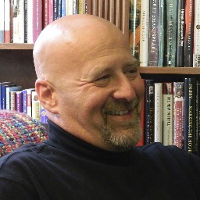
PETE: You have said Romance of Religion took you some 10 years to complete. Why so long and can you take us through the writing process involved?
FATHER DWIGHT LONGENECKER: My writing process is usually pretty quick. I have an idea, then an outline, then I fulfill the outline. This time I got started, then I was interrupted with other life events and other writing projects. I was also unclear at the outline stage where exactly the book was going. As I began to do more work on myth and stories everything began to come into focus more. After I was at the half way point I got bogged down, then after re-thinking, the rest of the outline came together and from then on it was clear sailing. Another part of the writing process for me is the Chestertonian aspect. Many people have observed the Chestertonian style. I realize that writing like Chesterton is considered by some to be either a mistake or bad taste or both. I was willing to take the risk for a real reason. The point of the book is to stand things on their head and help people see religion in a fresh way. One of the ways to do this is to use fresh imagery, fresh language and unexpected metaphors and a surprising linguistic style. I have deliberately used this kind of style because it helps to turn things upside down and bring fresh perspectives. For example, when I am writing about some potentially dull religious topic, by searching for rhyme, alliteration or a fresh comparison or metaphor I am forced to see the subject from a new perspective and as I do, this comes into the writing style and helps the reader to see things in a fresh way.
PETE: What was your inspiration for writing this book? Why this topic now?
FATHER DWIGHT LONGENECKER: I am driven by several factors. First of all, I am weary of religion being restricted to a set of rules and a set of doctrines. This is the perpetual problem of religion–that we codify and reduce what should be an adventure or a love affair to a set of policy guidelines. I wanted to stand that on its head. Secondly, I am annoyed by some of the attacks on religion by those who know very little about both literature and religion. Shallow atheists dismiss religion as being “myth” while fundamentalists insist on defending the “historical truth” of the Bible. In fact the glory of the Sacred text is that it is historical and mythical at the same time. That is the other driving inspiration of the book. The third inspiration is my passion for sharing the faith story. Our stories are the way we evangelize, so by re-charging the stories I hope to re-charge the faith. The fourth has been a desire to reach out to non Catholic Christians and expand my audience. The book is published by Thomas Nelson–a Protestant publishing house so I am pleased to be reaching out and sharing with non Catholics.
PETE: The imagery you used throughout the book was amazing, warriors, lovers, battle, etc. Where did you develop this idea?
FATHER DWIGHT LONGENECKER: I’m glad you enjoyed it. I can’t claim originality. These characters are the stock characters of all the stories we humans tell. Time and again in every culture we continue in many different ways to tell adventures stories, love stories, stories of the battle between good and evil. This is the stuff of human life and therefore it is the reality of religion. When we reduce religion to doctrines and dogmas rules and regulations, we emasculate the great romance. I hope no one will get me wrong. We need the doctrines, dogmas, rules and regulations, but they are the map for the journey. They’re not the journey. They are the music theory and the sheet music on the page. They are not the music.
These mythic characters are important because as we experience the story we learn about life. We identify with the main character and go on the journey with them. When they face difficulties we share them. When they face moral choices we have to make the choice with them. When they face spiritual decisions we come face to face with the spiritual dimension. All of this works within us below the level of explication for most people. This is the level where our religion should also affect us. Therefore, if we limit religion to rules and dogma and a set of principles for being nice people we are not allowing religion to really get down to the depths of who we are, and we do not allow religion to transform us the way it is supposed to.
PETE: What do you hope readers take away from this book?
FATHER DWIGHT LONGENECKER: I hope they will be inspired by the rollicking style and the happy warrior language to embark on their own heroic adventure of faith. Even if their step forward is minimal–that they will see their Christian life as a great adventure or nothing at all. I also hope they will learn more about the Christian faith, how literature and culture fit with the Christian vocation, and how to take a few risks for God.
PETE: You mention CS Lewis and J.R.R. Tolkien many times through this book. What influence have they had on you as Christian and in your conversion to Catholicism?
FATHER DWIGHT LONGENECKER: C.S. Lewis enabled me to embrace an intelligent and intelligible form of Christianity without sacrificing orthodoxy. Unfortunately many who believe in historic Christianity take pride in a certain anti-intellectualism. They are countered by the ‘smart’ people who cast aside historic Christianity as antique and archaic. Lewis shows that a belief in historic Christianity can be reasonable, witty, educated and very smart. J.R.R.Tolkien’s influence is deeper and wider. The influence of his imagination and mythic qualities permeate everything in a deeper but more inarticulate way. This is because of the nature of his work. The Lord of the Rings is a powerfully mythic work. By “myth” I mean that it incarnates truth in such a complete way that it cannot be articulated very well. Instead we experience the truth as we experience the story. Tolkien works like that, and therefore his imagination and method influences me in a very profound, but less easily explained way.
PETE: Time for my signature ending question. This is a blog about books. What is currently on your bookshelf to read?
FATHER DWIGHT LONGENECKER: I always have a good number of books to review. I’m reading a collection of Pope Francis’ writings, Trent Horn’s book on answering atheists, Edward Sri’s Walking With Mary and I’ve got Dean Koontz’ latest on my Kindle reader. I also try to read Dante’s Commedia during Lent each year.
Other titles by Father Dwight Longenecker
Catholicism Pure and Simple

The Quest for the Creed: What the Apostles Really Believed, and Why It Matters

More Christianity: Finding the Fullness of the Faith

Listen My Son: St. Benedict for Fathers

Next Post

March 11, 2014 CBB Review: Saint Francis of Assisi – Gentle Revolutionary
Browse Our Archives
Select a Category A Year with Mary A Year with the Angels A Year with the Church Fathers Book News Children's Review Featured CD Giveaway Guest Post Interview Linked Review Media review Movie Review New Releases Off the Shelf Review speakers Teen Review The Clergy Speaks The Laity Speaks The Open Book Podcast Uncategorized
Select a Month October 2018 September 2018 August 2018 July 2018 June 2018 May 2018 April 2018 March 2018 February 2018 January 2018 December 2017 November 2017 October 2017 September 2017 August 2017 July 2017 June 2017 May 2017 April 2017 March 2017 February 2017 January 2017 December 2016 November 2016 October 2016 September 2016 August 2016 July 2016 June 2016 May 2016 April 2016 March 2016 February 2016 January 2016 December 2015 November 2015 October 2015 September 2015 August 2015 July 2015 June 2015 May 2015 April 2015 March 2015 February 2015 January 2015 December 2014 November 2014 October 2014 September 2014 August 2014 July 2014 June 2014 May 2014 April 2014 March 2014 February 2014 January 2014 December 2013 November 2013 October 2013 September 2013 August 2013 July 2013 June 2013 May 2013 April 2013 March 2013 February 2013 January 2013 December 2012 November 2012
Follow Us!
TAKE THE
Religious Wisdom Quiz
Which letter contains a hymn about Christ emptying Himself and being exalted?
Select your answer to see how you score.
Titus Ephesians Philippians Romans
Related posts from The Catholic Book Blogger

The Mysterious Magi - Mystery Solved!
Off the Shelf 050 with Fr Dwight Longenecker...

TRENDING AT PATHEOS Catholic

Rejecting Doom: Christian Hope And Human Action
Christianity is a religion of hope. We are to have hope and...

It’s What Comes From Within Which Matters
One of the most difficult things for us to understand is why...

Why I Choose the Eucharist Over the Sermon
Choose the Eucharist, Not the Sermon What are we supposed to get...

5 Design Elements Found in Spiritually Rooted Homes
Putting Spirituality Into Home Decor Our homes are more than our living...

Credo: A Story of God Told with the...
About 10 years ago, I began to imagine a personal "Credo" that...

The Anatomy of Divine Revelation in Catholic Thought
The claim that God has made Himself known to human beings is...
view all Catholic blogs
Ad-Free & Subscriber Log-In Subscription Support
- About Us
- 2026 Calendar
- Videos
- Podcasts
- Library of World Religions
- Faith In Media Tracker
- Advertise With Us
- Write for Us
- Privacy Policy
- Terms of Service
- Do Not Sell My Data
- Contact Us
- Radiant Digital
- Manage Newsletter Subscriptions
- Unsubscribe From Notifications
- Sitemap
Copyright 2008-2026, Patheos. All rights reserved.
Subscription Support Ad-Free & Subscriber Log-In
Follow Patheos