
BuddhistCatholicContemplativeEvangelicalGeneral ChristianHinduJewishLatter-day SaintMuslimNew VisionsProgressive Christian
Beliefs
- Buddhist
- Catholic
- Contemplative
- Evangelical
- General Christian
- Hindu
- Jewish
- Latter-day Saint
- More Voices
- Muslim
- New Visions
- Pagan
- Progressive Christian
Topics
- Religion News
- Food and Religion
- Sports and Religion
- Religious Art
- Religious Music and Entertainment
- Religious Events
- History and Religion
- Style and Religion
- Politics and Religion
- Women in Religion
- Recreation Outdoors and Religion
- Business Finance and Religion
- Careers Workplace and Religion
- Education and Religion
- Family Parenting and Religion
- Health Fitness and Religion
- Home and Religion
- Relationships and Religion
- Technology and Religion
- Travel and Religion
Columnists
- Buddhist Columnists
- Business Finance and Religion Columnists
- Careers Workplace and Religion Columnists
- Catholic Columnists
- Contemplative Columnists
- Education and Religion Columnists
- Evangelists Columnists
- Family Parenting and Religion Columnists
- General Christian Columnists
- Health Fitness and Religion Columnists
- Hindu Columnists
- History and Religion Columnists
- Home and Religion Columnists
- Jewish Columnists
- More Voices Columnists
- Latter Day Columnists
- Muslim Columnists
- New Visions Columnists
- Nonreligious Columnists
- Pagan Columnists
- Politics and Religion Columnists
- Progressive Columnists
- Recreation Outdoors and Religion Columnists
- Relationships and Religion Columnists
- Religion News Columnists
- Religious Art Columnists
- Religious Events Columnists
- Religious Music and Entertainment Columnists
- Sports and Religion Columnists
- Style and Religion Columnists
- Technology and Religion Columnists
- Travel and Religion Columnists
- Women in Religion Columnists
Resource Library
- 2026 Calendar
- Library of World Religions
- The 100 Most Holy Places on Earth
- Patheos Answers
- Podcasts
- Videos
- Faith Leaders Database
- Anglican Episcopalian
- Bahai
- Baptist
- Buddhism
- Christianity
- Confucianism
- Eastern Orthodoxy
- Hinduism
- Holiness and Pentecostal
- ISKCON
- Islam
- Judaism
- Lutheran
- Methodist
- The Church of Jesus Christ of Latter-day Saints
- New Age
- Paganism
- Presbytarian and Reformed
- Protestantism
- Religion Behind the Scenes
- Roman Catholic
- Scientology
- Shia Islam
- Sikhism
- Sufism
- Sunni Islam
- Taoism
- Zen
- See all religions
Research Tools
 Ad-Free & Subscriber Log-In Subscription Support
Ad-Free & Subscriber Log-In Subscription Support
Follow Patheos 

- Trending:
- Forgiveness
- |
- Marriage
- |
- Consciousness
- |
- Death Penalty
- |
- Election
- |
- Halloween
 The Catholic Book Blogger
-
More
-
2015 Book Reviews
-
- Home
- Catholic
- CBB Interview with Paul Thigpen
CBB Interview with Paul Thigpen
Last updated on: March 7, 2014 at 10:47 pm by Pete Socks
CBB Interview with Paul Thigpen 2014-03-07T22:47:10-05:00 Pete Socks
Patheos Explore the world's faith through different perspectives on religion and spirituality! Patheos has the views of the prevalent religions and spiritualities of the world.
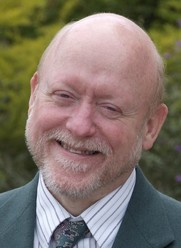 PETE: How difficult is it to compile 365 entries for a devotional book like A Year With the Saints? This would include the saints you chose and the topics for the meditations themselves.
PAUL THIGPEN: My field of scholarship is historical theology, so nearly all the texts from which the readings were selected were in my private library. The great challenge, then, wasn’t how to find the sources; the great challenge was how to decide which sources couldn’t be included!
My final choice of the saints to be quoted reflect several criteria. First, I wanted a good mix of men and women, as well as a wide variety of saints in terms of vocation, historical period, geography, and culture. I also wanted to make sure I included not just many of the most popular saints, but also some little-known saints who have something important to say to us.
Second, my priority was to go deep rather than wide in content. So instead of trying to find a different saint for every day, I often selected multiple passages from one saint. That way, I could offer a rich array of readings from saints whose classic texts, I believe, merit special attention, such as St. Augustine and St. Frances de Sales.
As for the choice of topics: Following the format of the other titles in this series from Saint Benedict Press, even though the book offers a year’s worth of daily readings (365), the topics aren’t tied to the liturgical calendar. Instead, my organizing principle for the topics was to follow, in a rough sort of way, the order of topics in the Catechism of the Catholic Church. The subject matter begins with readings related to the profession of faith, then moves to the celebration of the Christian mystery, then to life in Christ, and finally to Christian prayer.
In addition, as a kind of introduction, the very first reading is an encouragement from St. Basil about the importance of learning from the saints. And as a final word, the last reading is an exhortation from St. Thérèse about striving to become a saint ourselves.
Perhaps the greatest challenge here was to find a good balance between doctrinal topics and practical matters. You’ll find here, for example, a reading about the mystery of God’s nature, but also a reading about people who chatter during Mass!
PETE: What was your goal in compiling this book, and what do you hope readers take away from it?
PAUL THIGPEN: The goal of the Christian life is to become a saint—to be perfected in holiness, to be conformed to Christ, so that we will one day see God face to face and be like Him. As several saints themselves have observed, one of the best ways to move toward this goal is to study the words and lives of the saints, who have already made this journey and want to help us along. So my goal for the book, and my hope for readers, is that they will find here a powerful resource for doing precisely that.
PETE: Why do you feel daily meditation is so important?
PAUL THIGPEN: The practice of daily meditation and prayer has always been recognized as an essential component of spiritual life in the Christian tradition, and in the Jewish tradition as well, from which it springs. The psalmist calls “blessed” the one who “meditates day and night” on God’s words (Ps 1:2). “Every day I call upon You, O Lord” (Ps 88:9). “Every day I will bless You” (Ps 145:2).
PETE: Are there any particular writings of the saints you would recommend for deeper study and reflection?
PAUL THIGPEN: There are so many riches here that I hardly know where to begin! For an honest and intimate spiritual autobiography, read St. Augustine’s incomparable Confessions, or The Story of a Soul by St. Thérèse of Lisieux. For a useful, practical guide to everyday Christian life, read St. Frances de Sales’ Introduction to the Devout Life. If you want to go deeper into mystical theology, read The Interior Castle of St. Teresa of Ávila. And for the serious student of theology, you must begin to make your way carefully through St. Thomas Aquinas’ Summa Theologica.
I should note that some of these titles, and many other writings of the saints, are available from TAN Books, where I have the great pleasure of serving as editor.
PETE: In the introduction of the book you state you converted to Catholicism 20 years ago. Could you share your conversion story with my readers?
PAUL THIGPEN: It’s a bit involved—for the full story, you can read “His Opened Arms Welcomed Me,” a chapter I wrote for the first volume of Surprised by Truth, edited by Patrick Madrid (Basilica, 1994). It’s available online as well in the EWTN archive and other websites.
To summarize: A number of factors converged to bring me, first, from atheism to the Christian faith; and then twenty years later, from life as an Evangelical Protestant pastor into the Catholic Church. But perhaps the most important factor in my second conversion was my study of Church history in a Ph.D. program. As Blessed John Henry Cardinal Newman once said, “To be deep in history is to cease to be Protestant.”
The historical record convinced me that the Catholic Church is the Church Jesus founded, and that the essential Catholic doctrines challenged by Protestants were actually believed and taught by the early Christians—even those who had received the Faith directly from the Apostles. Once I knew that, I also knew that I had to enter the Catholic Church myself.
PETE: Time for my signature ending question. This is a blog about books. What is currently on your bookshelf to read?
PAUL THIGPEN: I’m currently reading the marvelous work of Fr. Vincent McNabb, O.P., an Irish Dominican of the early 20th century who ministered in England. Fr. McNabb was a friend of G. K. Chesterton, Hilaire Belloc, and Monsignor Ronald Knox, all of whom praised him highly. Chesterton once said of him: “He is one of the few great men I have met in my life. … Nobody who ever met or saw or heard Father McNabb has ever forgotten him.”
So far, I’ve read Fr. McNabb’s Life of Our Lord and Oxford Conferences on Prayer. He wrote about 30 books, so I’ll be working my way through his titles for a while!
___________________________________________________________________________________________________
Paul Thigpen, Ph.D., is the editor of TAN Books and the best-selling author, co-author or compiler of forty-one titles. Among his most popular books are The Burden: A Warning of Things to Come and The Rapture Trap: A Catholic Response to End Times Fever. A convert to the Catholic faith, Paul has served the Church as an award-winning journalist, historian, apologist, catechist, and member of the National Advisory Council of the United States Conference of Catholic Bishops. His work has been circulated worldwide and translated into twelve languages. You can learn more about his work at his website http://www.paulthigpen.com/
Next Post

December 30, 2013 New and Notable Releases
Browse Our Archives
Select a Category A Year with Mary A Year with the Angels A Year with the Church Fathers Book News Children's Review Featured CD Giveaway Guest Post Interview Linked Review Media review Movie Review New Releases Off the Shelf Review speakers Teen Review The Clergy Speaks The Laity Speaks The Open Book Podcast Uncategorized
Select a Month October 2018 September 2018 August 2018 July 2018 June 2018 May 2018 April 2018 March 2018 February 2018 January 2018 December 2017 November 2017 October 2017 September 2017 August 2017 July 2017 June 2017 May 2017 April 2017 March 2017 February 2017 January 2017 December 2016 November 2016 October 2016 September 2016 August 2016 July 2016 June 2016 May 2016 April 2016 March 2016 February 2016 January 2016 December 2015 November 2015 October 2015 September 2015 August 2015 July 2015 June 2015 May 2015 April 2015 March 2015 February 2015 January 2015 December 2014 November 2014 October 2014 September 2014 August 2014 July 2014 June 2014 May 2014 April 2014 March 2014 February 2014 January 2014 December 2013 November 2013 October 2013 September 2013 August 2013 July 2013 June 2013 May 2013 April 2013 March 2013 February 2013 January 2013 December 2012 November 2012
Follow Us!
TAKE THE
Religious Wisdom Quiz
Which letter contains a hymn about Christ emptying Himself and being exalted?
Select your answer to see how you score.
Titus Ephesians Philippians Romans
Related posts from The Catholic Book Blogger
Learn persuasion from the Lord; Church Fathers: Day...
Pray for conversions; Church Fathers: Day 348
Welcome the straying when they turn back; Church...
Pray for the straying; Church Fathers: Day 346
TRENDING AT PATHEOS Catholic

Rejecting Doom: Christian Hope And Human Action
Christianity is a religion of hope. We are to have hope and...

It’s What Comes From Within Which Matters
One of the most difficult things for us to understand is why...

Why I Choose the Eucharist Over the Sermon
Choose the Eucharist, Not the Sermon What are we supposed to get...

5 Design Elements Found in Spiritually Rooted Homes
Putting Spirituality Into Home Decor Our homes are more than our living...

Credo: A Story of God Told with the...
About 10 years ago, I began to imagine a personal "Credo" that...

The Anatomy of Divine Revelation in Catholic Thought
The claim that God has made Himself known to human beings is...
view all Catholic blogs
Ad-Free & Subscriber Log-In Subscription Support
- About Us
- 2026 Calendar
- Videos
- Podcasts
- Library of World Religions
- Faith In Media Tracker
- Advertise With Us
- Write for Us
- Privacy Policy
- Terms of Service
- Do Not Sell My Data
- Contact Us
- Radiant Digital
- Manage Newsletter Subscriptions
- Unsubscribe From Notifications
- Sitemap
Copyright 2008-2026, Patheos. All rights reserved.
Subscription Support Ad-Free & Subscriber Log-In
Follow Patheos