
BuddhistCatholicContemplativeEvangelicalGeneral ChristianHinduJewishLatter-day SaintMuslimNew VisionsProgressive Christian
Beliefs
- Buddhist
- Catholic
- Contemplative
- Evangelical
- General Christian
- Hindu
- Jewish
- Latter-day Saint
- More Voices
- Muslim
- New Visions
- Pagan
- Progressive Christian
Topics
- Religion News
- Food and Religion
- Sports and Religion
- Religious Art
- Religious Music and Entertainment
- Religious Events
- History and Religion
- Style and Religion
- Politics and Religion
- Women in Religion
- Recreation Outdoors and Religion
- Business Finance and Religion
- Careers Workplace and Religion
- Education and Religion
- Family Parenting and Religion
- Health Fitness and Religion
- Home and Religion
- Relationships and Religion
- Technology and Religion
- Travel and Religion
Columnists
- Buddhist Columnists
- Business Finance and Religion Columnists
- Careers Workplace and Religion Columnists
- Catholic Columnists
- Contemplative Columnists
- Education and Religion Columnists
- Evangelists Columnists
- Family Parenting and Religion Columnists
- General Christian Columnists
- Health Fitness and Religion Columnists
- Hindu Columnists
- History and Religion Columnists
- Home and Religion Columnists
- Jewish Columnists
- More Voices Columnists
- Latter Day Columnists
- Muslim Columnists
- New Visions Columnists
- Nonreligious Columnists
- Pagan Columnists
- Politics and Religion Columnists
- Progressive Columnists
- Recreation Outdoors and Religion Columnists
- Relationships and Religion Columnists
- Religion News Columnists
- Religious Art Columnists
- Religious Events Columnists
- Religious Music and Entertainment Columnists
- Sports and Religion Columnists
- Style and Religion Columnists
- Technology and Religion Columnists
- Travel and Religion Columnists
- Women in Religion Columnists
Resource Library
- 2026 Calendar
- Library of World Religions
- The 100 Most Holy Places on Earth
- Patheos Answers
- Podcasts
- Videos
- Faith Leaders Database
- Anglican Episcopalian
- Bahai
- Baptist
- Buddhism
- Christianity
- Confucianism
- Eastern Orthodoxy
- Hinduism
- Holiness and Pentecostal
- ISKCON
- Islam
- Judaism
- Lutheran
- Methodist
- The Church of Jesus Christ of Latter-day Saints
- New Age
- Paganism
- Presbytarian and Reformed
- Protestantism
- Religion Behind the Scenes
- Roman Catholic
- Scientology
- Shia Islam
- Sikhism
- Sufism
- Sunni Islam
- Taoism
- Zen
- See all religions
Research Tools
 Ad-Free & Subscriber Log-In Subscription Support
Ad-Free & Subscriber Log-In Subscription Support
Follow Patheos 

- Trending:
- Forgiveness
- |
- Marriage
- |
- Consciousness
- |
- Death Penalty
- |
- Election
- |
- Halloween
 The Catholic Book Blogger
-
More
-
2015 Book Reviews
-
- Home
- Catholic
- CBB Interview with Mike Aquilina
CBB Interview with Mike Aquilina
Last updated on: December 1, 2013 at 8:56 pm by Pete Socks
CBB Interview with Mike Aquilina 2013-12-01T20:56:39-05:00 Pete Socks
Patheos Explore the world's faith through different perspectives on religion and spirituality! Patheos has the views of the prevalent religions and spiritualities of the world.
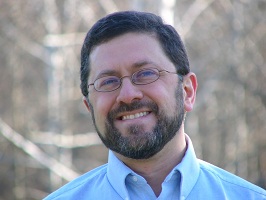 This marks my second interview with author Mike Aquilina. This time a few questions about his contribution to The Fathers of the Church Bible.
PETE: I find the concept of this Bible and your 92 Church Fathers inserts a great combination. Can you give us your thoughts on what makes the Church Fathers so relevant to scripture study.
MIKE AQUILINA: When we talk about the Fathers, we’re talking about the great teachers of the first few hundred years of Christian history. They were the Bible’s first Christian interpreters. They were the first to hear the Gospel preached, and some of them heard it from the Apostles themselves. The Bible was entrusted to the holy Fathers by the Apostles, and the Fathers treasured it. Remember, Christianity was illegal for much of its first three centuries, so those documents had to be kept, copied, protected, and preserved at great risk and great expense.
The world of the Fathers was the world of authors of the New Testament. They lived under the same laws. They played the same sports. They paid taxes to the same authorities. They baked bread according to the same methods, using the same grains. The Fathers had access to information and insights that we, at the distance of two millennia, no longer have — unless we have them from the Fathers.
The Fathers received from the Apostles a tradition of reading the Scriptures, and the passed it on in the Church. What Catholics will find interesting is that the Church the Fathers see in the New Testament looks a lot like the parishes we attend every Sunday. It’s centered on the Eucharist. It has a hierarchy. It offers prayers for the dead and asks the intercession of the saints. Its members make the Sign of the Cross and use holy water. They go to Confession, and they get anointed when they’re gravely ill. The Fathers saw that there are good, sound, biblical reasons for doing these things. The reasons still apply today. The Fathers can teach us to read the Scriptures in the spirit — and the Spirit — in which they were written.
All that is great. But what makes the Fathers most relevant is that they’re such great reads. The centuries are like a great sieve. The lesser works get sifted out, and the stuff that remains is pure gold — Ignatius of Antioch, Justin Martyr, John Chrysostom, Augustine.
PETE: 92 inserts is a lot, but with the wealth of information available to us from the Church Fathers how did you decide what to use?
MIKE AQUILINA: It was a tough call. There’s a ton of good material, but my publisher limited me, at first, to just 88 inserts — one for each key on the piano. That seemed to me like hardly anything. St. John Chrysostom and St. Augustine all by themselves occupy several bookshelves in my office, and almost everything they did was a reflection on Scripture! I could easily have filled my allotted pages with bits and pieces from one or another of those men. But then there are about a hundred more teachers whom our tradition refers to as Church Fathers!
I tried to pick out the best of the best. I tried to make the inserts topical. I tried to make them representative. I wanted readers to come away with a strong sense of the Fathers’ methods of reading the Bible. And I wanted readers to come away with a strong sense of the way the Fathers applied the Bible to everyday life.
I also asked myself: What’s most useful to Catholic readers today? So there’s a lot of material that’s helpful for explaining and defending the Catholic faith. Readers will learn how the earliest Fathers, for example, talked about the Mass. There’s also material relevant to the debates over creation and evolution. There’s an insert on the Bible and purgatory.
I was thrilled when my publisher gave me four more pages, bringing the total to 92!
PETE: If you had to pick out of the documents you used for the inserts, what would be the top 3 you would recommend for further study?
MIKE AQUILINA: Pete, I always try to steer people toward the earliest Fathers — called the Apostolic Fathers: Clement of Rome, Ignatius of Antioch, and Polycarp of Smyrna. They’re our window on classic Christianity, the generation after the Apostles. The Apostolic Fathers’ surviving works are few, and they’re brief, but they’re powerful witnesses for our faith. They testify to Jesus’ divinity and his true humanity. They show us a Church that’s eucharistic and hierarchical. They even call that Church “Catholic.” That’s our Church, and it’s theirs, too. We owe them a debt of gratitude for preserving what they received from the Apostles. Thanks be to God for raising up so many generations of faithful witnesses — raising them up to be our Fathers in the faith.
____________________________________________________________________________________________________
Mike Aquilina is author or editor of more than forty books on Catholic history, doctrine, and devotion. Mike’s career in publishing spans three decades, and hundreds of his articles have appeared in periodicals and journals in the United States and abroad. You can find more about Mike and his work at his website, www.mikeaquilina.com.
Mike Aquilina. The Fathers of the Church Bible
Previous Post

November 28, 2013
Weekly Giveaway - The Fathers of the Church Bible
Next Post
December 2, 2013 The Art of Giving
Browse Our Archives
Select a Category A Year with Mary A Year with the Angels A Year with the Church Fathers Book News Children's Review Featured CD Giveaway Guest Post Interview Linked Review Media review Movie Review New Releases Off the Shelf Review speakers Teen Review The Clergy Speaks The Laity Speaks The Open Book Podcast Uncategorized
Select a Month October 2018 September 2018 August 2018 July 2018 June 2018 May 2018 April 2018 March 2018 February 2018 January 2018 December 2017 November 2017 October 2017 September 2017 August 2017 July 2017 June 2017 May 2017 April 2017 March 2017 February 2017 January 2017 December 2016 November 2016 October 2016 September 2016 August 2016 July 2016 June 2016 May 2016 April 2016 March 2016 February 2016 January 2016 December 2015 November 2015 October 2015 September 2015 August 2015 July 2015 June 2015 May 2015 April 2015 March 2015 February 2015 January 2015 December 2014 November 2014 October 2014 September 2014 August 2014 July 2014 June 2014 May 2014 April 2014 March 2014 February 2014 January 2014 December 2013 November 2013 October 2013 September 2013 August 2013 July 2013 June 2013 May 2013 April 2013 March 2013 February 2013 January 2013 December 2012 November 2012
Follow Us!
TAKE THE
Religious Wisdom Quiz
What book contains the "Suffering Servant" prophecy?
Select your answer to see how you score.
Zechariah Isaiah Lamentations Jeremiah
Related posts from The Catholic Book Blogger

CBB Interview with Sonja Corbitt
CBB Interview with Robert Wicks
TRENDING AT PATHEOS Catholic

Rejecting Doom: Christian Hope And Human Action
Christianity is a religion of hope. We are to have hope and...

It’s What Comes From Within Which Matters
One of the most difficult things for us to understand is why...

Why I Choose the Eucharist Over the Sermon
Choose the Eucharist, Not the Sermon What are we supposed to get...

5 Design Elements Found in Spiritually Rooted Homes
Putting Spirituality Into Home Decor Our homes are more than our living...

Credo: A Story of God Told with the...
About 10 years ago, I began to imagine a personal "Credo" that...

The Anatomy of Divine Revelation in Catholic Thought
The claim that God has made Himself known to human beings is...
view all Catholic blogs
Ad-Free & Subscriber Log-In Subscription Support
- About Us
- 2026 Calendar
- Videos
- Podcasts
- Library of World Religions
- Faith In Media Tracker
- Advertise With Us
- Write for Us
- Privacy Policy
- Terms of Service
- Do Not Sell My Data
- Contact Us
- Radiant Digital
- Manage Newsletter Subscriptions
- Unsubscribe From Notifications
- Sitemap
Copyright 2008-2026, Patheos. All rights reserved.
Subscription Support Ad-Free & Subscriber Log-In
Follow Patheos