
BuddhistCatholicContemplativeEvangelicalGeneral ChristianHinduJewishLatter-day SaintMuslimNew VisionsProgressive Christian
Beliefs
- Buddhist
- Catholic
- Contemplative
- Evangelical
- General Christian
- Hindu
- Jewish
- Latter-day Saint
- More Voices
- Muslim
- New Visions
- Pagan
- Progressive Christian
Topics
- Religion News
- Food and Religion
- Sports and Religion
- Religious Art
- Religious Music and Entertainment
- Religious Events
- History and Religion
- Style and Religion
- Politics and Religion
- Women in Religion
- Recreation Outdoors and Religion
- Business Finance and Religion
- Careers Workplace and Religion
- Education and Religion
- Family Parenting and Religion
- Health Fitness and Religion
- Home and Religion
- Relationships and Religion
- Technology and Religion
- Travel and Religion
Columnists
- Buddhist Columnists
- Business Finance and Religion Columnists
- Careers Workplace and Religion Columnists
- Catholic Columnists
- Contemplative Columnists
- Education and Religion Columnists
- Evangelists Columnists
- Family Parenting and Religion Columnists
- General Christian Columnists
- Health Fitness and Religion Columnists
- Hindu Columnists
- History and Religion Columnists
- Home and Religion Columnists
- Jewish Columnists
- More Voices Columnists
- Latter Day Columnists
- Muslim Columnists
- New Visions Columnists
- Nonreligious Columnists
- Pagan Columnists
- Politics and Religion Columnists
- Progressive Columnists
- Recreation Outdoors and Religion Columnists
- Relationships and Religion Columnists
- Religion News Columnists
- Religious Art Columnists
- Religious Events Columnists
- Religious Music and Entertainment Columnists
- Sports and Religion Columnists
- Style and Religion Columnists
- Technology and Religion Columnists
- Travel and Religion Columnists
- Women in Religion Columnists
Resource Library
- 2026 Calendar
- Library of World Religions
- The 100 Most Holy Places on Earth
- Patheos Answers
- Podcasts
- Videos
- Faith Leaders Database
- Anglican Episcopalian
- Bahai
- Baptist
- Buddhism
- Christianity
- Confucianism
- Eastern Orthodoxy
- Hinduism
- Holiness and Pentecostal
- ISKCON
- Islam
- Judaism
- Lutheran
- Methodist
- The Church of Jesus Christ of Latter-day Saints
- New Age
- Paganism
- Presbytarian and Reformed
- Protestantism
- Religion Behind the Scenes
- Roman Catholic
- Scientology
- Shia Islam
- Sikhism
- Sufism
- Sunni Islam
- Taoism
- Zen
- See all religions
Research Tools
 Ad-Free & Subscriber Log-In Subscription Support
Ad-Free & Subscriber Log-In Subscription Support
Follow Patheos 

- Trending:
- Forgiveness
- |
- Marriage
- |
- Consciousness
- |
- Death Penalty
- |
- Election
- |
- Halloween
 The Catholic Book Blogger
-
More
-
2015 Book Reviews
-
- Home
- Catholic
- CBB Interview with Scott Hahn
CBB Interview with Scott Hahn
Last updated on: March 12, 2014 at 6:53 pm by Pete Socks
CBB Interview with Scott Hahn 2014-03-12T18:53:12-05:00 Pete Socks
Patheos Explore the world's faith through different perspectives on religion and spirituality! Patheos has the views of the prevalent religions and spiritualities of the world.
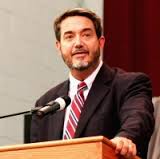 I am admittedly a bit fanboy here but this week I have the pleasure of sharing my recent interview with Dr. Scott Hahn.
PETE: Your new book Consuming the Word, spends some time on the Church Fathers. What lessons do they teach that you feel are the most important for our Church today?
SCOTT HAHN: The Church always speaks of the Fathers as witnesses. They witness to the Apostolic Tradition, the faith handed on by the Apostles. It was the Fathers who produced the canon of Scriptures, and it was the Fathers who instructed the Church in the methods of biblical interpretation employed by Jesus and the Apostles. Their witness is invaluable because it protects us from our tendency to temporal provincialism. We carry within us the presuppositions of our age, and we unconsciously impose them on other ages. The Fathers help us to see the Scriptures with fresh eyes — the eyes of the ancients, the eyes that first looked upon the Word made flesh. Likewise, by referring to these witnesses as “Fathers,” we remind ourselves that, as Catholics, we are members of a family, a divine family, one that spans the centuries, and includes every nation and tribe on earth, just as it reaches from earth all the way into heaven, which is where the Fathers are very much alive, even now, and praying for us.
PETE: Continuing with the theme of Church Fathers, do you have a particular favorite and are there any writings of the Church Fathers you recommend?
SCOTT HAHN: I love them all. In my work I return again and again to St. Irenaeus, for his covenantal approach to salvation history, along with his emphasis on the unity of the Old and New Testaments. Living in the second century, he received the faith from St. Polycarp, who had received it from the Apostle John. So his pedigree and his authenticity are unimpeachable. His work, moreover, is sealed in a sense and authenticated by his martyrdom.
I’m also utterly dependent on the great figures of the fourth and fifth centuries, St. Jerome and St. Augustine, because they taught me an integrated approach to Scripture — a reading that took into account both the literal and spiritual senses, along with the coordination of biblical exegesis and doctrine, as well as liturgy and life.
PETE: What are the highlights in Consuming the Word that you really want readers to sit up and take notice to?
SCOTT HAHN: The New Testament was a sacrament long before it was a document, and the document itself testifies to this fact. Indeed, the only time Jesus ever spoke of “the new covenant/testament” is when he’s instituted the Eucharist (Luke 22:20); and then he commanded his disciples to “do this” – not “write this” – and by “this,” he clearly meant the Eucharist, that is, “the New Testament,” which is precisely what the disciples went about doing for the rest of their lives.
I believe this can be a breakthrough in our dialogue with other Christians who want to follow the New Testament, but who aren’t Catholic – yet.
I demonstrate this painstakingly in the book, with abundant evidence from Scripture and the early Fathers. When you look at the life of the early Church, you see that Scripture and liturgy were inseparable for the first Christians. They should be inseparable for Christians today as well. When one is lost, both are lost. It is in light of each that we understand the other.
PETE: You have written many books, all of which have been well received by the Catholic community. Are there any particular titles you would recommend as “must reads” for those wishing to further understand their Catholic Faith?
SCOTT HAHN: Consuming the Word is a watershed for me, and I think of it as a summary work. If this book defines me, I’ll be happy. But it builds upon certain works that came before, especially The Lamb’s Supper, Letter and Spirit, and Swear to God. For those wishing to go deeper, I would also recommend my more academic works, particularly Kinship by Covenant, The Kingdom of God as Liturgical Empire, and Covenant and Communion: The Biblical Theology of Pope Benedict XVI.
PETE: Are there any books besides your own that you would recommend on the subject of the Church Fathers?
SCOTT HAHN: For those starting out, I recommend Mike Aquilina’s The Fathers of the Church, and for those who are ready to go a little deeper, Robert Louis Wilken’s The Spirit of Early Christian Thought.
PETE: What topic would you like to cover that you have not yet written a book on?
SCOTT HAHN: Don’t get me started. I have a long list of books I want to produce if God gives me the years and the energy.
PETE: Time for my signature ending question. This is a blog about books. What is currently on your bookshelf to read?
SCOTT HAHN: This summer I’m hoping to get through the following six titles, at least: Pope Benedict’s A SCHOOL OF PRAYER: THE SAINTS SHOW US HOW TO PRAY, Brad Gregory’s THE UNINTENDED REFORMATION, John Baptist Ku’s GOD THE FATHER IN THE THEOLOGY OF ST. THOMAS AQUINAS, Mary Eberstadt’s HOW THE WEST REALLY LOST GOD, Robert Spencer’s NOT PEACE BUT A SWORD: THE GREAT CHASM BETWEEN CHRISTIANITY AND ISLAM, and Ryan Topping’s REBUILDING CATHOLIC CULTURE: HOW THE CATECHISM CAN SHAPE OUR COMMON LIFE.
Previous Post

June 17, 2013
Karol from Poland : The Life of John Paul II for Children
Next Post
June 21, 2013 Consuming the Word : The New Testament and the Eucharist in the Early Church
Browse Our Archives
Select a Category A Year with Mary A Year with the Angels A Year with the Church Fathers Book News Children's Review Featured CD Giveaway Guest Post Interview Linked Review Media review Movie Review New Releases Off the Shelf Review speakers Teen Review The Clergy Speaks The Laity Speaks The Open Book Podcast Uncategorized
Select a Month October 2018 September 2018 August 2018 July 2018 June 2018 May 2018 April 2018 March 2018 February 2018 January 2018 December 2017 November 2017 October 2017 September 2017 August 2017 July 2017 June 2017 May 2017 April 2017 March 2017 February 2017 January 2017 December 2016 November 2016 October 2016 September 2016 August 2016 July 2016 June 2016 May 2016 April 2016 March 2016 February 2016 January 2016 December 2015 November 2015 October 2015 September 2015 August 2015 July 2015 June 2015 May 2015 April 2015 March 2015 February 2015 January 2015 December 2014 November 2014 October 2014 September 2014 August 2014 July 2014 June 2014 May 2014 April 2014 March 2014 February 2014 January 2014 December 2013 November 2013 October 2013 September 2013 August 2013 July 2013 June 2013 May 2013 April 2013 March 2013 February 2013 January 2013 December 2012 November 2012
Follow Us!
TAKE THE
Religious Wisdom Quiz
What sacred tent did God command the Israelites to build?
Select your answer to see how you score.
Tabernacle Temple House of David Booth
Related posts from The Catholic Book Blogger
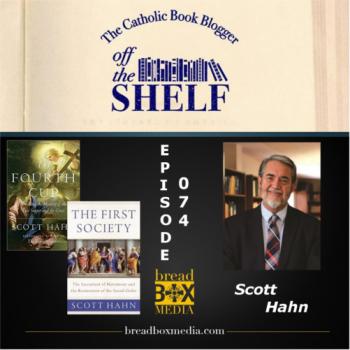
Scott Hahn on Off the Shelf 074

CBB Interview with Sonja Corbitt
TRENDING AT PATHEOS Catholic

Rejecting Doom: Christian Hope And Human Action
Christianity is a religion of hope. We are to have hope and...

It’s What Comes From Within Which Matters
One of the most difficult things for us to understand is why...

Why I Choose the Eucharist Over the Sermon
Choose the Eucharist, Not the Sermon What are we supposed to get...

5 Design Elements Found in Spiritually Rooted Homes
Putting Spirituality Into Home Decor Our homes are more than our living...

Credo: A Story of God Told with the...
About 10 years ago, I began to imagine a personal "Credo" that...

The Anatomy of Divine Revelation in Catholic Thought
The claim that God has made Himself known to human beings is...
view all Catholic blogs
Ad-Free & Subscriber Log-In Subscription Support
- About Us
- 2026 Calendar
- Videos
- Podcasts
- Library of World Religions
- Faith In Media Tracker
- Advertise With Us
- Write for Us
- Privacy Policy
- Terms of Service
- Do Not Sell My Data
- Contact Us
- Radiant Digital
- Manage Newsletter Subscriptions
- Unsubscribe From Notifications
- Sitemap
Copyright 2008-2026, Patheos. All rights reserved.
Subscription Support Ad-Free & Subscriber Log-In
Follow Patheos