
BuddhistCatholicContemplativeEvangelicalGeneral ChristianHinduJewishLatter-day SaintMuslimNew VisionsProgressive Christian
Beliefs
- Buddhist
- Catholic
- Contemplative
- Evangelical
- General Christian
- Hindu
- Jewish
- Latter-day Saint
- More Voices
- Muslim
- New Visions
- Pagan
- Progressive Christian
Topics
- Religion News
- Food and Religion
- Sports and Religion
- Religious Art
- Religious Music and Entertainment
- Religious Events
- History and Religion
- Style and Religion
- Politics and Religion
- Women in Religion
- Recreation Outdoors and Religion
- Business Finance and Religion
- Careers Workplace and Religion
- Education and Religion
- Family Parenting and Religion
- Health Fitness and Religion
- Home and Religion
- Relationships and Religion
- Technology and Religion
- Travel and Religion
Columnists
- Buddhist Columnists
- Business Finance and Religion Columnists
- Careers Workplace and Religion Columnists
- Catholic Columnists
- Contemplative Columnists
- Education and Religion Columnists
- Evangelists Columnists
- Family Parenting and Religion Columnists
- General Christian Columnists
- Health Fitness and Religion Columnists
- Hindu Columnists
- History and Religion Columnists
- Home and Religion Columnists
- Jewish Columnists
- More Voices Columnists
- Latter Day Columnists
- Muslim Columnists
- New Visions Columnists
- Nonreligious Columnists
- Pagan Columnists
- Politics and Religion Columnists
- Progressive Columnists
- Recreation Outdoors and Religion Columnists
- Relationships and Religion Columnists
- Religion News Columnists
- Religious Art Columnists
- Religious Events Columnists
- Religious Music and Entertainment Columnists
- Sports and Religion Columnists
- Style and Religion Columnists
- Technology and Religion Columnists
- Travel and Religion Columnists
- Women in Religion Columnists
Resource Library
- 2026 Calendar
- Library of World Religions
- The 100 Most Holy Places on Earth
- Patheos Answers
- Podcasts
- Videos
- Faith Leaders Database
- Anglican Episcopalian
- Bahai
- Baptist
- Buddhism
- Christianity
- Confucianism
- Eastern Orthodoxy
- Hinduism
- Holiness and Pentecostal
- ISKCON
- Islam
- Judaism
- Lutheran
- Methodist
- The Church of Jesus Christ of Latter-day Saints
- New Age
- Paganism
- Presbytarian and Reformed
- Protestantism
- Religion Behind the Scenes
- Roman Catholic
- Scientology
- Shia Islam
- Sikhism
- Sufism
- Sunni Islam
- Taoism
- Zen
- See all religions
Research Tools
 Ad-Free & Subscriber Log-In Subscription Support
Ad-Free & Subscriber Log-In Subscription Support
Follow Patheos 

- Trending:
- Forgiveness
- |
- Marriage
- |
- Consciousness
- |
- Death Penalty
- |
- Election
- |
- Halloween

- Home
- Catholic
- Religious Music and Entertainment
- Meet Likoudis Legacy Foundation Founder Andrew Likoudis
Meet Likoudis Legacy Foundation Founder Andrew Likoudis
Last updated on: September 23, 2026 at 8:19 am by Mark Wilson
Meet Likoudis Legacy Foundation Founder Andrew Likoudis 2026-09-23T08:19:50-05:00 Mark Wilson
Patheos Explore the world's faith through different perspectives on religion and spirituality! Patheos has the views of the prevalent religions and spiritualities of the world.
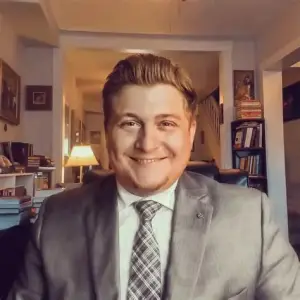
There are some Catholics who help my faith come alive with the knowledge that it is good, true and beautiful. One of those individuals is fellow Patheos Catholic writer Andrew Likoudis. When I go to his Facebook I know that he will write or share something worth reading. There is always a lively discussion to be had as well. He truly is one of the bright lights of Catholic social media. He approaches Catholicism with devout reverent faith and deep reasonable intellect. He merges faith and reason together rather well. He is also very human and ordinary all at the same time. He wrote so much about his life for this interview that I had to split his answers into two separate blog posts. The first part traces his spiritual journey.
The next set of questions revolves around my usual questions about Catholic writing. His answers reflect the deep teaching of our Cath0lic faith. I’m sure you will learn something about being Catholic and about Andrew himself as you…
Meet Likoudis Legacy Foundation Founder Andrew Likoudis
2. What makes a good Catholic writer?
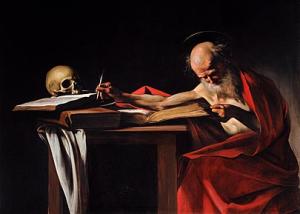
A good Catholic writer should care about getting two things right: the faith and the writing. You have to understand what the Church actually teaches and then be able to explain it clearly and honestly. Catholicism is already deep. There’s no reason to make it harder to understand than it needs to be.
Charity matters too. You should be able to make a strong argument without treating the person you disagree with as an enemy. Some of the best Catholic writing takes an opposing argument seriously enough to understand why an intelligent person might believe it before explaining where it goes wrong. Disagreement doesn’t have to become hostility.
I also think Catholic writers have to resist writing for their own camp. It is very easy, especially online, to learn which phrases will earn applause from people who already agree with you. That may build an audience (or a tribe), but it doesn’t necessarily produce good writing or good thinking. A writer should be willing to complicate his own side’s argument when the truth requires it.
3. What do you enjoy most about Catholic writing?
The material never runs out. When you’re writing about God and the Church, you’re entering a conversation that has been going on for two thousand years. There’s always another question, another controversy, another saint or theologian you haven’t read closely enough.
I also enjoy discovering how interconnected things are. A question that initially looks like it is only about liturgy can suddenly become a question about authority or doctrinal development. A dispute about ecumenism can force you into ecclesiology, history, canon law, or the Fathers. One source leads to another, and sometimes you discover that an argument Catholics are having today was being argued in a surprisingly recognizable form centuries ago.
I also like hearing from readers. Some of the most useful corrections and conversations I’ve had have begun with an email from someone I didn’t know. Writing can be solitary, but publishing something puts the argument into a much larger conversation, and I appreciate that.
4. What inspires your writing?
Mostly the Church, particularly the questions that emerge from her life in history. I’m especially interested in ecclesiology, ecumenism, and liturgy, and a lot of my work comes back to a few basic questions. What is the Church? Why can we trust her? How does she remain herself through historical change? What does Christian unity actually require?
My grandfather is obviously a big part of my inspiration too. He devoted much of his life to the question of reunion between Catholics and the Orthodox, and the Likoudis Legacy Foundation continues that work. Growing up around him gave those questions a personal dimension for me. The division between East and West was never merely an abstract historical problem. It was bound up with my grandfather’s conversion from Greek Orthodoxy, his writing, and eventually my own work.
I’m especially drawn to subjects where the easy answer breaks down under scrutiny. That usually means there is something worth writing about.
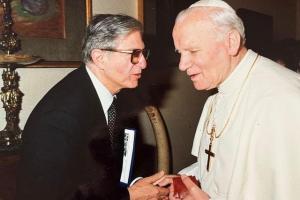
James Likoudis and St. Pope John Paul 2
5. How does your Catholic faith influence your writing?
It’s why I write in the first place. I left the faith when I was younger and eventually found my way back through the open doors of a small Franciscan chapel in Baltimore during a rainstorm. I remember what it was like to be outside the Church and then to encounter her again. So I don’t approach Catholicism simply as a given of my upbringing or a worldview I inherited ready-made. I had to question it, leave it, and eventually decide whether I believed it was actually true.
But returning also meant figuring out what was actually essential to the faith and what I had inherited alongside it without necessarily being essential to it. That distinction has become enormously important to me. Catholics can sometimes absolutize things that are contingent, cultural, disciplinary, or in some cases not really part of the faith at all. When those things are presented as though they were Catholicism itself, they can become real obstacles both to evangelization and to someone trying to find his way into the Church.
That is one reason tradition and reform are recurring themes in my writing. My Substack is called Tradition & Renewal l for a reason. Tradition matters because Christianity is something received, not something we reinvent for ourselves. But renewal matters too. Part of the Church’s task in every age is to present what is perennial in a way that allows people to encounter it as something living rather than static, stuffy, or dry.
For me, renewal is partly about that kind of re-enchantment. It means helping people see the depth, beauty, intellectual richness, and spiritual vitality of Catholicism, especially when the version they have encountered has obscured those things. Sometimes that requires recovering something that has been neglected. Sometimes it requires reforming something genuinely in need of reform. And sometimes it simply requires distinguishing the faith itself from things Catholics have become accustomed to treating as though they were the faith. I’ve encountered that tendency particularly in some traditionalist circles, where particular disciplines, customs, theological opinions, or expressions of the faith can take on an absoluteness that Catholic tradition itself does not give them. Ironically, I think a deeper understanding of tradition can be the corrective.
That experience also affects how I approach disagreement. I have held beliefs I now think were wrong, sometimes very confidently. Remembering that is useful. It makes it harder to reduce someone to the worst version of his argument or assume that because I can see a problem in his reasoning, I understand everything that brought him to it. Truth matters, but so does the person trying to find it.
6. Which of your books are you most proud of and why?
Probably Faith in Crisis: Critical Dialogues in Catholic Traditionalism, Church Authority, and Reform. It was the most ambitious project I had undertaken, and I started it with little more than an idea and the confidence that I could pull the right people together to make it work.
It began in August 2023 when I reached out to a handful of scholars I knew through my grandfather’s network and my own. I had no publisher or institutional apparatus behind me. I had an idea for a relatively modest book on magisterial authority, radical traditionalism, and fundamentalism, and a conviction that some of the questions Catholics were fighting about online deserved much more serious answers than they were getting.
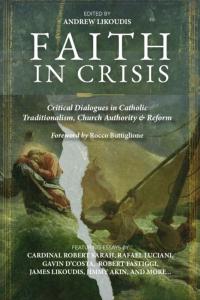
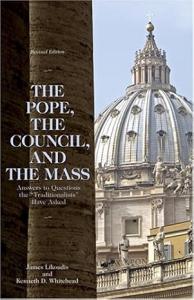
From the beginning, I saw it as a continuation of my grandfather’s The Pope, the Council, and the Mass, which he co-authored with Kenneth Whitehead during the Lefebvre crisis. Even the basic architecture follows the same threefold concern: the papacy and Church authority, Vatican II, and the liturgy. The controversies had changed in form, but the deeper questions were remarkably similar. Can Catholics trust the pope and the Magisterium? How should Vatican II be understood in relation to the tradition that preceded it? What does legitimate reform look like, and how should Catholics respond when they think something has gone badly wrong?
What had changed dramatically was the environment. My grandfather was answering these questions through books, journals, correspondence, and Catholic organizations. By the time I began Faith in Crisis, the same disputes were moving through social media, YouTube, podcasts, and online communities at extraordinary speed. I wanted to continue the conversation he and Whitehead had entered decades earlier, but for a new generation.
The project grew from what I initially imagined as perhaps ten chapters into a forty-chapter book with more than thirty contributors. Robert Fastiggi and Pedro Gabriel, MD, alone contributed six essays between them, and I ended up writing four chapters myself in addition to the preface, introduction and postscript. That gave me the chance not only to edit other people’s work but to shape the argument of the book from beginning to end.
Some of the contributions still stand out to me especially. My friend Andrew Mioni opens the volume with an analysis of the crisis Vatican II was actually called to address. Luis Dizon dismantles the claim that Pope Francis worshipped Pachamama. Fr. Francis Tiso, one of my favorite writers, takes up Assisi and interreligious dialogue. Fr. Bernard Mulcahy, O.P., contributed a beautiful chapter on obedience. Gavin D’Costa addresses traditionalist objections to Catholic teaching on the Jewish people, which feels especially important at a moment when antisemitism is again becoming disturbingly visible, including in some traditionalist Catholic spaces.
Cardinal Cardinal Robert Sarah’s contribution had a different pastoral purpose. In The Road Ahead: A Call for True Ecclesial Unity, he tried to offer solace and guidance to Catholics wounded or disoriented by Traditionis Custodes, while drawing heavily on Pope Francis’s Desiderio Desideravi. I appreciated that because it did not simply reopen the argument over the older liturgy. It tried to help people remain rooted in the Church, receive the liturgy as the Church offers it, and move toward unity rather than allowing pain or resentment to harden into estrangement.
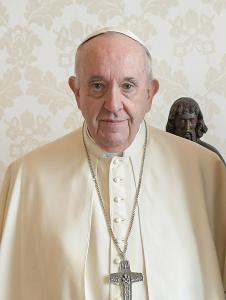
Il Presidente della Repubblica Sergio Mattarella incontra Papa Francesco
That range mattered to me. I never wanted the book to be a polemic in which thirty people all said the same thing. I wanted serious Catholic thinkers approaching difficult questions from different angles, with room for disagreement within the bounds of the faith. Fr. Carter Griffin captured that well in his endorsement when he wrote, “I don’t agree with everything in this anthology. And I think that’s the point.”
What makes me proudest is that the final book became much larger than my own perspective. It also received an imprimatur from Archbishop Archbishop William Lori. and a foreword from Rocco Buttiglione , endorsements from a cardinal and a senior Vatican official, and it brought together theologians, clergy, scholars, apologists, and writers I respected. But it still bears my fingerprints throughout. I conceived it, assembled the contributors, structured the argument, edited the volume, wrote seven pieces of it, and carried it through publication.
There is also something especially meaningful about the fact that my grandfather’s final essay appears in it, a retrospective on the liturgical reform. He spent much of his life defending Vatican II, the papacy, and the Church’s capacity for authentic reform. In that sense, Faith in Crisis is not merely a book I edited. It is a continuation of work he began decades before me, but carried forward in my own voice and for a different Catholic moment.
Some of the other contributors include Jimmy Akin, Mike Aquilina, Timothy O’Malley, James L. Papandrea, Laura Vander Vos, Henry Matthew Alt, MA, Dave Armstrong, Fr. Matthew Mary Bartow, MFVA, Mike Lewis, MA, Michael Lofton, MA, and more.
7. What theological subject interests you most?
Ecclesiology, without question. What fascinates me is the intersection between the Church’s divine constitution and her very human existence in history. Catholicism makes an extraordinary claim about itself. The Church is not simply a community trying to preserve Christian ideas as faithfully as it can. Christ established her, and the Holy Spirit genuinely guides and preserves her through history. And yet that same Church is governed and inhabited by fallible human beings, developing her language, institutions, disciplines, and theological understanding over time.
A lot of my interest in doctrinal development comes from trying to sift those things properly. What belongs to the substance of the faith itself, and what is historically contingent or human? Even among the latter, what carries genuine ecclesial authority and therefore cannot simply be dismissed as a Church leader’s opinion? How can something develop considerably in its formulation or application while remaining substantially the same doctrine or a development of it?
I think the Holy Spirit is especially important here. Catholics affirm his guidance of the Church almost automatically, but I’m not sure we always know what we mean by that. It can become something we pay lip service to and then effectively bracket when we actually interpret the Church’s history. Part of that may be the secular intellectual atmosphere we inhabit, which trains us to explain institutions almost entirely through human causes. But I also think pneumatology, the theology of the Holy Spirit, has often been less developed in mainstream Catholic theological consciousness than Christology or ecclesiology. The Holy Spirit is the third Person of the Trinity, but he can sometimes function almost like an afterthought in the way Catholics imagine the Church.
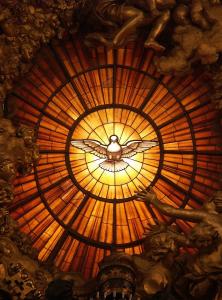
Minolta DSC
Taking his role seriously changes the ecclesiological question. If the Holy Spirit really guides the Church, that cannot mean merely that he occasionally intervenes to prevent a pope or council from formally defining heresy. His presence has to mean something for the Church’s actual life in history, for her reception and transmission of revelation, her doctrinal development, her worship, and her continuing ability to recognize and articulate the faith entrusted to her. At the same time, none of that eliminates human freedom, contingency, bad judgment, sin, or the need for reform. Understanding how those two realities coexist is one of the things I find most fascinating.
That is where my interest in indefectibility comes from. What exactly has Christ promised to preserve in the Church, and how does the Holy Spirit accomplish that preservation through a Church that remains thoroughly human? How do we distinguish legitimate development, authoritative but reformable judgments, historical contingencies, prudential failures, and corruption from something that would actually constitute a failure of the Church herself?
Ultimately, these are epistemological questions too. If Christianity is true, it matters not only that God has revealed himself, but how we can reliably know what belongs to that revelation amid two thousand years of historical development. Sifting the divine from the contingent without either divinizing everything the Church has ever done or reducing her history to purely human causes is probably the theological problem I find most interesting.
8. Is there a particular Scripture passage that has influenced you?
Christ’s prayer for Christian unity in John 17 has probably shaped me more than any other passage, especially “that they may all be one.” It’s difficult to spend much time thinking about the divisions among Christians without returning to that prayer. Christian unity isn’t simply an interesting theological project or something the Church can pursue when circumstances are favorable. It is something Christ himself prayed for—in fact the last prayer or his public ministry, prior to His Passion.
What strikes me is that the prayer connects unity with witness. Christ prays for his disciples to be one so that the world may believe. That makes Christian division more than an internal ecclesiastical problem. Our divisions obscure something Christianity is supposed to reveal about God and about the reconciliation made possible in Christ.
That is one reason ecumenism has become such a central part of my work. The theological questions matter enormously, and genuine unity cannot be purchased by pretending differences do not exist. But the purpose of resolving those differences is not simply to win an argument about which side was right. It is ultimately to recover the communion Christ wills for his Church.
9. What are you working on now?
Several things. The Likoudis Legacy Foundation is preparing the inaugural issue of The Kydones Review, our journal devoted to Christian unity and Catholic-Orthodox reconciliation. Its first theme is “Christian Unity in a Fragmented Age.” I’m also continuing the Foundation’s work of bringing neglected texts, like the recent Congar book, back into print and developing several other writing and editing projects.
Outside of that, I’m continuing my own writing and journalism, and I run a small web design studio that has increasingly given me the chance to work with Catholic writers, artists, musicians, organizations, and other creatives. I like having several different kinds of work going at once. They exercise very different parts of my brain.
10. Who is your favorite saint?
St. Faustina Kowalska. More than anything, it is her emphasis on Divine Mercy.
When I look back at the years when I was floundering in relativism, postmodernism, nihilism, and sin, I’m very conscious that I was living withou
t the sacramental life of the Church and without really understanding how much I needed God’s mercy. I thought I was searching intellectu
ally, and I was, but there was also a deeper spiritual disorder underneath it. I wasn’t simply trying to solve an argument. I needed to be rescued.
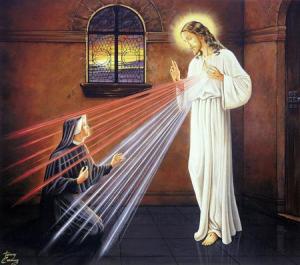
Reading Faustina’s Diary gave me a language for understanding that. I also read St. Thérèse of Lisieux, and the two of them developed in me a much deeper sense of trust in God and a more serious life of prayer. Mercy stopped being an abstraction. I came to see that God had been merciful to me while I was still very far from him.
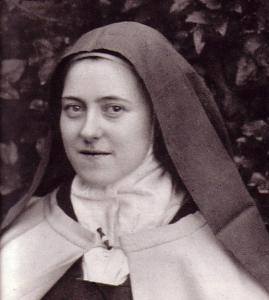
St. Catherine of Siena is another favorite. I’m drawn to her intensity, courage, and fierce love for the Church. St. Vincent Ferrer is up there too. Interestingly, these two contemporaries of one another followed two rival popes, well… one real and one antipope.
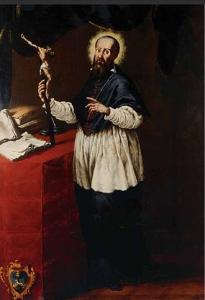
Among male saints, though, St. Francis de Sales may be my favorite. I find his combination of prudence and gentleness particularly important today. We are living through a moment when some models of masculinity are shaped by red-pilling, machismo, and the idea that strength has to mean stoicism or even hardness of heart. Francis de Sales presents a very different model. His gentleness was not weakness or passivity. It was disciplined strength, patience, self-command, and prudence. St. Joseph represents something similar: quiet strength without the need to make his masculinity a performance.
I’m growing in my appreciation for St. Maximilian Kolbe as well. He is my Confirmation saint, and for years the obvious thing about him to me was his martyrdom. Again, I never really resonated with his circumstances at Auschwitz. Increasingly, though, I’m more fascinated by his evangelism: the scale of what he built at Niepokalanów, his use of modern media, the Militia Immaculatae, and his extraordinary ambition to bring people to Christ through the Immaculata. His death was heroic, but I think concentrating on the manner of his death can sometimes obscure just how creative and energetic his apostolate was.
11. Who is your favorite living Catholic writer?
Probably Jacques Philippe. There are theologians whose work I cite more often and writers whose subjects overlap more directly with my own, but Philippe has affected the way I actually think and live.
What I admire about him is his ability to write simply without becoming simplistic. He can take questions about freedom, prayer, interior peace, suffering, or trust in God that have occupied Christian spiritual writers for centuries and make them immediately intelligible without flattening them into self-help. That is much harder than making a subject sound complicated.
I also think I need writers like that precisely because so much of my own work is argumentative. I spend a lot of time thinking about controversies, distinctions, historical problems, authority, and competing theological claims. Philippe is a useful reminder that theology is ultimately supposed to lead somewhere beyond having the correct position in an argument. The Christian life has to be lived.
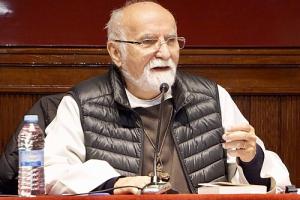
Diócesis de Vitoria / Gasteizko Elizbarrutia – Jacques Philippe | Diócesis de Vitoria / Gasteizko Elizbarrutia | Flickr
12. If you could have lunch with one deceased writer, who would it be?
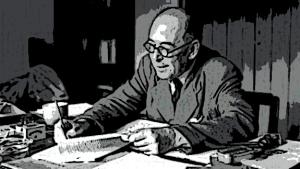
C. S. Lewis. I’d want a long lunch in an English pub, with whatever he ordered. I’d probably spend most of it asking about friendship, imagination, conversion, and what he thinks Catholics still misunderstand about Protestants and Protestants misunderstand about Catholics.
I’d also want to talk to him about the modern technological world. Lewis was remarkably perceptive about the temptation to reduce human beings to things that can be managed, conditioned, or remade. I’d be curious what he would make of artificial intelligence, transhumanism, social media, and a culture in which so much of our lives now takes place through screens.
Mostly, though, I’d want to listen. There are enough imaginary conversations with C. S. Lewis in books already.
13. Name a favorite movie/tv show or music you find worth sharing with others.
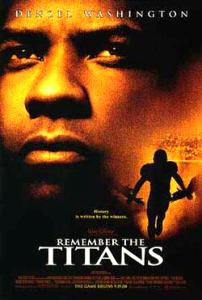
For movies, Remember the Titans is probably the one I’d pick. It’s a genuine tear-jerker, its musical score is also sensational, it’s full of the kind of motivation that inflames your heart, and it’s based mostly on real events. Martin Scorsese’s Silence, National Treasure, Inception, and Jumper are all up there. They are all very different movies.
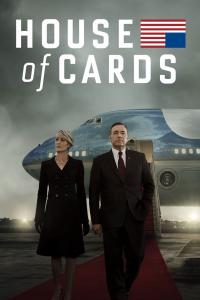
For television, Suits, with Ozark and House of Cards close behind. I appreciate the dramatic maneuvering of the protagonists in these shows.
Musically, my tastes make even less sense. Two of my favorite artists are Jacob Collier and Kendrick Lamar. I also love Renaissance polyphony, especially their soaring harmonies and dissonances. Gregorian chant in general can feel a little monotone to me, but Hildegard von Bingen is an exception. Her music has a mystical quality that I really love.
14. If one of your books could be made into a movie, which would you choose, and who would play the lead?
Most of my books would make terrible movies. I don’t think anyone is waiting for the cinematic universe of Catholic ecclesiology.
But if I can cheat and choose just one part of a book I edited, I’d choose the autobiography of Demetrios Kydones. His life has almost everything you would want in a historical drama. He was a fourteenth-century Byzantine statesman and intellectual caught between East and West as Byzantium was collapsing around him. His encounter with Latin theology eventually led him into communion with Rome.
You have Constantinople, Italy, theological controversy, imperial politics, friendship, conversion, and the approaching Ottoman threat. More importantly, you have a man forced to ask what loyalty to truth will require of him when truth begins pulling him away from the intellectual and religious world that formed him, jeopardizing his career and even life in the process. I haven’t decided who should play him, but I’m leaning toward Oscar Isaac or an Andrew Garfield with long hair. Andrew’s performance in Silence was Oscar-worthy, and I think portraying the interior struggle Kydones must have faced is essential.
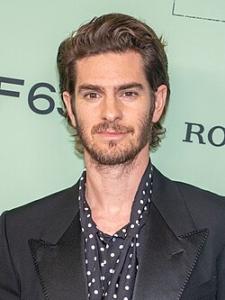
Garfield in 2025
15. What historical period or event fascinates you most?
Late Byzantium, especially the fourteenth century leading into the Council of Florence.
Demetrios Kydones is the main reason why. He was not simply a theologian commenting from the sidelines. He was deeply embedded in imperial politics, serving as mesazon, effectively one of the emperor’s chief ministers and diplomatic advisers, first under John VI Kantakouzenos and later under a rival emperor, John V Palaiologos. Kydones handled imperial correspondence, received ambassadors, dealt with Western affairs, and became one of the emperor’s key intermediaries with Rome and the Latin West.
His intellectual life was just as complicated. One of his early teachers and spiritual mentors was Nilus Kabasilas, who initially encouraged his engagement with Thomas Aquinas. Kydones eventually moved in a very different theological direction than Kabasilas anticipated, however, and later wrote against positions Kabasilas had defended. There is something fascinating about seeing a student eventually become the theological opponent of a man he had once regarded as a mentor.
His younger brother Prochoros makes the story even more interesting. Prochoros was a monk on Mount Athos and, like Demetrios, became deeply engaged with Latin scholastic theology. He translated Augustine and Aquinas and became a fierce critic of Palamism. His views eventually brought him into direct conflict with the Byzantine ecclesiastical establishment, and his condemnation in 1368 deeply affected Demetrios, who defended his brother and attacked the proceedings against him.
So Kydones was living several lives at once. He was the emperor’s man at court, a diplomat trying to secure Western assistance against the growing Ottoman threat, a translator introducing Aquinas to the Greek world and at odds with his longtime mentor, a brother watching Prochoros come under ecclesiastical condemnation, and eventually a Byzantine intellectual who entered communion with Rome while remaining culturally and politically Byzantine.
His story refuses all of the neat categories people sometimes impose on East and West. He was not simply “Latin” or “Greek,” “political” or “theological.” His political obligations, friendships, family ties, intellectual discoveries, and religious convictions were all entangled.
By the time of the Council of Florence in 1439, Kydones had been dead for several decades, but many of the questions he had spent his life wrestling with had become the central questions of the age. The Greek and Latin delegations confronted the Filioque, purgatory, unleavened bread, and above all papal primacy.
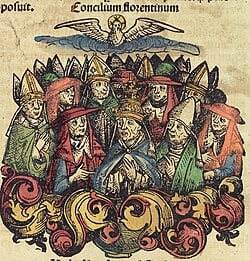
Council of Florence, from the Nuremberg Chronicle by Hartmann Schedel
And what fascinates me most is that unity was, at least formally and for a moment, actually achieved. Laetentur Caeli was signed by nearly the entire Greek delegation, and the council proclaimed the reunion of East and West. The union later collapsed in the face of resistance in Byzantium, but that does not make Florence simply a failed council. For a brief period, after centuries of estrangement, Catholics and Greeks really did reach an agreement, but this moment shows the necessity also of the reception of agreement, on the ground.
That raises much harder questions than the usual story of an inevitable East-West divide. What constitutes genuine reception of a council? How much of the later rejection was theological, and how much was shaped by politics, anti-Latin memory, cultural identity, and the desperation of an empire approaching collapse?
This interview was published on September 23, 2026
The day these other Historical Trivia events happened
1122 – Pope Callixtus II and Holy Roman Emperor Henry V agree to the Concordat of Worms to put an end to the Investiture Controversy.
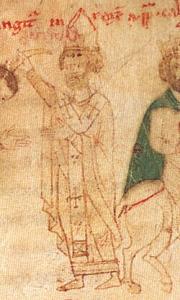
allixtus II as depicted in the Liber ad honorem Augusti by Peter of Eboli, 1196
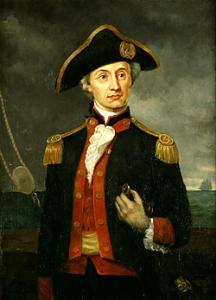
1779 – American Revolutionary War: John Paul Jones, naval commander of the United States, on board the USS Bonhomme Richard, wins the Battle of Flamborough Head
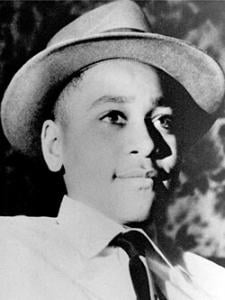
1955 – An all-white jury in Mississippi finds Roy Bryant and J. W. Milam not guilty in the torture-murder of 14-year-old African American boy Emmett Till.
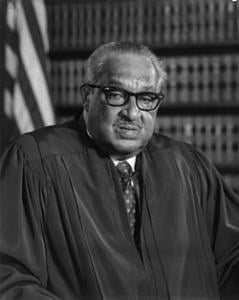
1961 – U.S. President John F. Kennedy nominates African American civil rights lawyer Thurgood Marshall to the Court of Appeals for the Second Circuit,[25] although pro-segregation Southern senators manage to delay his confirmation until September 11, 1962.
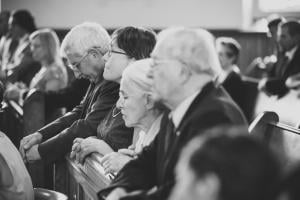
2016 – Andrew’s godfather Paul Likoudis’ passes away.
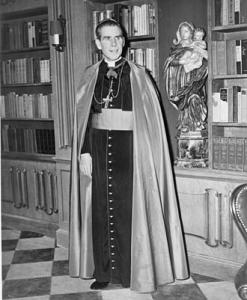
2026 – Day before the Beatification of Fulton Sheen
16. Is there a project you would especially like readers to know about?
I’m currently writing what I believe will be the first comprehensive book devoted to the indefectibility of the Catholic Church, To His Face: Indefectibility and the Problem of Dissent. There have been shorter works treating particular dimensions of indefectibility, but for a doctrine so foundational to Catholic ecclesiology, I have not found a comprehensive book-length treatment of the doctrine itself.
Indefectibility matters because it is one of the conditions that makes unconditional trust in the Church as a teacher intelligible in the first place. Catholics do not believe merely that the Church has usually been reliable, or that her teachings deserve confidence until sufficient evidence appears against them. The claim is much stronger. Christ established a Church, entrusted revelation to her, and promised that she would endure in the truth through the assistance of the Holy Spirit.
But indefectibility also functions as a bulwark. It places real limits on what the Church could ever teach or become.
There are developments Catholics may find surprising, difficult, or even initially hard to reconcile with earlier formulations. There are prudential judgments, disciplines, pastoral strategies, theological emphases, and non-definitive teachings that can develop or be reformed. But there are also things the Church simply could not do without ceasing to be what she claims to be.
The Church could not one day teach that there are four Persons in the Trinity. She could not reverse the divinity of Christ, deny the Resurrection, or declare that the Eucharist is merely symbolic after definitively teaching otherwise. Nor could she simply overturn doctrines such as the indissolubility of a valid consummated sacramental marriage and announce that what had previously been taught as belonging to the deposit of faith was false all along.
If that were possible, Catholicism would become epistemologically unstable. Catholics would have no principled reason to trust any doctrine as finally secure, because any teaching could theoretically be reversed by a future ecclesial authority.
That is why I think indefectibility is more important than it sometimes sounds. It is not merely a defensive proposition saying that the Church will somehow continue to exist until the end of time. It is a claim about the reliability of the Church as the historical bearer of revelation.
At the same time, the doctrine cannot be inflated until everything the Church has ever done or said becomes irreformable. That would make historical development almost impossible to explain. The real challenge is identifying the boundaries correctly. What belongs to the deposit of faith? What has been definitively taught? What is authoritative but reformable? What belongs to discipline, prudence, theological opinion, or historically conditioned expression? And what exactly does the Holy Spirit guarantee through all of those distinctions?
That is why the book becomes a work of religious epistemology as much as ecclesiology. If Christ established a Church and promised to preserve her in the truth, then indefectibility tells us both why Catholics can trust the Church and why there are certain lines the Church herself can never cross.
In a way, that brings me back to the question I have been asking since I was a teenager: how do you actually know that what you believe is true?
Learn More about Andrew
Andrew Likoudis — Catholic Scholar, Editor & Consultant
Want to Be Interviewed Also?
The Catholic Bard Wants To Interview You! |
Interview Questions For My Catholic Blog
Meet More Catholic Writers
A Link List To The Catholic Bard’s Meet The Writer Series Part 2
Religious Music and Entertainment
Previous Post
September 21, 2026
The Spiritual Journey of Catholic Writer Andrew Likoudis
Next Post
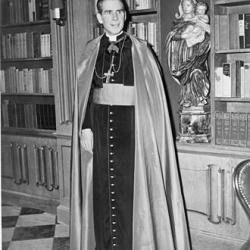
September 24, 2026 The Homeless at Home by Blessed Fulton Sheen
Browse Our Archives
Select a Category 1889 abortion adoption Advent After Life Angles apologetics Art Awards BCCT bible book review books business Carmelite Catechetics Catholic Actors catholic authors Catholic Bard Catholic Faith Catholic List Catholic Rigorous Vortex Christian Authors Christmas church teaching civil conversation coronavirus Current Events death Different Religions Divine Mercy Easter Education encouragment Entertainment Eucharist Evangelization Event faith Family Life famous people feast day food Fun Stuff Global Church God guest post Harry Potter healing Heck of a Ride Around the Sun history holiday Holy Family Holy Orders Holy Spirit Holy Week hope Humor Interview Ireland Jesus kindle unlimited reflections Last Things Lecto Divina with Kristin Lent Lent/Easter liturgy love marriage Mary Meet the Author Mission Month in Advance Movie Review Movies Movies of the Month Music Narrative Older Writings patheos authors personal Philosophy podcasts poetry political Politics pope prayer Private Revelation pro-life public domain Quotes racial relations racism reflection Religious Life Saints science Scriptural Meditation social justice Social Media spirituality suffering supernatural theology Topics Travel Trivia Tweeting to the Choir Uncategorized universal church Vatican virtue war Week in Review women world religions writing Writing Write Now
Select a Month October 2026 September 2026 August 2026 July 2026 June 2026 May 2026 April 2026 March 2026 February 2026 January 2026 December 2025 November 2025 October 2025 September 2025 August 2025 July 2025 June 2025 May 2025 April 2025 March 2025 February 2025 January 2025 December 2024 November 2024 October 2024 September 2024 August 2024 July 2024 June 2024 May 2024 April 2024 March 2024 February 2024 January 2024 December 2023 November 2023 October 2023 September 2023 August 2023 July 2023 June 2023 May 2023 April 2023 March 2023 February 2023 January 2023 December 2022 November 2022 October 2022 September 2022 August 2022 July 2022 June 2022 May 2022 April 2022 March 2022 February 2022 January 2022 December 2021 November 2021 October 2021 September 2021 August 2021 July 2021 June 2021 May 2021 April 2021 March 2021 February 2021 January 2021 December 2020 November 2020 October 2020 September 2020 August 2020 July 2020 June 2020 May 2020
Follow Us!
TAKE THE
Religious Wisdom Quiz
What was the length of the great flood?
Select your answer to see how you score.
50 days 370 Days 40 days and 40 Nights 60 days
Books by This Author Books by Catholic Bard
Related posts from Catholic Bard

Looking For Good Catholic Writing - October 2026
Meet Grimm Catholic Writer J.C. Hopes
The Homeless at Home by Blessed Fulton Sheen

Meet Taco Loving Catholic Historical Writer Leah Fisher
TRENDING AT PATHEOS Catholic

Emotion in Early Christianity by Andrew Crislip
Andrew Crislip’s Emotion in Early Christianity examines an often overlooked dimension of...

16 Spiritual Touchstones for a More Grounded Life
After decades of spiritual study, here are 16 principles I try...

Catholic Evangelization: Sharing Your Faith Every Day
Welcome back to the Graceful Awakening mini-series called, “From Faith to Mission.” ...

The Pillar of the Boatmen: the Ancient Monument...
The Pillar of the Boatmen is a Romano-Gaulish sculpture that dates from...

In one sense walking into Westminster Abbey is like walking down the...

'Super Scam Me' Exposes AI Jon Bon Jovi...
Leslie Pickett believed she was in a relationship with Jon Bon Jovi....
view all Catholic blogs
Ad-Free & Subscriber Log-In Subscription Support
- About Us
- 2026 Calendar
- Videos
- Podcasts
- Library of World Religions
- Faith In Media Tracker
- Advertise With Us
- Write for Us
- Privacy Policy
- Terms of Service
- Do Not Sell My Data
- Contact Us
- Radiant Digital
- Manage Newsletter Subscriptions
- Unsubscribe From Notifications
- Sitemap
Copyright 2008-2026, Patheos. All rights reserved.
Subscription Support Ad-Free & Subscriber Log-In
Follow Patheos