
BuddhistCatholicContemplativeEvangelicalGeneral ChristianHinduJewishLatter-day SaintMuslimNew VisionsProgressive Christian
Beliefs
- Buddhist
- Catholic
- Contemplative
- Evangelical
- General Christian
- Hindu
- Jewish
- Latter-day Saint
- More Voices
- Muslim
- New Visions
- Pagan
- Progressive Christian
Topics
- Religion News
- Food and Religion
- Sports and Religion
- Religious Art
- Religious Music and Entertainment
- Religious Events
- History and Religion
- Style and Religion
- Politics and Religion
- Women in Religion
- Recreation Outdoors and Religion
- Business Finance and Religion
- Careers Workplace and Religion
- Education and Religion
- Family Parenting and Religion
- Health Fitness and Religion
- Home and Religion
- Relationships and Religion
- Technology and Religion
- Travel and Religion
Columnists
- Buddhist Columnists
- Business Finance and Religion Columnists
- Careers Workplace and Religion Columnists
- Catholic Columnists
- Contemplative Columnists
- Education and Religion Columnists
- Evangelists Columnists
- Family Parenting and Religion Columnists
- General Christian Columnists
- Health Fitness and Religion Columnists
- Hindu Columnists
- History and Religion Columnists
- Home and Religion Columnists
- Jewish Columnists
- More Voices Columnists
- Latter Day Columnists
- Muslim Columnists
- New Visions Columnists
- Nonreligious Columnists
- Pagan Columnists
- Politics and Religion Columnists
- Progressive Columnists
- Recreation Outdoors and Religion Columnists
- Relationships and Religion Columnists
- Religion News Columnists
- Religious Art Columnists
- Religious Events Columnists
- Religious Music and Entertainment Columnists
- Sports and Religion Columnists
- Style and Religion Columnists
- Technology and Religion Columnists
- Travel and Religion Columnists
- Women in Religion Columnists
Resource Library
- 2026 Calendar
- Library of World Religions
- The 100 Most Holy Places on Earth
- Patheos Answers
- Podcasts
- Videos
- Faith Leaders Database
- Anglican Episcopalian
- Bahai
- Baptist
- Buddhism
- Christianity
- Confucianism
- Eastern Orthodoxy
- Hinduism
- Holiness and Pentecostal
- ISKCON
- Islam
- Judaism
- Lutheran
- Methodist
- The Church of Jesus Christ of Latter-day Saints
- New Age
- Paganism
- Presbytarian and Reformed
- Protestantism
- Religion Behind the Scenes
- Roman Catholic
- Scientology
- Shia Islam
- Sikhism
- Sufism
- Sunni Islam
- Taoism
- Zen
- See all religions
Research Tools
 Ad-Free & Subscriber Log-In Subscription Support
Ad-Free & Subscriber Log-In Subscription Support
Follow Patheos 

- Trending:
- Forgiveness
- |
- Marriage
- |
- Consciousness
- |
- Death Penalty
- |
- Election
- |
- Halloween

- Home
- Catholic
- Starting Off Lent with the Popes
Starting Off Lent with the Popes
Last updated on: February 18, 2026 at 7:20 am by Mark Wilson
Starting Off Lent with the Popes 2026-02-18T07:20:40-05:00 Mark Wilson
Patheos Explore the world's faith through different perspectives on religion and spirituality! Patheos has the views of the prevalent religions and spiritualities of the world.
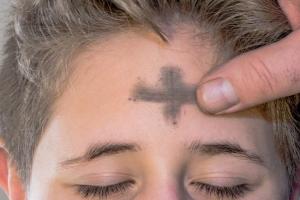
Lent 2026 Begins
Here are what some popes have said at the beginning of Lent.
Things you can reflect and meditate on.
St. John Paul II
Therefore the message of Ash Wednesday is expressed with the words of St. Paul: “We are ambassadors for Christ, God making his appeal through us. We beseech you on behalf of Christ, be reconciled to God. For our sake, he made him to be sin who knew no sin, so that in him we might become the righteousness of God” (2 Cor 5:20-21). Collaborate with him!
The significance of Ash Wednesday is not limited to remind us of death and sin; it is also a loud call to overcome sin, to be converted. Both of these express collaboration with Christ. During Lent we have before our eyes the whole divine “economy” of grace and salvation”. In this time of Lent let us remember “not to accept the grace of God in vain” (2 Cor 6:1).
Jesus Christ himself is the most sublime grace of Lent. It is he himself who appears before us in the admirable simplicity of the Gospel, of its words and its works. He speaks to us with the might of his Gethsemane, of the judgment before Pilate, of the scourging , of the crowning with thorns, of the via crucis, of his crucifixion: with everything that can shake man’s heart.
In this period of Lent the whole Church wishes to be specially united with Christ, in order that his preaching and his service may be even more fruitful. “Behold, now is the acceptable time; behold, now is the day of salvation” (2 Cor 6:2).
28 February 1979: Ash Wednesday
Benedict XVI
Following in his footsteps and united to him, we must all strive to oppose evil with good, falsehood with truth and hatred with love.
In the Encyclical Deus Caritas Est, I wanted to present this love as the secret of our personal and ecclesial conversion. Referring to Paul’s words to the Corinthians, “the love of Christ urges us on” (II Cor 5: 14), I stressed that “the consciousness that, in Christ, God has given himself for us, even unto death, must inspire us to live no longer for ourselves but for him, and, with him, for others” (n. 33).
Furthermore, love, as Jesus says today in the Gospel, must be expressed in practical acts for our neighbour, and especially for the poor and the needy, always subordinating the value of “good works” to the sincerity of the relationship with our “Father who is in Heaven”, who “sees in secret” and “will reward” all whose good actions are humble and disinterested (cf. Mt 6: 1, 4, 6, 18).
The manifestation of love is one of the essential elements in the life of Christians who are encouraged by Jesus to be the light of the world, so that by seeing their “good works”, people give glory to God (cf. Mt 5: 16).
This recommendation to us is particularly appropriate at the beginning of Lent, so that we may understand better and better that “for the Church, charity is not a kind of welfare activity… but is a part of her nature, an indispensable expression of her very being” (Deus Caritas Est, n. 25).
True love is expressed in acts that exclude no one, after the example of the Good Samaritan who, with great openness of heart, helped a stranger in difficulty whom he had met “by chance” along the way (cf. Lk 10: 31).
1 March 2006,
Blessing and Imposition of the Ashes
at the Basilica of St Sabina on the Aventine Hill
Pope Francis
The first element [of Lent] is prayer. Prayer is the strength of the Christian and of every person who believes. In the weakness and frailty of our lives, we can turn to God with the confidence of children and enter into communion with him. In the face of so many wounds that hurt us and could harden our hearts, we are called to dive into the sea of prayer, which is the sea of God’s boundless love, to taste his tenderness. Lent is a time of prayer, of more intense prayer, more prolonged, more assiduous, more able to take on the needs of the brethren; intercessory prayer, to intercede before God for the many situations of poverty and suffering.
The second key element of the Lenten journey is fasting. We must be careful not to practice a formal fast, or one which in truth “satisfies” us because it makes us feel good about ourselves. Fasting makes sense if it questions our security, and if it also leads to some benefit for others, if it helps us to cultivate the style of the Good Samaritan, who bends down to his brother in need and takes care of him. Fasting involves choosing a sober lifestyle; a way of life that does not waste, a way of life that does not “throw away”. Fasting helps us to attune our hearts to the essential and to sharing. It is a sign of awareness and responsibility in the face of injustice, abuse, especially to the poor and the little ones, and it is a sign of the trust we place in God and in his providence.
The third element is almsgiving: it points to giving freely, for in almsgiving one gives something to someone from whom one does not expect to receive anything in return. Gratuitousness should be one of the characteristics of the Christian, who aware of having received everything from God gratuitously, that is, without any merit of his own, learns to give to others freely. Today gratuitousness is often not part of daily life where everything is bought and sold. Everything is calculated and measured. Almsgiving helps us to experience giving freely, which leads to freedom from the obsession of possessing, from the fear of losing what we have, from the sadness of one who does not wish to share his wealth with others.
5 March 2014: Holy Mass,
blessing and imposition of the Ashes
Pope Leo XVI
Our God is one who seeks to involve us. Even today he shares with us what is in his heart. Because of this, listening to the word in the liturgy teaches us to listen to the truth of reality. In the midst of the many voices present in our personal lives and in society, Sacred Scripture helps us to recognize and respond to the cry of those who are anguished and suffering. In order to foster this inner openness to listening, we must allow God to teach us how to listen as he does. We must recognize that “the condition of the poor is a cry that, throughout human history, constantly challenges our lives, societies, political and economic systems, and, not least, the Church.”
With spiritual insight, Saint Augustine helps us to understand the tension between the present moment and the future fulfilment that characterizes this custody of the heart. He observes that: “In the course of earthly life, it is incumbent upon men and women to hunger and thirst for justice, but to be satisfied belongs to the next life. Angels are satisfied with this bread, this food. The human race, on the other hand, hungers for it; we are all drawn to it in our desire. This reaching out in desire expands the soul and increases its capacity.”[2] Understood in this way, fasting not only permits us to govern our desire, purifying it and making it freer, but also to expand it, so that it is directed towards God and doing good.
However, in order to practice fasting in accordance with its evangelical character and avoid the temptation that leads to pride, it must be lived in faith and humility. It must be grounded in communion with the Lord, because “those who are unable to nourish themselves with the word of God do not fast properly.”[3] As a visible sign of our inner commitment to turn away from sin and evil with the help of grace, fasting must also include other forms of self-denial aimed at helping us to acquire a more sober lifestyle, since “austerity alone makes the Christian life strong and authentic.”[4]
In this regard, I would like to invite you to a very practical and frequently unappreciated form of abstinence: that of refraining from words that offend and hurt our neighbor. Let us begin by disarming our language, avoiding harsh words and rash judgement, refraining from slander and speaking ill of those who are not present and cannot defend themselves. Instead, let us strive to measure our words and cultivate kindness and respect in our families, among our friends, at work, on social media, in political debates, in the media and in Christian communities. In this way, words of hatred will give way to words of hope and peace.
Message of the Holy Father Leo XIV for Lent 2026
Previous Post

February 16, 2026
Why Certain People Protest ICE
Next Post

February 19, 2026 Meet the Writer James K. Hanna
Browse Our Archives
Select a Category 1889 abortion adoption Advent After Life Angles apologetics Art Awards BCCT bible book review books business Carmelite Catechetics Catholic Actors catholic authors Catholic Bard Catholic Faith Catholic List Catholic Rigorous Vortex Christian Authors Christmas church teaching civil conversation coronavirus Current Events death Different Religions Divine Mercy Easter Education encouragment Entertainment Eucharist Evangelization Event faith Family Life famous people feast day food Fun Stuff Global Church God guest post Harry Potter healing Heck of a Ride Around the Sun history holiday Holy Family Holy Orders Holy Spirit Holy Week hope Humor Interview Ireland Jesus kindle unlimited reflections Last Things Lecto Divina with Kristin Lent Lent/Easter liturgy love marriage Mary Meet the Author Mission Month in Advance Movie Review Movies Movies of the Month Music Narrative Older Writings patheos authors personal Philosophy podcasts poetry political Politics pope prayer Private Revelation pro-life public domain Quotes racial relations racism reflection Religious Life Saints science Scriptural Meditation social justice Social Media spirituality suffering supernatural theology Topics Travel Trivia Tweeting to the Choir Uncategorized universal church Vatican virtue war Week in Review women world religions writing Writing Write Now
Select a Month October 2026 September 2026 August 2026 July 2026 June 2026 May 2026 April 2026 March 2026 February 2026 January 2026 December 2025 November 2025 October 2025 September 2025 August 2025 July 2025 June 2025 May 2025 April 2025 March 2025 February 2025 January 2025 December 2024 November 2024 October 2024 September 2024 August 2024 July 2024 June 2024 May 2024 April 2024 March 2024 February 2024 January 2024 December 2023 November 2023 October 2023 September 2023 August 2023 July 2023 June 2023 May 2023 April 2023 March 2023 February 2023 January 2023 December 2022 November 2022 October 2022 September 2022 August 2022 July 2022 June 2022 May 2022 April 2022 March 2022 February 2022 January 2022 December 2021 November 2021 October 2021 September 2021 August 2021 July 2021 June 2021 May 2021 April 2021 March 2021 February 2021 January 2021 December 2020 November 2020 October 2020 September 2020 August 2020 July 2020 June 2020 May 2020
Follow Us!
TAKE THE
Religious Wisdom Quiz
Who was Abraham's firstborn son?
Select your answer to see how you score.
Isaac Jacob Esau Ishmael
Books by This Author Books by Catholic Bard
Related posts from Catholic Bard
Catholic Teaching On Tough Issues

Latest News That Doesn't Involve Trump
Controversial Statements from the Pope and the President
After Washing of the Feet Take and Eat
TRENDING AT PATHEOS Catholic

When Halloween Unmasks Married Hearts
Written by Dr. David K. Ewen from Eternal Truth Bible College Behind...

Aristotle. He’s been called the father of logic, the father of the...

Methodist Central Hall and Westminster Abbey
Situated on the same square is Methodist Central Hall and Westminster Abbey. ...

57th Dove Awards Honor Dolly Parton, Crown New...
On gospel music’s biggest night, the 57th annual GMA Dove Awards honored...

The First Eucharistic Controversy: Christ’s Real Presence
For Catholics, the Eucharist is the source and summit of the Christian...

What a Stop Sign Can Teach Us About...
How to Make a Decision When You Can't Hear God Main point:...
view all Catholic blogs
Ad-Free & Subscriber Log-In Subscription Support
- About Us
- 2026 Calendar
- Videos
- Podcasts
- Library of World Religions
- Faith In Media Tracker
- Advertise With Us
- Write for Us
- Privacy Policy
- Terms of Service
- Do Not Sell My Data
- Contact Us
- Radiant Digital
- Manage Newsletter Subscriptions
- Unsubscribe From Notifications
- Sitemap
Copyright 2008-2026, Patheos. All rights reserved.
Subscription Support Ad-Free & Subscriber Log-In
Follow Patheos