
BuddhistCatholicContemplativeEvangelicalGeneral ChristianHinduJewishLatter-day SaintMuslimNew VisionsProgressive Christian
Beliefs
- Buddhist
- Catholic
- Contemplative
- Evangelical
- General Christian
- Hindu
- Jewish
- Latter-day Saint
- More Voices
- Muslim
- New Visions
- Pagan
- Progressive Christian
Topics
- Religion News
- Food and Religion
- Sports and Religion
- Religious Art
- Religious Music and Entertainment
- Religious Events
- History and Religion
- Style and Religion
- Politics and Religion
- Women in Religion
- Recreation Outdoors and Religion
- Business Finance and Religion
- Careers Workplace and Religion
- Education and Religion
- Family Parenting and Religion
- Health Fitness and Religion
- Home and Religion
- Relationships and Religion
- Technology and Religion
- Travel and Religion
Columnists
- Buddhist Columnists
- Business Finance and Religion Columnists
- Careers Workplace and Religion Columnists
- Catholic Columnists
- Contemplative Columnists
- Education and Religion Columnists
- Evangelists Columnists
- Family Parenting and Religion Columnists
- General Christian Columnists
- Health Fitness and Religion Columnists
- Hindu Columnists
- History and Religion Columnists
- Home and Religion Columnists
- Jewish Columnists
- More Voices Columnists
- Latter Day Columnists
- Muslim Columnists
- New Visions Columnists
- Nonreligious Columnists
- Pagan Columnists
- Politics and Religion Columnists
- Progressive Columnists
- Recreation Outdoors and Religion Columnists
- Relationships and Religion Columnists
- Religion News Columnists
- Religious Art Columnists
- Religious Events Columnists
- Religious Music and Entertainment Columnists
- Sports and Religion Columnists
- Style and Religion Columnists
- Technology and Religion Columnists
- Travel and Religion Columnists
- Women in Religion Columnists
Resource Library
- 2026 Calendar
- Library of World Religions
- The 100 Most Holy Places on Earth
- Patheos Answers
- Podcasts
- Videos
- Faith Leaders Database
- Anglican Episcopalian
- Bahai
- Baptist
- Buddhism
- Christianity
- Confucianism
- Eastern Orthodoxy
- Hinduism
- Holiness and Pentecostal
- ISKCON
- Islam
- Judaism
- Lutheran
- Methodist
- The Church of Jesus Christ of Latter-day Saints
- New Age
- Paganism
- Presbytarian and Reformed
- Protestantism
- Religion Behind the Scenes
- Roman Catholic
- Scientology
- Shia Islam
- Sikhism
- Sufism
- Sunni Islam
- Taoism
- Zen
- See all religions
Research Tools
 Ad-Free & Subscriber Log-In Subscription Support
Ad-Free & Subscriber Log-In Subscription Support
Follow Patheos 

- Trending:
- Forgiveness
- |
- Marriage
- |
- Consciousness
- |
- Death Penalty
- |
- Election
- |
- Halloween

- Home
- Catholic
- History and Religion
- Who Moved The Stone- Some Realities of That Far-Off Morning
Who Moved The Stone- Some Realities of That Far-Off Morning
Last updated on: April 23, 2025 at 7:00 am by Mark Wilson
Who Moved The Stone- Some Realities of That Far-Off Morning 2025-03-31T21:11:31-05:00 Mark Wilson
Patheos Explore the world's faith through different perspectives on religion and spirituality! Patheos has the views of the prevalent religions and spiritualities of the world.
From the Logos Community Archives
In the spirit of the Easter season, and as an aid to believers; I recommend the excellent book by Frank Morison (Albert Henry Ross). Brother Mark April 2014 edited November 2024
According to Amazon.com
This work has been selected by scholars as being culturally important and is part of the knowledge base of civilization as we know it.
This work is in the public domain in the United States of America, and possibly other nations. Within the United States, you may freely copy and distribute this work, as no entity (individual or corporate) has a copyright on the body of the work.
Wikipedia states
“Frank Morison (January 1, 1881 – 14 September 14, 1950), is best known today for writing the book Who Moved the Stone?, under the pseudonym Frank Morison. First published in 1930, the book analyses texts about the events related to the crucifixion and resurrection of Jesusof Nazareth. The book has been repeatedly reprinted (in 1944, 1955, 1958, 1962, 1977, 1981, 1983, 1987, 1996 and 2006). Ross was skeptical regarding the resurrection of Jesus, and set out to analyse the sources and to write a short paper entitled Jesus – the Last Phase to demonstrate the apparent myth. In compiling his notes, he came to be convinced of the truth of the resurrection, and set out his reasoning in the book Who moved the stone?. Many people have become Christian after reading the book, and some have used the work as a reference for more work on the subject.”
Here is a sample of a chapter of that book.
CHAPTER XIV—SOME REALITIES OF THAT FAR-OFF MORNING
What is the secret of this silent and impenetrable tomb? It is a question which presses insistently for an answer.
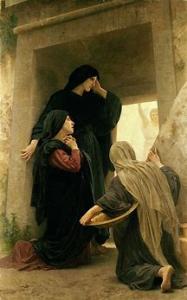
There are certain things about this story which impress me profoundly. They are not the kind of things which can lightly be set aside as of minor or only relative importance. They belong to the fundamental and bedrock
features of the problem. In the first place, whatever the physical or dogmatic consequences may be, I cannot and do not believe that the body of Jesus of Nazareth rested in Joseph’s garden during any part of that period
which is contemporary with the rise of Christianity.
If it could be shown that there was a single document of admittedly early date dealing with the crucifixion and burial of Jesus in which it was even remotely hinted that such was the case, I for one should attach to that hint
very considerable weight. It would at least introduce the same kind of uncertainty which exists concerning certain other aspects of the problem. It would provide a peg, however shaky and insecure, upon which to hang a
doubt. But the documents are adamant upon this fundamental feature of the Easter dawn.
Whether we turn to the two dependent Gospels, St. Matthew and St. Luke, to the comparatively unorthodox Gospel of Peter, to the Gospel of St. John, to the Emmaus document preserved by St. Luke, or to the admittedly
primitive Marcan fragment itself, we find the same consistent and unvarying witness to the disappearance of the body. If the situation had been the other way round; if we had been asked to believe something which
was denied by every solitary manuscript which has survived the centuries, how solid and unanswerable would that cumulative and absolutely unanimous denial appear! What play could be made by the dialectician with
the fact that not the smallest chink or loophole had been left for doubt.
Surely (it would be contended), the real truth must have blundered somewhere to the light. Yet in all the varied literature from that far-off time, written under different skies, by men of varying temperaments, possessed
by obviously divergent theories of the true course of those memorable events, there has come down to us no hint or suggestion that the facts about the grave were other than those substantially recorded in the Gospel
according to St. Mark. However disconcerting the fact may be, the literary verdict is unanimous and must at least be given its due weight by the impartial mind.
But there is something far more arresting and significant than even this unanimous literary witness, and I do not see how even the most confident of modern critics can view it steadily and consistently without experiencing a
feeling of profound disquiet and unrest. I mean the extraordinary silence of antiquity concerning the later history of the grave of Jesus. It is strange—this absolutely unbroken silence concerning a spot which must have been a very sacred place to thousands of people outside the circle of the Christian believers themselves. If the disciples were deceived in this matter, or if the intensity of their faith in the Appearances led them to ignore or to attach no importance to the condition of the grave, what of the preponderant mass of the Jewish public outside? Did no one regard with reverence the sepulchre which held the mortal remains of the greatest Teacher that Israel had seen since the prophetic days? Had Joseph of Arimathea and Nicodemus no counterpart among all the toiling multitudes who crowded round the boats on the shores of Galilee and filled Capernaum and Cana and Nazareth with tumultuous throngs? Surely for every man or woman who came under the magnetic influence of the disciples there must have been a hundred who had no illusions concerning the grave, but were filled with profound grief and sorrow by the untimely death of Christ.
Yet we can search in vain for any sign or hint or whisper that during those first four crucial years when the Christians were teaching their strange doctrine within the walls of Jerusalem there was a stream of pilgrims to that
silent grotto beyond the gate. We catch no echo of any controversy between the many who knew the real facts and the deluded few who taught and presumably believed otherwise. Why did the least believable of all the cults
of Christianity survive and leave no traces of the one rational and divergent form which, according to all reasonable expectation, ought to have overmastered it and triumphed in its stead?
Or take the same central problem from another and slightly different point of view. Let the reader sit down and in the quiet of his own study ponder one very simple but searching question. Why was it that Jerusalem
became the centre and focus of this mad unreason which in the coming years was to spread itself outwards to the uttermost limits of the Roman world? Why Jerusalem in preference to Capernaum, or even Nazareth
itself? There are a hundred reasons why so demonstrably fragile a myth as the belief in the physical resurrection of Jesus ought to have flourished in the congenial soil of Galilee and to have withered within the precincts of
the real grave.
Jerusalem was always hostile and unsympathetic to the genius of Christ; Galilee was His home. Those who loved Him best and must have mourned Him most came from that smiling province. No one seriously doubts that
within fourteen days of the Crucifixion Peter and Andrew and some others of the Apostolic band stood upon the shores of that inland sea and felt the call of their ancient and honourable trade. Granted that a vision came to one
of them and perhaps to all. But why did not this mystic church of believers spring into being and strike its deepest and most central roots in Galilee, the spiritual home of Jesus, a place impregnated with His personality and
teaching? Why did everybody who caught the infection of this spring madness gravitate to Jerusalem as steel to a magnet? Why should so irrational a doctrine flourish most readily and take its implacable stand in
the veritable presence and vicinity of that which it denied?
There is only one answer to all these questions which satisfies alike the unanimous literary witness and the collateral requirements of historical circumstance. It lies in the assumption that the story of the women’s visit to
the grave—as given in all its primitive and naked simplicity in the Marcan fragment—is the true story. It was told, not because it had any particular apologetic value—for as an apologetic it can be riddled with criticism—but
because things fell out that way. In other words, it was a fact of history.
General Christian
History and Religion
Previous Post
April 21, 2025
RIP Pope Francis - History Remembered Easter Week 2025
Next Post
April 27, 2025 Divine Mercy On All Religious People Alive in 1889
Browse Our Archives
Select a Category 1889 abortion adoption Advent After Life Angles apologetics Art Awards BCCT bible book review books business Carmelite Catechetics Catholic Actors catholic authors Catholic Bard Catholic Faith Catholic List Catholic Rigorous Vortex Christian Authors Christmas church teaching civil conversation coronavirus Current Events death Different Religions Divine Mercy Easter Education encouragment Entertainment Eucharist Evangelization Event faith Family Life famous people feast day food Fun Stuff Global Church God guest post Harry Potter healing Heck of a Ride Around the Sun history holiday Holy Family Holy Orders Holy Spirit Holy Week hope Humor Interview Ireland Jesus kindle unlimited reflections Last Things Lecto Divina with Kristin Lent Lent/Easter liturgy love marriage Mary Meet the Author Mission Month in Advance Movie Review Movies Movies of the Month Music Narrative Older Writings patheos authors personal Philosophy podcasts poetry political Politics pope prayer Private Revelation pro-life public domain Quotes racial relations racism reflection Religious Life Saints science Scriptural Meditation social justice Social Media spirituality suffering supernatural theology Topics Travel Trivia Tweeting to the Choir Uncategorized universal church Vatican virtue war Week in Review women world religions writing Writing Write Now
Select a Month October 2026 September 2026 August 2026 July 2026 June 2026 May 2026 April 2026 March 2026 February 2026 January 2026 December 2025 November 2025 October 2025 September 2025 August 2025 July 2025 June 2025 May 2025 April 2025 March 2025 February 2025 January 2025 December 2024 November 2024 October 2024 September 2024 August 2024 July 2024 June 2024 May 2024 April 2024 March 2024 February 2024 January 2024 December 2023 November 2023 October 2023 September 2023 August 2023 July 2023 June 2023 May 2023 April 2023 March 2023 February 2023 January 2023 December 2022 November 2022 October 2022 September 2022 August 2022 July 2022 June 2022 May 2022 April 2022 March 2022 February 2022 January 2022 December 2021 November 2021 October 2021 September 2021 August 2021 July 2021 June 2021 May 2021 April 2021 March 2021 February 2021 January 2021 December 2020 November 2020 October 2020 September 2020 August 2020 July 2020 June 2020 May 2020
Follow Us!
TAKE THE
Religious Wisdom Quiz
What did Eve eat in the Garden of Eden?
Select your answer to see how you score.
An unclean animal A vine branch Fruit from the Tree of Knowledge Bread
Books by This Author Books by Catholic Bard
Related posts from Catholic Bard

Meet Grimm Catholic Writer J.C. Hopes
The Homeless at Home by Blessed Fulton Sheen

Meet Taco Loving Catholic Historical Writer Leah Fisher

Meet Fellowship & Fairydust Founder Avellina Balestri
TRENDING AT PATHEOS Catholic

Looking at the Largest Orthodox Cathedral on Earth
There is often a considerable amount of anger and, shall we...

The Problem with False Prophets
Miller’s Station UMC| 10/18/26| Anchor Verse: Jeremiah 23: 1, 9-23 I...

Emotion in Early Christianity by Andrew Crislip
Andrew Crislip’s Emotion in Early Christianity examines an often overlooked dimension of...

16 Spiritual Touchstones for a More Grounded Life
After decades of spiritual study, here are 16 principles I try...

Catholic Evangelization: Sharing Your Faith Every Day
Welcome back to the Graceful Awakening mini-series called, “From Faith to Mission.” ...

The Pillar of the Boatmen: the Ancient Monument...
The Pillar of the Boatmen is a Romano-Gaulish sculpture that dates from...
view all Catholic blogs
Ad-Free & Subscriber Log-In Subscription Support
- About Us
- 2026 Calendar
- Videos
- Podcasts
- Library of World Religions
- Faith In Media Tracker
- Advertise With Us
- Write for Us
- Privacy Policy
- Terms of Service
- Do Not Sell My Data
- Contact Us
- Radiant Digital
- Manage Newsletter Subscriptions
- Unsubscribe From Notifications
- Sitemap
Copyright 2008-2026, Patheos. All rights reserved.
Subscription Support Ad-Free & Subscriber Log-In
Follow Patheos