
BuddhistCatholicContemplativeEvangelicalGeneral ChristianHinduJewishLatter-day SaintMuslimNew VisionsProgressive Christian
Beliefs
- Buddhist
- Catholic
- Contemplative
- Evangelical
- General Christian
- Hindu
- Jewish
- Latter-day Saint
- More Voices
- Muslim
- New Visions
- Pagan
- Progressive Christian
Topics
- Religion News
- Food and Religion
- Sports and Religion
- Religious Art
- Religious Music and Entertainment
- Religious Events
- History and Religion
- Style and Religion
- Politics and Religion
- Women in Religion
- Recreation Outdoors and Religion
- Business Finance and Religion
- Careers Workplace and Religion
- Education and Religion
- Family Parenting and Religion
- Health Fitness and Religion
- Home and Religion
- Relationships and Religion
- Technology and Religion
- Travel and Religion
Columnists
- Buddhist Columnists
- Business Finance and Religion Columnists
- Careers Workplace and Religion Columnists
- Catholic Columnists
- Contemplative Columnists
- Education and Religion Columnists
- Evangelists Columnists
- Family Parenting and Religion Columnists
- General Christian Columnists
- Health Fitness and Religion Columnists
- Hindu Columnists
- History and Religion Columnists
- Home and Religion Columnists
- Jewish Columnists
- More Voices Columnists
- Latter Day Columnists
- Muslim Columnists
- New Visions Columnists
- Nonreligious Columnists
- Pagan Columnists
- Politics and Religion Columnists
- Progressive Columnists
- Recreation Outdoors and Religion Columnists
- Relationships and Religion Columnists
- Religion News Columnists
- Religious Art Columnists
- Religious Events Columnists
- Religious Music and Entertainment Columnists
- Sports and Religion Columnists
- Style and Religion Columnists
- Technology and Religion Columnists
- Travel and Religion Columnists
- Women in Religion Columnists
Resource Library
- 2026 Calendar
- Library of World Religions
- The 100 Most Holy Places on Earth
- Patheos Answers
- Podcasts
- Videos
- Faith Leaders Database
- Anglican Episcopalian
- Bahai
- Baptist
- Buddhism
- Christianity
- Confucianism
- Eastern Orthodoxy
- Hinduism
- Holiness and Pentecostal
- ISKCON
- Islam
- Judaism
- Lutheran
- Methodist
- The Church of Jesus Christ of Latter-day Saints
- New Age
- Paganism
- Presbytarian and Reformed
- Protestantism
- Religion Behind the Scenes
- Roman Catholic
- Scientology
- Shia Islam
- Sikhism
- Sufism
- Sunni Islam
- Taoism
- Zen
- See all religions
Research Tools
 Ad-Free & Subscriber Log-In Subscription Support
Ad-Free & Subscriber Log-In Subscription Support
Follow Patheos 

- Trending:
- Forgiveness
- |
- Marriage
- |
- Consciousness
- |
- Death Penalty
- |
- Election
- |
- Halloween

- Home
- Catholic
- Outside the Church There is No Salvation Explained
Outside the Church There is No Salvation Explained
Last updated on: November 6, 2024 at 7:00 am by Mark Wilson
Outside the Church There is No Salvation Explained 2024-11-02T08:32:10-05:00 Mark Wilson
Patheos Explore the world's faith through different perspectives on religion and spirituality! Patheos has the views of the prevalent religions and spiritualities of the world.
For your consideration
A selection from the Public Domain Work
The Spirit of Catholicism (1924)
by
Karl Adam (theologian)
(October 22, 1876 – April 1, 1966)
Chapter X: The Church Necessary for Salvation
And if he will not hear the Church, let him be to thee as the heathen and publican (Mt. xviii, 17).
From the very beginning, as St. Matthew testifies (xviii, 17) the necessity for salvation of belonging to the one fellowship was established on the basis of an express saying of our Lord’s: “If a man will not hear the Church, let him be to thee as the heathen and publican,” that is, regard him no longer as a Christian. St. Cyprian afterwards expressed this conviction of primitive Christianity in those clear-cut sentences which have impressed themselves on the memory of Christendom: “To have the one God for your Father, you must have the Church for your mother” (Ep. Ixxiv, 7). “No man can be saved except in the Church” (Ep. iv, 4). “Outside the Church there is no salvation” (Ep. Ixxiii, 21).
Now there is no doubt, that if her catholicity gives the Church a world-wide and comprehensive character, her claim to be the only source of salvation turns her in upon herself and makes her aloof and exclusive. So the truth stands fast, rigid and inexorable in its compact solidity, that there is but one Christ and but one justifying Church of Christ. But, we may ask, does that mean that all heretics and non-Catholics are destined to hell?
If we would interpret correctly the Catholic doctrine that there is no salvation outside the Church, that is to say if we would understand it as the Church would have it understood, we should grasp its history and its connection with the rest of her teaching. For no Catholic doctrine is an isolated mass of thought, but has on the contrary its proper place and meaning in the whole unitary system and cannot be fully appreciated except through this whole system.
To begin with, it is certain that the declaration that there is no salvation outside the Church is not aimed at individual non-Catholics, at any persons as persons, but at non- Catholic churches and communions, in so far as they are non-Catholic communions. Its purpose is to formulate positively the truth that there is but one Body of Christ and therefore but one Church which possesses and imparts the grace of Christ in its fullness. Stated otherwise the declaration would run: Every separated church which sets itself up against the original Church of Christ stands outside the communion of Christ’s grace. It cannot be a mediator of salvation. So far as it is a separate and antagonistic church, it is essentially unfruitful as regards the supernatural life. So that that spiritual unfruitfulness which is predicated in the doctrine is not to be affirmed of the individual non-Catholic, but primarily of non-Catholic communions as such. By that which constitutes their separateness and differentiates them in faith and worship from the Catholic Church, they are able to awaken no supernatural life. Therefore, in so far as they are un-Catholic and anti-Catholic, that is to say in regard to their distinct character, they are not able to claim the honorable title of a “mother” church.
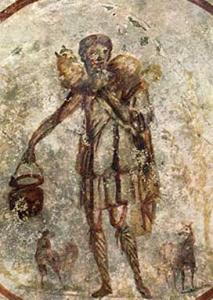
The assertion that the Catholic Church of later centuries has developed the ideas of St. Cyprian and St. Augustine, that she has ‘continually sharpened the principle of exclusiveness and so continually narrowed Catholicism” is in contradiction with the plain facts of history. For the truth is that the later Church corrected the original rigorism of the ancient African theologian and maintained that God’s grace worked even outside the Catholic body. Non-Catholic sacraments have the power to sanctify and save, not only objectively, but also subjectively. It is therefore conceivable also, from the Church’s standpoint, that there is a true, devout and Christian life in those non-Catholic communions which believe in Jesus and baptize in His Name. We Catholics regard this Christian life, wherever it appears, with unfeigned respect and with thankful love. We regard with deep esteem our Protestant deaconesses, and such noble figures at Wichern and Bodelschwingh. We admire the loving manifestations of the “Home Mission.”
The songs of a Paul Gerhard, the St. Matthew Passion of a Sebastian Bach and the oratorios of a Handel affect us almost as “sweet melodies from our old family home.” And not merely a Christian life, but a complete and lofty Christian life, a life according to the “full age of Christ,” a saintly life, is possible—so Catholics believe—even in definitely non-Catholic communions. It is true that it cannot develop with that luxuriance which is possible in the Church, where is the fullness of Jesus and His Body; and it will never be anti-Catholic in its quality. Yet it will be a genuine saintly life; since, wherever grace is, the noble fruits of grace can ripen. Such saintly figures have appeared and do still appear, especially in the Russian Church, which has preserved the fullest measure of the ancient inheritance. Consider the saintly characters of a Dmitri, an Innocens, a Tykhon, a Theodosius. Nor are saints and martyrs impossible, on Catholic principles, even in the Protestant churches. Nay, it is Catholic teaching that the grace of Christ operates, not only in the Christian communions, but also in the non-Christian world, in Jews and in Turks and in Japanese. The Church rightly maintains and continually reiterates, in decisive and uncompromising fashion, her claim to be the sole true Body of Christ; but at the same time she holds a generous and large-minded view regarding the activity of Christ’s grace. That activity has no bounds or limits, but is as infinite as the love of God. The spirit of the Church in her dealings with souls may be stated in St. Augustine’s words: “Love men, slay error!”
True there is only one Church of Christ. She alone is the Body of Christ and without her there is no salvation. Objectively and practically considered she is the ordinary way of salvation, the single and exclusive channel by which the truth and grace of Christ enter our world of space and time. But those also who know her not receive these gifts from her; yes, even those who misjudge and fight against her, provided they are in good faith, and are simply and loyally seeking the truth without self-righteous obstinacy. Though it be not the Catholic Church itself which hands them the bread of truth and grace, yet it is Catholic bread that they eat. And, while they eat of it, they are, without knowing it or willing it, incorporated in the supernatural substance of the Church. Though they be outwardly separated from the Church, they belong to its soul.
So that the non-Catholic of good will is already fundamentally united to the Church. It is only that he sees her not. Yet she is there, invisible and mysterious. And the more he grows in faith and in love, the more plainly will she become actually visible to him. Many have already seen her, and many more yet will see her. There is a special possibility of such reunion with the Catholic Church wherever Protestantism has remained faithful to Christ and believes truly in the Incarnate God. And it is because we believe that very many non-Catholics are already thus invisibly united with the Church, that we do not abandon our conviction that this invisible union will one day be made visible in all its beauty. The more consciously and completely we all of us exhibit the spirit of Christ, the more certainly will that hour of grace approach, when the veils will fall from all eyes, when we shall put away all prejudice and misunderstanding and bitterness, when we shall once again as of old extend to one another the hand of brotherhood, when there shall be one God, one Christ, one shepherd and one flock.
Previous Post
November 4, 2024
Map of Life is a Good Explanation of the Catholic Faith
Next Post
November 8, 2024 Those Who Shaped the World Who Were Alive in 1889
Browse Our Archives
Select a Category 1889 abortion adoption Advent After Life Angles apologetics Art Awards BCCT bible book review books business Carmelite Catechetics Catholic Actors catholic authors Catholic Bard Catholic Faith Catholic List Catholic Rigorous Vortex Christian Authors Christmas church teaching civil conversation coronavirus Current Events death Different Religions Divine Mercy Easter Education encouragment Entertainment Eucharist Evangelization Event faith Family Life famous people feast day food Fun Stuff Global Church God guest post Harry Potter healing Heck of a Ride Around the Sun history holiday Holy Family Holy Orders Holy Spirit Holy Week hope Humor Interview Ireland Jesus kindle unlimited reflections Last Things Lecto Divina with Kristin Lent Lent/Easter liturgy love marriage Mary Meet the Author Mission Month in Advance Movie Review Movies Movies of the Month Music Narrative Older Writings patheos authors personal Philosophy podcasts poetry political Politics pope prayer Private Revelation pro-life public domain Quotes racial relations racism reflection Religious Life Saints science Scriptural Meditation social justice Social Media spirituality suffering supernatural theology Topics Travel Trivia Tweeting to the Choir Uncategorized universal church Vatican virtue war Week in Review women world religions writing Writing Write Now
Select a Month October 2026 September 2026 August 2026 July 2026 June 2026 May 2026 April 2026 March 2026 February 2026 January 2026 December 2025 November 2025 October 2025 September 2025 August 2025 July 2025 June 2025 May 2025 April 2025 March 2025 February 2025 January 2025 December 2024 November 2024 October 2024 September 2024 August 2024 July 2024 June 2024 May 2024 April 2024 March 2024 February 2024 January 2024 December 2023 November 2023 October 2023 September 2023 August 2023 July 2023 June 2023 May 2023 April 2023 March 2023 February 2023 January 2023 December 2022 November 2022 October 2022 September 2022 August 2022 July 2022 June 2022 May 2022 April 2022 March 2022 February 2022 January 2022 December 2021 November 2021 October 2021 September 2021 August 2021 July 2021 June 2021 May 2021 April 2021 March 2021 February 2021 January 2021 December 2020 November 2020 October 2020 September 2020 August 2020 July 2020 June 2020 May 2020
Follow Us!
TAKE THE
Religious Wisdom Quiz
Which book of the Bible records Paul’s shipwreck?
Select your answer to see how you score.
1 Corinthians Romans Acts 2 Timothy
Books by This Author Books by Catholic Bard
Related posts from Catholic Bard
The Homeless at Home by Blessed Fulton Sheen
A Meditation of the Mystery of the Trinity
Good Catholic Writing April 2026
TRENDING AT PATHEOS Catholic

The Dangers of Gradual Accommodation (Winking at Sin)
Recently, the “law of gradualness” resurfaced during the opening of a weeklong,...

The Iron Gates and the Lion of the...
Yesterday, I didn't finish my report about, well, yesterday. So I'll...

Dolly Parton’s Last Song Wins Dove Award with...
Bluegrass band The Grascals, speaking on the red carpet at the 57th...

The Image: On the Horror of Capitalism and...
The Image Then went the Pharisees, and took counsel how they might...

We are approaching the date of our new American national holiday: October...

Letters on Living the Faith by C.S. Lewis
Most of us met C.S. Lewis as a public intellectual. Mere Christianity....
view all Catholic blogs
Ad-Free & Subscriber Log-In Subscription Support
- About Us
- 2026 Calendar
- Videos
- Podcasts
- Library of World Religions
- Faith In Media Tracker
- Advertise With Us
- Write for Us
- Privacy Policy
- Terms of Service
- Do Not Sell My Data
- Contact Us
- Radiant Digital
- Manage Newsletter Subscriptions
- Unsubscribe From Notifications
- Sitemap
Copyright 2008-2026, Patheos. All rights reserved.
Subscription Support Ad-Free & Subscriber Log-In
Follow Patheos