
BuddhistCatholicContemplativeEvangelicalGeneral ChristianHinduJewishLatter-day SaintMuslimNew VisionsProgressive Christian
Beliefs
- Buddhist
- Catholic
- Contemplative
- Evangelical
- General Christian
- Hindu
- Jewish
- Latter-day Saint
- More Voices
- Muslim
- New Visions
- Pagan
- Progressive Christian
Topics
- Religion News
- Food and Religion
- Sports and Religion
- Religious Art
- Religious Music and Entertainment
- Religious Events
- History and Religion
- Style and Religion
- Politics and Religion
- Women in Religion
- Recreation Outdoors and Religion
- Business Finance and Religion
- Careers Workplace and Religion
- Education and Religion
- Family Parenting and Religion
- Health Fitness and Religion
- Home and Religion
- Relationships and Religion
- Technology and Religion
- Travel and Religion
Columnists
- Buddhist Columnists
- Business Finance and Religion Columnists
- Careers Workplace and Religion Columnists
- Catholic Columnists
- Contemplative Columnists
- Education and Religion Columnists
- Evangelists Columnists
- Family Parenting and Religion Columnists
- General Christian Columnists
- Health Fitness and Religion Columnists
- Hindu Columnists
- History and Religion Columnists
- Home and Religion Columnists
- Jewish Columnists
- More Voices Columnists
- Latter Day Columnists
- Muslim Columnists
- New Visions Columnists
- Nonreligious Columnists
- Pagan Columnists
- Politics and Religion Columnists
- Progressive Columnists
- Recreation Outdoors and Religion Columnists
- Relationships and Religion Columnists
- Religion News Columnists
- Religious Art Columnists
- Religious Events Columnists
- Religious Music and Entertainment Columnists
- Sports and Religion Columnists
- Style and Religion Columnists
- Technology and Religion Columnists
- Travel and Religion Columnists
- Women in Religion Columnists
Resource Library
- 2026 Calendar
- Library of World Religions
- The 100 Most Holy Places on Earth
- Patheos Answers
- Podcasts
- Videos
- Faith Leaders Database
- Anglican Episcopalian
- Bahai
- Baptist
- Buddhism
- Christianity
- Confucianism
- Eastern Orthodoxy
- Hinduism
- Holiness and Pentecostal
- ISKCON
- Islam
- Judaism
- Lutheran
- Methodist
- The Church of Jesus Christ of Latter-day Saints
- New Age
- Paganism
- Presbytarian and Reformed
- Protestantism
- Religion Behind the Scenes
- Roman Catholic
- Scientology
- Shia Islam
- Sikhism
- Sufism
- Sunni Islam
- Taoism
- Zen
- See all religions
Research Tools
 Ad-Free & Subscriber Log-In Subscription Support
Ad-Free & Subscriber Log-In Subscription Support
Follow Patheos 

- Trending:
- Forgiveness
- |
- Marriage
- |
- Consciousness
- |
- Death Penalty
- |
- Election
- |
- Halloween

- Home
- Catholic
- Where We Got The Bible
Where We Got The Bible
Last updated on: September 24, 2024 at 11:32 pm by Mark Wilson
Where We Got The Bible 2024-09-24T23:32:31-05:00 Mark Wilson
Patheos Explore the world's faith through different perspectives on religion and spirituality! Patheos has the views of the prevalent religions and spiritualities of the world.
In the world of social media or in real life you might run into a protestant who blasts Catholics for believing things contrary to scripture. When they do this it is good to remember that the bible is a Catholic book and that they borrowed it from us and then have the sheer audacity to try and use it against us.
Catholics constantly say that the Catholic Church GAVE us the Bible…..this is obviously not true, as GOD gave us His Word…….the Catholics are trained to repeat this ‘fact’ automatically…..I was even taught to say this myself…..but it is 100 percent false…..they even say the Bible is a Catholic book..EXPOSING THE CATHOLIC CHURCH on Facebook.
Seriously.
Where do they think we got the bible anyway.
Let Jimmy Akin clear things up for you.
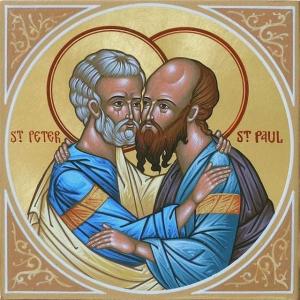
Some groups of Christians try to claim the Bible for themselves. They make it sound like the Catholic Church is opposed to Scripture. Some even claim that the Church “hates” the Bible.
But all Christians owe an enormous debt to the Catholic Church, for it was through the Church that the Bible was given to the world. Jesus himself founded the Catholic Church. He appointed its first leaders, and they were the ones who—under the inspiration of the Holy Spirit—wrote the books of the New Testament, which completed and became the capstone of all the scriptures that had come before.
The Holy Spirit then guided the Catholic Church to discern which books belonged in the Bible and which did not. This involved the crucial process of sorting the true scriptures from all of the false ones that existed.
The Catholic Church laboriously copied the scriptures in the age before the printing press, when every book—including lengthy ones like the Bible—had to be written by hand. It thus preserved these books through the centuries, unlike so many ancient works that have now been lost.
The Catholic Church is why we have the Bible today, and everyone should be grateful for the gift that, by the grace of God, it has given to the world.
The Bible is a Catholic book!
The Bible is a Catholic Book (2019) by Jimmy Akin, Catholic Answers Press

We think because the bible is so readily available today that it was always that way. Mike Aquilina explains…
“YOU SEARCH THE SCRIPTURES, because you think that in them you have eternal life; and it is they that bear witness to me” (John 5:39). We search the Scriptures all the time. Google or Duck-DuckGo is here to help. We can just send a search engine off to find whatever we want in the Bible. Every conceivable translation is in our pockets, along with millions and millions of words of commentaries to help us understand—or misunderstand—what we’re reading.
Even before the age of the Internet, the Bible was everywhere. If you checked into a hotel, the Gideons had been there before you and made sure there was a Bible in the nightstand by the bed. Street preachers kept boxes of New Testaments to give away. You could get a cheap paperback Bible for a couple of dollars, or a lavishly illustrated coffee-table edition. It was slightly harder to find Catholic Bibles than Protestant Bibles, but only slightly—you didn’t have to work very hard.
All this means that we live in an age where everyone can have a Bible. Our parents lived in that age, too, and so did our grandparents. Unless we have lived in some totalitarian country where Bibles were banned, we’ve never known a world where that wasn’t true. This is a luxury our ancestors never dreamed of. We can “search the Scriptures” in seconds.
And here Mike gets to his main point.
In the ancient world, searching the Scriptures was a job for specialists, and it took the skill of a lifetime. Even in Alexandria, where the famous Library supposedly kept a copy of every book in existence, finding something in a particular book was hard work—assuming you could find the particular book in the first place. It takes some real imagination to go back fifteen or twenty centuries to an age when ordinary people didn’t have Bibles. But if we don’t put in that work, we’ll misunderstand the early Christians completely. They didn’t live in our world, and their encounters with Scripture happened in one main context: the liturgy. That was where they heard Scripture. And just as important, that was where they heard Scripture interpreted.
-How the Fathers Read the Bible: Scripture, Liturgy, and the Early Church (2022) by Mike Aquilina Emmaus Road Publishing.

And now here is a lengthy reading on our topic
for your biblical historical knowledge
a selection from the public domain work
Where We Got the Bible: Our Debt to the Catholic Church (1911)
by Henry Grey Graham
(March 8, 1874 – December 5, 1959)

Dedicated to ALL LOVERS OF THE WRITTEN WORD OF GOD.
In which are certain things hard to be understood, which the
unlearned and unstable wrest, as they do also the other
scriptures, to their own destruction. – 2 Peter 3:16
I would not believe the Gospel unless moved thereto by the
authority of the Church. – Saint Augustine of Hippo
If all were true that is alleged against the Catholic Church in
her treatment of Holy Scripture, then the proper title of
these papers should be not ‘How we got‘, but ‘How we have
not got the Bible’. The common and received opinion about
the matter among non-Catholics in Britain, for the most part,
has been that Rome hates the Bible – that she has done all
she could to destroy it – that in all countries where she has
held power and sway she has kept the Bible from the hands
of the people – has taken it and burned it whenever she
found anyone reading it.
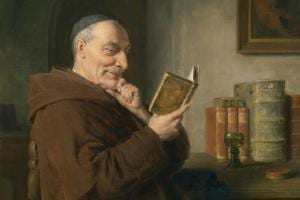
Or if she cannot altogether prevent
its publication or its perusal, at least she renders it as nearly
useless as possible by sealing it up in a dead language
which the majority of people can neither read nor
understand. And all this she does, (so we are told), because
she knows that her doctrines are absolutely opposed to and
contradicted by the letter of God’s written Word – she holds
and propagates dogmas and traditions which could not
stand one moment’s examination if exposed to the
searching light of Holy Scripture.
As a matter of fact, is it not known to everybody that,
when the Bible was for the first time brought to the light
and printed and put into the peoples’ hands in the sixteenth
century, suddenly there was a great revolt against the Roman Church
– there was a glorious Reformation? The people eagerly gazing upon the
open Bible, saw they had been befooled and hoodwinked,
and been taught to hold her doctrines the commandments of
men’, and forthwith throwing off the fetters, and
emancipating themselves from the bondage of Romanism,
they embraced the pure truth of the Word of God as set forth
in Protestantism and Protestant Bibles.
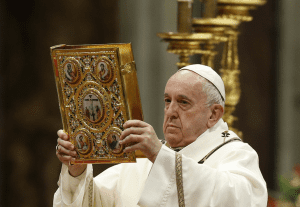
Is not this the tale that history tells about Rome?
Has she not always waged a cruel and relentless war against the Holy Book
– issued prohibitions and framed decrees against reading it, or
having it in the house – sometimes even in her deadly hatred
going the length of making bonfires of heaps of Old and New
Testaments, as Tunstall, Bishop of London, did to William
Tyndale’s? Has she not burned at the stake, or at least
banished from their home and country, servants of the Lord
like John Wycliffe and William Tyndale for no other crime
than that of translating and printing and putting into lay
folk’s hands the sacred text of the gospel of Jesus Christ?
Who does not know instances, even in our own days, of
pious old women (especially in Ireland) chancing to light
upon a Bible (which they have never seen before) and
reading it (especially John 3:16), and going to the priest
about the new light they had received through the blessed
words, and then the priest snatching it out of their hands
and throwing it into the fire? This is not at all uncommon (it
is said) in Catholic lands, where the poor people sometimes
chance to get a copy of God’s Word through the devoted
labours of Bible-women and tract-distributors.
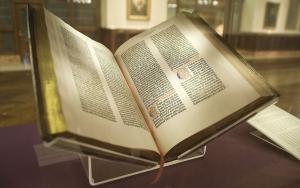
A Scotch lady in Rome, now happily a Catholic but then a member of a
Protestant congregation there which supports a Bible distributor,
once informed me of the account that this
gentleman gravely related to a meeting of the congregation,
as to how an old woman in a small Italian town, accepting
one of his Testaments and being illuminated by the Gospel
of Saint John (which she never saw before, of course, though
part of it is read every day at Holy Mass), straightway went
and confuted her priest and silenced him, so that he had no
word to say in reply. This I repeat, is the commonly accepted
idea about Rome and her attitude towards Holy Scripture
among the masses of non-Catholic people.
People have been acting much in the same way in regard to the assertion
so glibly made that Rome hates the Bible, and persecutes it,
and tries to blot it out of existence. But nowadays many are
enquiring – Is it really so? Are we sure of our facts? Are we
not building up mountains of abuse and calumny on a false
supposition?

By a calm consideration of the facts of history and a mind open to
conviction on genuine evidence, they will be driven by sheer
force of honesty to the conclusion that the Catholic Church,
so far from being the monster of iniquity that she is painted,
has in very truth been the parent, the author and maker
under God, of the Bible; that she has guarded it and
defended it all through the ages, and preserved it from error
or destruction; that she has ever held it in highest
veneration and esteem, and has grounded her doctrines
upon it; that she alone has the right to call it her book; that
she alone possesses the true Bible and the whole Bible, and
that copies of the Scriptures existing outside of her pale, are
partly incorrect and partly defective, and that whatever in
them is true, is true because derived from her alone
possesses the Book in its fullness and its truth.
If they were Catholics, they would love God’s Holy Word more and more;
they would understand it better; they would adore the
Divine Providence that took such a wise and sure means of
preserving and perpetuating it; and they would profoundly
admire the Catholic Church for her ceaseless vigilance,
untiring zeal, and unswerving fidelity to the commission
entrusted to her by Almighty God.
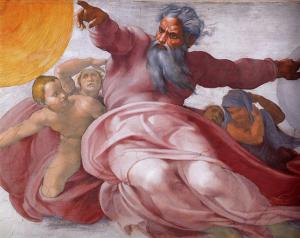
Some Errors Removed
Now, in order to understand properly the work of the
Catholic Church in creating and defending and perpetuating
the Holy Scriptures, we must say a few preliminary words as
to the human means used in their production, and as to the
collecting of the Books of the Bible as we have it at present.
There are some common erroneous ideas which we would do
well to clear away from our minds at the very outset.
1. To begin with, the Bible did not drop down from Heaven
ready-made, as some seem to imagine; it did not suddenly
appear upon the earth, carried down from Almighty God by
the hand of angel or seraph; but it was written by men like
ourselves, who held in their hand pen (or reed) and ink and
parchment, and laboriously traced every letter in the
original languages of the East. They were divinely inspired
certainly, as no others ever have been before or since;
nevertheless they were human beings, men chosen by God
for the work, making use of the human instruments that lay
to their hand at the time.

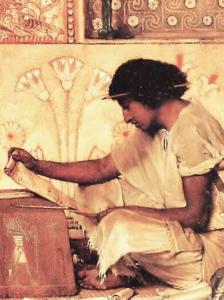
2. In the second place we shall do well to remember that the
Bible was not written all at once, or by one man, like most
other books with which we are acquainted, but that 1500
years elapsed between the writing of Genesis (the first Book
of the Old Testament) and the Apocalypse or Revelation of
Saint John (the last Book of the New). It is made up of a
collection of different books by different authors, forming, in
short, a library instead of a single work, and hence called in
Greek, ‘Biblia’, or the Books.
If you had lived in the days
immediately succeeding the death of Moses, all you would
have had given to you to represent the Bible would have
been the first five books of the Old Testament, written by
that patriarch himself; that was the Bible in embryo, so to
speak – the little seed that was to grow subsequently into a
great tree, the first stone laid on which was gradually to be
erected the beautiful temple of the written Word throughout
the centuries that followed. From this we can see that the
preacher extolling the Bible as the only comfort and guide of
faithful souls was slightly out of his reckoning when he used
these words:
‘Ah, my brethren! what was it that comforted
and strengthened Joseph in his dark prison in Egypt? What
was it that formed his daily support and meditation? What
but that blessed book, the Bible’
As Joseph existed before a line of the Old Testament was penned,
and about 1800 years before the first of the New Testament books saw the light,
the worthy evangelist was guilty of what we call a slight anachronism.
3. Nor will it be out of place to remark here that the Bible
was not written originally in English or Gaelic. Some folks
speak as if they believed that the Sacred Books were first
composed, and the incomparable Psalms of David set forth,
in the sweet English tongue, and that they were afterwards
rendered into barbarous language such as Latin or Greek or
Hebrew, for the sake of inquisitive scholars and critics. This
is not correct; the original language, broadly speaking, of
the Old Testament was Hebrew; that of the New Testament
was Greek.
Thus our Bibles as we have them today for
reading are ‘translations’ – that is, are a rendering or
equivalent in English of the original Hebrew and Greek as it
came from the pen of prophet and apostle and evangelist.
We see this plainly enough in the title-page of the Protestant
New Testament, which reads ‘New Testament of Our Lord and
Saviour Jesus Christ, translated out of the original Greek.’

4. A last point must always be kept clearly in mind, for it
concerns one of the greatest delusions entertained by
Protestants and makes their fierce attacks on Rome appear
so silly and irrational – the point, namely that the Bible, as
we have it now, was not printed in any language at all till
about 1500 years after the birth of Christ, for the simple
reason that there was no such thing as printing known
before that date.
We have become so accustomed to the use
of the printing press that we can scarcely conceive of the
ages when the only books known to men were in
handwriting; but it is the fact that, had we lived and
flourished before Mr John Gooseflesh discovered the art of
printing in the fifteenth century, we should have had to read
our Testaments and our Gospels from the manuscript of
monk or friar, from the pages of parchment or vellum or
paper covered with the handwriting, sometimes very
beautiful and ornamental, of the scribe that had undertaken
the slow and laborious task of copying the Sacred Word.
Protestants in these days send shiploads of printed Bibles
abroad, and scatter thousands of Testaments hither and
thither in every direction for the purpose of evangelising the
heathen and converting sinners, and declare that the Bible,
and the Bible only, can save men’s souls. What, then, came
of those poor souls who lived before the Bible was printed,
before it was even written in its present form? How were
nations made familiar with the Christian religion and
converted to Christianity before the fifteenth century?
Our Divine Lord, I suppose, wished that the unnumbered millions
of human creatures born before the year 1500 should
believe what He had taught and save their souls and go to
Heaven, at least as much as those of the sixteenth and
twentieth centuries; but how could they do this when they
had no Bibles, or were too poor to buy one, or could not read
it even though they bought it, or could not understand it
even if they could read it? On the Catholic plan (so to call it)
of salvation through the teaching of the Church, souls may
be saved and people become saints, and believe and do all
that Jesus Christ meant them to believe and do – and, as a
matter of fact, this has happened – in all countries and in all
ages without either the written or the printed Bible, and
both before and after its production.
The Protestant theory, on the contrary,
which stakes a man’s salvation on the
possession of the Bible, leads to the most flagrant
absurdities, imputes to Almighty God a total indifference to
the salvation of the countless souls that passed hence to
eternity for 1500 years, and indeed ends logically in the
blasphemous conclusion that our Blessed Lord failed to
provide an adequate means of conveying to men in every
age the knowledge of His truth.
We shall see, as we proceed, the utter impossibility of the survival of Christianity,
and of its benefits to humanity, on the principle of ‘the Bible and
the Bible only’. Meanwhile we can account for the fact that
intelligent non-Catholics have not awakened to its
hollowness and absurdity only by supposing that they do
not sufficiently realise, ‘read, mark, learn, and inwardly
digest’ (as the English Prayer-Book says) this single item of
history – the Bible was not printed till at least 1400 years
after Christ.
A Final Thought
Throughout the ages when there was no other Church she
has preserved them from error, saved them from destruction,
multiplied them in every language under Heaven, and put
them with the necessary prudence in her people’s hands.
Again and again heretics and apostates have tried to
mutilate and corrupt them – indeed, have actually done so;
but the Roman Church has ever preserved a version pure
and entire. She claims that she alone knows the meaning of
their teaching, and alone possesses the right to interpret
them to men. She will tolerate no tampering with the sacred
text, and in these days especially, when scientists and critics
who have lost belief in the supernatural attack them and
labour to overthrow their Divine authority and authorship,
Rome alone stands as their protector; to her alone pious
lovers of the Sacred Volume, be they Catholic or Protestant,
must look to save it and defend it.
You Can Read the Whole Thing Here.
Where We Got the Bible (archive.org)
General Christian
Previous Post

September 20, 2024
Ancestors of Popes and Presidents Alive in 1889
Next Post
October 1, 2024 This Month In Life October 2024
Browse Our Archives
Select a Category 1889 abortion adoption Advent After Life Angles apologetics Art Awards BCCT bible book review books business Carmelite Catechetics Catholic Actors catholic authors Catholic Bard Catholic Faith Catholic List Catholic Rigorous Vortex Christian Authors Christmas church teaching civil conversation coronavirus Current Events death Different Religions Divine Mercy Easter Education encouragment Entertainment Eucharist Evangelization Event faith Family Life famous people feast day food Fun Stuff Global Church God guest post Harry Potter healing Heck of a Ride Around the Sun history holiday Holy Family Holy Orders Holy Spirit Holy Week hope Humor Interview Ireland Jesus kindle unlimited reflections Last Things Lecto Divina with Kristin Lent Lent/Easter liturgy love marriage Mary Meet the Author Mission Month in Advance Movie Review Movies Movies of the Month Music Narrative Older Writings patheos authors personal Philosophy podcasts poetry political Politics pope prayer Private Revelation pro-life public domain Quotes racial relations racism reflection Religious Life Saints science Scriptural Meditation social justice Social Media spirituality suffering supernatural theology Topics Travel Trivia Tweeting to the Choir Uncategorized universal church Vatican virtue war Week in Review women world religions writing Writing Write Now
Select a Month October 2026 September 2026 August 2026 July 2026 June 2026 May 2026 April 2026 March 2026 February 2026 January 2026 December 2025 November 2025 October 2025 September 2025 August 2025 July 2025 June 2025 May 2025 April 2025 March 2025 February 2025 January 2025 December 2024 November 2024 October 2024 September 2024 August 2024 July 2024 June 2024 May 2024 April 2024 March 2024 February 2024 January 2024 December 2023 November 2023 October 2023 September 2023 August 2023 July 2023 June 2023 May 2023 April 2023 March 2023 February 2023 January 2023 December 2022 November 2022 October 2022 September 2022 August 2022 July 2022 June 2022 May 2022 April 2022 March 2022 February 2022 January 2022 December 2021 November 2021 October 2021 September 2021 August 2021 July 2021 June 2021 May 2021 April 2021 March 2021 February 2021 January 2021 December 2020 November 2020 October 2020 September 2020 August 2020 July 2020 June 2020 May 2020
Follow Us!
TAKE THE
Religious Wisdom Quiz
Who were the first man and woman according to Genesis?
Select your answer to see how you score.
Adam and Eve Cain and Abel Noah and his wife Abram and Sarai
Books by This Author Books by Catholic Bard
Related posts from Catholic Bard

Looking For Good Catholic Writing - October 2026
Catholic Teaching On Tough Issues
I want to Live and Die as a...
TRENDING AT PATHEOS Catholic

When Halloween Unmasks Married Hearts
Written by Dr. David K. Ewen from Eternal Truth Bible College Behind...

Aristotle. He’s been called the father of logic, the father of the...

Methodist Central Hall and Westminster Abbey
Situated on the same square is Methodist Central Hall and Westminster Abbey. ...

57th Dove Awards Honor Dolly Parton, Crown New...
On gospel music’s biggest night, the 57th annual GMA Dove Awards honored...

The First Eucharistic Controversy: Christ’s Real Presence
For Catholics, the Eucharist is the source and summit of the Christian...

What a Stop Sign Can Teach Us About...
How to Make a Decision When You Can't Hear God Main point:...
view all Catholic blogs
Ad-Free & Subscriber Log-In Subscription Support
- About Us
- 2026 Calendar
- Videos
- Podcasts
- Library of World Religions
- Faith In Media Tracker
- Advertise With Us
- Write for Us
- Privacy Policy
- Terms of Service
- Do Not Sell My Data
- Contact Us
- Radiant Digital
- Manage Newsletter Subscriptions
- Unsubscribe From Notifications
- Sitemap
Copyright 2008-2026, Patheos. All rights reserved.
Subscription Support Ad-Free & Subscriber Log-In
Follow Patheos