
BuddhistCatholicContemplativeEvangelicalGeneral ChristianHinduJewishLatter-day SaintMuslimNew VisionsProgressive Christian
Beliefs
- Buddhist
- Catholic
- Contemplative
- Evangelical
- General Christian
- Hindu
- Jewish
- Latter-day Saint
- More Voices
- Muslim
- New Visions
- Pagan
- Progressive Christian
Topics
- Religion News
- Food and Religion
- Sports and Religion
- Religious Art
- Religious Music and Entertainment
- Religious Events
- History and Religion
- Style and Religion
- Politics and Religion
- Women in Religion
- Recreation Outdoors and Religion
- Business Finance and Religion
- Careers Workplace and Religion
- Education and Religion
- Family Parenting and Religion
- Health Fitness and Religion
- Home and Religion
- Relationships and Religion
- Technology and Religion
- Travel and Religion
Columnists
- Buddhist Columnists
- Business Finance and Religion Columnists
- Careers Workplace and Religion Columnists
- Catholic Columnists
- Contemplative Columnists
- Education and Religion Columnists
- Evangelists Columnists
- Family Parenting and Religion Columnists
- General Christian Columnists
- Health Fitness and Religion Columnists
- Hindu Columnists
- History and Religion Columnists
- Home and Religion Columnists
- Jewish Columnists
- More Voices Columnists
- Latter Day Columnists
- Muslim Columnists
- New Visions Columnists
- Nonreligious Columnists
- Pagan Columnists
- Politics and Religion Columnists
- Progressive Columnists
- Recreation Outdoors and Religion Columnists
- Relationships and Religion Columnists
- Religion News Columnists
- Religious Art Columnists
- Religious Events Columnists
- Religious Music and Entertainment Columnists
- Sports and Religion Columnists
- Style and Religion Columnists
- Technology and Religion Columnists
- Travel and Religion Columnists
- Women in Religion Columnists
Resource Library
- 2026 Calendar
- Library of World Religions
- The 100 Most Holy Places on Earth
- Patheos Answers
- Podcasts
- Videos
- Faith Leaders Database
- Anglican Episcopalian
- Bahai
- Baptist
- Buddhism
- Christianity
- Confucianism
- Eastern Orthodoxy
- Hinduism
- Holiness and Pentecostal
- ISKCON
- Islam
- Judaism
- Lutheran
- Methodist
- The Church of Jesus Christ of Latter-day Saints
- New Age
- Paganism
- Presbytarian and Reformed
- Protestantism
- Religion Behind the Scenes
- Roman Catholic
- Scientology
- Shia Islam
- Sikhism
- Sufism
- Sunni Islam
- Taoism
- Zen
- See all religions
Research Tools
 Ad-Free & Subscriber Log-In Subscription Support
Ad-Free & Subscriber Log-In Subscription Support
Follow Patheos 

- Trending:
- Forgiveness
- |
- Marriage
- |
- Consciousness
- |
- Death Penalty
- |
- Election
- |
- Halloween

- Home
- Catholic
- Vatican II and the Eastern Rite Churches
Vatican II and the Eastern Rite Churches
Last updated on: July 30, 2024 at 7:00 am by Mark Wilson
Vatican II and the Eastern Rite Churches 2024-07-13T21:00:02-05:00 Mark Wilson
Patheos Explore the world's faith through different perspectives on religion and spirituality! Patheos has the views of the prevalent religions and spiritualities of the world.
‘Our first duty is to spread the name and reign of Christ more widely every day,
and to call back the mutinous and the wandering to the bosom of the Church.’
-Pope Leo XIII
The above quote is the attitude that is expressed throughout the Vatican 2 documents. This ecumenical synod wished to build bridges to those outside the mainstream of faith instead of building up walls with anathemas, like they had in previous councils. “Vatican 2 is a major change in direction within the history of the Church: that is to say, calling an Ecumenical Council not to react to opposition, but to act positively toward the growth of the Universal Church.“ (1) I have run across various Catholics whom think that anything less then condemnation of other’s religious beliefs is equal to abandoning the truth of our faith. They fail to realize that forcing the vinegar of truth down the throats of others rarely leads to true conversion and that offering the truth with the honey of divine charity tends to draw others out of seclusion and into meaningful dialogue.
The Holy Spirit did indeed blow new life into the Catholic Church through the 2nd Vatican council. This new life in the spirit helped to repave the way the church dealt with various groups inside and outside the church. It is refreshing to my soul to see a church that does not lord it over others, but with humility, gently tries to lead the way for others to come back into the bosom of the church. This is especially true in the case of the Eastern Churches that have reunited with Rome.
I found ‘The Decree on the Catholic Eastern Churches ‘ to be a strange document indeed. Strange because it deals with a particular section of our church that I never seem to run into or hear much about. I like many others, when thinking of the spiritual heritage and tradition of the Catholic Church, have thought of only the western part of the church, not realizing that our church has many traditions that run back centuries.
“The attitude generally found is that if you are a Catholic, then you go to church as I do, you worship as I do, you do the things in our church that I do in mine. If you do not, then you are not a Catholic. It rarely occurs to a Western Rite Catholic, more specifically to a Roman Rite Catholic, that there are literally millions of true Catholics of whom the above description, in fact not true. “ (2)
It is important for us as Catholics to remember that there is one body in Christ and that the body is made up of many members. It’s too easy to become complacent and puffed up with pride thinking our own particular way of doing things is the only way that it has every been, ever will be, and shall be. I see this attitude prevalent in many Catholics, who in wishing to stay faithful to Christ and his teachings, tend to forget about gentleness and compassion when dealing with others who have not come to the same conclusion about the same general spiritual matters they have been convicted in heart about. This attitude usually leads to alienating those we would want to reach out. This attitude doesn’t build bridges but puts up walls. Lumen Gentium states the obvious truth that those who are Non-Catholic Christians are still united to us through faith and baptism If they who are not united visibly to the church are still considered a part of the People of God, how much more so are they who are considered by the church to be an official visible part of the church, worthy of being treated the same by the rest of the faithful?
There is much literature and information I have run across having to do with heretical, anti-catholic, and schismatic groups, but not a lot to do with a whole particular church group that has once again reunited with Rome, after splitting off from them. But this little talked about section of the church is very important indeed, as the council fathers thought the Eastern Church important enough to dedicate a whole document just to them. If this group of reunited brothers and sisters in Christ is important to the hierarchy of our church they should also be important to us as well.
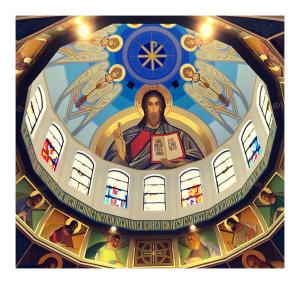
R. D. Barry
Dome of St John the Baptist Ukrainian Church Flickr
The Eastern Rite Church is somewhat like the Prodigal Son who has returned home after wondering off into the world to seek his own way. Instead of filling the returning son with shame and regret for leaving, the father pours love upon the son and makes him feel welcome. The Vatican 2 fathers makes every Eastern Church that comes back into reunion with Rome feel welcome by allowing them to retain their own individual identities as a church. They don’t force a generation of Christians to abandon a whole culture of spiritual heritage that make up their identity as a church. “Lest we be an obstacle to the salvation of Men through the harshness of our judgment”-(OE 26: ) One of the key points to individual identity in this case is maintaining their liturgical rites. “Each and every Catholic, as also the baptized of every non-Catholic church or denomination who enters into the fullness of the Catholic communion, must retain his own rite wherever he is, must cherish it and observe it to the best of his ability.” – (OE 4)
Though the Eastern Church has been separated for quite some time from mother church, the Church recognizes that the Holy Spirit has been working within the Eastern Traditions. “History, tradition and abundant ecclesiastical institutions bear outstanding witness to the great merit owing to the Eastern Churches by the universal Church.” – (OE: 5.) When you recognize the truth, know matter how big or how small, within the faith traditions of other Christians, you help to build bridges to unity, instead of putting up walls to unity. This is why the Vatican 2 documents represent so much the beauty of Christ, because they reflect his inner desire that we all be united in Him.
The reason the church fathers allow them to keep their own liturgical rites is because the rites never violated or went against the rule of faith found in Catholic theology. They expressed differently how the sacred mysteries were celebrated but they still celebrated the same mysteries. Recognizing this spiritual truth is one of the ways Orientation Ecclesiarum builds bridges and not walls. It seeks to highlight what Eastern Churches have in common with the church they have reunited with. “All members of the Eastern Rite should know and be convinced that they can and should always preserve their legitimate liturgical rite and their established way of life,“ OE 6
By allowing Eastern Churches to maintain their own liturgical rites, they are acknowledging that the Holy Spirit is always working to maintain certain aspects of the truth even with those who are not visibly united to Rome. The Eastern Church has kept a great deal of what the church has always taught when she broke off from her. This is one of the reasons why it was not as hard for the Eastern Church to reunite with the Western Church and one of the reasons why they did not have to abandon their liturgical heritage. God works in all people at all times. The ways that one can express their worship of God is not just limited to one particular rite of liturgy. The five different liturgical rites of the Eastern church express the different ways that God has allowed his sons and daughters to worship him. It’s interesting and amazing to know that there are so many different rites and just as interesting to know that there are 22 autonomous churches in which these rites reside. It was true in the ancient church as well as the present day church that there are more then just one liturgical rite. The different rites came to life from the various cultures that were brought into the fold of the church. “Our Lord did not define any specific rite. He gave only the essential elements of Divine Liturgy, Sacraments, prayer life, spiritual principles, but did not specify their celebration or the mode of practicing them. We must not wonder then that ceremonies and rites lack uniformity. Different peoples have different characteristics, varying national customs, their own peculiar traditions, and their own singular ways of living which undoubtedly exert influence on divine worship. (3) Those who claim that Vatican 2 destroyed the only true legitimate Latin Mass that has been with us from the dawn of the church, with the water- downed irreverent Novus Ordu Mass fail to realize that there is several more legitimate rites held within the Eastern church and that they are a full and not just partial member of our universal Catholic family.
The liturgical rites also include the right and responsibility for the sacraments to be distributed to the faithful by her Eastern Priests. “The Sacred Ecumenical Council confirms and approves the ancient discipline of the sacraments existing in the Eastern Churches, as also the ritual practices connected with their celebration and administration and ardently desires that this should be re-established if circumstances warrant it. (OE 12) I love especially how Christ touches our souls in the sacraments. To hear the priest absolve my sins away or to see a new soul born into Christ through baptism gives joy to my heart. And to know that Church has allowed this with the Eastern church is a pure sign of joy that the Eastern Church is fully participating in the life of Christ and that they are indeed united with the church. The ways in which the sacraments in the Eastern church are disturbed may differ from the west, but never the less are still valid and excepted by the hierarchy of the church.
The liturgical rites within the Eastern Church are not the only tradition that the Catholic Church has allowed them to hold on to. The Church has allowed the Eastern Churches that have come back into communion with Rome to maintain their form of ecclesiastical hierarchy called the Patriarchs. The Patriarchs have been around the church from the earliest times and thus continue to give evidence that the Holy Spirit has maintained certain key aspects of the fullness of faith within their eastern tradition. They recognize the Patriarchs as fathers and heads of their flock. They recognize and allow The Eastern Church to elect new Patriarchs where needed. To allow them to maintain their ecclesiastical authority is another example of building bridges for those outside the mainstream of faith to walk back across the Tiber into walls of the church.
The church not only recognizes the authority of the Patriarchs, but recognizes how important they are for helping restore church unity. “The Eastern Churches in communion with the Apostolic See of Rome have a special duty of promoting the unity of all Christians”. (OE 24) Pope John Paul 2nd greatly stressed the urge and desire that the East part of the solution to the division of unity. “This appeal calls on the Churches of the East and the West to concentrate on the essential: “We cannot come before Christ, the Lord of history, as divided as we have unfortunately been in the course of the second millennium. These divisions must give way to rapprochement and harmony; the wounds on the path of Christian unity must be healed.” “ (3)
The Orthodox church is closest in form and structure to the Catholic Church and the Eastern Churches are Orthodox churches that have reunited with Rome. What better example and model for unity then those within the Eastern churches. They have been reunited with Rome and have been able to maintain their own individual identities as a church in both liturgy and hierarchy. .
The Decree on the Catholic Eastern Churches,’ brought forth by the 2nd Vatican Council really emprises with divine charity how much the church has reached out to those who have journeyed back into the fold of the church. It has allowed them to keep their liturgical rites and their hierarchal system of Patriarchs.
(1)The Other Catholics.
(1) These Are My Rites Finn
(2) The Byzantine Catholics Basil Shereghy
(3) Orientale Lumen 3
Apostolic Letter on the Eastern Churches
His Holiness Pope John Paul II
Promulgated on May 2, 1995
Previous Post
July 25, 2024
Having a Catholic Worldview
Next Post
August 1, 2024 This Month in Life August 2024
Browse Our Archives
Select a Category 1889 abortion adoption Advent After Life Angles apologetics Art Awards BCCT bible book review books business Carmelite Catechetics Catholic Actors catholic authors Catholic Bard Catholic Faith Catholic List Catholic Rigorous Vortex Christian Authors Christmas church teaching civil conversation coronavirus Current Events death Different Religions Divine Mercy Easter Education encouragment Entertainment Eucharist Evangelization Event faith Family Life famous people feast day food Fun Stuff Global Church God guest post Harry Potter healing Heck of a Ride Around the Sun history holiday Holy Family Holy Orders Holy Spirit Holy Week hope Humor Interview Ireland Jesus kindle unlimited reflections Last Things Lecto Divina with Kristin Lent Lent/Easter liturgy love marriage Mary Meet the Author Mission Month in Advance Movie Review Movies Movies of the Month Music Narrative Older Writings patheos authors personal Philosophy podcasts poetry political Politics pope prayer Private Revelation pro-life public domain Quotes racial relations racism reflection Religious Life Saints science Scriptural Meditation social justice Social Media spirituality suffering supernatural theology Topics Travel Trivia Tweeting to the Choir Uncategorized universal church Vatican virtue war Week in Review women world religions writing Writing Write Now
Select a Month October 2026 September 2026 August 2026 July 2026 June 2026 May 2026 April 2026 March 2026 February 2026 January 2026 December 2025 November 2025 October 2025 September 2025 August 2025 July 2025 June 2025 May 2025 April 2025 March 2025 February 2025 January 2025 December 2024 November 2024 October 2024 September 2024 August 2024 July 2024 June 2024 May 2024 April 2024 March 2024 February 2024 January 2024 December 2023 November 2023 October 2023 September 2023 August 2023 July 2023 June 2023 May 2023 April 2023 March 2023 February 2023 January 2023 December 2022 November 2022 October 2022 September 2022 August 2022 July 2022 June 2022 May 2022 April 2022 March 2022 February 2022 January 2022 December 2021 November 2021 October 2021 September 2021 August 2021 July 2021 June 2021 May 2021 April 2021 March 2021 February 2021 January 2021 December 2020 November 2020 October 2020 September 2020 August 2020 July 2020 June 2020 May 2020
Follow Us!
TAKE THE
Religious Wisdom Quiz
Which book is known as the "Weeping Prophet's" book?
Select your answer to see how you score.
Jeremiah Lamentations Ezekiel Isaiah
Books by This Author Books by Catholic Bard
Related posts from Catholic Bard

Looking For Good Catholic Writing - October 2026
Catholic Teaching On Tough Issues
Map of Life is a Good Explanation of...
TRENDING AT PATHEOS Catholic

Methodist Central Hall and Westminster Abbey
Situated on the same square is Methodist Central Hall and Westminster Abbey. ...

57th Dove Awards Honor Dolly Parton, Crown New...
On gospel music’s biggest night, the 57th annual GMA Dove Awards honored...

The First Eucharistic Controversy: Christ’s Real Presence
For Catholics, the Eucharist is the source and summit of the Christian...

What a Stop Sign Can Teach Us About...
How to Make a Decision When You Can't Hear God Main point:...

Archdiocese Hosts Military Marriage Retreat in Germany
RASTATT, Germany — The transient military lifestyle, with its frequent deployments and...

Nearly every morning, I make the drive to Detroit with my high-school-age...
view all Catholic blogs
Ad-Free & Subscriber Log-In Subscription Support
- About Us
- 2026 Calendar
- Videos
- Podcasts
- Library of World Religions
- Faith In Media Tracker
- Advertise With Us
- Write for Us
- Privacy Policy
- Terms of Service
- Do Not Sell My Data
- Contact Us
- Radiant Digital
- Manage Newsletter Subscriptions
- Unsubscribe From Notifications
- Sitemap
Copyright 2008-2026, Patheos. All rights reserved.
Subscription Support Ad-Free & Subscriber Log-In
Follow Patheos