
BuddhistCatholicContemplativeEvangelicalGeneral ChristianHinduJewishLatter-day SaintMuslimNew VisionsProgressive Christian
Beliefs
- Buddhist
- Catholic
- Contemplative
- Evangelical
- General Christian
- Hindu
- Jewish
- Latter-day Saint
- More Voices
- Muslim
- New Visions
- Pagan
- Progressive Christian
Topics
- Religion News
- Food and Religion
- Sports and Religion
- Religious Art
- Religious Music and Entertainment
- Religious Events
- History and Religion
- Style and Religion
- Politics and Religion
- Women in Religion
- Recreation Outdoors and Religion
- Business Finance and Religion
- Careers Workplace and Religion
- Education and Religion
- Family Parenting and Religion
- Health Fitness and Religion
- Home and Religion
- Relationships and Religion
- Technology and Religion
- Travel and Religion
Columnists
- Buddhist Columnists
- Business Finance and Religion Columnists
- Careers Workplace and Religion Columnists
- Catholic Columnists
- Contemplative Columnists
- Education and Religion Columnists
- Evangelists Columnists
- Family Parenting and Religion Columnists
- General Christian Columnists
- Health Fitness and Religion Columnists
- Hindu Columnists
- History and Religion Columnists
- Home and Religion Columnists
- Jewish Columnists
- More Voices Columnists
- Latter Day Columnists
- Muslim Columnists
- New Visions Columnists
- Nonreligious Columnists
- Pagan Columnists
- Politics and Religion Columnists
- Progressive Columnists
- Recreation Outdoors and Religion Columnists
- Relationships and Religion Columnists
- Religion News Columnists
- Religious Art Columnists
- Religious Events Columnists
- Religious Music and Entertainment Columnists
- Sports and Religion Columnists
- Style and Religion Columnists
- Technology and Religion Columnists
- Travel and Religion Columnists
- Women in Religion Columnists
Resource Library
- 2026 Calendar
- Library of World Religions
- The 100 Most Holy Places on Earth
- Patheos Answers
- Podcasts
- Videos
- Faith Leaders Database
- Anglican Episcopalian
- Bahai
- Baptist
- Buddhism
- Christianity
- Confucianism
- Eastern Orthodoxy
- Hinduism
- Holiness and Pentecostal
- ISKCON
- Islam
- Judaism
- Lutheran
- Methodist
- The Church of Jesus Christ of Latter-day Saints
- New Age
- Paganism
- Presbytarian and Reformed
- Protestantism
- Religion Behind the Scenes
- Roman Catholic
- Scientology
- Shia Islam
- Sikhism
- Sufism
- Sunni Islam
- Taoism
- Zen
- See all religions
Research Tools
 Ad-Free & Subscriber Log-In Subscription Support
Ad-Free & Subscriber Log-In Subscription Support
Follow Patheos 

- Trending:
- Forgiveness
- |
- Marriage
- |
- Consciousness
- |
- Death Penalty
- |
- Election
- |
- Halloween

- Home
- Catholic
- History and Religion
- Renascence, Reformation, Trent & Guadalupe Change 16th Cent
Renascence, Reformation, Trent & Guadalupe Change 16th Cent
Last updated on: June 11, 2024 at 3:00 am by Mark Wilson
Renascence, Reformation, Trent & Guadalupe Change 16th Cent 2024-06-11T03:00:06-05:00 Mark Wilson
Patheos Explore the world's faith through different perspectives on religion and spirituality! Patheos has the views of the prevalent religions and spiritualities of the world.
Last Time on HORATS
Gutenberg & Columbus Expand the World in the 15th Century MARCH 04, 2024
Now We Enter into the
16th Century
1500 – 1549
16th century: c. 1500 – 1600 – Oxford Reference
Popes 215 – 221 reigned on the throne of St. Peter.
0 Saint Popes
0 Blessed Pope
7 Non – Sainted Popes
0 Anti – Popes
Some of my information came from…
Kelly, Martin. “A Timeline of North American Exploration: 1492–1585.” ThoughtCo, Apr. 5, 2023,
Timeline-of-Exploration-1492-1585
1500’s
1500: Pedro Álvares Cabral (1467–1520) was a Portuguese nobleman and military commander who was the first European to discover Brazil and who claimed it for Portugal.
Learn More.. The Discovery of Brazil
1500: Vicente Yáñez Pinzón (c. 1462 – after 1514) was a Spanish navigator and explorer, the youngest of the Pinzón brothers. Along with his older brother, Martín Alonso Pinzón (c. 1441 – c. 1493), who captained the Pinta, he sailed with Christopher Columbus on the first voyage to the New World, in 1492,[4] as captain of the Niña.Yáñez Pinzón. In 1500, the Spanish navigator, explorer and conquistador Vicente Yáñez Pinzón became the first documented European to sail up the Amazon River.
1501: Amerigo Vespucci (1454–1512) was an Italian merchant, explorer, and navigator from the Republic of Florence, from whose name the term “America” is derived. He explored the Brazilian coast and realized (unlike Columbus) that he had found a whole brand spanking new continent.
Learn More…. Amazon.com: The Portuguese Empire: by Captivating History.
1501: Michelangelo returns to his native Florence to begin work on the statue David.
Jan 1, 1502 – The first reported African slaves arrive in the New World
1502– Leonardo serves as military engineer and cartographer to Cesare Borgia; traveling with the army throughout Romagna. Leonardo designs a bridge for the Sultan.
The Italian Renaissance was a stage on which art and history, literature and politics, science and warfare were inextricably entangled: Leonardo, Machiavelli, and Borgia were as much involved in this entanglement as any others. Leonardo, Machiavelli, and Borgia: as the lives of these disparate individuals unfold, we see how each illustrates an aspect of the Renaissance—its art, its philosophy, and its wars. Borgia was the actor strutting the boards, Machiavelli plotted the devious script, while Leonardo painted the set and designed the ingenious mechanical devices that shifted the scenery.
Learn More…
The Artist, the Philosopher, and the Warrior: The Intersecting Lives of Da Vinci, Machiavelli, and Borgia and the World They Shaped by Paul Strathern,
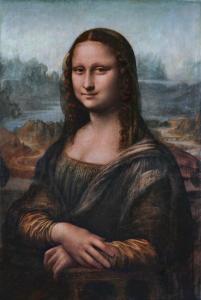
1503: Leonardo da Vinci begins painting the Mona Lisa and completes it three years later.
1504: Leonardo da Vinci was given the commission by gonfaloniere Piero Soderini, a contract signed by Niccolò Machiavelli, to decorate the Palazzo Vecchio‘s Salone dei Cinquecento (Hall of the Five Hundred). At the same time his rival Michelangelo, who had just finished his David, was designated the opposite wall. This was the only time that Leonardo da Vinci and Michelangelo worked together on the same project.
1505: The world’s first watch was crafted by the German inventor, locksmith and watchmaker Peter Henlein from Nuremberg.
July 17 1505: Martin Luther enters St. Augustine’s Monastery at Erfurt, Germany and begins his journey to instigating the Protestant Reformation.
1506: St. Peter Faber (April 13, 1506 – 1 August 1, 1546) is born. He was a Jesuit priest and theologian, who was also a co-founder of the Society of Jesus, along with Ignatius of Loyola and Francis Xavier. Pope Francis announced his canonization in 2013.
1506: Christopher Columbus (between August 25, and October 31, 1451 – May 20,1506) dies in Valladolid, Spain.
1506: The Mona Lisa portrait painting is finished by Italian artist Leonardo da Vinci. Leonardo may have continued working on it as late as 1517.
1507: The first recorded epidemic of smallpox in the New World on the island of Hispaniola. It devastates the native Taíno population.
The Agony and the Ecstasy is a 1965 American historical drama film directed by Carol Reed and starring Charlton Heston as Michelangelo and Rex Harrison as Pope Julius II. The film was partly based on Irving Stone‘s 1961 biographical novel of the same name, and deals with the conflicts of Michelangelo and Pope Julius II during the 1508-1512 painting of the Sistine Chapel ceiling. It also features a soundtrack by prolific composers Alex North and Jerry Goldsmith.
Jun 11, 1509: Prince Henry (future Henry VIII of England) marries his first wife Catherine of Aragon.
June 24, 1509: Henry VIII becomes King of England;
1509: John Calvin founder of Calvinism, (July 10, 1509 – 27 May 27, 1564) is born in France.
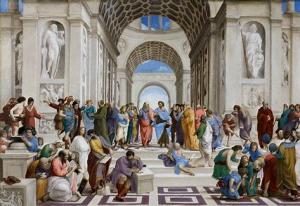
1509 and 1511: The School of Athens (Italian: Scuola di Atene) is a fresco by the Italian Renaissance artist Raphael. The fresco was painted between as a part of Raphael’s commission to decorate the rooms now known as the Stanze di Raffaello, in the Apostolic Palace in the Vatican. It depicts a congregation of philosophers, mathematicians, and scientists from Ancient Greece, including Plato, Aristotle, Pythagoras, Archimedes, and Heraclitus. The Italian artists Leonardo da Vinci and Michelangelo are also featured in the painting, shown as Plato and Heraclitus respectively. The School of Athens (c. 1511)
1510: Bartolomé de Las Casas, (born August 1474, Sevilla?—died July 17, 1566, Madrid), Spanish historian and missionary, called the Apostle of the Indies. He sailed on Christopher Columbus’s third voyage (1498) and later became a planter on Hispaniola (1502). In 1510 he became the first priest ordained in the Americas.
1510’s
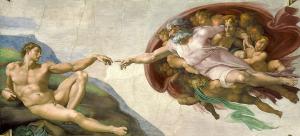
1512: Michelangelo’s Sistine Chapel is completed, under the patronage of Pope Leo X.
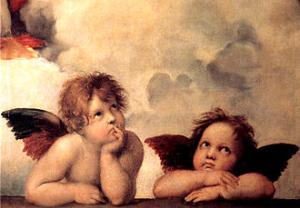
Sistine Madonna (1512) by Raphael painting was commissioned in 1512 by Pope Julius II for the church of San Sisto,
1512: Copernicus writes Commentariolus, and proclaims the sun the center of the solar system.
1512: The first Portuguese exploratory expedition was sent eastward from Malacca (in present-day Malaysia) to search for the ‘Spice Islands‘ (Maluku) led by Francisco Serrão. Serrão is shipwrecked but struggles on to Hitu (northern Ambon) and wins the favour of the local rulers.
1512–1517: Catholic Ecumenical Council # 18 –Fifth Lateran Council.
This council called to restore peace between Catholic leaders and affirm papal authority, but little was done to implement it
December 27 1512: The King and Queen of Spain issued the Laws of Burgos, a set of rules for how Spaniards were to treat Native Americans in the Caribbean islands colonized by Spain.
1513: Vasco Núñez de Balboa (c. 1475 – around January 12–21, 1519) was a Spanish explorer, governor, and conquistador. He is best known for having crossed the Isthmus of Panama to the Pacific Ocean in 1513, becoming the first European to lead an expedition to have seen or reached the Pacific from the New World.
1513: Juan Ponce de León (ACH Podcast) the Spanish explorer and conquistador (1474–1521) finds and names Florida. As legend has it, he searches for the Fountain of Youth but doesn’t find it.
1513: Machiavelli writes The Prince, a treatise about political philosophy.
“The lion cannot protect himself from traps, and the fox cannot defend himself from wolves. One must therefore be a fox to recognize traps, and a lion to frighten wolves.”
1514: Oratory of Divine Love founded in Rome after the teachings of St. Catherine of Genoa.
1515: St. Philip Neri is born in Florence; he will go on to found several lay religious groups.
1516: Utopia by Saint Thomas More(February 7, 1478 – July 6, 1535) is written
It’s better to have enough of what we really need than an abundance of superfluities.”
1516: Díaz de Solís becomes the first European to land in Uruguay, but most of his expedition is killed and perhaps eaten by local people.
1517: Martin Luther publishes the Ninety-Five Theses in Wittenberg, triggering the beginning of the Protestant Reformations.
1518: Leo Africanus, also known as al-Hasan ibn Muhammad al-Wazzan al-Fasi, an Andalusian Berber diplomat who is best known for his book Descrittione dell’Africa (Description of Africa), is captured by Spanish pirates; he is taken to Rome and presented to Pope Leo X.
1518: Dancing plague of 1518
The Dance Tree (1922) by Kiran Millwood Hargrave is a fictionalized version of the summer of Dancing Plague 1518 in Strasbourg.

1518: The Treaty of London was a non-aggression pact between the major European nations. The signatories were Burgundy, France, England, the Holy Roman Empire, the Netherlands, the Papal States and Spain, all of whom agreed not to attack one another and to come to the aid of any that were under attack.
January 1, 1519: – Ulrich Zwingli preaches for the first time, as people’s priest of the Great Minister in Zürich.
March 4, 1519– Hernán Cortés and his conquistadores land in Mexico.
Alonso Álvarez de Pineda (1494–1520) the Spanish conquistador and cartographer sails from Florida to Mexico, mapping the gulf coast along the way and landing in Texas.
1519: Ferdinand Magellan (February 4, 1480 – April 27, 1521) was a Portuguese explorer. He is best known for having planned and led the 1519 Spanish expedition to the East Indies across the Pacific Ocean to open a maritime trade route, during which he discovered the interoceanic passage bearing thereafter his name and achieved the first European navigation from the Atlantic to Asia.
1519: Hernán Cortés (1485–1547) the Spanish conquistador defeats the Aztecs and conquers Mexico.
1520’s
1520: Petrus Apianus (April 16, 1495 – April 21, 1552) Petrus Apianus’s 1520 world map is one of the most important early maps of the world, and the earliest map available on the market to name America. The first available printed map to bear the name… | Daniel Crouch (crouchrarebooks.com)
1521: Diet of Worms called by Emperor Charles V.
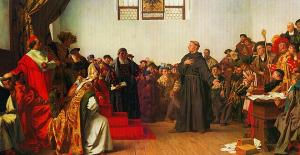
Luther at the Diet of Worms, by Anton von Werner, 1877
1521: St. Peter Canisius (May 8, 1521 – December 21, 1597) born in the Netherlands. He becomes a Doctor of the church in 1925.
1521: Portuguese explorer Ferdinand Magellan, (February 4, 1480 – April 27, 1521) funded by Charles V of Spain, sails around South America into the Pacific. Despite Magellan’s death in 1521, his expedition becomes the first to circumnavigate the globe.
1521: Henry VIII receives the title “Defender of the Faith” from Pope Leo X King Henry VIII of England wrote ‘Septum Sacramentorum’. This pamphlet defended the Catholic Seven Sacraments against the attack made by Luther in ‘On the Babylonian Captivity of the Church’. The Pope gave King Henry the title ‘Fidei Defensor’ (Defender of the Faith).
September 6, 1522– The Victoria one of the surviving ships of the Magellan expedition, returns to Sanlúcar de Barrameda in Spain, under the command of Juan Sebastián Elcano, becoming the first ship to circumnavigate the world.
1522-De arte supputandi libri quattuor was the first printed work on arithmetic published in England. Published in 1522, it was written by Cuthbert Tunstall, Bishop of London, and based on Luca Pacioli‘s Summa de arithmetica, geometria, proportioni et proportionalità. It is dedicated to Sir Thomas More.
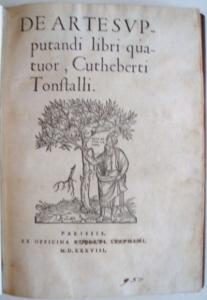
1522 : Martin Luther’s German edition of the New Testament is published.
1523: Spanish conquistador Pánfilo de Narváez (1485–1541) becomes governor of Florida but dies along with most of his colony after dealing with a hurricane, attacks by Indigenous groups, and disease.
1524: In a French-sponsored voyage, Italian explorer Giovanni de Verrazzano (1485–1528) discovers the Hudson River before sailing north to Nova Scotia.
1524: The Spiritual Exercises of Saint Ignatius is written.
“Love ought to manifest itself in deeds rather than in words…. love consists in a mutual sharing of goods, for example, the lover gives and shares with the beloved what he possesses, or something of that which he has or is able to give; and vice versa, the beloved shares with the lover. Hence, if one has knowledge, he shares it with the one who does not possess it; and so also if one has honors, or riches. Thus, one always gives to the other.”
1524–1525: German Peasants’ War.
February 3, 1525 – The Anabaptist movement began. Anabaptists are Christians that believe that baptism should not occur until later in life when the subject is able to confess their sins. Anabaptists were disliked by both Catholics and Protestants.
1525–1528: Venerable Caritas Pirckheimer (March 21, 1467 – August 19, 1532) was Abbess of Saint Clara’s convent in Nuremberg and lead the Poor Clares in fighting for their monastery to stay Catholic and stay open.
1528: The Capuchin Franciscan Order began as a renewal of the Order of Friars Minor. The friars of this reform movement wanted a life more focused on prayer and a stricter observance of poverty. These men were also fervent preachers of the Gospel and compassionate servants of the sick and suffering in their day.
1526: Cosmography and geography of Africa was published by Leo Africanus (c. 1494 – c. 1554). It contained the first detailed descriptions published in Europe of the Barbary Coast (modern Morocco, Algeria, and Tunisia) and the gold-trading kingdoms of west-central Africa.
1527: Protestant Reformation begins in Sweden.
1527 – 1529:
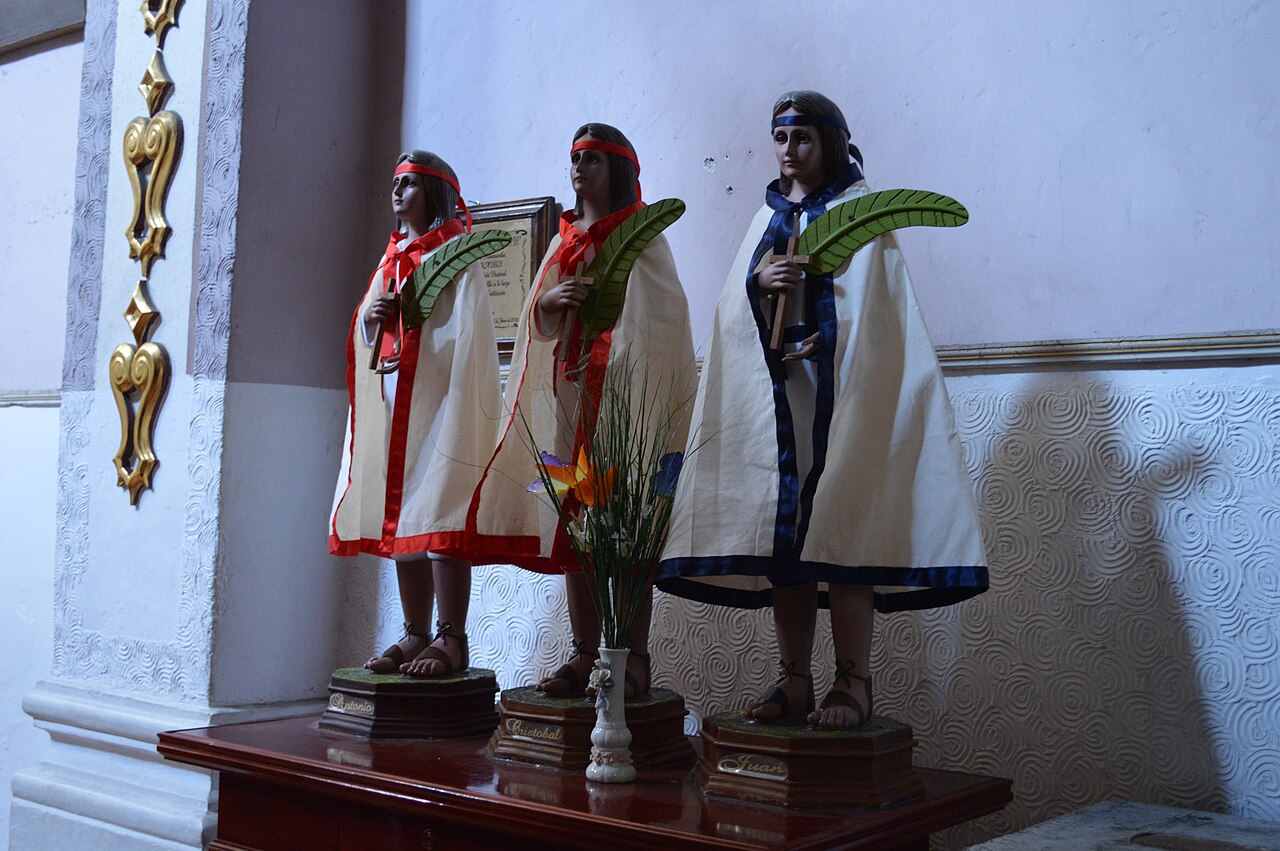
Sts. Cristobal, Antonio and Juan (d. 1527-29), Children of the Diocese of Tlaxcala; Martyrs (Tlaxcala, Mexico)
Canonized: 15 October 2017 by Pope Francis
Feast September 23
The Martyrs of Tlaxcala were three Mexican Roman Catholic teenagers from the state of Tlaxcala: The three Teenagers were converts from the indigenous traditions of their families to the Roman Catholic faith and received their educations from the Order of Friars Minor who baptized them and evangelized in the area. Their activism and evangelical zeal led to their deaths at the hands of those who detested their newfound faith and perceived them as dangers to their values and rituals.- From Wikipedia
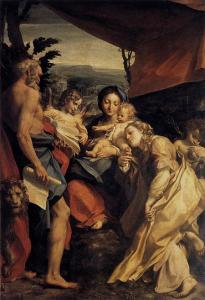
1528: Antonio da Correggio– Madonna of St. Jerome
1529: Siege of Vienna initiated by the Ottoman Turks.
1530’s
1530: **Ivan the Terrible (**August 25, 1530 – March 28, 1584) is born.
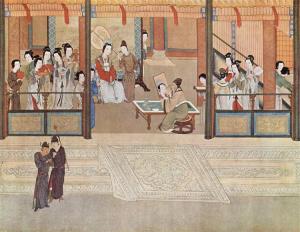
1530: Spring morning in the Han Palace by Qiu Ying – WikiArt.org
1530: Kõpu Lighthouse is one of the best known symbols and tourist sights on the Estonian island of Hiiumaa. It is one of the oldest lighthouses in the world having been in continuous use since its completion in 1531.
1531:Our Lady of Guadalupe–
- December 9 – The Virgin of Guadalupe first appears to Juan Diego at Tepeyac, Mexico City.
- December 12 – Mary, mother of Jesus, in the guise of Our Lady of Guadalupe, appears imprinted on the tilmàtli of Juan Diego Cuauhtlatoatzin, an Aztec convert to Catholicism, in Tepeyac near Mexico City.
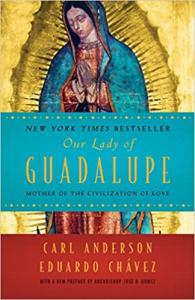
Learn More: Our Lady of Guadalupe | Catholic Central – YouTube
1531: August 26 – Comet Halley achieves its perihelion.
1531: October 11 – Battle of Kappel: The forces of Zürich are defeated by the Catholic cantons. Huldrych Zwingli **(**January 1, 1484 – 11 October 11, 1531) the Swiss religious reformer, is killed in battle. He was a leader of the Reformation in Switzerland, born during a time of emerging Swiss patriotism and increasing criticism of the Swiss mercenary system.
1532: In Peru, Spanish conquistador Francisco Pizarro (1475–1541) conquers the Inca Empire.
1533: Thomas Cranmer (July 2, 1489 – March 21, 1556) is appointed Archbishop of Canterbury and annuls Henry’s 24-year marriage to Catherine of Aragon (December 16, 1485 – January 7, 1536). He then marries his second wife Anne Boleyn (c. 1501 or 1507 – May 19, 1536).
1533: Elizabeth I (September 7, 1533 – 24 March 24, 1603) is born. She was Queen of England and Ireland from November 17, 1558 until her death in 1603. Elizabeth was the last monarch of the House of Tudor and is sometimes referred to as the “Virgin Queen.
1533: Ursuline order founded by St. Angela Merici (March 21, 1474 – January 27, 1540). She died on my birthday.
1534–1536: Spanish explorer Álvar Núñez Cabeza de Vaca (1490–1559), explores from the Sabine River to the Gulf of California. When he arrives in Mexico City, his tales reinforce ideas that the Seven Cities of Cibola (aka Seven Cities of Gold) exist and are located in New Mexico.
1534: Anabaptist rebellion begins in Münster, Germany.
1534: Nov 28- The Act of Supremacy declares Henry VIII of England the head of the Church in England and not the Pope.
1535: French explorer Jacques Cartier (1491–1557) explores and maps the Gulf of Saint Lawrence.
1535: St, John Fisher (c. October 19, 1469 – June 22, 1535 )is beheaded before the Vigil of the feast of the Nativity of St. John the Baptist on June 23. The public saw the sinister irony in the parallels between the conviction of Fisher and that of his patronal namesake, Saint John the Baptist, who was executed by King Herod Antipas for challenging the validity of Herod’s marriage to his brother’s divorcée Herodias.And King Henry couldn’t have that hanging over his head.
1535: St. Thomas More (February 7, 1478 – July 6, 1535) is executed in England for refusing to take the Oath of Supremacy,saying King Henry was the head of the church. He was convicted of treason and executed. On his execution, he was reported to have said: “I die the King’s good servant, and God’s first”.
Jan 9, 1536: Catherine of Aragon first wife of Henry VIII of England dies of Cancer.
May 19, 1536: Anne Boleyn, second wife of Henry VIII dies by execution at the Tower of London.
1536- Henry VIII marries his third wife, Jane Seymour (c. 1508 – October 24, 1537).
1536 – 1541: The Dissolution of the monasteries and nunneries of England was a set of administrative and legal processes between 1536 and 1541 by which Henry VIII disbanded monasteries, priories, convents, and friaries in England, Wales, and Ireland, expropriated their income, disposed of their assets, and provided for their former personnel and functions.
1536: John Calvin published ‘Institutes of the Christian Religion’. This book defined Protestant religion according to Calvin (Calvinism).
1537: William Tyndale‘s (c. 1494 – c. October 6, 1536) partial translation of the Bible into English is published, which would eventually be incorporated into the King James Bible.
1538: St. Charles Borromeo (October 2, 1538 – November 3, 1584) cardinal and leader of the Catholic Reformation, born in Italy.
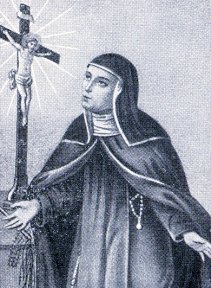
December 21, 1539 – Blessed Maria Llorença Requenses Llong (1463 – December 21, 1539) was a Spanish Roman Catholic professed religious and the founder of the Capuchin Poor Clares. Llong founded the hospital of “Santa Maria del Popolo” in Naples where she relocated to (and where she was widowed) and which received numerous papal privileges from Pope # 217 Non-Saint Leo X (March 9, 1513 –
December 1, 1521 -8 years, 267 days)and Pope # 218 Non-Saint Adrian VI (January 9, 1522 – September 14, 1523 – 1 year, 248 days)
1539: Henry VIII of England approves the translation of the Bible into English.
1539: French Franciscan friar Fray Marcos de Niza (1495–1558), sent by the Spanish governor of Mexico (New Spain), explores Arizona and New Mexico searching for the Seven Cities of Gold and foments rumor-mongering in Mexico City that he has seen the cities when he returns.
1539–1542: Spanish explorer and conquistador Hernando de Soto (1500–1542) explores Florida, Georgia, and Alabama, meets the Mississippian chiefdoms there and becomes the first European to cross the Mississippi River, where he is killed by the locals.
1540’s
January 6, 1540: Henry VIII marries his fourth wife, Anne of Cleves (1515 – July 16, 1557).
July 12, 1540: Henry VIII gets an annulment from Anne of Cleves.
July 28, 1540: Henry VIII of England marries his fifth wife, Catherine Howard (c. 1524 – 13 February 13, 1542).
1540: The Society of Jesus (Jesuit order) is founded in Paris by Ignatius of Loyola and his six companions.
1540–1542: Spanish conquistador and explorer Francisco Vásquez de Coronado (1510–1554) leaves Mexico City and explores the Gila River, the Rio Grande, and the Colorado River. He reaches as far north as Kansas before returning to Mexico City. He too searches for the legendary Seven Cities of Gold.
1541: The Amazon River is encountered and explored by Francisco de Orellana (1511 – November 1546).
1541: The Genevan Consistory instituted as part of the implementation of John Calvin’s Ecclesiastical Ordinances. It is a council of the Protestant Church of Geneva similar to a synod in other Reformed churches.
1542: Spanish (or possibly Portuguese) conquistador and explorer Juan Rodriguez Cabrillo (1497–1543) sails up the California Coast and claims it for Spain.
1542: Fr, Juan de Padilla, OFM (1500–1542) (ACH Podcast) Fr. Juan was a Spanish Catholic priest and missionary who spent much of his life exploring North America with Francisco Vásquez de Coronado. He was killed in Kansas by Native Americans, and is considered to be one of the first Christian martyrs in the U.S..
1542: Bartolomé Ferrelo (1499–1550), the Spanish pilot for Cabrillo continues his expedition up the California coast and reaches what is probably present-day Oregon.
1542: Spanish mystic St. John of the Cross (June 24, 1542 – December 14,1591) is born.
1542: The Roman Inquisition begins. It began as part of the Catholic Church’s Counter-Reformation against the spread of Protestantism, but it represented a less harsh affair than the previously established Spanish Inquisition.
1542: **Bartolomé de las Casas’**s (November 11, 1484– 18 July 18,1566 ) A Short Account of the Destruction of the Indies is published.
Feb 1542: Catherine Howard is accused of adultery and executed in the Tower of London.
July 1543: Henry VIII of England marries his sixth and final wife, Catherine Parr (1512 – September 5,1548).
1543: Followers of Hernando De Soto continue his expedition without him, sailing from the Mississippi River to Mexico.
1543: On the Revolutions of the Heavenly Spheres by Nicolaus Copernicus (February 18, 1473 – May 24, 1543) is published. His book offered mathematical arguments for the existence of the heliocentric universe, denying the geocentric model. The Earth and other planets orbited the sun and not the sun orbiting the earth.
This book is seen as the start of the the Scientific Revolution . a series of events that marked the emergence of modern science during the early modern period, when developments in mathematics, physics, astronomy, biology (including human anatomy) and chemistry transformed the views of society about nature.
1545–1563: Ecumenical Council # 19- The Council of Trent defined the Church’s position in the Catholic Reformation.
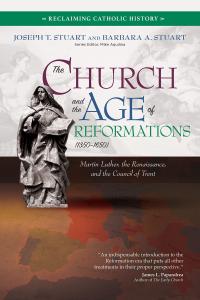
Catholics finally took up the widespread call for reform in a systematic way at the Council of Trent (1545–1563), the very city the ineffectual Luigi d’Aragona passed through on his tour. This council was so important and so comprehensive that another like it was not needed for four hundred years—until Vatican Council II (1962–1965). Even then, Vatican II was more about “updating” the faith than reform of systematic abuses. The Age of Reformations resulted in the fragmenting of Western Christianity but also in new forms of Christian life and culture.
The Church in the Age of Reformations provides a case study in the principles of true reform and in the challenging conditions of the time that obscured them. While most Christians would agree that “true reform is a matter of regaining and maintaining the true image of Christ, and the true reformer is the one who most fully expresses the image of Christ in all facets of life,” what does that mean at the institutional level? That is where Christians have disagreed with each other ever since the Age of Reformations.
Joseph T. Stuart and Barbara A. Stuart The Church and the Age of Reformations (1350–1650): Martin Luther, the Renaissance, and the Council of Trent (Reclaiming Catholic History) (2022 ) Ave Maria Press
1546: Michelangelo Buonarroti is made chief architect of St. Peter’s Basilica.
1546: Francis Xavier works among the peoples of Ambon, Ternate and Morotai (Moro) laying the foundations for a permanent mission. (to 1547)
1547: Grand Prince Ivan the Terrible is crowned tsar of (All) Russia, thenceforth becoming the first Russian tsar.
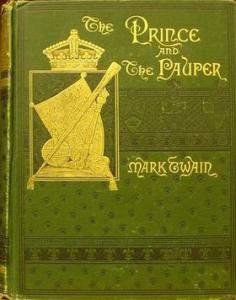
The Prince and the Pauper is a novel by American author Mark Twain. It was first published in 1881 in Canada, before its 1882 publication in the United States. The novel represents Twain’s first attempt at historical fiction. The plot concerns the ascension of nine-year-old Edward VI of England in 1547 and his interactions with look-alike Tom Canty, a London pauper who lives with his abusive, alcoholic father.
1548: Askia Daoud, who reigned from 1548 to 1583, establishes public libraries in Timbuktu (in present-day Mali).
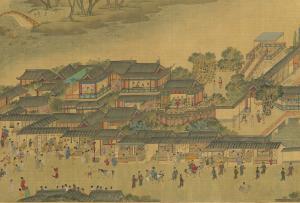
1548: The Ming Dynasty government of China issues a decree banning all foreign trade and closes down all seaports along the coast; these Hai jin laws came during the Wokou wars with Japanese pirates.
Scenes of everyday life in Ming China, by Qiu Ying

1549: June 9 – The Book of Common Prayer is introduced in English churches; the Prayer Book Rebellion against it breaks out in the West Country
Next Time on
HOARATS
Gregorian Exploration & Reformation Expand The 16th Century APRIL 9, 2024
To Understand
What I love and How I Write About History
Hit the Link Above.
To understand about this particular series I’m writing about, please read
The Catholic Bard’s Guide To History Introduction
And to view a historical article click on
Hindu
History and Religion
Previous Post

April 1, 2024
This Month in Life April 2024
Next Post

April 9, 2024 Gregorian Exploration & Reformation Expand The 16th Century
Browse Our Archives
Select a Category 1889 abortion adoption Advent After Life Angles apologetics Art Awards BCCT bible book review books business Carmelite Catechetics Catholic Actors catholic authors Catholic Bard Catholic Faith Catholic List Catholic Rigorous Vortex Christian Authors Christmas church teaching civil conversation coronavirus Current Events death Different Religions Divine Mercy Easter Education encouragment Entertainment Eucharist Evangelization Event faith Family Life famous people feast day food Fun Stuff Global Church God guest post Harry Potter healing Heck of a Ride Around the Sun history holiday Holy Family Holy Orders Holy Spirit Holy Week hope Humor Interview Ireland Jesus kindle unlimited reflections Last Things Lecto Divina with Kristin Lent Lent/Easter liturgy love marriage Mary Meet the Author Mission Month in Advance Movie Review Movies Movies of the Month Music Narrative Older Writings patheos authors personal Philosophy podcasts poetry political Politics pope prayer Private Revelation pro-life public domain Quotes racial relations racism reflection Religious Life Saints science Scriptural Meditation social justice Social Media spirituality suffering supernatural theology Topics Travel Trivia Tweeting to the Choir Uncategorized universal church Vatican virtue war Week in Review women world religions writing Writing Write Now
Select a Month October 2026 September 2026 August 2026 July 2026 June 2026 May 2026 April 2026 March 2026 February 2026 January 2026 December 2025 November 2025 October 2025 September 2025 August 2025 July 2025 June 2025 May 2025 April 2025 March 2025 February 2025 January 2025 December 2024 November 2024 October 2024 September 2024 August 2024 July 2024 June 2024 May 2024 April 2024 March 2024 February 2024 January 2024 December 2023 November 2023 October 2023 September 2023 August 2023 July 2023 June 2023 May 2023 April 2023 March 2023 February 2023 January 2023 December 2022 November 2022 October 2022 September 2022 August 2022 July 2022 June 2022 May 2022 April 2022 March 2022 February 2022 January 2022 December 2021 November 2021 October 2021 September 2021 August 2021 July 2021 June 2021 May 2021 April 2021 March 2021 February 2021 January 2021 December 2020 November 2020 October 2020 September 2020 August 2020 July 2020 June 2020 May 2020
Follow Us!
TAKE THE
Religious Wisdom Quiz
Where was Jesus' first miracle performed?
Select your answer to see how you score.
Cana Capernaum Nazareth Jerusalem
Books by This Author Books by Catholic Bard
Related posts from Catholic Bard

Looking For Good Catholic Writing - October 2026
Catholic Teaching On Tough Issues
The Homeless at Home by Blessed Fulton Sheen
An Irishman Against American Slavery
TRENDING AT PATHEOS Catholic

In one sense walking into Westminster Abbey is like walking down the...

'Super Scam Me' Exposes AI Jon Bon Jovi...
Leslie Pickett believed she was in a relationship with Jon Bon Jovi....

The Brazilian Remake of Kendricks' 'Flywheel' Opens in...
“Flywheel,” the story that launched the Kendrick Brothers’ filmmaking career is getting...

The Dangers of Gradual Accommodation (Winking at Sin)
Recently, the “law of gradualness” resurfaced during the opening of a weeklong,...

The Iron Gates and the Lion of the...
Yesterday, I didn't finish my report about, well, yesterday. So I'll...

The Image: On the Horror of Capitalism and...
The Image Then went the Pharisees, and took counsel how they might...
view all Catholic blogs
Ad-Free & Subscriber Log-In Subscription Support
- About Us
- 2026 Calendar
- Videos
- Podcasts
- Library of World Religions
- Faith In Media Tracker
- Advertise With Us
- Write for Us
- Privacy Policy
- Terms of Service
- Do Not Sell My Data
- Contact Us
- Radiant Digital
- Manage Newsletter Subscriptions
- Unsubscribe From Notifications
- Sitemap
Copyright 2008-2026, Patheos. All rights reserved.
Subscription Support Ad-Free & Subscriber Log-In
Follow Patheos