
BuddhistCatholicContemplativeEvangelicalGeneral ChristianHinduJewishLatter-day SaintMuslimNew VisionsProgressive Christian
Beliefs
- Buddhist
- Catholic
- Contemplative
- Evangelical
- General Christian
- Hindu
- Jewish
- Latter-day Saint
- More Voices
- Muslim
- New Visions
- Pagan
- Progressive Christian
Topics
- Religion News
- Food and Religion
- Sports and Religion
- Religious Art
- Religious Music and Entertainment
- Religious Events
- History and Religion
- Style and Religion
- Politics and Religion
- Women in Religion
- Recreation Outdoors and Religion
- Business Finance and Religion
- Careers Workplace and Religion
- Education and Religion
- Family Parenting and Religion
- Health Fitness and Religion
- Home and Religion
- Relationships and Religion
- Technology and Religion
- Travel and Religion
Columnists
- Buddhist Columnists
- Business Finance and Religion Columnists
- Careers Workplace and Religion Columnists
- Catholic Columnists
- Contemplative Columnists
- Education and Religion Columnists
- Evangelists Columnists
- Family Parenting and Religion Columnists
- General Christian Columnists
- Health Fitness and Religion Columnists
- Hindu Columnists
- History and Religion Columnists
- Home and Religion Columnists
- Jewish Columnists
- More Voices Columnists
- Latter Day Columnists
- Muslim Columnists
- New Visions Columnists
- Nonreligious Columnists
- Pagan Columnists
- Politics and Religion Columnists
- Progressive Columnists
- Recreation Outdoors and Religion Columnists
- Relationships and Religion Columnists
- Religion News Columnists
- Religious Art Columnists
- Religious Events Columnists
- Religious Music and Entertainment Columnists
- Sports and Religion Columnists
- Style and Religion Columnists
- Technology and Religion Columnists
- Travel and Religion Columnists
- Women in Religion Columnists
Resource Library
- 2026 Calendar
- Library of World Religions
- The 100 Most Holy Places on Earth
- Patheos Answers
- Podcasts
- Videos
- Faith Leaders Database
- Anglican Episcopalian
- Bahai
- Baptist
- Buddhism
- Christianity
- Confucianism
- Eastern Orthodoxy
- Hinduism
- Holiness and Pentecostal
- ISKCON
- Islam
- Judaism
- Lutheran
- Methodist
- The Church of Jesus Christ of Latter-day Saints
- New Age
- Paganism
- Presbytarian and Reformed
- Protestantism
- Religion Behind the Scenes
- Roman Catholic
- Scientology
- Shia Islam
- Sikhism
- Sufism
- Sunni Islam
- Taoism
- Zen
- See all religions
Research Tools
 Ad-Free & Subscriber Log-In Subscription Support
Ad-Free & Subscriber Log-In Subscription Support
Follow Patheos 

- Trending:
- Forgiveness
- |
- Marriage
- |
- Consciousness
- |
- Death Penalty
- |
- Election
- |
- Halloween

- Home
- Catholic
- I cannot believe that I am more merciful than God
I cannot believe that I am more merciful than God
Last updated on: November 30, 2022 at 1:13 am by Kristin Wilson
I cannot believe that I am more merciful than God 2022-11-30T01:13:52-05:00 Kristin Wilson
Patheos Explore the world's faith through different perspectives on religion and spirituality! Patheos has the views of the prevalent religions and spiritualities of the world.
I just recently attended a memorial service for someone who died and was raised Catholic. I think they were anyway. They had a prayer service done by a Catholic priest regardless. I don’t think the deceased person attended church or lived out a Catholic life. He wasn’t wicked as far as I know and was a decent good guy who loved his family, friends and good music. Despite not being totally dedicated to the Catholic faith he was unofficially canonized during that service by the priest while at the same time having prayers said for his soul.
I honestly hope that doesn’t happen to me when I die. I actually want a funeral and not a prayer service. I have seen several prayer services and celebrations of life for people I know who died in recent years. Some of whom were raised Catholic. I want the emphasis at my funeral to be on praying for my soul that is hopefully in purgatory. Or better and hopefully not worse. In the Catholic faith I hope to live and die.
Why assume someone is in heaven despite the disregard for anything our faith teaches about how to get to heaven? Hell is a real possibility for those who reject the faith. For those who carelessly and casually just disregard it?
But then again I can’t assume the worst either despite the lack of evidence for the contrary. It really wouldn’t be a prudent decision to tell a room full of grieving people, “Your loved one might be in hell but sorry for your loss.”
Where are the souls of those good people who died but did not live out a particularly Catholic life. Fr. Mike gives a good answer to this question.
This deep question about Eternal Destiny was pondered about in a conversation on Twitter that I came across not too long ago.
Metalifex@SamuelA88226271: (Feb 3)
When I became a father of several very disobedient little boys I finally came to realize how God could love me.
I can discipline my children, but I can never disown them. For better or worse, they are mine.
I cannot believe that I am more merciful than God.
CatholicBard: This is very true. And this is an appropriate topic on this Divine Mercy Sunday. And now Steve Skojec, founder of the Trad website One Peter Five ,who has been in a spiritual drought, bares his soul with heartfelt concern for humanity.
Steve Skojec: @SteveSkojec: (Feb 4)
This has changed me as well. 8 kids, 1 of them a wayward stepchild, 5 of them rowdy boys, all of them people I treated, too often & for too long, almost as mercilessly as I thought God would treat me. But it was wrong and I knew it. I felt it. I had to change. A father’s heart cannot conceive of a thing like hell. We do not torture those we love. Not even when they’re wrong. And certainly, never without a chance at redemption.
But even if we were to grant that our present life should be so decisive, and that somehow, without really knowing if any of what Christianity teaches us is true, we still believe, there’s still so much margin for error. If the saints/private rev. are to be believed, most people don’t go to hell for acts of real malice. They’re not murdering and committing genocide and raping and abusing. They’re doing common human sins of the flesh, or not going to Church, or not going to confession (because they’re not sure it does anything), etc. Many aren’t Catholic or even Christian. Statistically, if EENS is true, the vast majority of people who go to hell go because they don’t believe in something they’ve never believed & don’t know that they SHOULD believe. Christianity is a minority view in the world. Always has been.
CatholicBard: For those who don’t know what EENS means “Outside the Church there is no salvation” (Extra ecclesiam nulla sal)
Steve Skojec: @SteveSkojec: So at the very least, for the people who are trying to live as decently as they know how within the cultural mores they find themselves in, even if that entails a good deal of what Catholics would class as sin, you’d think they shouldn’t be tortured for all eternity for that.
And for all the Catholics who have tried to be decent, but largely fallen short — especially those influenced by a very lax and uninspiring ecclesiastical culture — again, do they get tortured forever for being Christmas & Easter Catholics? Eating meat on Lenten Fridays?
None of that makes sense. None of any of it does. If God truly wants us to be with him, why does he make it so damn hard to believe? Why does he give us a Church that is one of the most corrupt institutions on the planet and make us slaves to it out of required obedience?
CatholicBard: Steve really asks some great and heartfelt questions here. I symphonize with the thoughts here and get annoyed when too many Catholics and other Christians just easily dismiss these concerns. You don’t have to look hard to find the opinion that most of humanity is going to hell. This has been a dominant theological opinion since the time of Augustine. But it is not the only view nor is it the official view of the church. Some believe that in the end everyone will be saved. Some believe in a variation popularized by theologian Hans Vons Balthazar and Bishop Robert Barron called ‘Dare We Hope’. This proposes that we do not know for certain anyone is in hell but the possibility remains and we hope that people don’t end up there. It is not universalism.
David Mills posted on Facebook-
“Hell is to be contemplated strictly as a matter which concerns me alone. As part of the spiritual life it belongs behind the ‘closed door’ of my own room.
From the standpoint of living faith, I cannot fundamentally believe in anyone’s damnation but my own; as far as my neighbor is concerned, the light of resurrection can never be so obscured that I would be allowed or obliged to stop hoping for him.”— Hans Urs von Balthasar Thanks to Mark DeFrancisis for the quote.
This is not universalism. Universalism is not an accepted position of Catholic faith. But those who do actually believe it are believing in it for very good reasons.
In this last section of this article here are some answers to some objections to those who hold a universalist objection by a former fellow Patheos Catholic writer and First Peter Five contributor Avellina Balestri.
While I am in the cautiously optimistic “Dare we hope” camp, I do run into a lot of poor arguments leveled against Universalists/Restorationists by their fellow Christians which I think should be set straight.
- The position denies the merits of the Cross.
It really doesn’t…if anything, Universalists are saying the merits of the Cross are so powerful in bearing the burdens of sin and its effects that ultimately, no matter how windy the road may be, all evil will be consumed wholly and all creatures freed from its deforming grasp. I get that opposition might be raised with regards to the need to accept this gift, explicitly or implicitly, but the hope for Universalists is that no one would resist it eternally and God would triumph through their redemption by being “all in all.”
- It denies judgement and punishment.
Most Universalists are believers in some type of post-mortem punishment, though they see it as ultimately serving to bring the individual to recognize their own wrong-headedness and repent. In essence, they believe in a justice that has the power to lead towards reformation. That having been said, some of the most chilling descriptions of hell I have read are from Universalist literary giant George MacDonald, who combined the idea of separation from God with His love wrongly received akin to a “black flame”, in which the sinner is allowed to be his own god and surrendered to the torments of his own twisted soul, a truly nightmarish prospect.
- It denies free will.
Free will is one of the better defenses for hell, everlasting or otherwise, with C.S. Lewis remarking that the doors are locked from the inside. Perhaps this is indeed the case, and some souls are simply too far gone to wake from their own nightmare. I can certainly envision that as a real possibility. If this is the case, though, it still creates an image of God losing a little battle to Satan and our own stubbornness. The Universalist view suggests that even the hardest sinner could not hold out against the divine calling indefinitely, since no matter how deformed we have made ourselves, we are still bearing the image of God. The concept presented, then, is not cohesion on God’s part but a divine appeal that never entirely ceases and ultimately breaks into our hearts by virtue of our only true identity in God.
- “Jesus spoke more about hell than anyone.”
It’s not nearly so clear cut. Yes, it is undeniable He spoke plenty about judgement and punishment throughout the four Gospels, but I think the texts are varied in imagery enough to make arguments possible for unending torment, the annihilation of the unjust, or their ultimate release from bondage. Also, it is often hard to distinguish in many texts whether Christ is talking about a post-mortem punishment or earthly judgement, as certain language involving fire and worms seems to be taken from the Old Testament regarding this-world punishment, and the destruction of Jerusalem is always looming in many of Christ’s warnings. In addition to this, there is the issue of the separation of the righteous and the wicked in the New Heavens and the New Earth, and what exactly “age” means. The debates can and have raged on…but it’s simply not as clear-cut as some people make it.
5. It discourages Evangelism.
I feel like hell, everlasting or otherwise, used as a major tool for Evangelism is quite problematic. It can come off like a strong-arming tactic, especially when the need to insist upon its unending nature is thrown in. This, I believe, turns away more people than it draws in. I am not saying we should cease to warn people about the consequences of sin upon the soul, but this can take many forms that are not solely dependent upon the threat of an everlasting hell. To say Universalists are “bad Christians” for not pulling the everlasting card in order to assure good conduct I think is extremely unfair to them.
6. It is all about emotions.
Honestly, most Universalists I know are not just tufts of fluff who can’t handle the prospect of sin being punished. What they are actually doing is trying to make sense of what Christians have always struggled to interpret sensibly: A loving God being content to allow the endless torment of potentially billions of His creatures for no greater purpose than itself. Both emotions *and* intellect struggle to fit this prospect into the Christian narrative, but it has always required a certain amount of mental gymnastics. Julian of Norwich herself struggled with the prospect, asking how all things could be well when so many souls were to suffer damnation, i.e. endless separation from God. Perhaps I am in the same boat, and always have been. But I continue to pray for and treasure the hope that, somehow, through the divine graciousness, every shattered image of God may yet be repaired, and not one shall go lost who may not, somehow, be found.
Catholic Bard: I would add a 7th reason why Universalists position is understandable. It is because they believe in this.
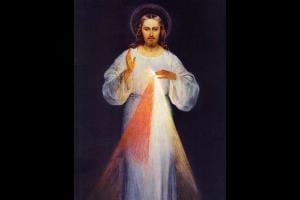
Jesus I Trust In You
I think the reality of eternal destiny is summed up nicely in this quote I found in an article about purgatory. It is one of the best explanations I have ever come across.
The fires of hell, the suffering fires of purgatory, and the all-consuming bliss of beatitude are one thing, the same One. When the soul is freed from the confines, and limits, and filter of the physical body, it rushes back to the Love from whence it proceeded. That soul’s experience of His presence will be hell, purification, or the light of beatitude, depending on its conformity or lack of conformity to God’s love. -Sonja Corbitt Purgatory is a Person – SpiritualDirection.com
Click here for a fuller conversation about his topic. Dare We Have a Conversation About Hope?
And this topic is also included in this post Some Catholic Hot Takes
And some more helpful conversations on this topic.
“Dare We Hope?” FAQ page – Word on Fire
Balthasar’s “Dare We Hope That All Men Be Saved”: A Defense | Gaudium et Spes 22
What “No Salvation Outside the Church” Means | Catholic Answers
I
Previous Post

April 23, 2022
Writing Right Now # 5: Rays of Truth Part 1
Next Post

April 24, 2022 Writing Right Now # 6: Rays of Truth Part 2
Recent Comments
Browse Our Archives
Select a Category 1889 abortion adoption Advent After Life Angles apologetics Art Awards BCCT bible book review books business Carmelite Catechetics Catholic Actors catholic authors Catholic Bard Catholic Faith Catholic List Catholic Rigorous Vortex Christian Authors Christmas church teaching civil conversation coronavirus Current Events death Different Religions Divine Mercy Easter Education encouragment Entertainment Eucharist Evangelization Event faith Family Life famous people feast day food Fun Stuff Global Church God guest post Harry Potter healing Heck of a Ride Around the Sun history holiday Holy Family Holy Orders Holy Spirit Holy Week hope Humor Interview Ireland Jesus kindle unlimited reflections Last Things Lecto Divina with Kristin Lent Lent/Easter liturgy love marriage Mary Meet the Author Mission Month in Advance Movie Review Movies Movies of the Month Music Narrative Older Writings patheos authors personal Philosophy podcasts poetry political Politics pope prayer Private Revelation pro-life public domain Quotes racial relations racism reflection Religious Life Saints science Scriptural Meditation social justice Social Media spirituality suffering supernatural theology Topics Travel Trivia Tweeting to the Choir Uncategorized universal church Vatican virtue war Week in Review women world religions writing Writing Write Now
Select a Month October 2026 September 2026 August 2026 July 2026 June 2026 May 2026 April 2026 March 2026 February 2026 January 2026 December 2025 November 2025 October 2025 September 2025 August 2025 July 2025 June 2025 May 2025 April 2025 March 2025 February 2025 January 2025 December 2024 November 2024 October 2024 September 2024 August 2024 July 2024 June 2024 May 2024 April 2024 March 2024 February 2024 January 2024 December 2023 November 2023 October 2023 September 2023 August 2023 July 2023 June 2023 May 2023 April 2023 March 2023 February 2023 January 2023 December 2022 November 2022 October 2022 September 2022 August 2022 July 2022 June 2022 May 2022 April 2022 March 2022 February 2022 January 2022 December 2021 November 2021 October 2021 September 2021 August 2021 July 2021 June 2021 May 2021 April 2021 March 2021 February 2021 January 2021 December 2020 November 2020 October 2020 September 2020 August 2020 July 2020 June 2020 May 2020
Follow Us!
TAKE THE
Religious Wisdom Quiz
I killed 600 Philistines with nothing but an oxgoad. Who am I?
Select your answer to see how you score.
Gideon Shamgar Samson Ehud
Books by This Author Books by Catholic Bard
Related posts from Catholic Bard

The Homeless at Home by Blessed Fulton Sheen
I want to Live and Die as a...
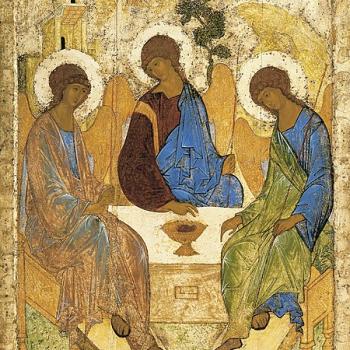
A Meditation of the Mystery of the Trinity
TRENDING AT PATHEOS Catholic

The Iron Gates and the Lion of the...
Yesterday, I didn't finish my report about, well, yesterday. So I'll...

Dolly Parton’s Last Song Wins Dove Award with...
Bluegrass band The Grascals, speaking on the red carpet at the 57th...

The Image: On the Horror of Capitalism and...
The Image Then went the Pharisees, and took counsel how they might...

We are approaching the date of our new American national holiday: October...

Letters on Living the Faith by C.S. Lewis
Most of us met C.S. Lewis as a public intellectual. Mere Christianity....

When Halloween Unmasks Married Hearts
Written by Dr. David K. Ewen from Eternal Truth Bible College Behind...
view all Catholic blogs
What Are Your Thoughts?leave a comment
Comments are closed.
Ad-Free & Subscriber Log-In Subscription Support
- About Us
- 2026 Calendar
- Videos
- Podcasts
- Library of World Religions
- Faith In Media Tracker
- Advertise With Us
- Write for Us
- Privacy Policy
- Terms of Service
- Do Not Sell My Data
- Contact Us
- Radiant Digital
- Manage Newsletter Subscriptions
- Unsubscribe From Notifications
- Sitemap
Copyright 2008-2026, Patheos. All rights reserved.
Subscription Support Ad-Free & Subscriber Log-In
Follow Patheos