
BuddhistCatholicContemplativeEvangelicalGeneral ChristianHinduJewishLatter-day SaintMuslimNew VisionsProgressive Christian
Beliefs
- Buddhist
- Catholic
- Contemplative
- Evangelical
- General Christian
- Hindu
- Jewish
- Latter-day Saint
- More Voices
- Muslim
- New Visions
- Pagan
- Progressive Christian
Topics
- Religion News
- Food and Religion
- Sports and Religion
- Religious Art
- Religious Music and Entertainment
- Religious Events
- History and Religion
- Style and Religion
- Politics and Religion
- Women in Religion
- Recreation Outdoors and Religion
- Business Finance and Religion
- Careers Workplace and Religion
- Education and Religion
- Family Parenting and Religion
- Health Fitness and Religion
- Home and Religion
- Relationships and Religion
- Technology and Religion
- Travel and Religion
Columnists
- Buddhist Columnists
- Business Finance and Religion Columnists
- Careers Workplace and Religion Columnists
- Catholic Columnists
- Contemplative Columnists
- Education and Religion Columnists
- Evangelists Columnists
- Family Parenting and Religion Columnists
- General Christian Columnists
- Health Fitness and Religion Columnists
- Hindu Columnists
- History and Religion Columnists
- Home and Religion Columnists
- Jewish Columnists
- More Voices Columnists
- Latter Day Columnists
- Muslim Columnists
- New Visions Columnists
- Nonreligious Columnists
- Pagan Columnists
- Politics and Religion Columnists
- Progressive Columnists
- Recreation Outdoors and Religion Columnists
- Relationships and Religion Columnists
- Religion News Columnists
- Religious Art Columnists
- Religious Events Columnists
- Religious Music and Entertainment Columnists
- Sports and Religion Columnists
- Style and Religion Columnists
- Technology and Religion Columnists
- Travel and Religion Columnists
- Women in Religion Columnists
Resource Library
- 2026 Calendar
- Library of World Religions
- The 100 Most Holy Places on Earth
- Patheos Answers
- Podcasts
- Videos
- Faith Leaders Database
- Anglican Episcopalian
- Bahai
- Baptist
- Buddhism
- Christianity
- Confucianism
- Eastern Orthodoxy
- Hinduism
- Holiness and Pentecostal
- ISKCON
- Islam
- Judaism
- Lutheran
- Methodist
- The Church of Jesus Christ of Latter-day Saints
- New Age
- Paganism
- Presbytarian and Reformed
- Protestantism
- Religion Behind the Scenes
- Roman Catholic
- Scientology
- Shia Islam
- Sikhism
- Sufism
- Sunni Islam
- Taoism
- Zen
- See all religions
Research Tools
 Ad-Free & Subscriber Log-In Subscription Support
Ad-Free & Subscriber Log-In Subscription Support
Follow Patheos 

- Trending:
- Forgiveness
- |
- Marriage
- |
- Consciousness
- |
- Death Penalty
- |
- Election
- |
- Halloween

- Home
- Catholic
- The Lion Guard VS DC Superheros
The Lion Guard VS DC Superheros
Last updated on: November 30, 2022 at 1:10 am by Mark Wilson
The Lion Guard VS DC Superheros 2022-11-30T01:10:28-05:00 Mark Wilson
Patheos Explore the world's faith through different perspectives on religion and spirituality! Patheos has the views of the prevalent religions and spiritualities of the world.
The Catholic Bard is always looking to share interesting articles about the faith and the world in which that faith is lived. When I spot talented people I want to share their writing talent with others. So Catholic Sci-Fi Writer Caroline Furlong has graciously let me reprint an article by her regarding the issue of good and evil as displayed in the world of popular entertainment. She focuses on this classic struggle by comparing this theme in the Disney Lion King spin off series ‘The Lion Guard’, and the DC Universe super hero clash Batman V Superman. Let her insights excite your imagination
Good vs. Evil – How The Lion Guard Succeeded So Well with Viewers of All Ages
AUGUST 17, 2018 / CAROLINE FURLONG

Some time ago Alex Stump, a writer over at the Castalia House blog, posted an interesting article focusing on the series My Little Pony: Friendship is Magic. Personally, since the art for this show does not appeal to me, neither does the series. But Alex enjoys it, and I benefited from his post, since it reminded me of a show I do like. This would be none other than Disney’s The Lion Guard which, along with My Little Pony, has experienced unforeseen success outside of its target audience.
Along with Mr. Stump, let us investigate why this is. What could possibly make young adults or adults tune in regularly to watch a children’s television show? Do the adults/teens in question watch The Lion Guard because they are
(A) enthusiastic, obsessive fans of The Lion King,
(B) they are nostalgics searching for the childhood they remember or wish they had, or
(C) they have a shameless lack of self-respect and will watch only children’s cartoons?
Each of these three hypothetical answers could very well be true. But Mr. Stump and I have come to a different conclusion: the reason My Little Pony: Friendship is Magic and The Lion Guard have taken off is because viewers are starved for stories with heroism. In both MLP and Lion Guard, the characters are not only called heroes (or, more accurately, heroines in the case of MLP); they actually behave in a consistently heroic manner. Kion and his friends in The Lion Guard have faults, to be sure, but none of these cripple them or poison their good acts.
For a specific example, consider Kion’s accidental summoning of Scar’s spirit in the mid-series film The Rise of Scar. He does this when Janja, a hyena and one of the main antagonists in the series, kidnaps his older sister. After her rescue fails to garner the desired reaction from Kion, the hyena threatens to wipe out the rest of the royal family. He does all of this in order to anger the cub, since only Kion can summon Scar’s spirit.
In the dark about Janja’s motivations, Kion knows only that the hyena is trying to intimidate him. Having struggled previously with his temper and the bad effects it can cause, up until this point Kion has remained remarkably calm. But his enemy’s final scare tactic, coming after the audacious capture of his sister, snaps his control. He uses his special power as leader of the Lion Guard against the hyena in rage. Doing this awakens Scar’s spirit, enabling him to guide the hyenas and other Outlanders in their attacks on the Pride Lands.
While this is a deadly mistake on Kion’s part, it does not compromise his heroic nature. The cub is still a laudable protagonist who espouses truth, justice, and the right despite his error. This one dangerous lapse in his control, while making life harder for him and his friends/family, does not destroy his innate chivalry and valiant character. It does not lessen his heroism because it is not an utterly self-destructive sin on his part.
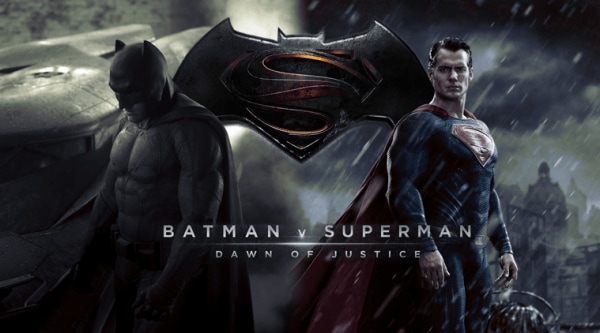
If one compares this protagonist’s behavior with that displayed by the heroes in the film Batman vs. Superman: Dawn of Justice, the picture is different. Neither of these protagonists adheres to the principle in the film’s name; they do not act in a truly just manner, to each other or anyone else, during the course of the movie. This is most obvious in the case of the Dark Knight, who arbitrarily decides that Superman is too dangerous to live and must be killed.
Batman’s decision is an illogical move on the part of the writer(s) which was cloaked in reason. Previous incarnations of this hero showed him struggling to avoid taking the law into his own hands, and Dawn of Justice tries to present the Dark Knight’s actions in this light. A little examination of Bruce Wayne’s motivation, however, shows something else entirely: here, Batman is not preparing to bring Superman down because the Man of Steel has committed an actual crime or appears to be on the brink of doing so.
No, Bruce’s actions are based in pride; he is proud of his status as a genius who has been defending innocent people in his own way for twenty years. Now that this immensely powerful, alien upstart has arrived, he feels his position is being threatened. He therefore comes to see Superman as a threat – a menace he alone recognizes and is capable of defeating – and thus prepares to commit pre-meditated murder.
Although this is a compelling story idea, assigning it to Batman ruins both the character and the premise for the tale. The many years of association the public has with the Dark Knight means they expect him to behave in a certain way; in this case they expect him to at least be reluctant to kill a fellow hero, even if he is justly suspicious of him. Pride has never been a part of Batman’s collection of vices. Neither has paranoia – at least, not to the extreme it would need to be to presage the events of this movie. Bruce Wayne is supposed to be a conflicted hero driven by pain, which is tempered with a strong sense of justice. So when the writers for this film removed the restraining virtue of integrity, all they had left to work with was pain. And pain does not a hero make.
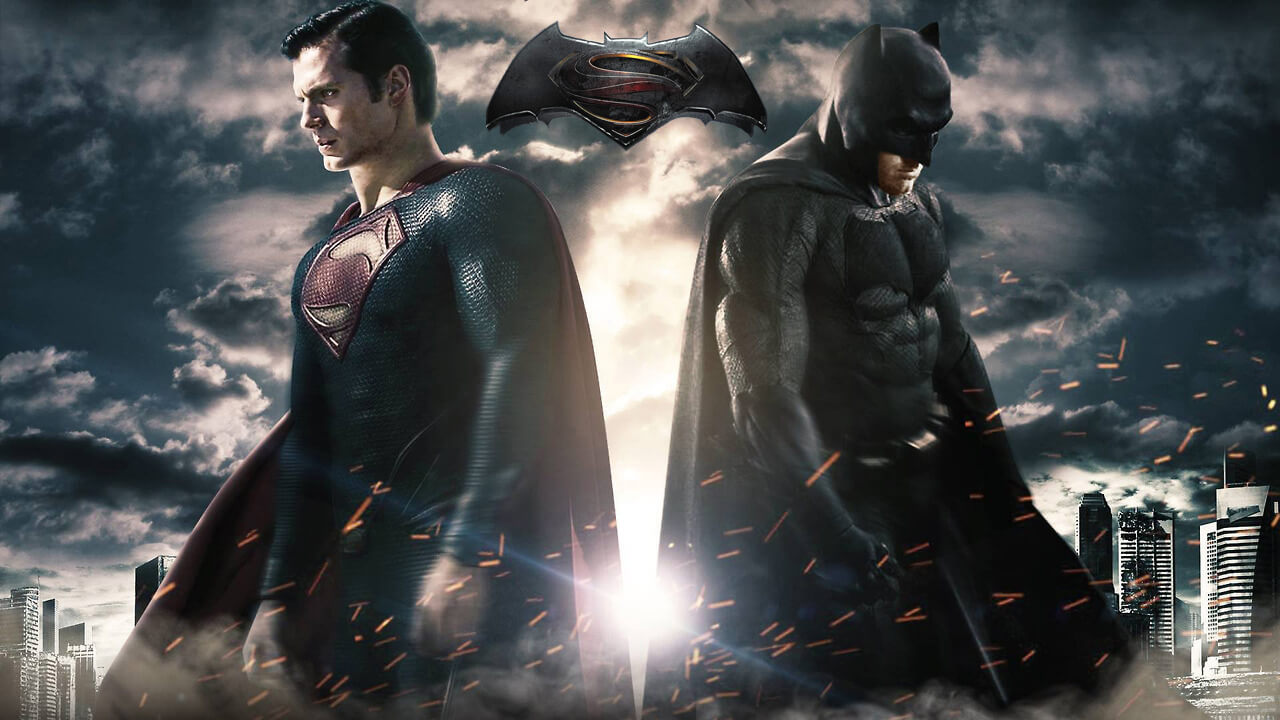
Superman, as mentioned above, fails in his heroic calling during this story as well. While attending a Congressional hearing, a bomb smuggled into the building is set off, killing everyone but Superman. Automatically, due to their long exposure to this hero, the audience expects him to immediately begin searching for the bomber in order that virtue may be restored. This is not what happens; after surviving this crime against life and justice, the hero does not pursue the wrong-doer. He goes into self-imposed exile.
This is not the act of a hero; it is the gross self-indulgence of a teenager who feels bad because he believes he failed. How much heroism is there to be found in a man who abandons his responsibilities because they are “too tough,” a fact that is “proven” by his survival of an attack which killed others? The answer is that there isn’t any heroism in Clark Kent’s actions following the bombing. Instead of adhering the audience’s expectations, the writers have Superman disappear into exile so that he may flagellate himself in private for a crime he did not commit.
Again, this is a valid crisis for a hero to endure, but in Dawn of Justice both the plot point and the character were badly mishandled. One can see this by looking at an example from The Lion Guard. In the episode “Never Roar Again,” Kion tries Dawn’s tactic of self-imposed exile as well. This installment of the series shows viewers what happens when the prince of the Pride Lands uses his “superpower” in anger; it causes massive destruction and almost leads to the death of his beloved mother, Nala. For a time this lapse in control makes Kion distrustful of himself, and he considers giving up the use of his power so that he may be sure he will never endanger those he loves in the future.
Rather than allow him to follow through with this plan, the spirit of Kion’s grandfather advises him to talk to his mother. When he does, Nala quickly puts the kibosh on her son’s natural but selfish and misguided idea of protection. Reminding her boy that his power is a part of him, she urges Kion to trust himself again, proving in the process that her own faith in him does not waver. Rediscovering his self-confidence through his mother’s love, the prince saves Nala from an outside threat with his power before continuing to use it throughout the series.
In this series, as opposed to Dawn of Justice, the protagonist’s heroism is restored by the mature understanding of another. Instead of playing into the (post?) modern trend that considers heroism to be either a lie or something which cloaks the protagonist’s perverse self-interest, this show portrays a boy acting courageously to meet his responsibilities and live up to his ideals. Kion, unlike Batman and Superman, maintains his allegiance to the true, the good, and the beautiful even after he finds that he has the capacity for evil.
This leads to a discussion of another area in which The Lion Guard differs from many “adult” shows and films today: while its protagonists are flawed, these faults do not dominate the good espoused by the heroes. They rise above their sinful nature to meet evil’s challenge, reminding viewers that this is possible for everyone in real life, too. Also, this show and MLP are tonally upbeat, presenting the confident belief that good will (eventually) triumph over evil.
Dawn of Justice lacked both these things. In the first place, it capriciously assigned enormous flaws to two Romantic heroes in order to make them more “believable” and “realistic” to the audience. In reality it accomplished neither feat; both these heroes’ actions are totally out of character with their previous, standard portrayals. In this film Batman has supposedly allowed his passion for justice to become corrupted; the film writer(s) decided that he should no longer believe in letting the law handle criminals but that he should deal out righteousness himself. This leads him to see himself as an incarnation of the law, demonstrated best when he decides that he must become Superman’s jury, judge, and executioner.

On the other hand, the writer(s) make Superman come across as a chump during the film. Rather than conscientiously and sensibly attempting to find out who detonated the bomb in the midst of the Congressional hearing, the Man of Steel retreats from the world stage to punish himself for an act perpetrated by the villain. Unlike the incident in “Never Roar Again,” the bombing in Dawn was NOT Superman’s fault. Yet the writer(s) had him take the blame for it anyway, in order that he might appoint himself an asinine penance. It is a penance that, conveniently, requires him to abandon his higher responsibility to his adopted homeworld so he can make himself and his detractors feel better.
Both these characters are supposed to be heroes. Hypothetically, they should be paragons of virtue; they ought to stand for truth, justice, courage, honor, and “the American Way.” But in the course of this movie, neither of them behaves righteously. Their later, apparently heroic, actions in the film are compromised and carry less weight for this reason. Superman’s moment of self-sacrifice, Batman’s recognition of how far he has fallen – neither incident heals the wounds dealt to the audience by these protagonists’ previously selfish behavior.
This is why the “tone” of the film is so dark. Much like the goblin’s mirror from Hans Christian Anderson’s fairy tale The Snow Queen, this film distorts reality. Through its mistreatment of the characters and grim, occasionally indolent storytelling, the atmosphere of the movie is dim. This in turn darkens the minds of those who view it. In preference to lifting their minds to the higher things in life or reminding them that man can achieve great things in his loyalty to righteousness, this movie blurs the viewers’ vision, making it hard for them to recognize true virtue when they see it.
With this and other examples of the (post?) modern caricatures that degrade heroism, is it any wonder that shows such as My Little Pony: Friendship is Magic and The Lion Guard have taken off into the fictional stratosphere? Their protagonists behave heroically, despite personal cost, and that lends to their narratives a sense of optimism. Life, like an army, survives on good morale. If a man can keep hoping, he can keep living, despite having the whole world arrayed against him.
Readers and future writers, please, please, follow The Lion Guard’s example. Please, tell stories of heroes and heroines who work past and/or overcome their faults. Please tell stories that are optimistic, that give readers/viewers hope for themselves and the future. Millionaires come and go, but artists who give others even an hour’s joy and a renewed sense of hope – their legacy endures beyond their lifetimes.
If you liked this article, friend Caroline Furlong on Facebook or follow her here at www.carolinefurlong.wordpress.com. Her stories have been published in Cirsova’s Summer Special and Unbound III: Goodbye, Earth, while her poetry appeared in the now defunct Organic Ink, Vol. 2*. She has also had stories published in* Planetary Anthologies Luna* and Uranus*. Order them today!
*These are Amazon affiliate links. When you purchase something through it, this author receives a commission from Amazon at no extra charge to you, the buyer.
Previous Post

August 25, 2021
The Significance of August 25
Next Post
August 29, 2021 The Reading and Music List for July and August 2021
Browse Our Archives
Select a Category 1889 abortion adoption Advent After Life Angles apologetics Art Awards BCCT bible book review books business Carmelite Catechetics Catholic Actors catholic authors Catholic Bard Catholic Faith Catholic List Catholic Rigorous Vortex Christian Authors Christmas church teaching civil conversation coronavirus Current Events death Different Religions Divine Mercy Easter Education encouragment Entertainment Eucharist Evangelization Event faith Family Life famous people feast day food Fun Stuff Global Church God guest post Harry Potter healing Heck of a Ride Around the Sun history holiday Holy Family Holy Orders Holy Spirit Holy Week hope Humor Interview Ireland Jesus kindle unlimited reflections Last Things Lecto Divina with Kristin Lent Lent/Easter liturgy love marriage Mary Meet the Author Mission Month in Advance Movie Review Movies Movies of the Month Music Narrative Older Writings patheos authors personal Philosophy podcasts poetry political Politics pope prayer Private Revelation pro-life public domain Quotes racial relations racism reflection Religious Life Saints science Scriptural Meditation social justice Social Media spirituality suffering supernatural theology Topics Travel Trivia Tweeting to the Choir Uncategorized universal church Vatican virtue war Week in Review women world religions writing Writing Write Now
Select a Month October 2026 September 2026 August 2026 July 2026 June 2026 May 2026 April 2026 March 2026 February 2026 January 2026 December 2025 November 2025 October 2025 September 2025 August 2025 July 2025 June 2025 May 2025 April 2025 March 2025 February 2025 January 2025 December 2024 November 2024 October 2024 September 2024 August 2024 July 2024 June 2024 May 2024 April 2024 March 2024 February 2024 January 2024 December 2023 November 2023 October 2023 September 2023 August 2023 July 2023 June 2023 May 2023 April 2023 March 2023 February 2023 January 2023 December 2022 November 2022 October 2022 September 2022 August 2022 July 2022 June 2022 May 2022 April 2022 March 2022 February 2022 January 2022 December 2021 November 2021 October 2021 September 2021 August 2021 July 2021 June 2021 May 2021 April 2021 March 2021 February 2021 January 2021 December 2020 November 2020 October 2020 September 2020 August 2020 July 2020 June 2020 May 2020
Follow Us!
TAKE THE
Religious Wisdom Quiz
What does 1 John say God is, and in Him is no darkness at all?
Select your answer to see how you score.
Light Truth Love Spirit
Books by This Author Books by Catholic Bard
Related posts from Catholic Bard
Latest News That Doesn't Involve Trump
Short Reviews of Some 2026 Academy Award Nominated...
1977 The Year Star Wars Came Out
TRENDING AT PATHEOS Catholic

In one sense walking into Westminster Abbey is like walking down the...

'Super Scam Me' Exposes AI Jon Bon Jovi...
Leslie Pickett believed she was in a relationship with Jon Bon Jovi....

The Brazilian Remake of Kendricks' 'Flywheel' Opens in...
“Flywheel,” the story that launched the Kendrick Brothers’ filmmaking career is getting...

The Dangers of Gradual Accommodation (Winking at Sin)
Recently, the “law of gradualness” resurfaced during the opening of a weeklong,...

The Iron Gates and the Lion of the...
Yesterday, I didn't finish my report about, well, yesterday. So I'll...

The Image: On the Horror of Capitalism and...
The Image Then went the Pharisees, and took counsel how they might...
view all Catholic blogs
Ad-Free & Subscriber Log-In Subscription Support
- About Us
- 2026 Calendar
- Videos
- Podcasts
- Library of World Religions
- Faith In Media Tracker
- Advertise With Us
- Write for Us
- Privacy Policy
- Terms of Service
- Do Not Sell My Data
- Contact Us
- Radiant Digital
- Manage Newsletter Subscriptions
- Unsubscribe From Notifications
- Sitemap
Copyright 2008-2026, Patheos. All rights reserved.
Subscription Support Ad-Free & Subscriber Log-In
Follow Patheos