
BuddhistCatholicContemplativeEvangelicalGeneral ChristianHinduJewishLatter-day SaintMuslimNew VisionsProgressive Christian
Beliefs
- Buddhist
- Catholic
- Contemplative
- Evangelical
- General Christian
- Hindu
- Jewish
- Latter-day Saint
- More Voices
- Muslim
- New Visions
- Pagan
- Progressive Christian
Topics
- Religion News
- Food and Religion
- Sports and Religion
- Religious Art
- Religious Music and Entertainment
- Religious Events
- History and Religion
- Style and Religion
- Politics and Religion
- Women in Religion
- Recreation Outdoors and Religion
- Business Finance and Religion
- Careers Workplace and Religion
- Education and Religion
- Family Parenting and Religion
- Health Fitness and Religion
- Home and Religion
- Relationships and Religion
- Technology and Religion
- Travel and Religion
Columnists
- Buddhist Columnists
- Business Finance and Religion Columnists
- Careers Workplace and Religion Columnists
- Catholic Columnists
- Contemplative Columnists
- Education and Religion Columnists
- Evangelists Columnists
- Family Parenting and Religion Columnists
- General Christian Columnists
- Health Fitness and Religion Columnists
- Hindu Columnists
- History and Religion Columnists
- Home and Religion Columnists
- Jewish Columnists
- More Voices Columnists
- Latter Day Columnists
- Muslim Columnists
- New Visions Columnists
- Nonreligious Columnists
- Pagan Columnists
- Politics and Religion Columnists
- Progressive Columnists
- Recreation Outdoors and Religion Columnists
- Relationships and Religion Columnists
- Religion News Columnists
- Religious Art Columnists
- Religious Events Columnists
- Religious Music and Entertainment Columnists
- Sports and Religion Columnists
- Style and Religion Columnists
- Technology and Religion Columnists
- Travel and Religion Columnists
- Women in Religion Columnists
Resource Library
- 2026 Calendar
- Library of World Religions
- The 100 Most Holy Places on Earth
- Patheos Answers
- Podcasts
- Videos
- Faith Leaders Database
- Anglican Episcopalian
- Bahai
- Baptist
- Buddhism
- Christianity
- Confucianism
- Eastern Orthodoxy
- Hinduism
- Holiness and Pentecostal
- ISKCON
- Islam
- Judaism
- Lutheran
- Methodist
- The Church of Jesus Christ of Latter-day Saints
- New Age
- Paganism
- Presbytarian and Reformed
- Protestantism
- Religion Behind the Scenes
- Roman Catholic
- Scientology
- Shia Islam
- Sikhism
- Sufism
- Sunni Islam
- Taoism
- Zen
- See all religions
Research Tools
 Ad-Free & Subscriber Log-In Subscription Support
Ad-Free & Subscriber Log-In Subscription Support
Follow Patheos 

- Trending:
- Forgiveness
- |
- Marriage
- |
- Consciousness
- |
- Death Penalty
- |
- Election
- |
- Halloween

- Home
- Catholic
- Fr. Louis Melahn’s Reflections on Traditiones Custodes.
Fr. Louis Melahn’s Reflections on Traditiones Custodes.
Last updated on: November 30, 2022 at 1:10 am by Mark Wilson
Fr. Louis Melahn’s Reflections on Traditiones Custodes. 2022-11-30T01:10:36-05:00 Mark Wilson
Patheos Explore the world's faith through different perspectives on religion and spirituality! Patheos has the views of the prevalent religions and spiritualities of the world.
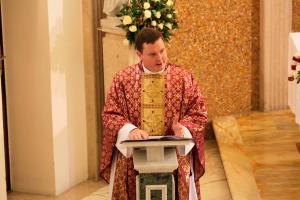
Anyone who frequents Catholic FB groups may have come across Fr. Louis Melahn. He is a very well written priest with lots of spiritual insights into many things specifically Catholic theology as well as issues such as politics. He has a way to shine a light of reason and deep orthodox faith onto any issue he is writing about. Even if I disagree with him about anything, he presents his point of view with charity and clarity and I will listen to what he has to say. He is a great guy to talk with online and probably in person as well. I’m sure he is or would be a good spiritual director. I found his thoughts on Pope Francis’s Traditiones Custodes presented a very balanced viewpoint . He touched on various aspects of the letter all with respect to different viewpoints. So without further explanation or introduction here is Fr. Louis’s thoughts.
Problematic Names
For anyone who is familiar with the sensibilities of Catholics, it should come as no surprise that the reactions have been both very passionate and very varied, and so I thought a word would be in order.
In this letter, the Pope Francis rescinds a lot of the provisions of Pope Benedict XVI’s Summorum Pontificum, which had given broad permission for priests to celebrate the Mass (and other liturgical rites) according to the liturgical books that were in use before 1970: the so-called “Latin Mass” or “Tridentine Mass.”
(Both names are, actually, problematic, because nothing prevents a priest from celebrating the Mass promulgated by Pope Paul VI in 1969 in the Latin language, and the “Tridentine” Mass did not come into universal use until many decades after the Council of Trent. What gives the “Latin” Mass its name is that, until 1965, it was with very few exceptions celebrated exclusively in Latin. For this reason, for now, I will continue to use the terminology established in Summorum Pontificum: “Ordinary Form” for the Mass promulgated in 1969, and “Extraordinary Form” for the Mass celebrated before then.)
I will begin by saying that I understand a lot of the concerns on both sides.
Concern For Both Sides
For those who are attached to the Extraordinary Form, I can understand why. It was crafted in an organic way over thousands of years, it is rich with symbolism, and it has an aura of sacredness that can seem difficult to carry over to the Ordinary Form. (More about that below.)
I think I speak for a lot of Catholics that, unfortunately, it is not uncommon for the Ordinary Form to be celebrated in a sloppy, informal, or otherwise irreverent way. The sheer number of variations possible can be daunting (and for the celebrating priest, often bewildering). It is not uncommon for the quality of the sacred music to be sub-par, and the sacred silence that is recommended before and after the celebration is often disregarded. More often than not, the liturgical vestments are distracting and seem to be of cheap construction.
I should point out, however, none of this, as such, is actually a defect in the rite itself, but rather in its execution. The Ordinary Form should always be understood and executed in continuity with the Extraordinary from which it came, and if this were done faithfully, I think a lot of the concerns of those attached to the Extraordinary Form would be relieved. (It is worth noting that the Extraordinary Form could be celebrated in a sloppy way, too: for instance, it was not uncommon in the so-called “low Mass”—a Mass that was celebrated for an ordinary week day—for the priest to rush through it, even though he accomplished all the rubrics.)
I think a case can be made that some of the details in the post-conciliar reforms made to the Mass are questionable, both in their purpose and in the way they were brought about. There was an effort to “simplify” the Mass and to bring it closer to its “original” expression—but in the reformers’ zeal to accomplish this goal, perhaps some of the rich symbolism of the Extraordinary Form was eroded. However, I can point to numerous examples in which the Ordinary Form is celebrated with dignity and great beauty.
On the other hand, I can understand the concerns raised by the Holy Father as well.
The Trap
Unfortunately, it is not difficult to fall into the trap of identifying abuses in the sacred liturgy with the Ordinary Form itself, and from there it is not difficult to call into question the reform itself, and from there the ecumenical council, the Second Vatican Council, that began the process of reform.
That trap, however, is a very dangerous and unfortunate one to fall into, especially the rejection of Vatican II. I would encourage anyone who has read this far in my post to read as many of the Council documents as possible. They are a veritable treasure trove of truth and doctrine, especially the four principle “constitutions”: Sacrosanctum concilium (on the sacred liturgy), Dei Verbum (on the Scriptures), Lumen gentium (on the Church), and Gaudium et spes (on the relationship of the Church to the modern world).
It is, therefore, most distressing to see that a lot of people and groups attached to the Extraordinary Form end up attacking an ecumenical council that, in fact, faithfully exposes and expands on the Church’s teaching. Even more distressing is to see groups calling into question the validity of the rites promulgated after the reform, as if it were possible for the Church to approve a liturgy incompatible with the celebration of the Sacraments. Such would give lie to our Lord’s solemn promise to Peter that nothing, not even the “gates of Hell” would overcome the Church (Matthew 16:18). It is not uncommon for this kind of criticism to involve the Holy Father himself, as if he were being unfaithful.
Equally distressing, however, is the attitude of other people and groups—most of them decidedly not attached to the Extraordinary Form—who minimize or dismiss the legitimate concerns, and genuine needs, of those who love the Extraordinary form.
Neither tendency is healthy for the Church, and I can at least understand where the Holy Father is coming from, because it seems that these tendencies have been increasing, and the criticisms have become more vocal and shrill over time.
So, what do I think of the Holy Father’s decision?
What I Think of the Pope’s Decision
Let me begin by saying that I fully support the Holy Father. I intend to obey him, and have no intention to be disloyal in any way whatsoever. I shouldn’t have to say this, but he is not a heretic, and whatever I think of his prudential decisions, he has faithfully led the Church in his time as Pope.
If, however, I had to give the Holy Father some constructive advice regarding this particular apostolic letter, it would be as follows.
First of all, I fear that the sudden rescinding of the permissions to celebrate the Extraordinary Form will salt the wounds in those who are attached to that form, and they will feel much more marginalized than they were during the time of Summorum Pontificum. That, in turn, will drive many to schismatic or irregular groups, such as the SSPX—which I think is contrary to the Holy Father’s intentions.
Second, it represents a considerable centralization and consolidation of power over the celebration of the liturgy to the Holy See. For example, newly ordained priests who would like to celebrate in the
Extraordinary Form must now request permission from their bishop, and he, in turn must first consult the Holy See before granting it. How much control the Holy See should have is a matter for prudential
judgment, but this is a very sharp contrast to other reforms that Francis has made (for instance, in giving each region practically complete autonomy in the translation of liturgical books). I think, on the whole, it is best for the Church leave things to people’s free choice, and not be in the business of placing obstacles in the way of their legitimate liturgical preferences.
Third, although the results of the consultation made to the bishops have not been made public (in my opinion, some sort of summary, keeping the names of individual bishop anonymous, should be made available), I am not sure that they have correctly identified the causes of the divisions regarding the Extraordinary Form. Traditiones custodes seems to attribute it almost exclusively to Benedict’s “liberalization” of the celebration of the Extraordinary Form. In reality, I think that the dominant root cause is something else: I think that many people perceive that the Church in Francis’ era is becoming (for lack of a better expression) more “liberal” (i.e., less faithful in some regards to the Church’s constant teachings), and many of those those attached to the Extraordinary Form feel threatened. As I have said, I think that many of these concerns are unfounded or at least exaggerated, but it would be a good idea for the Holy Father and other bishops to address them with charity and also clarity.
Finally, the Holy Father does not address the question of the problems we encounter with the celebration of the Ordinary Form, that I mentioned above. He does not have to do so in this motu proprio, but if he would like to give an olive branch to those who are attached to the Extraordinary Form, it would not be a bad idea to address some of those abuses later on.
I stress that I make these reflections in the hope that they are constructive and not because I have anything against the Holy Father. (Unfortunately, unreasonable criticisms do abound, especially on social media.) It is, at the end of the day, a prudential decision, and it is our duty as members of the Church to be on board with what the Holy Father disposes.
I certainly hope and pray that he will succeed in his goal: that is, the healing of divisions in the Church. That, in the end, is the most important thing.
Fr. Louis Melahn on Facebook July 24 at 12:01 PM ·
Want to Read More on this Topic?
Click Below.
Some Reactions to Motu Proprio
More Reactions To Traditionis Custodes
Recent Comments
Browse Our Archives
Select a Category 1889 abortion adoption Advent After Life Angles apologetics Art Awards BCCT bible book review books business Carmelite Catechetics Catholic Actors catholic authors Catholic Bard Catholic Faith Catholic List Catholic Rigorous Vortex Christian Authors Christmas church teaching civil conversation coronavirus Current Events death Different Religions Divine Mercy Easter Education encouragment Entertainment Eucharist Evangelization Event faith Family Life famous people feast day food Fun Stuff Global Church God guest post Harry Potter healing Heck of a Ride Around the Sun history holiday Holy Family Holy Orders Holy Spirit Holy Week hope Humor Interview Ireland Jesus kindle unlimited reflections Last Things Lecto Divina with Kristin Lent Lent/Easter liturgy love marriage Mary Meet the Author Mission Month in Advance Movie Review Movies Movies of the Month Music Narrative Older Writings patheos authors personal Philosophy podcasts poetry political Politics pope prayer Private Revelation pro-life public domain Quotes racial relations racism reflection Religious Life Saints science Scriptural Meditation social justice Social Media spirituality suffering supernatural theology Topics Travel Trivia Tweeting to the Choir Uncategorized universal church Vatican virtue war Week in Review women world religions writing Writing Write Now
Select a Month October 2026 September 2026 August 2026 July 2026 June 2026 May 2026 April 2026 March 2026 February 2026 January 2026 December 2025 November 2025 October 2025 September 2025 August 2025 July 2025 June 2025 May 2025 April 2025 March 2025 February 2025 January 2025 December 2024 November 2024 October 2024 September 2024 August 2024 July 2024 June 2024 May 2024 April 2024 March 2024 February 2024 January 2024 December 2023 November 2023 October 2023 September 2023 August 2023 July 2023 June 2023 May 2023 April 2023 March 2023 February 2023 January 2023 December 2022 November 2022 October 2022 September 2022 August 2022 July 2022 June 2022 May 2022 April 2022 March 2022 February 2022 January 2022 December 2021 November 2021 October 2021 September 2021 August 2021 July 2021 June 2021 May 2021 April 2021 March 2021 February 2021 January 2021 December 2020 November 2020 October 2020 September 2020 August 2020 July 2020 June 2020 May 2020
Follow Us!
TAKE THE
Religious Wisdom Quiz
What principle about debt is found in Proverbs?
Select your answer to see how you score.
Never lend Debt is always good The borrower is slave to the lender Ignore money
Books by This Author Books by Catholic Bard
Related posts from Catholic Bard

Looking For Good Catholic Writing - October 2026
Catholic Teaching On Tough Issues
Was 'Rededicate 250' Really One Nation Under God?

Latest News That Doesn't Involve Trump
TRENDING AT PATHEOS Catholic

A new article, written by Jeff Lindsay and Gale L. Pooley,...

Swimfan: Forgotten Aughts Pleasures
This is a recovery effort. In 2002, My Big Fat Greek Wedding...

Top Three Anti-Catholic Lies About Catholicism
This is my initial transcript for the video, "THE 3 WORST...

Pope Leo Celebrates Mass for Nurses & Docs...
I don't have any idea how he did it, but Pope Leo...

The Sermon on the Mount, Part I: Matthew...
The Sermon on the Mount, Part I (Matthew 4:12-5:12) St. Matthew moves...

What's up from Crossway: Reviewing some of their latest A few weeks...
view all Catholic blogs
What Are Your Thoughts?leave a comment
Comments are closed.
Ad-Free & Subscriber Log-In Subscription Support
- About Us
- 2026 Calendar
- Videos
- Podcasts
- Library of World Religions
- Faith In Media Tracker
- Advertise With Us
- Write for Us
- Privacy Policy
- Terms of Service
- Do Not Sell My Data
- Contact Us
- Radiant Digital
- Manage Newsletter Subscriptions
- Unsubscribe From Notifications
- Sitemap
Copyright 2008-2026, Patheos. All rights reserved.
Subscription Support Ad-Free & Subscriber Log-In
Follow Patheos