
BuddhistCatholicContemplativeEvangelicalGeneral ChristianHinduJewishLatter-day SaintMuslimNew VisionsProgressive Christian
Beliefs
- Buddhist
- Catholic
- Contemplative
- Evangelical
- General Christian
- Hindu
- Jewish
- Latter-day Saint
- More Voices
- Muslim
- New Visions
- Pagan
- Progressive Christian
Topics
- Religion News
- Food and Religion
- Sports and Religion
- Religious Art
- Religious Music and Entertainment
- Religious Events
- History and Religion
- Style and Religion
- Politics and Religion
- Women in Religion
- Recreation Outdoors and Religion
- Business Finance and Religion
- Careers Workplace and Religion
- Education and Religion
- Family Parenting and Religion
- Health Fitness and Religion
- Home and Religion
- Relationships and Religion
- Technology and Religion
- Travel and Religion
Columnists
- Buddhist Columnists
- Business Finance and Religion Columnists
- Careers Workplace and Religion Columnists
- Catholic Columnists
- Contemplative Columnists
- Education and Religion Columnists
- Evangelists Columnists
- Family Parenting and Religion Columnists
- General Christian Columnists
- Health Fitness and Religion Columnists
- Hindu Columnists
- History and Religion Columnists
- Home and Religion Columnists
- Jewish Columnists
- More Voices Columnists
- Latter Day Columnists
- Muslim Columnists
- New Visions Columnists
- Nonreligious Columnists
- Pagan Columnists
- Politics and Religion Columnists
- Progressive Columnists
- Recreation Outdoors and Religion Columnists
- Relationships and Religion Columnists
- Religion News Columnists
- Religious Art Columnists
- Religious Events Columnists
- Religious Music and Entertainment Columnists
- Sports and Religion Columnists
- Style and Religion Columnists
- Technology and Religion Columnists
- Travel and Religion Columnists
- Women in Religion Columnists
Resource Library
- 2026 Calendar
- Library of World Religions
- The 100 Most Holy Places on Earth
- Patheos Answers
- Podcasts
- Videos
- Faith Leaders Database
- Anglican Episcopalian
- Bahai
- Baptist
- Buddhism
- Christianity
- Confucianism
- Eastern Orthodoxy
- Hinduism
- Holiness and Pentecostal
- ISKCON
- Islam
- Judaism
- Lutheran
- Methodist
- The Church of Jesus Christ of Latter-day Saints
- New Age
- Paganism
- Presbytarian and Reformed
- Protestantism
- Religion Behind the Scenes
- Roman Catholic
- Scientology
- Shia Islam
- Sikhism
- Sufism
- Sunni Islam
- Taoism
- Zen
- See all religions
Research Tools
 Ad-Free & Subscriber Log-In Subscription Support
Ad-Free & Subscriber Log-In Subscription Support
Follow Patheos 

- Trending:
- Forgiveness
- |
- Marriage
- |
- Consciousness
- |
- Death Penalty
- |
- Election
- |
- Halloween

- Home
- Catholic
- Meet the Speakers of A Better Discourse
Meet the Speakers of A Better Discourse
Last updated on: November 30, 2022 at 1:06 am by Mark Wilson
Meet the Speakers of A Better Discourse 2022-11-30T01:06:58-05:00 Mark Wilson
Patheos Explore the world's faith through different perspectives on religion and spirituality! Patheos has the views of the prevalent religions and spiritualities of the world.
In a previous post I talked about the Good Discourse Conference January 22 – 24, 2021 and what it is all about.
In this post I want to introduce you to the speakers and those involved in the conference and give you a sample of their writings. It is my hope that by looking at the writings of these various individuals it will give you an idea of who they are. These are the folks who are running the conference and helping lead us all to Catholic writing greatness.

I want to start off with the person who thought me worthy enough to invite to this gathering of acclaimed Catholic authors.
Sherry Antonetti
A good discourse allows for listening as much as talking, for giving and forgiving, as much as asking and receiving. We need to pray for all of us, to have receptive hearts for each other, even those with whom we disagree…and whoever we can think of that we would ask the question, “Even them?” “Even these?” the answer is…and it’s hard to recognize, because it would be oh so much easier if it weren’t, “Yes, even these.”
“But they are lepers. They are sinners. They are tax collectors.” my brain says in some format, and I’m sure everyone’s does…”They did X” and “X” is horrible, and was horrible, and will always be horrible. However Christ forgave the most horrible of acts from the most horrible of places, and we cannot be more merciful than Christ.
So if we want a better discourse, a better reality than the one we can all point to, from the beginning of fallen and ordinary time, then we must ask for the peace the world cannot give, and give it to the world. It will fall on those who hear it, it will return to us on those who do not. Be the words “Peace be with you,” and peace will be with your spirit, even in the hardest of times and you will have “a good discourse,” if not with those around you, always with God and that will be sufficient.
Let us go and make our visit.
A Good Discourse in the Nation, How we Begin Again (Saturday, January 9, 2021)

Fr. John LoCoco
Eric J. Demeuse
The 1541 Diet of Regensburg—the namesake of this forum—proved a significant dialogue between Catholics and Protestants. Essential agreement was reached on a number of still contentious issues, though lamentably these agreements came to naught. Four years later, the Council of Trent began but failed to persuade a Lutheran delegation to attend. This was not the case 400 years later at Vatican II, where Protestant theologians were invited, participated, and sat “just to the left of the high altar of St. Peter’s.” The ecclesiological import of these three events—Regensburg, Trent, Vatican II—must be carefully discerned and differentiated. But they cannot be properly understood without filling in the narrative—without understanding and judging both the origins and the fruits of such events. Seeds sown at Regensburg and at Trent in the hope of ecclesial unity and reform were cultivated—and also battered by storms—during the ensuing centuries, all on the road to Vatican II.
Between Regensburg and Vatican II: Historical Light and Theological Development

Jennifer Fitz
I am one of those people who has a love/hate relationship with “Make Me an Instrument of Your Peace,” the hymn that US Catholic parishes are contractually obligated to sing at least three times a year if they want to keep their pet-blessing license.
(That’s a joke. Also, my cat needs his blessing renewed.)
Not a joke: Sometimes the song annoys me, sometimes the song inspires me, but being a peacemaker is not something that falls naturally within my wheelhouse. Longtime readers and meat-life friends can attest, the thing I am very, very good at is identifying problems and complaining about them.
Becoming a Vessel of Mercy– Riparians at the Gate + Jennifer Fitz It’s all Catholic.

Leticia Ochoa Adams
Each moment without him is gotten through in different ways. Watching lions on television really helps.
Yeah, I don’t really get it either, but one night I was flipping through channels seeking something that had nothing to do with reality or death. Why I thought stories about lions wouldn’t involve death is beyond me, but there it is.
The program I had settled on was about a lioness that had lost her mate and three of her babies. A heard of bulls and a pride of lionesses were still after her and her remaining cubs, and she was hungry, tired and faced with overcoming one obstacle after another. Finally she found her female cub; its back was broken from being stomped on by the bulls.
I’m slowly learning that my son’s death is not the end of my story; it’s not even the end of his story. In each one of these shows about lions, the mothers love their cubs but they know when it is time to let them make their own choices, even choices that end badly. When the worst happens, the mother lions do not swallow their grief – they wail it out and disturb the darkness — but they do not stay there, they move on.
Lessons of the lioness: There is hope beyond grief October 2, 2017) Aleteia

David Mills
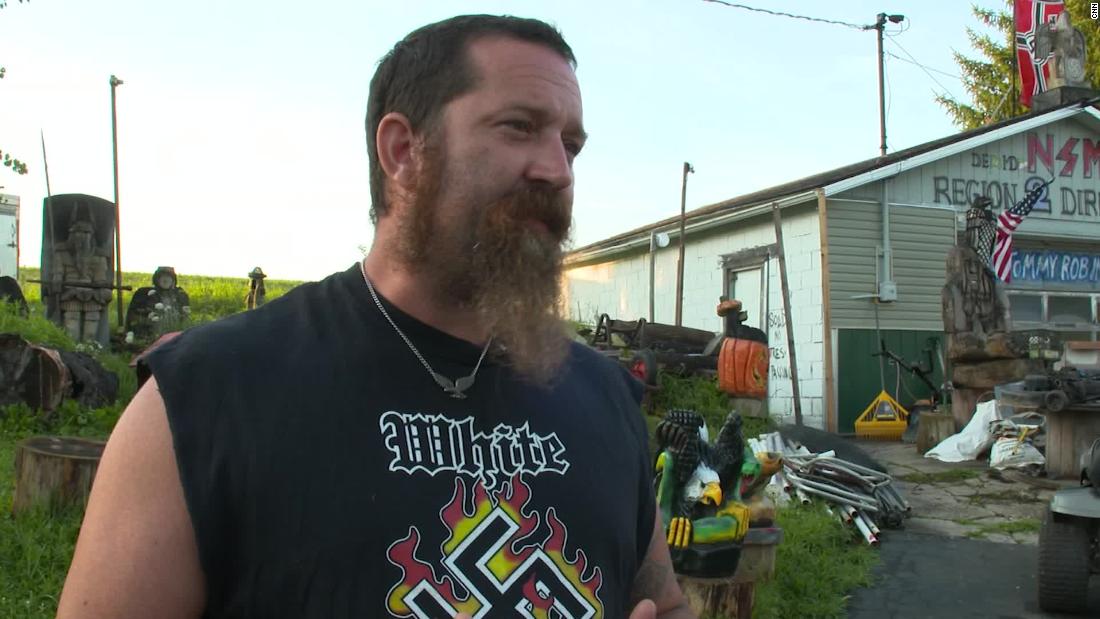
How would I talk to the young mother with swastikas tattooed on her arms when I ran into her pushing her baby in a stroller down the street? What if her boyfriend bragged about going to D.C. and invading the Capitol? What if he was wearing a “Camp Auschwitz” T-shirt? And came over to borrow the lawnmower?
I would feel about them the way Dorthey Day’s neighbors felt about Communists. If not moreso. Alt-rightism is as dangerous a bad idea as communism. The bigotry, the hatefulness, the stupidity. The anti-semitism. The hatred of Christianity or the blasphemous misuse of Christianity, depending on the group. The simple-mindedness and the smugness. It pushes all my buttons.
What do you do? Love them as you can, obviously. But does that include bringing them pies, playing with them on the beach, giving them lifts? The saints would tell us to befriend them, remind us that no one is beyond the reach of God’s grace, that we could have been or may be in a different way such as them, that the only thing that will break their hard hearts will be love, that such depraved humanity can only be healed by their meeting the True Man in his people. Love may well include correction, but it begins with kindness.
Be friends with the radicals: Dorothy Day and what it means to love our neighbors (January 11, 2021)
Grace Mazza Urbanski
Babies cry to alert their caretakers they need something: attention, food, comfort, sleep, clean diapers. Under healthy circumstances, babies have an expectation of a caring response. They cry out; a parent responds. They are never angry or resentful that they cannot provide everything for themselves. They are content to rely on the providence of their parents. The Lord tells us,”As a mother comforts her child, so I will comfort you” (Isaiah 66:13). The Scriptures remind us over and over we are the children of God, the God who will never forsake us (see Isaiah 49:15, Psalm 27, Luke 11:13).
After all those weeks of praying as an infant in the arms of my loving Father, the cries of babies resonate somewhere deep within. Pavlov would be proud to observe my new instinct to pray upon hearing a baby noise. Happy coos and squeals are an invitation to prayer; relentless screaming and soulful cries remind me of my fitful neediness. Incense and bells may be more conventional, but a child’s voice is my new prayer trigger.
And what better laboratory than a packed church for testing this prayer stimulus? The louder the better, as far as I’m concerned. Children of the world, unite! Do you sense a moment of profound stillness? Pierce it! Can you detect a reverent pause? Tear it wide open, and bring us to tears as we confront our own infancy, our own awesome dependence on our heavenly Father.
Let’s Hear It from the Children!, (December 11, 2015) Catholic365

Melanie Bettinelli
And then from the church as the grace pours upon me I hear their voices singing sweetly, perfected by the space, the high gothic arches, resounding between the stained glass windows and among the organ pipes and down the length of the vault to where the angels soar above the altar: People Look East, they sing. And O Come Divine Messiah.
And I finish my confession and my penance and wonder if Father is enjoying the concert, the sweet voices of children singing: O Come O Come Emmanuel in the winter-bound church at dusk.
Kneeling I help one distressed child finish his penance. He has forgotten the words and I am the memory who holds the prayers and the world together and so I pray with him, adding his intentions to mine.
And then we troop outside again while hidden behind the cloudy veil at the end of the shortest day of the year Jupiter and Saturn draw close together—some wonders are hidden from our sight but still we wonder as we turn back to the van and drive home through the night singing out Christmas lights! Christmas lights! and filling the night with moving song.
And we crown the night with pizza and gingerbread with ice cream. Because the mercy of the Lord is sweet.
Christ was with us in the sacrament and Christ was with us in the singing. And in the driving home in the dark looking at lights and more singing. And in the celebratory eating of gingerbread and ice cream. Because God loves us and his love is with us and life is really really beautiful.
Solstice, 2020— Grace Notes at the Closing of the Year, The Blog of Melanie Bettinelli The Wine Dark Sea

Br. Joe Hoover, SJ
The church in the United States is not divided, it is not polarized, it is not at war with itself. In no meaningful way are millions of Catholics in this country at each other’s throats about liturgical styles, homosexuality, Vatican II, priestly genders, Mass translations or what kind of pills a woman can morally ingest. People do not have the time or money or energy to be angry at popes or angry at people who are angry at popes. They have to work or sleep or put up swing-sets for their kids.
Some Catholics may disagree on some things, but a statistic does not measure where in their body, in their mental space, in the hours of their day, those disagreements live. Talks by learned panelists or grave churchmen do not capture the precise amount of time millions of churchgoers grumble about ecclesial issues. In fact, most Catholics do not spend much time there at all.
No, there is not a “civil war” in the Catholic Church (August 27, 2018) America Magazine
 Merridith Frediani
- Grant yourself something you like. Maybe it’s taking thirty minutes to read a book you enjoy. Maybe it’s a piece of Dove chocolate. Maybe it’s going for a walk around the block. Maybe it’s watching an episode of a favorite show. Let yourself indulge but don’t overdo it. Moderation is a good thing. Too much indulgence can lead to feelings of guilt or remorse. This may not be the time for leading the ascetic life but don’t get extreme either.
- Have a good cry. Crying is our body’s way of releasing. It’s ugly and snotty and usually embarrassing if we are not alone but there’s no shame in lying on your bed clutching a roll of toilet paper because you’re out of Kleenex and heaving out the emotion. Weep and you’ll feel better.
- Share your sadness with a good friend. God created us to be together. He tells us to love each other. While you may feel you are burdening another person, you are also letting that person love you. It’s good for kids to learn that when we share with someone we trust and love, it makes the hardship easier to bear. We do not need to stoically handle this by ourselves. Let someone listen to you and in turn listen to someone else.
- Contemplate the truth. The truth is that you are a beloved child of God. He desires goodness for you and He will bring goodness forth from struggle. “For I know well the plans I have for you, says the Lord, plans for your welfare and not for woe, so as to give you a future of hope.” (Jeremiah 29:11) This is the truth. Spend some time with it.
- Take a bath and a nap. No explanation needed: these things can only be helpful.
St. Thomas Aquinas’ Remedy for Sadness (September 18, 2020) Catholic Mom

Caroline Harvey
I think there are many times in our lives when we feel just as confused and lost as the apostles, questioning in our hearts, “Jesus, why is this better?” Why is it better that you conceal your presence and divinity in the Eucharist? Why is it better that we receive grace through the sacraments, which can become so mundane and misunderstood? Why is it better that we have to pray for what we need if you already know? Or even, why is it better that suffering and pain—of any kind—is allowed?
That last question usually strikes at our hearts the hardest. Fear or disdain of pain and suffering is a fundamental motivator for all human actions or reactions. Especially in a first-world country, when every comfort or tool is at our disposal, instantly, it can be quite difficult to accept pain, loss, separation, or suffering of any kind. If we’re hungry, we eat. If restaurants or stores are closed, we order food online. If we miss someone’s presence, we video chat with them or send them goofy pictures of our dogs. Because of this, I think we can understand the apostle’s confusion and fear when Jesus announces that it is better if he leaves.
How can that possibly be better? Only a solid understanding of who the Advocate is and why Jesus and the Father are sending him to us can adequately answer that question. It sometimes seems as if the Holy Spirit is the forgotten person of the Trinity. I even feel bad when singing the Gloria or saying the Creed—he gets like a line or two in each and is otherwise not mentioned. And it would appear that, besides being the explanation for Mary’s pregnancy and a momentary appearance as a dove during Jesus’ baptism, the Advocate is pretty much out of the picture until the Last Supper. Or is he?
Who Is the Holy Spirit and Why Should We Pray to Him? (June 1, 2020) Ascension Press

These people are hosting a Discord (irony alert) channel to discuss this after the conference.
Larry Denninger the Catholic Misfit

Mr. Catholic stunned all of Catholicism when he tweeted out his decision to allow Jesus Christ to save the Catholic Church. Responding to the May 17th tweet, Jesus admitted the declaration caught him unawares.
“Only I can save it? It’s up to me now?” the Second Person of the Trinity asked, with an exasperated sigh. “I mean, I guess so. I thought I had left the Church in capable hands, but okay. I promise to give it the ol’ college try.”
A spokesman for Jesus told ACMPress that the Word Made Flesh can’t start saving the Catholic Church until all the coronavirus lockdowns have been lifted, and the churches reopened.
“If that’s okay with Mr. Catholic, that is,” the spokesman added.
Mr. Catholic was unavailable for comment, as he was at his regulary scheduled cranialrectal exam, before joining his friends to retake Constantinople.
Mr. Catholic Decides to Let Jesus Save the Catholic Church (May 19, 2020)
Will Duquette
This blog is associated with The Catholic Conspiracy family of Catholic bloggers; and as an author I write from a Catholic world view. But what does that mean for my novels? Are they “Catholic Fiction”?
It all depends on what you mean by “Catholic Fiction”.
As a blogger I’ve written extensively about the Catholic faith in a number of venues, and most notably at my Patheos blog, “Cry Woof!“. There my goal is to talk about the Catholic faith: to explain, to teach, and to enlighten.
As a novelist, though, my goal is to be a teller of tales: to entertain, to amuse, and, I hope, to make you laugh. In that sense, I hope that my work is Catholic fiction in exactly the same sense (if not in the same degree) that the work of J.R.R. Tolkien and Tim Powers is Catholic fiction: that is, fiction written by a Catholic. I may occasionally touch on Catholic matters in my books (the S’Mary’s World project, which I hope to get back to one day, concerns a Catholic colony world) but my intent as a novelist is never didactic.
Teaching is teaching and storytelling is storytelling. Mixing the two is possible, as C.S. Lewis did in The Screwtape Letters and The Great Divorce; but precisely what these two books gain as teaching tools they lose as stories. My aim is different: the tale well told, and the laugh honestly earned.

Rebecca Frech
Whenever I thought of the devil of the Garden of Eden, or told the story to my children, I saw him as a small green fellow. First a lizard like the ones in my garden, and then a skinny grass snake with a sneaky smile – small, cunning, wheedling. Adam and Eve I imagined to be beguiled, talked into eating that apple the same way a slick used car salesman talks you into buying a lemon. Slimy and smarmy, and slick.
It was a dive into medieval art that turned my notions on their ear.
There are traditions, I learned, in which the serpent in the garden is not small, snake-like, and whispering lies. He’s very much a fearsome dragon, before he is cursed into legless mortification. He oppresses, threatens, and intimidates. He’s more Vito Corleone making Eve an offer she can’t refuse, then someone trying to sell her on a “good deal for today only.” In those traditions, Eve trembled in fear at Satan’s awesomeness rather than being simply seduced into disobedience, She bit into the fruit, hoping to avoid pain and even the unknown-until-now death, and the knowledge of Good and Evil was the carrot dangled in front of her fear.
The failure and sin of Adam, then, is not merely that he is morally weak and easily persuaded. His failure lies in his spinelessness, his cringing, his disobedience, and his refusal to protect not just his wife; but all of creation. The very same creation which had been designed for and entrusted to him by God, Adam wasn’t willing to chance his health and safety to defend.
The Dragon in the Garden of Eden (April 19, 2019)

For more on the conference and to sign up click here.
Previous Post

January 15, 2021
2020 Movies on Disney +
Next Post

January 17, 2021 Election Decision 2016
Browse Our Archives
Select a Category 1889 abortion adoption Advent After Life Angles apologetics Art Awards BCCT bible book review books business Carmelite Catechetics Catholic Actors catholic authors Catholic Bard Catholic Faith Catholic List Catholic Rigorous Vortex Christian Authors Christmas church teaching civil conversation coronavirus Current Events death Different Religions Divine Mercy Easter Education encouragment Entertainment Eucharist Evangelization Event faith Family Life famous people feast day food Fun Stuff Global Church God guest post Harry Potter healing Heck of a Ride Around the Sun history holiday Holy Family Holy Orders Holy Spirit Holy Week hope Humor Interview Ireland Jesus kindle unlimited reflections Last Things Lecto Divina with Kristin Lent Lent/Easter liturgy love marriage Mary Meet the Author Mission Month in Advance Movie Review Movies Movies of the Month Music Narrative Older Writings patheos authors personal Philosophy podcasts poetry political Politics pope prayer Private Revelation pro-life public domain Quotes racial relations racism reflection Religious Life Saints science Scriptural Meditation social justice Social Media spirituality suffering supernatural theology Topics Travel Trivia Tweeting to the Choir Uncategorized universal church Vatican virtue war Week in Review women world religions writing Writing Write Now
Select a Month October 2026 September 2026 August 2026 July 2026 June 2026 May 2026 April 2026 March 2026 February 2026 January 2026 December 2025 November 2025 October 2025 September 2025 August 2025 July 2025 June 2025 May 2025 April 2025 March 2025 February 2025 January 2025 December 2024 November 2024 October 2024 September 2024 August 2024 July 2024 June 2024 May 2024 April 2024 March 2024 February 2024 January 2024 December 2023 November 2023 October 2023 September 2023 August 2023 July 2023 June 2023 May 2023 April 2023 March 2023 February 2023 January 2023 December 2022 November 2022 October 2022 September 2022 August 2022 July 2022 June 2022 May 2022 April 2022 March 2022 February 2022 January 2022 December 2021 November 2021 October 2021 September 2021 August 2021 July 2021 June 2021 May 2021 April 2021 March 2021 February 2021 January 2021 December 2020 November 2020 October 2020 September 2020 August 2020 July 2020 June 2020 May 2020
Follow Us!
TAKE THE
Religious Wisdom Quiz
Whom did Paul leave sick at Miletus, showing that early Christians sometimes suffered illness?
Select your answer to see how you score.
Trophimus Timothy Silas Barnabas
Books by This Author Books by Catholic Bard
Related posts from Catholic Bard

Looking For Good Catholic Writing - October 2026

Meet Grimm Catholic Writer J.C. Hopes

The Homeless at Home by Blessed Fulton Sheen

Meet Taco Loving Catholic Historical Writer Leah Fisher
TRENDING AT PATHEOS Catholic

Letters on Living the Faith by C.S. Lewis
Most of us met C.S. Lewis as a public intellectual. Mere Christianity....

When Halloween Unmasks Married Hearts
Written by Dr. David K. Ewen from Eternal Truth Bible College Behind...

Aristotle. He’s been called the father of logic, the father of the...

Methodist Central Hall and Westminster Abbey
Situated on the same square is Methodist Central Hall and Westminster Abbey. ...

57th Dove Awards Honor Dolly Parton, Crown New...
On gospel music’s biggest night, the 57th annual GMA Dove Awards honored...

The First Eucharistic Controversy: Christ’s Real Presence
For Catholics, the Eucharist is the source and summit of the Christian...
view all Catholic blogs
Ad-Free & Subscriber Log-In Subscription Support
- About Us
- 2026 Calendar
- Videos
- Podcasts
- Library of World Religions
- Faith In Media Tracker
- Advertise With Us
- Write for Us
- Privacy Policy
- Terms of Service
- Do Not Sell My Data
- Contact Us
- Radiant Digital
- Manage Newsletter Subscriptions
- Unsubscribe From Notifications
- Sitemap
Copyright 2008-2026, Patheos. All rights reserved.
Subscription Support Ad-Free & Subscriber Log-In
Follow Patheos