
BuddhistCatholicContemplativeEvangelicalGeneral ChristianHinduJewishLatter-day SaintMuslimNew VisionsProgressive Christian
Beliefs
- Buddhist
- Catholic
- Contemplative
- Evangelical
- General Christian
- Hindu
- Jewish
- Latter-day Saint
- More Voices
- Muslim
- New Visions
- Pagan
- Progressive Christian
Topics
- Religion News
- Food and Religion
- Sports and Religion
- Religious Art
- Religious Music and Entertainment
- Religious Events
- History and Religion
- Style and Religion
- Politics and Religion
- Women in Religion
- Recreation Outdoors and Religion
- Business Finance and Religion
- Careers Workplace and Religion
- Education and Religion
- Family Parenting and Religion
- Health Fitness and Religion
- Home and Religion
- Relationships and Religion
- Technology and Religion
- Travel and Religion
Columnists
- Buddhist Columnists
- Business Finance and Religion Columnists
- Careers Workplace and Religion Columnists
- Catholic Columnists
- Contemplative Columnists
- Education and Religion Columnists
- Evangelists Columnists
- Family Parenting and Religion Columnists
- General Christian Columnists
- Health Fitness and Religion Columnists
- Hindu Columnists
- History and Religion Columnists
- Home and Religion Columnists
- Jewish Columnists
- More Voices Columnists
- Latter Day Columnists
- Muslim Columnists
- New Visions Columnists
- Nonreligious Columnists
- Pagan Columnists
- Politics and Religion Columnists
- Progressive Columnists
- Recreation Outdoors and Religion Columnists
- Relationships and Religion Columnists
- Religion News Columnists
- Religious Art Columnists
- Religious Events Columnists
- Religious Music and Entertainment Columnists
- Sports and Religion Columnists
- Style and Religion Columnists
- Technology and Religion Columnists
- Travel and Religion Columnists
- Women in Religion Columnists
Resource Library
- 2026 Calendar
- Library of World Religions
- The 100 Most Holy Places on Earth
- Patheos Answers
- Podcasts
- Videos
- Faith Leaders Database
- Anglican Episcopalian
- Bahai
- Baptist
- Buddhism
- Christianity
- Confucianism
- Eastern Orthodoxy
- Hinduism
- Holiness and Pentecostal
- ISKCON
- Islam
- Judaism
- Lutheran
- Methodist
- The Church of Jesus Christ of Latter-day Saints
- New Age
- Paganism
- Presbytarian and Reformed
- Protestantism
- Religion Behind the Scenes
- Roman Catholic
- Scientology
- Shia Islam
- Sikhism
- Sufism
- Sunni Islam
- Taoism
- Zen
- See all religions
Research Tools
 Ad-Free & Subscriber Log-In Subscription Support
Ad-Free & Subscriber Log-In Subscription Support
Follow Patheos 

- Trending:
- Forgiveness
- |
- Marriage
- |
- Consciousness
- |
- Death Penalty
- |
- Election
- |
- Halloween

- Home
- Catholic
- The Keys of Doing the Father’s Will
The Keys of Doing the Father’s Will
Last updated on: November 30, 2022 at 1:05 am by Guest Contributor
The Keys of Doing the Father’s Will 2022-11-30T01:05:59-05:00 Guest Contributor
Patheos Explore the world's faith through different perspectives on religion and spirituality! Patheos has the views of the prevalent religions and spiritualities of the world.
The Catholic Bard presents a guest post featuring a homily given on the Twenty-sixth Sunday in Ordinary Time re-presented here as a meditation written by Deacon Joshua Klickman.

He is a Deacon at Saint Patrick Catholic Church Fayetteville, NC and Coordinator for Human Life and Dignity at Diocese of Raleigh.
Jesus said to the chief priests and elders of the people:
“What is your opinion?
A man had two sons.
He came to the first and said,
‘Son, go out and work in the vineyard today.’
He said in reply, ‘I will not, ‘
but afterwards changed his mind and went.
The man came to the other son and gave the same order.
He said in reply, ‘Yes, sir,‘ but did not go.
Which of the two did his father’s will?”
They answered, “The first.”
Jesus said to them, “Amen, I say to you,
tax collectors and prostitutes
are entering the kingdom of God before you.
When John came to you in the way of righteousness,
you did not believe him;
but tax collectors and prostitutes did.
Yet even when you saw that,
you did not later change your minds and believe him.”-MT 21:28-32
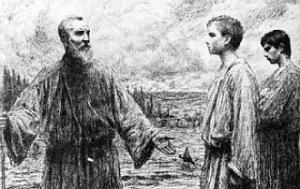
In this meditation I want to focus on our individual role in the Church and in the world.
In the Gospel reading from Matthew, a man tells one son to go out and work in the vineyard. That son says that he will not go, but he “changes his mind” and goes out to work in the vineyard, doing the will of his father. The other son said, “yes sir” but then he did nothing.
There are a lot of things that we can learn from this simple story, and certainly one of the most apparent is that what we do is more important than what we say, but there is another key theme here that makes this story more than a just a fable.

In my research on this passage I went to the Catechism of the Catholic Church[1] and to the writings of the Early Church Fathers[2] to see what this verse meant to them and to see when they cited this verse in their writings. In every instance, this verse is used when discussing repentance. I think we can miss that with the New American Bible translation that we read from at Mass which uses the phrase “changed his mind.” In other English translations the word “repent” is commonly used here, but in the Greek, this is the word Met-am-el-lom-ai [3] which means “to go back on your word,” which in this case is regret and then repentance. For Clement of Alexandria, the main point of this passage is that Jesus has come to offer salvation, so we must repent and become a living law.[4] We must examine our lives and find those areas where we have said no to what is right and just, and then repent and do the will of the father.
Often, we do not feel like doing what is right. That is part of our condition of “original sin.” We see this every year with New Year’s resolutions. I am not going to say that this is fine or good, but it is what it is. We all have the tendency to resist doing what is right, even when we know better, even when we intend to do the good. Our changing bodies get stuck in the idea that what we are doing is better than anything else, and we become resistant to change, even when we say, “yes sir,” we then go out and disobey. Scripture is full of examples, and even the Chaste Guardian of the Virgin Mary and Foster-Father of the Son of God, St Joseph, had to change his mind to do the will of the Father, thanks to an angel appearing to him in a dream.

So there is a lot of hope in this reading and some very practical lessons. On the one hand there is a son who says “yes” and does nothing, and on the other hand there is a son who says “no,” but repents. He changes his mind, and then the change is made complete in his doing and his obedience. Notice that he doesn’t say “dad, I’m sorry that I didn’t go out and work in the vineyard.” There is no verbal apology, but there is a full conversion with a firm purpose of amendment that actually DOES the will of the father out of love. We see that, in doing, we are converted. We cooperate with grace and this leads to the deeper conversion of becoming a living law. Our increased love leads us to habitually do what is right.
I think this passage is perfect as we approach the end of this election season. I have recently heard the statement that “we clergy are not supposed to be political.” Nonsense, I have never heard that from anyone in authority. Look at the announcements from the Bishops. They are VERY political. I work for the diocese and every January, in addition to the Marches for Life in Raleigh and in Washington DC, we attend an annual gathering to engage with our political representatives on policies that affect human life and dignity such as gun violence, the environment, immigration, and nuclear weapons.
So we are certainly called to be political, but what we cannot be is partisan. We cannot be blind to the unjust aspects of our own political parties, nor can we deny the goodness that is present in other organizations. When we do the will of the Father, we work to advance truth, goodness, and beauty. If we don’t recognize these where they exist, we participate with evil. In fact, the starting point for evangelization is to find what is recognized as true, good, and beautiful and show how the Trinity is at work in those places so we can convert the world to a deeper sense of joy, freedom, and peace.
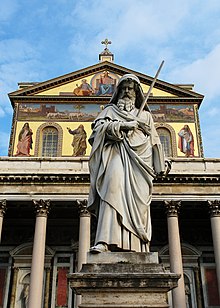
We must be Christians first, just like St Paul was a Roman citizen who was a Christian, first. And look what he did to that title “Roman.” In his day it was the Romans killing Christians. Roman authorities used the death penalty to kill Christians, now, you cannot imagine Christianity without the culture, language, and even the city of Rome. St Paul was certainly that son who said “no” to the father but then repented.
The key for St Paul was conversion and DOING the will of the father. And so it for us and our political engagement, DOING is the key. At some level, voting is simply expressing an opinion.[5] If someone cheated you out of a thousand dollars, you would not be content in expressing the opinion that this should not have happened, you would go out and DO something to get your money back and see to it that it would never happen again.
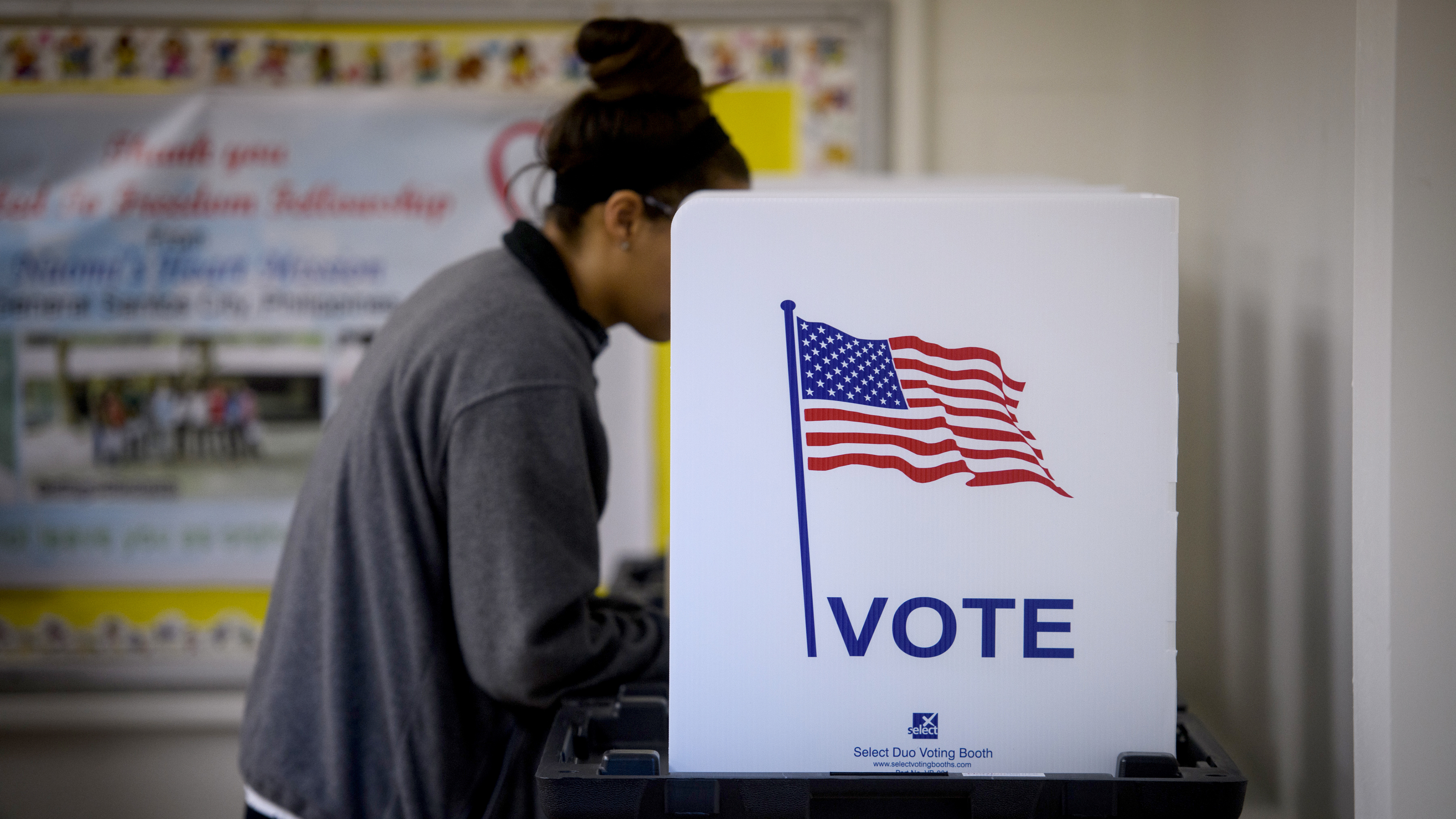
Voting is a very important, but I think it can take away from the fact that there is a lot of work. Many people sit in anxiety, waiting for that day to cast a vote and then worry about how that vote will make a difference and even judge others based on their vote. This year I have a lot of friends who don’t even want to vote. To relieve this anxiety, I think the solution is to go out into the world and DO the will of the father.
All of those policies that we care about, some of the things I mentioned, go out and get involved with them. This will not only better inform you about how you should vote, it will relieve that anxiety about the uncertain effects of your vote, as you will be DOING the will of the father. Selfless service leads to a sense of peace.

This is how we will be judged at the end. Did we receive love from God and give this love to others? Did we feed the hungry, give drink to the thirsty, welcome the stranger, visit the imprisoned, and support life from conception until natural death? This gospel today is also perfect to reflect on as we consider our own stewardship. One of the best ways to be involved is to get involved with parish ministries. As Father Greg remined us these past few weeks, work and prayer are the key to renew our interior lives and to restore our parish life. There are a plethora of opportunities to do the will of the father right here in our parish.
Finally, I want to point out the scriptural meaning from PHIL 2:1-5 that gives us the real key here, as love is the essential ingredient to Christian obedience and freedom.
Brothers and sisters:
If there is any encouragement in Christ,
any solace in love,
any participation in the Spirit,
any compassion and mercy,
complete my joy by being of the same mind, with the same love,
united in heart, thinking one thing.
Do nothing out of selfishness or out of vainglory;
rather, humbly regard others as more important than yourselves,
each looking out not for his own interests,
but also for those of others.Have in you the same attitude
that is also in Christ Jesus.
We do the will of the father when we become obedient like Christ and see others as more important than ourselves, not looking out for our own interest, but for the interest of others. This is how we will be judged at the end. Did we receive love from God and give this love to others? Did we feed the hungry, give drink to the thirsty, welcome the stranger, visit the imprisoned, and support life from conception until natural death? This gospel passage is also perfect to reflect on as we consider our own stewardship. One of the best ways to is to get involved with parish ministries. As my priest Father Greg has reminded us in our parish, work and prayer are the key to renew our interior lives and to restore our parish life. There are a plethora of opportunities to do the will of the father right in our own parishes.

It is in this work of doing the will of the father out of love for the other that we are transformed and converted to him. When we love others, we do the will of the father. In Saint Paul’s letter to the Romans, he tells us that loving our neighbor as ourselves is the summation and fulfillment of the law. [6] So as reflect on our own stewardship and consider how we use our time, talent, and treasure, let us keep in mind these readings to see how we use our own resources to love others.
Seek the Saintly Intercession of St Paul and St Joseph and meditate on their lives, and then ask yourself these simple questions, have I loved others as I would want to be loved if I were in their situation, and have I become a living law by doing the will of the Father?
References
All Scriptural References from The Didache Bible: With Commentaries Based on the Catechism of the Catholic Church. Downers Grove, IL: Midwest Theological Forum, 2014
Catechism of the Catholic Church: Revised in Accordance with the Official Latin Text Promulgated by Pope John Paul II. Vatican City: Libreria Editrice Vaticana, 1997.
Fernández-Carvajal Francisco. In Conversation with God: Meditations for Each Day of the Year. London: Scepter, 2000.
Roberts, A., & Coxe, A. C. (2012). Ante-Nicene Fathers the writings of the Fathers down to A.D. 325. Peabody, MA: Hendrickson.
Socías, James. Daily Roman missal: complete with readings in one volume with Sunday and weekday Masses … and the order of Mass in Latin and English on facing pages and devotions and prayers for use throughout the year. Woodridge, IL: James Socias for Midwest Theological Forum, 2012.
Strong, James, and James Strong. The New Strong’s Expanded Exhaustive Concordance of the Bible. Nashville: Thomas Nelson, 2010.
Thoreau, Henry David. Walden or, Life in the Woods and on the Duty of Civil Disobedience. New York: Perennial Library, 1965.
- I found one more error as I was rehearsing this morning…section 14…I said “get involved” twice. Here is the correction
[1] Catechism of the Catholic Church: Revised in Accordance with the Official Latin Text Promulgated by Pope John Paul II. Vatican City: Libreria Editrice Vaticana, 1997. (CCC 1425)
[2] Roberts, A., & Coxe, A. C. (2012). Ante-Nicene Fathers the writings of the Fathers down to A.D. 325. Peabody, MA: Hendrickson, 1:492; 2:351, 3:446
[3] Strong, James, and James Strong. The New Strong’s Expanded Exhaustive Concordance of the Bible. Nashville: Thomas Nelson, 2010. p. 162. (H3338)
[4] Roberts, A., & Coxe, A. C. (2012). Ante-Nicene Fathers the writings of the Fathers down to A.D. 325. Peabody, MA: Hendrickson. 2:351. Clement of Alexandria says of this verse, “We become a living law.”
[5] Cf. Thoreau, Henry David. Walden or, Life in the Woods and on the Duty of Civil Disobedience. New York: Perennial Library, 1965. P 258 “How can a man be satisfied to entertain an opinion…If you are cheated out of a single dollar by your neighbor, you do not rest satisfied with knowing you are cheated, or with saying that you are cheated…but you take effectual steps at once to obtain the full amount, and see to it that you are never cheated again. Action from principle, the perception and the performance of right, changes things and relations; it is essentially revolutionary, and does not consist wholly with anything which was. It not only divided States and churches, it divides families; ay, it divides the individual, separating the diabolical in him from the divine.
[6] Romans 13:8-10
Previous Post
October 22, 2020
The Rest of the Glory
Next Post
October 24, 2020 It's Funny How Catholics Do Comedy
Browse Our Archives
Select a Category 1889 abortion adoption Advent After Life Angles apologetics Art Awards BCCT bible book review books business Carmelite Catechetics Catholic Actors catholic authors Catholic Bard Catholic Faith Catholic List Catholic Rigorous Vortex Christian Authors Christmas church teaching civil conversation coronavirus Current Events death Different Religions Divine Mercy Easter Education encouragment Entertainment Eucharist Evangelization Event faith Family Life famous people feast day food Fun Stuff Global Church God guest post Harry Potter healing Heck of a Ride Around the Sun history holiday Holy Family Holy Orders Holy Spirit Holy Week hope Humor Interview Ireland Jesus kindle unlimited reflections Last Things Lecto Divina with Kristin Lent Lent/Easter liturgy love marriage Mary Meet the Author Mission Month in Advance Movie Review Movies Movies of the Month Music Narrative Older Writings patheos authors personal Philosophy podcasts poetry political Politics pope prayer Private Revelation pro-life public domain Quotes racial relations racism reflection Religious Life Saints science Scriptural Meditation social justice Social Media spirituality suffering supernatural theology Topics Travel Trivia Tweeting to the Choir Uncategorized universal church Vatican virtue war Week in Review women world religions writing Writing Write Now
Select a Month October 2026 September 2026 August 2026 July 2026 June 2026 May 2026 April 2026 March 2026 February 2026 January 2026 December 2025 November 2025 October 2025 September 2025 August 2025 July 2025 June 2025 May 2025 April 2025 March 2025 February 2025 January 2025 December 2024 November 2024 October 2024 September 2024 August 2024 July 2024 June 2024 May 2024 April 2024 March 2024 February 2024 January 2024 December 2023 November 2023 October 2023 September 2023 August 2023 July 2023 June 2023 May 2023 April 2023 March 2023 February 2023 January 2023 December 2022 November 2022 October 2022 September 2022 August 2022 July 2022 June 2022 May 2022 April 2022 March 2022 February 2022 January 2022 December 2021 November 2021 October 2021 September 2021 August 2021 July 2021 June 2021 May 2021 April 2021 March 2021 February 2021 January 2021 December 2020 November 2020 October 2020 September 2020 August 2020 July 2020 June 2020 May 2020
Follow Us!
TAKE THE
Religious Wisdom Quiz
Who was the first man created, according to the Bible?
Select your answer to see how you score.
Moses Adam Jacob Abraham
Books by This Author Books by Catholic Bard
Related posts from Catholic Bard

Looking For Good Catholic Writing - October 2026
Meet Grimm Catholic Writer J.C. Hopes
I want to Live and Die as a...
TRENDING AT PATHEOS Catholic

The Iron Gates and the Lion of the...
Yesterday, I didn't finish my report about, well, yesterday. So I'll...

Dolly Parton’s Last Song Wins Dove Award with...
Bluegrass band The Grascals, speaking on the red carpet at the 57th...

The Image: On the Horror of Capitalism and...
The Image Then went the Pharisees, and took counsel how they might...

We are approaching the date of our new American national holiday: October...

Letters on Living the Faith by C.S. Lewis
Most of us met C.S. Lewis as a public intellectual. Mere Christianity....

When Halloween Unmasks Married Hearts
Written by Dr. David K. Ewen from Eternal Truth Bible College Behind...
view all Catholic blogs
Ad-Free & Subscriber Log-In Subscription Support
- About Us
- 2026 Calendar
- Videos
- Podcasts
- Library of World Religions
- Faith In Media Tracker
- Advertise With Us
- Write for Us
- Privacy Policy
- Terms of Service
- Do Not Sell My Data
- Contact Us
- Radiant Digital
- Manage Newsletter Subscriptions
- Unsubscribe From Notifications
- Sitemap
Copyright 2008-2026, Patheos. All rights reserved.
Subscription Support Ad-Free & Subscriber Log-In
Follow Patheos