
BuddhistCatholicContemplativeEvangelicalGeneral ChristianHinduJewishLatter-day SaintMuslimNew VisionsProgressive Christian
Beliefs
- Buddhist
- Catholic
- Contemplative
- Evangelical
- General Christian
- Hindu
- Jewish
- Latter-day Saint
- More Voices
- Muslim
- New Visions
- Pagan
- Progressive Christian
Topics
- Religion News
- Food and Religion
- Sports and Religion
- Religious Art
- Religious Music and Entertainment
- Religious Events
- History and Religion
- Style and Religion
- Politics and Religion
- Women in Religion
- Recreation Outdoors and Religion
- Business Finance and Religion
- Careers Workplace and Religion
- Education and Religion
- Family Parenting and Religion
- Health Fitness and Religion
- Home and Religion
- Relationships and Religion
- Technology and Religion
- Travel and Religion
Columnists
- Buddhist Columnists
- Business Finance and Religion Columnists
- Careers Workplace and Religion Columnists
- Catholic Columnists
- Contemplative Columnists
- Education and Religion Columnists
- Evangelists Columnists
- Family Parenting and Religion Columnists
- General Christian Columnists
- Health Fitness and Religion Columnists
- Hindu Columnists
- History and Religion Columnists
- Home and Religion Columnists
- Jewish Columnists
- More Voices Columnists
- Latter Day Columnists
- Muslim Columnists
- New Visions Columnists
- Nonreligious Columnists
- Pagan Columnists
- Politics and Religion Columnists
- Progressive Columnists
- Recreation Outdoors and Religion Columnists
- Relationships and Religion Columnists
- Religion News Columnists
- Religious Art Columnists
- Religious Events Columnists
- Religious Music and Entertainment Columnists
- Sports and Religion Columnists
- Style and Religion Columnists
- Technology and Religion Columnists
- Travel and Religion Columnists
- Women in Religion Columnists
Resource Library
- 2026 Calendar
- Library of World Religions
- The 100 Most Holy Places on Earth
- Patheos Answers
- Podcasts
- Videos
- Faith Leaders Database
- Anglican Episcopalian
- Bahai
- Baptist
- Buddhism
- Christianity
- Confucianism
- Eastern Orthodoxy
- Hinduism
- Holiness and Pentecostal
- ISKCON
- Islam
- Judaism
- Lutheran
- Methodist
- The Church of Jesus Christ of Latter-day Saints
- New Age
- Paganism
- Presbytarian and Reformed
- Protestantism
- Religion Behind the Scenes
- Roman Catholic
- Scientology
- Shia Islam
- Sikhism
- Sufism
- Sunni Islam
- Taoism
- Zen
- See all religions
Research Tools
 Ad-Free & Subscriber Log-In Subscription Support
Ad-Free & Subscriber Log-In Subscription Support
Follow Patheos 

- Trending:
- Forgiveness
- |
- Marriage
- |
- Consciousness
- |
- Death Penalty
- |
- Election
- |
- Halloween

- Home
- Catholic
- Who are the Patheosi in your Neighborhood?
Who are the Patheosi in your Neighborhood?
Last updated on: November 30, 2022 at 1:02 am by Mark Wilson
Who are the Patheosi in your Neighborhood? 2022-11-30T01:02:18-05:00 Mark Wilson
Patheos Explore the world's faith through different perspectives on religion and spirituality! Patheos has the views of the prevalent religions and spiritualities of the world.

Personally, one of the things that bothers me more than anything else is for people to completely ignore me. Pretend I don’t exist. It grates on my nerves like nothing else. I have a few people at my job who will completely ignore my existence. They will interact with others in my immediate vicinity, say hi to them, hug them, walk by me and say hi to someone else, who might be standing next to me. One of the people who is currently ignoring me, even makes a face and rolls her eyes if I’m too near her presence. Ignoring others is a complete sign of disrespect and lack of charity.
I don’t expect to be able to know everyone or get along with everyone or have time to acknowledge everyone, but I want to at the least know the people who are in my immediate neighborhood. In this case I’m talking about the virtual neighborhood where I blog at Catholic Bard. I took a look around and decided to look up a little something about all my neighbors who have a different world view then I do. Were just one voice in the middle of a sea of voices. So, I think it’s important to know who is raising their voices that surrounds us.
As Catholics we don’t have to just think of our selves in our own little castle ready to attack or defend against the hoards of belief different then our own.
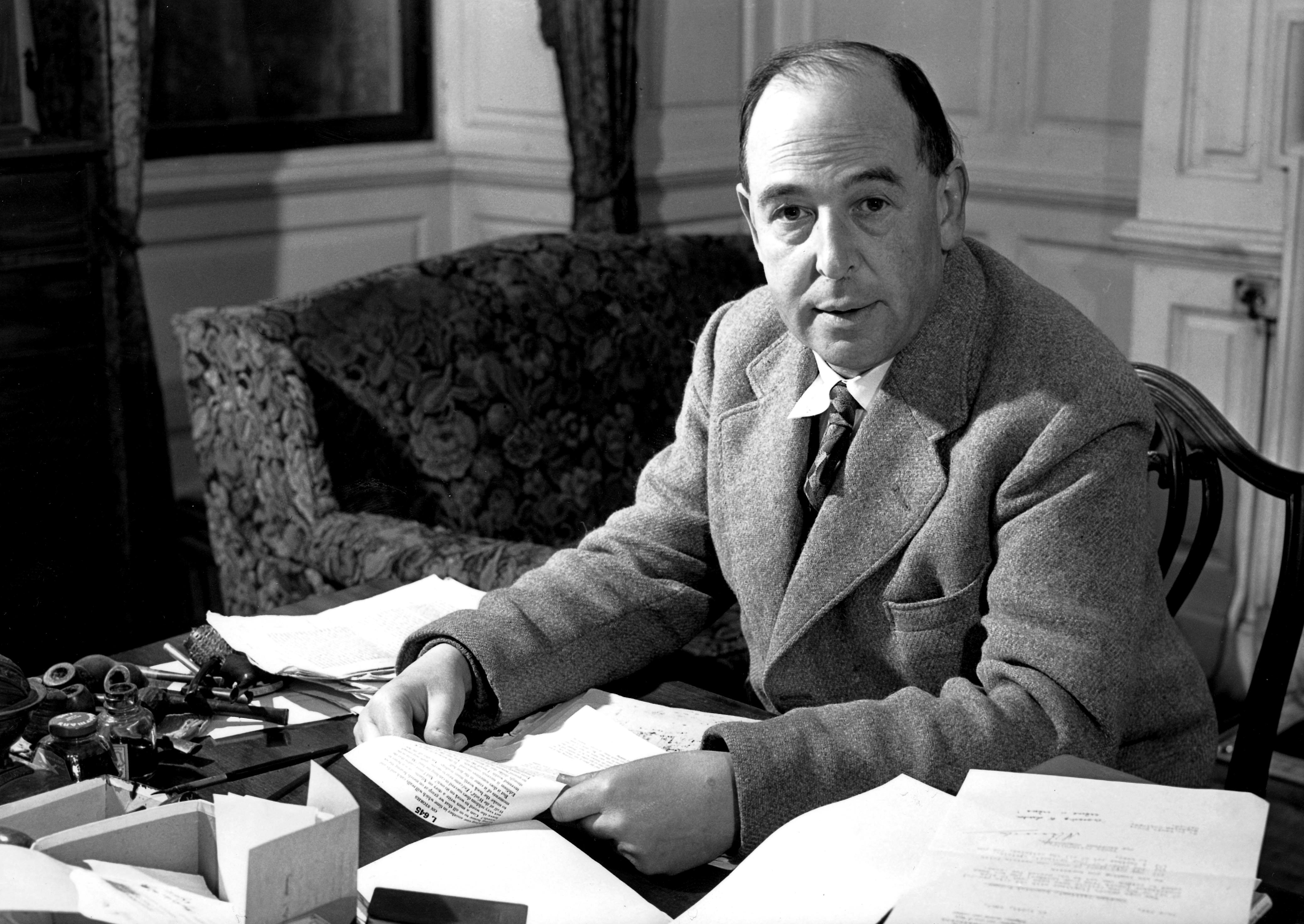
If you are a Christian, you do not have to believe that all the other religions are simply wrong all through. If you are an atheist, you do have to believe that the main point in all the religions of the whole world is simply one huge mistake. If you are a Christian, you are free to think that all these religions, even the queerest ones, contain at least some hint of the truth. When I was an atheist, I had to try to persuade myself that most of the human race have always been wrong about the question that mattered to them most; when I became a Christian, I was able to take a more liberal view. But, of course, being a Christian does mean thinking that where Christianity differs from other religions, Christianity is right and they are wrong. As in arithmetic – there is only one right answer to a sum, and all other answers are wrong; but some of the wrong answers are much nearer being right than others.
― C.S. Lewis, Mere Christianity
So here is a look around the neighborhood of Patheos in which many people with different view points and convictions write. I tried to find common and ecumenical themes found by people of all faiths. Let’s get to know them. I have (once again) compiled a collection of quotes from each section and offered a Catholic commentary from some known apologist where applicable, to see how it compares with our own world view. I have tried to find non-critical viewpoints in this post; not denying we have significant differences that need to be discussed, but not concentrating on them.
Here is a list of every religious section currently listed on Patheos alphabetically.
A future post will concentrate on the many different topics listed on Pathoes and a look at all the columnist sections listed in the Patheos topical section.
Here is a List of Patheos Columnists.
Happy Browsing!
Patheos World Belief Traditions
It is a mistake to think that the dividing line between us is those who bear religious beliefs, and those who do not. The dividing line in humanity is not the religious/non-religious, but those who believe that uniting humanity in important areas is worth the effort, and those who don’t. The dividing line is between those who honor our diversity and pluralism as our greatest attribute, and those who are afraid of it. The dividing line is between those who see more possibilities when we are in sincere, honest dialogue and search for common ground, and those who do not.
Fr. Carl Chudy, Non-Religious and Religious Engagement: Common Ground & Where it Can Lead (October 21, 2017) The Secular Spectrum @ Patheos Nonreligious
Buddhist
The English-speaking world loves their gurus and Eastern mysterious wisdom and enlightenment and all that stuff. And while (I hope I’m not being too optimistic in saying) we’re collectively growing out of our most infantile–and destructive–phase of interacting and mingling with “the East”, there is still a long way to go. Colonialism’s dual projections of “dark evil” and “mysterious goodness” continue to play out in popular culture. But both rely on obscured vision of the place(s) and people for what and who they are.
Justin Whitaker Australia’s Next Top Guru (Parody) (November 9, 2015) American Buddhist Perspectives @ Patheos Buddhist

Huston Smith says in The Religions of Man that there have been only two people in history about whom others asked not “Who are you?” but “What are you: a man or a god?” They were Jesus and Buddha.
Buddha’s clear answer was: I am a man, not a god; Christ’s clear answer was: I am both “Son of Man” and “Son of God.”
Buddha said, “Look not to me, look to my dharma (doctrine)”; Christ said, “Come unto me.” Buddha said, “Be ye lamps unto yourselves”; Christ said, “I am the light of the world.”
Peter Kreeft, Comparing Christianity & Buddhism, Fundamentals of the Faith, Ignatius Press.
Catholic
The world, you must agree, contains much good. If it didn’t, you would not have seen anything that pointed towards God. But as you point out, there is much that could cause one to despair. The Good do not always prosper. The Evil are not always punished. There is seemingly pointless suffering, and in the final analysis death is the end for each of us. And you ask the atheist “what gives you hope?”
I suppose one way to get “hope” is to deny that this is the case. But as a Secular Humanist my commitment is not only towards enhancing and enjoying life, but understanding truth. I don’t think the evidence supports either the existence of God or an afterlife. You disagree, I know that. But I don’t intend to get into an argument on this issue right now, I simply want to note that the existence of God is not really a meaning question as such, but an empirical one. It isn’t love of life that separates the atheist from the theist, I think, but what we see as evidence; a desire for consistency and integrity in examining claims and determining their probability. We don’t think it’s true. There you have it.
Sue Strandberg Secular Humanism & Christianity: Seeking Common Ground (March 6, 2019) Biblical Evidence for Catholicism by Dave Armstrong @ Patheos Catholic
Contemplative
Indeed, my other favorite word for contemplation is a Hebrew word for silence, found only four times in the Hebrew scriptures, and always in the Psalms. That word is dûmiyyāh (דּוּמִיָּה), which means not only silence but a kind of repose, a kind of still waiting. We find it in Psalm 62, in the line “For God alone, my soul in silence waits.”
When we pray at the edge of waiting, silence becomes a surgical scalpel to carefully remove our attachments to transitory pleasures or addictive compulsions. The silence of waiting sets us free — but it doesn’t do so violently or instantaneously. That’s where the “waiting” part comes in.
We pray at the edge of waiting when we bring our patience into the silence, trusting that the roots and thorns of our graspings and our anxieties must be slowly and gently pruned away, measured by a process of unraveling that opens us up according to the leisure of eternity, not the relentless ticking of terrestrial time. And yet, this waiting, this silence, this edge of prayer is something we live into breath by breath, heartbeat by heartbeat, instant by instant.
Carl McColman, At the Edge of Waiting — A Celtic Approach to Contemplation (June 9, 2017) A Contemplative Faith @ Patheos Contemplative
Evangelical
Scripture is not always as clear as we wish it were. What about evil? Did God create evil? Such questions find no easy answers in the Bible. However, church fathers such as Gregory of Nyssa and Augustine of Hippo answered them in ways faithful to the Bible but going beyond anything explicitly said in the Bible. We have a “great cloud of witnesses” between the first century and the twenty-first century to look to and listen to. They were not always right, but in many cases they came up with ideas that we do not need to discover on our own. In other words, the Great Tradition can help us understand scripture and shape our own task of faithfully improvising Christian discipleship today.
Roger E. Olson, Why Study/Learn Historical Theology (May 26, 2020) Roger E. Olson, @ Patheos Evangelical
Whatever truths Protestantism teaches, Catholicism also teaches. Catholicism is inclusive, not exclusive. It does not like words like “merely” or “only” or sola. Sola scriptura, sola fide, and sola gratia were the three slogans of the Reformation—as if scripture excluded Tradition instead of presupposing it and referring to it and affirming it; and as if faith excluded works instead of necessarily producing the works of charity by its very essence, as mothers produce babies; and as if grace set aside nature and human nature rather than using and perfecting nature (and natural reason).
Peter Kreeft, Catholics and Protestants: What Can We Learn from Each Other? (2017) Ignatius Press
General Christian
There is no way around this one. Language needs to be ingested regularly to produce anything worthwhile. If you’re not gobbling down and savoring words on a regular basis, your work will come out anemic and limp. You want red-blooded words, robust and hearty and ready to work for you. You only get that from reading wide. For every 100 words you write, read 1,000. Not just blogs or articles, or God forbid-tweets, but long-form books in a lot of genres. If you’re going to write well, you must read.
You must pay attention.
I say, I’m always writing, sometimes I type. I use bath crayons for ideas that come to me in the shower or aqua notes, which I just discovered through a reader. I voice message myself when I drive. All other times I have paper handy should a sentence materialize. These words flit about and if you don’t grab them and wrestle them on the page when they present themselves, they’re lost forever.
Alia Joy Writing Tips: Do What Works (February 23, 2019) The Fluency of Hope @ Patheos General Christian
Hindu
During my childhood, my father referenced Albert Einstein often, with quotes like “Science without religion is lame and religion without science is blind.” Einstein was deeply interested in the relationship between religion and science. He gave considerable attention to the humanities and the pursuit of peace through his writing. His scholarship went beyond his particular fields of academic study, and addressed the apparent conflict between scientific inquiry and religious practice.
The daughter of a scientist whose devotion was a pillar of her Hindu practice, I had always been assured of compatibility between religion and science by both my parents. Family dinners involved conversations with the poet-cum-English scholar and the molecular biologist steeped in bhakti, where we lingered over the spiritual, philosophical and phenomenological aspects of life
Padma Kuppa Religion and Science: Complementary Not Conflicting (April 19, 2017) Seeking Shanti @ Patheos Hindu

When C.S. Lewis was converted from atheism, he shopped around in the world’s religious supermarket and narrowed his choice down to Hinduism or Christianity. Religions are like soups, he said. Some, like consomme, are thin and clear (Unitarianism, Confucianism, modern Judaism); others, like minestrone, are thick and dark (paganism, “mystery religions”). Only Hinduism and Christianity are both “thin” (philosophical) and “thick” (sacramental and mysterious). But Hinduism is really two religions: “thick” for the masses, “thin” for the sages. Only Christianity is both.
Peter Kreeft, Comparing Christianity & Hinduism Fundamentals of the Faith, Ignatius Press.
Jewish
The home should be perceived as a microcosm of the universe.– Rebbe Menachem Schneerson
Modern Judaism places a strong emphasis on the sanctity of home. Our tradition encourages us to cultivate homes of love, of peace, of learning, of hospitality, of discussion, of patience, of forgiveness, of comfort, and of beauty, even if it’s a simple beauty.
Currently, many of us are spending more time at home than ever before, and likely more than we ever will going forward. So, now’s a good time to ask – what quality of home have I/we cultivated? Is our home a place of refuge and joy? Is it a place of peace? Or have I/we cultivated a home of discord, chaos, and conflict?
Anger in a home is like rottenness in fruit-Talmud, Sota 3b
Gregory Eran Gronbacher, The Sanctuary of Home (April 11, 2020) Open Table Judaism @ Patheos Jewish

If Jesus returned to earth today, which church would He go to? A Catholic church, of course, replies the Catholic. No, a Protestant church, argues the Protestant. I think both are wrong. I think he would begin as He did 2,000 years ago in a Jewish synagogue.
The long history of Christian anti-Semitism, in thought and deed, is perhaps the worst scandal in all the Church’s history. It is the Oedipus complex, for Judaism is Christianity’s father. All Christians are spiritually Jews, said Vatican II, echoing St. Paul. Christianity subtracts nothing from Judaism, but only fulfills it.
Peter Kreeft, Comparing Christianity & Judaism Fundamentals of the Faith, Ignatius Press.
Latter-day Saint
Hey, if you haven’t seen the judgy side of this Latter-day Saint rebirth, then I’m happy for you. Honestly. If that’s not something you’ve encountered yet, I’m really glad you’re seeing a more positive reaction than I have.
Let me tell you some of what I’ve seen: I’ve seen members publicly call friends and acquaintances to repentance for complaining about the change in policy. I’ve seen members tattle to leaders after seeing a fellow member say they’ll be sticking with “Mormon.” I’ve seen members brag that they’ve never called themselves “Mormon” because it was always wrong to do so, without acknowledging that the previous president of the Church embraced the nickname.
I don’t know about you, but when someone polices my language that way, it never feels like love. It only ever feels like gatekeeping, and if I were on the fence about staying in a group, that kind of reaction would push me all the way out. So before you respond to someone who complains about this policy, maybe ask yourself this question:
Would I rather this member of the Church stay active but call him/herself “a Mormon,” or would I prefer they leave the Church altogether? If you want them to stay (and I assume you do!), I recommend backing off.
Emily Belanger, To the People Defending the Church’s Decision to Ditch the “Mormon” Nickname (October 8, 2018) Peculiar People @ Patheos Latter-Day Saint
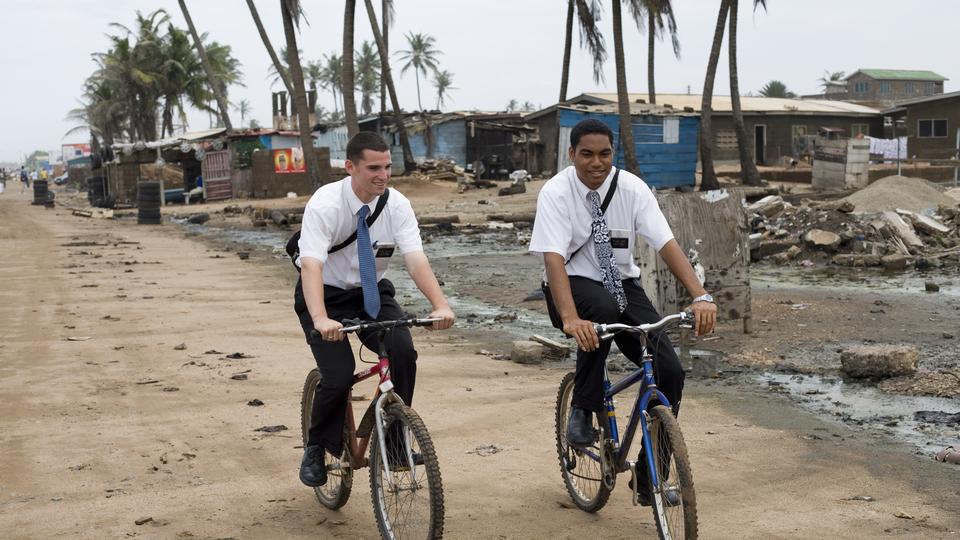
Moreover, Mormons have consistently been allies of evangelicals, Catholics, and Orthodox in battling America’s aggressive secular forces. They have worked diligently to preserve their communities, resist the temptations and influences of the post-Christian culture, and navigate attacks against them and their devotion to Christ.
Nor is the LDS missionary life an easy one – few religious vocations can match its intensity or sacrifices. For men, the missions last for two years; female missions are one-and-a-half years. During this time, missionaries never leave their mission territory. They have few opportunities to speak with family and friends back home. They live on a tight budget – many missionaries eat things like cereal and ramen noodles, almost every day, for months. They spend about twelve hours per day on mission, encountering mostly indifference and sometimes hostility. One LDS friend of mine who spent his mission in Japan had *one* convert during his entire mission.
Casey Chalk, Approaching Mormons (January 9, 2019) The Catholic Thing
Muslim
I have become deeply more compassionate. I could actually go to a temple, to a mosque, to a church, to the woods and ocean, to worship anywhere. I feel deep respect for a person with strong character and a good heart, no matter what they believe. There is no compulsion in religion. I have begun to read Rumi and the Mathnawi and express my religious and spiritual beliefs through my art. What had been ingrained in me as a child has come back to me as an artist, in paintings of angels decorated in gold, and the flowers representing the ones that I grew within Massachusetts.
I have a deep belief in the Quran and wish to die a Muslim because I believe in the Oneness of God that I found in the woods. God made me a certain way and gifted me a certain way, and this I can not deny myself. I cannot live in a straitjacket of other people’s judgments or cultural norms. I believe very deeply in a God of love, and that He loves all of His creation, not only on this planet but throughout the universe, despite their differences, race, rituals, and faith.
Stephenie Bushra Khan My Journey to Self-Expression and Interfaith Love as a Converted Muslim (May 23, 2020) Mostly Muslim @ Patheos Muslim

The striking simplicity of Islam’s creed, is summed up in the palindrome (i.e., it reads the same backward as forward) which shatters the silence daily from every mosque and minaret: la illaha illa Allah! “There is no God but Allah!”
Allah, of course, is the same God Jews and Christians worship. Islam is not only a Western, monotheistic religion rather than an Oriental, pantheistic religion, but explicitly bases itself on the historical revelation of the God of the Jews, tracing itself to Ishmael, Isaac’s brother, to whom God also promised special blessings according to Genesis. Isaac and Ishmael, Jews and Moslems, have been engaged in sibling rivalry ever since.
Islam neither merely simplifies Christianity nor merely adds to it, but reinterprets it—somewhat as Christianity does to Judaism. As the Christian interpretation of the Old Testament is not the same as the Jewish one, the Moslem interpretation of the New Testament is not the same as the Christian one; the Koran authoritatively interprets the New Testament as the New interprets the Old.
Peter Kreeft, Comparing Christianity & Islam Fundamentals of the Faith, Ignatius Press.
New Visions
Francis never intended to start a religious order. He simply wanted to live the gospel. He remains in history a Christian champion Protestants ought not only to know but also to embrace.
Luther set the Roman Church ablaze in a moment of cataclysmic repulsion of its mounting corruptions. But it ought not be overlooked that it was the faith of a humble friar who, centuries earlier, lent tinder that fueled the fire of the house that Luther burned.

On his deathbed, Martin Luther uttered his dying words: “We are beggars, that is true.”
Three hundred years earlier Francis of Assisi was living it. He made himself poor. So he feared nothing. The humble friar from Assisi single-handedly demonstrated that the New Testament Gospel of Christ crucified could be lived truly and with integrity in a violent, chaotic and un-Gospel-like age.
Wendy Murray, The Catholic Who Paved the Way for Martin Luther’s Reform (October 31, 2017) Poets and Lunatics @ Patheos New Visions
Nonreligious
What I mean by “real magic” are instances in which I’m not entirely sure I understand reality. They are moments when dream seems to break out into the world before me—moments when what I see in front of me is not “dead” reality but a bizarre admixture of the real and the unreal.
Examples for me include moments when I suspect there to be a sunken town beneath a lake, when I look into a jungle and imagine the bones of ancient civilizations lying within, when I watch a downpour and feel as if I were standing on another, very wet planet, or when I see a plane’s contrail streaking across the sky and wonder if it might be a rocket rising into the stratosphere.
Although it lasts only a moment—or maybe a good fraction of a minute if I put my foot down on its tail and hold it—the effect on me is vivifying. I walk away from these experiences with a sense of fullness, giddiness, or deep calm. I know at one and the same time that what I felt and saw was not real and yet it felt better than reality.
Daniel Lev Shkolnik, Has Science Killed the World Trying to Understand It? (December 14, 2018) Another Breed of Faith @ Patheos Nonreligious
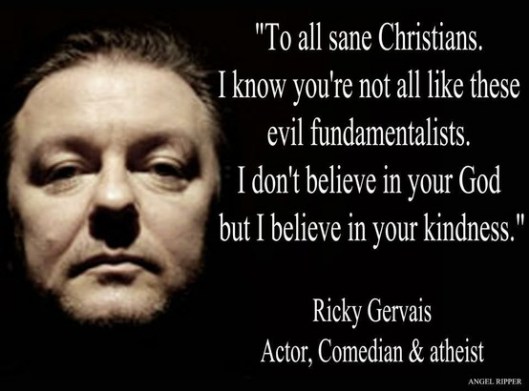
The most troubling consequence for me, if Christianity were true, would be the extraordinary number of people who would miss out on any communion with God because atheism is so plausible. After all, most people haven’t got the leisure time to mount serious philosophical and historical inquiries into other people’s religious beliefs. I’d be frightened by the prospect of a God that made no provision for the conversion of non-Christians who didn’t study theology.
The most attractive part of Christianity for me is the possibility of redemption after severe transgressions. I’ve written before (in the context of the dehumanizing nature of war and combat training) about how immoral actions are like bad habits. They can make it more difficult to cultivate the kind of open attitude required to treat other people kindly and with charity. Without the possibility of redemption, people can wound themselves past the point of recovery through their immoral actions. The damage we inflict upon ourselves could be beyond our own ability or the ability of our friends to mend.
Currently, I don’t think there always is a path back from the abyss, and that fact is the most depressing and upsetting part of my philosophy. If Christianity were true, I could be relieved on this point.
Leah Libresco, For the 800th Post, a Blast from the Past (October 1, 2012) Unequally Yolked @ Patheos Nonreligious Catholic
Pagan
It’s a cliché that bad times generate good art. Like all clichés there’s an element of truth to it, but also some wide generalizations. Bad times are almost always bad for artists – all but the most commercially successful struggle financially even during good times.
The suffering but brilliant artist is another cliché that reflects the truth that artists are often wired differently from other folks… but also the truth that rest of us like enjoying art but we don’t like supporting the people who make it.
Perhaps bad times drive all but the most dedicated artists to do something else. Thus we don’t have to wade through a lot of mediocre art to find the good stuff.
But the people who choose which art gets widespread distribution – especially TV and movies – are also the most insulated from bad times. They’re notoriously less interested in what’s good than they are with what will sell.
And I wonder if perhaps the rest of us are engaging in some selective memories. A book or movie or song that we find merely enjoyable in good times can suddenly be life-changing in bad times. The art hasn’t changed – the viewers of the art have.
John Beckett Do Bad Times Really Make Good Art? (May 24, 2020) Under the Ancient Oaks @ Patheos Pagan

It upsets me to see countless Catholics practically deny the supernatural realities of our faith with banal liturgies and disrespect or even disdain for the holiest things of our religion, and then see the same Catholics criticizing the errors of wayward neo-pagan youth. Until we take our own faith seriously, no one else will.
If we want to be a viable alternative to neo-paganism, we need to embrace once again the supernatural traditions of our faith. Our sacred language. Our ancient and venerable rites and formulas. Our “superstitious” Catholic practices. Our symbols. Our mystical traditions of prayer. We don’t need only more catechesis, as if ideas alone could save us. We need more mystery, more transcendence, more ritual, more magic, for lack of a better word.
Every Catholic must become a mystic, in the sense that we live like the supernatural is as real as the air we breathe—because it is. Then, and only then, will we be able to speak authentically to a world hungry for the divine.
Sam Guzman, Neo-Paganism and Catholic Mystery: Catholic Gentleman
Progressive Christian
Obviously, the early Church Fathers never actually watched the Matrix trilogy of movies. But, then again, maybe in some archetypal way, the Lord projected the movie’s major themes across time and space onto the screens of their corporate consciousness.

I am awestruck at how closely the cosmology of the early Church lines up with metaphorical symbols in The Matrix movies. Cosmology is simply the metaphysical study of the form, content, organization, of the universe. Christian Cosmology helps us understand the respective roles and relational dynamics of humans, angels, demons, fallen principalities and fallen powers.
Richard Murray “The Matrix“ as an Archetype of Christian Cosmology (February 1, 2020) Richard Murray @ Patheos Progressive Christian
More Voices
Since Jesus is a Greek name, he wouldn’t have been called “Jesus” by either his his family or followers. They would have referred to him as “Yeshua,” an abbreviation of the Jewish name for “Joshua” which means “to rescue” or “to deliver.”
The Christian Scriptures (New Testament) were written in Greek. Consequently, the authors translated his name to Greek as “Yesous.” The English version of this name is “Jesus.”
At the end of the day, most Christians call him by that name today.
I’ve always felt that to not call a person by their actual name is a bit insulting, but maybe that’s just me.

Ironically, Jesus was not a Christian; he was an Orthodox Jew. The followers of Jesus first referred to themselves as followers of “The Way.”
According to Acts 11:26, the disciples were first called Christians in Antioch circa 44 CE (Common Era), over a decade after Jeshuah’s execution by the Roman Army. But that is another story.
Bruce A Robinson Who Was Jesus? The No Nonsense Guide To The King Of Kings (December 5, 2017) Religious Tolerance @ Patheos More Voices
More Resources
Faith Figures and Leaders Database
Library of World Religions and Faith Traditions
Previous Post

May 26, 2020
Very Small Thing Beyond Your Power: Lectio Divina Reflection
Next Post

May 28, 2020 Love Trumps Surprises
Browse Our Archives
Select a Category 1889 abortion adoption Advent After Life Angles apologetics Art Awards BCCT bible book review books business Carmelite Catechetics Catholic Actors catholic authors Catholic Bard Catholic Faith Catholic List Catholic Rigorous Vortex Christian Authors Christmas church teaching civil conversation coronavirus Current Events death Different Religions Divine Mercy Easter Education encouragment Entertainment Eucharist Evangelization Event faith Family Life famous people feast day food Fun Stuff Global Church God guest post Harry Potter healing Heck of a Ride Around the Sun history holiday Holy Family Holy Orders Holy Spirit Holy Week hope Humor Interview Ireland Jesus kindle unlimited reflections Last Things Lecto Divina with Kristin Lent Lent/Easter liturgy love marriage Mary Meet the Author Mission Month in Advance Movie Review Movies Movies of the Month Music Narrative Older Writings patheos authors personal Philosophy podcasts poetry political Politics pope prayer Private Revelation pro-life public domain Quotes racial relations racism reflection Religious Life Saints science Scriptural Meditation social justice Social Media spirituality suffering supernatural theology Topics Travel Trivia Tweeting to the Choir Uncategorized universal church Vatican virtue war Week in Review women world religions writing Writing Write Now
Select a Month October 2026 September 2026 August 2026 July 2026 June 2026 May 2026 April 2026 March 2026 February 2026 January 2026 December 2025 November 2025 October 2025 September 2025 August 2025 July 2025 June 2025 May 2025 April 2025 March 2025 February 2025 January 2025 December 2024 November 2024 October 2024 September 2024 August 2024 July 2024 June 2024 May 2024 April 2024 March 2024 February 2024 January 2024 December 2023 November 2023 October 2023 September 2023 August 2023 July 2023 June 2023 May 2023 April 2023 March 2023 February 2023 January 2023 December 2022 November 2022 October 2022 September 2022 August 2022 July 2022 June 2022 May 2022 April 2022 March 2022 February 2022 January 2022 December 2021 November 2021 October 2021 September 2021 August 2021 July 2021 June 2021 May 2021 April 2021 March 2021 February 2021 January 2021 December 2020 November 2020 October 2020 September 2020 August 2020 July 2020 June 2020 May 2020
Follow Us!
TAKE THE
Religious Wisdom Quiz
How many minor prophets are there in the Old Testament?
Select your answer to see how you score.
15 7 10 12
Books by This Author Books by Catholic Bard
Related posts from Catholic Bard

Looking For Good Catholic Writing - October 2026

Meet Grimm Catholic Writer J.C. Hopes

The Homeless at Home by Blessed Fulton Sheen

Meet Taco Loving Catholic Historical Writer Leah Fisher
TRENDING AT PATHEOS Catholic

Emotion in Early Christianity by Andrew Crislip
Andrew Crislip’s Emotion in Early Christianity examines an often overlooked dimension of...

16 Spiritual Touchstones for a More Grounded Life
After decades of spiritual study, here are 16 principles I try...

Catholic Evangelization: Sharing Your Faith Every Day
Welcome back to the Graceful Awakening mini-series called, “From Faith to Mission.” ...

The Pillar of the Boatmen: the Ancient Monument...
The Pillar of the Boatmen is a Romano-Gaulish sculpture that dates from...

In one sense walking into Westminster Abbey is like walking down the...

'Super Scam Me' Exposes AI Jon Bon Jovi...
Leslie Pickett believed she was in a relationship with Jon Bon Jovi....
view all Catholic blogs
Ad-Free & Subscriber Log-In Subscription Support
- About Us
- 2026 Calendar
- Videos
- Podcasts
- Library of World Religions
- Faith In Media Tracker
- Advertise With Us
- Write for Us
- Privacy Policy
- Terms of Service
- Do Not Sell My Data
- Contact Us
- Radiant Digital
- Manage Newsletter Subscriptions
- Unsubscribe From Notifications
- Sitemap
Copyright 2008-2026, Patheos. All rights reserved.
Subscription Support Ad-Free & Subscriber Log-In
Follow Patheos