
BuddhistCatholicContemplativeEvangelicalGeneral ChristianHinduJewishLatter-day SaintMuslimNew VisionsProgressive Christian
Beliefs
- Buddhist
- Catholic
- Contemplative
- Evangelical
- General Christian
- Hindu
- Jewish
- Latter-day Saint
- More Voices
- Muslim
- New Visions
- Pagan
- Progressive Christian
Topics
- Religion News
- Food and Religion
- Sports and Religion
- Religious Art
- Religious Music and Entertainment
- Religious Events
- History and Religion
- Style and Religion
- Politics and Religion
- Women in Religion
- Recreation Outdoors and Religion
- Business Finance and Religion
- Careers Workplace and Religion
- Education and Religion
- Family Parenting and Religion
- Health Fitness and Religion
- Home and Religion
- Relationships and Religion
- Technology and Religion
- Travel and Religion
Columnists
- Buddhist Columnists
- Business Finance and Religion Columnists
- Careers Workplace and Religion Columnists
- Catholic Columnists
- Contemplative Columnists
- Education and Religion Columnists
- Evangelists Columnists
- Family Parenting and Religion Columnists
- General Christian Columnists
- Health Fitness and Religion Columnists
- Hindu Columnists
- History and Religion Columnists
- Home and Religion Columnists
- Jewish Columnists
- More Voices Columnists
- Latter Day Columnists
- Muslim Columnists
- New Visions Columnists
- Nonreligious Columnists
- Pagan Columnists
- Politics and Religion Columnists
- Progressive Columnists
- Recreation Outdoors and Religion Columnists
- Relationships and Religion Columnists
- Religion News Columnists
- Religious Art Columnists
- Religious Events Columnists
- Religious Music and Entertainment Columnists
- Sports and Religion Columnists
- Style and Religion Columnists
- Technology and Religion Columnists
- Travel and Religion Columnists
- Women in Religion Columnists
Resource Library
- 2026 Calendar
- Library of World Religions
- The 100 Most Holy Places on Earth
- Patheos Answers
- Podcasts
- Videos
- Faith Leaders Database
- Anglican Episcopalian
- Bahai
- Baptist
- Buddhism
- Christianity
- Confucianism
- Eastern Orthodoxy
- Hinduism
- Holiness and Pentecostal
- ISKCON
- Islam
- Judaism
- Lutheran
- Methodist
- The Church of Jesus Christ of Latter-day Saints
- New Age
- Paganism
- Presbytarian and Reformed
- Protestantism
- Religion Behind the Scenes
- Roman Catholic
- Scientology
- Shia Islam
- Sikhism
- Sufism
- Sunni Islam
- Taoism
- Zen
- See all religions
Research Tools
 Ad-Free & Subscriber Log-In Subscription Support
Ad-Free & Subscriber Log-In Subscription Support
Follow Patheos 

- Trending:
- Forgiveness
- |
- Marriage
- |
- Consciousness
- |
- Death Penalty
- |
- Election
- |
- Halloween
 Catholic Authenticity
-
Categories
- Home
- Catholic
- The Power of Negative Thinking: On Trauma and Validation
The Power of Negative Thinking: On Trauma and Validation
Last updated on: April 14, 2019 at 4:43 pm by Melinda Selmys
The Power of Negative Thinking: On Trauma and Validation 2019-04-14T16:43:30-04:00 Melinda Selmys
Patheos Explore the world's faith through different perspectives on religion and spirituality! Patheos has the views of the prevalent religions and spiritualities of the world.

It was my last year of high-school, late at night, and my boyfriend, J, was driving me home. Or rather, that’s where he was supposed to be driving me. Instead, he put on some loud and violent music that I told him I didn’t like and started driving out to the middle of nowhere. As he drove, he talked about how he wanted to kill me.
My emotional reaction at the time was slightly puzzling, but also pleasing to me. I felt practically nothing. I wasn’t afraid. I didn’t start crying or beg for my life. I wasn’t even mad. I remember watching the situation unfold as if I were a disinterested onlooker. My primary reaction was a kind of detached confusion: J’s behaviour made no sense, it was irrational, disproportionate, impossible to understand.
I can’t remember whether I said anything or just sat there in unresponsive silence, but eventually he drove me home.
And I continued to feel nothing. When he later insisted that he still didn’t want to break up with me, that he just felt there was something special between us, I was even more confused. I told him that I thought he was being irrational, that he didn’t seem to want what I was offering, and that being in a relationship with me seemed to be causing him more distress than good. However, I respected that he was better positioned to understand his own needs than I was, and if he wanted to continue to see me that was his choice.
Provided, that is, he understood and accepted that the relationship was on the terms that I had established when I first agreed to go out with him: that it was an open relationship, one that did not involve commitment, and would never involve sex.
He insisted that he would rather have that than lose me altogether, and so the relationship continued for another couple of months before he finally decided that I was a cold, emotionally immature, lesbian bitch. He dumped me by sending me a picture of us at our prom. My face was burnt out and a long, angry tirade involving a lot of swearing was written on the back.
I reacted to this more or less as one reacts to a dead mouse or a large turd left on the front porch. I didn’t bother reading the tirade. I dropped it into the trash can in the cafeteria and moved on with my day.
It resurfaced again a few days later. My male best friend – the man who I would later marry – had picked the photo up out of the trash and made photocopies. I think those photocopies might even still be around somewhere, tucked into a drawer in the filing cabinet.
“Have you read this?” he asked.
“No,” I said, wondering why he had bothered to preserve J’s idiotic outburst.
“Don’t you feel guilty?”
Guilty.
Not “Aren’t you scared?” “Aren’t you upset?” “Are you okay?” But “Don’t you feel somehow responsible for this?”
That should have been telling. It should have set off a thousand red flags. But it didn’t. At 17, I was intelligent enough to have read Kant’s Metaphysic of Morals, and rational enough to have implemented it as my ethical philosophy. But J was right about one thing: I didn’t get emotions.
Which is why I also didn’t get that my emotional reaction, or rather lack thereof, didn’t mean that I was unaffected by J’s threats and outbursts. I thought I was practising the precise kind of clear. rational detachment that my philosophy prescribed. I didn’t realize that I was actually dissociating from a traumatic series of events.
Which also meant I didn’t realize that I was vulnerable, and I didn’t think about the impact of that relationship on any of the changes that happened in its aftermath.
As far as I was concerned, I was fine. I was happy to have a philosophical discussion with my friend about guilt – which I rejected as a particularly useless emotion. I was still fine when I was walked into class at the end of the year to find that J’s contribution to our Writer’s Craft anthology was basically a not-very-thinly veiled series of murder fantasies in which I starred as the victim. It didn’t bother me when other male friends were unconcerned, seeing this as basically a joke at my expense.
None of it affected me. After all, when a person chose to do evil they were really choosing to harm themselves. If you just decided not to let the evil in, it had no power over you. I was marvelously, rationally unaffected.
I Choose To Be Okay
It would take decades for me to realize that actually I was deeply affected, that by willing myself to be indifferent actually I was just choosing not to deal with the situation. I was pushing all of the emotional reactions deep down into my psyche, where of course they were able to wreak havoc undetected in the deeps.
I always lived amid abstractions. It didn’t occur to me that the philosophical crisis that followed hot on the heels of the J disaster was, in fact, a direct reaction to that disaster. Sure, it was only shortly thereafter that my high-school Kantianism failed. It crashed and burned. I felt slightly concussed, wandering around my neighbourhood, trying to figure out how to make sense of a world where the centre suddenly did not hold.
But that had nothing to do with J. It was because I’d been read Fear and Trembling. Kant didn’t fall because I was subjected, rather violently, to the fact that humans do not always behave like autonomous rational agents of infinite worth and dignity. Kant fell because he was toppled by Kierkegard. That was a narrative I could accept.
The narrative of a rational agent who could choose not to be a victim, someone who could escape the realities of evil and violence simply by willing herself not to be traumatized.
The Detachment Trap
It’s a common enough cultural trope. It’s what we’re saying when we sing that old children’s rhyme: “Sticks and stones can break my bones, but names can never hurt me.” It’s the lie behind the claim that oppressed peoples can just pull themselves up if they stop “playing the victim.” It’s hidden in plain view by pop psychology about the power of “positive thinking.”
In its more intellectually respectable forms it appears in Platonism, in Stoicism, in some forms of Buddhism. As Hamlet puts it, “there is nothing either good or bad but thinking makes it so.”
What all of these have in common is a belief that emotional and psychological wounds are like vampires: they can’t come in unless you open the door. All you have to do is steadfastly shut your negative emotions out and you’re pretty much safe from anything except for direct physical assaults.
But it isn’t true. When traumatic events are minimized or deflected, it doesn’t make them not traumatic. My philosophical dissociation didn’t render me invulnerable. On the contrary, it left me particularly vulnerable to my ex-husband’s suggestion that guilt is an appropriate emotional reaction to being threatened and mistreated. It left me unable to understand that psychological genesis of the intellectual, existential and personal crises that rocked me in the months following my break-up with J. It left me at the mercy of emotional forces that I was unable to identify or name.
This is why validation is so important for victims. Because in the aftermath of trauma, people are confused. It’s very common for victims of abuse, rape or other traumatic life-events to not even realize that they have been victimized until finally they hear their experience named. This doesn’t mean that they can live in blissful ignorance if only nobody says anything. The unnamed, the unspeakable, lurks in the subconscious, silently ravaging the ego from its subterranean lair.
Naming it brings it to light. The terrible Kraken that battens on the detritus of the self is called forth. It rises in roaring, once made visible, and on the surface dies.
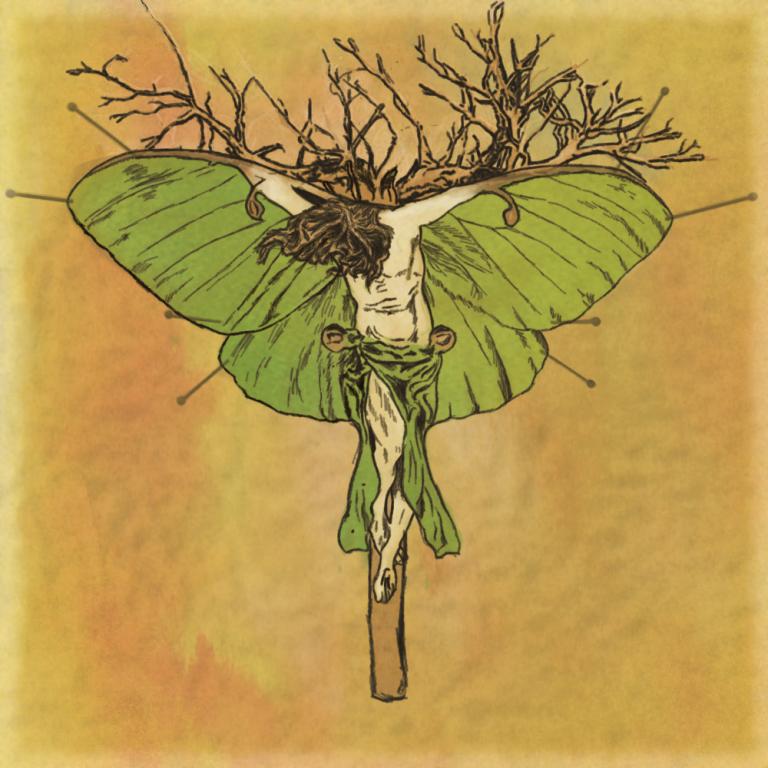
Image courtesy of Pixabay.
Stay in touch! Like Catholic Authenticity on Facebook:
Previous Post

April 5, 2019
28 Guaranteed Ways to Drive Any Man in the Universe Wild
Next Post
April 21, 2019 Fearful Resurrection
Browse Our Archives
Select a Category Abuse Beauty Charity Chastity Current Events Faith Family Feminism Fiction Humility Humour Identity Justice Perseverence Philosophy Poverty Sexuality trauma Uncategorized Virtues Wombats
Select a Month February 2020 November 2019 October 2019 August 2019 July 2019 June 2019 May 2019 April 2019 March 2019 February 2019 October 2018 September 2018 August 2018 July 2018 June 2018 May 2018 April 2018 March 2018 February 2018 January 2018 December 2017 November 2017 October 2017 September 2017 August 2017 July 2017 June 2017 May 2017 April 2017 March 2017 February 2017 January 2017 December 2016 November 2016 October 2016 September 2016 August 2016 July 2016 June 2016 May 2016 April 2016 March 2016 February 2016 January 2016 December 2015 November 2015 October 2015 September 2015 August 2015 July 2015 June 2015
Follow Us!
TAKE THE
Religious Wisdom Quiz
True or False: 3 John commends Diotrephes for his hospitality and love for the brethren.
Select your answer to see how you score.
TRUE FALSE
Books by This Author Books by Melinda Selmys
Support this
Column


Related posts from Catholic Authenticity

Get Behind Me, Tony Esolen: Stop Making Marriage...

Don’t Unfriend the Nazi: How Ideological Abuse Isolates...

The Powerlessness of Prayer: On Detaching with Love
TRENDING AT PATHEOS Catholic

Rejecting Doom: Christian Hope And Human Action
Christianity is a religion of hope. We are to have hope and...

It’s What Comes From Within Which Matters
One of the most difficult things for us to understand is why...

Why I Choose the Eucharist Over the Sermon
Choose the Eucharist, Not the Sermon What are we supposed to get...

5 Design Elements Found in Spiritually Rooted Homes
Putting Spirituality Into Home Decor Our homes are more than our living...

Credo: A Story of God Told with the...
About 10 years ago, I began to imagine a personal "Credo" that...

The Anatomy of Divine Revelation in Catholic Thought
The claim that God has made Himself known to human beings is...
view all Catholic blogs
Ad-Free & Subscriber Log-In Subscription Support
- About Us
- 2026 Calendar
- Videos
- Podcasts
- Library of World Religions
- Faith In Media Tracker
- Advertise With Us
- Write for Us
- Privacy Policy
- Terms of Service
- Do Not Sell My Data
- Contact Us
- Radiant Digital
- Manage Newsletter Subscriptions
- Unsubscribe From Notifications
- Sitemap
Copyright 2008-2026, Patheos. All rights reserved.
Subscription Support Ad-Free & Subscriber Log-In
Follow Patheos