
BuddhistCatholicContemplativeEvangelicalGeneral ChristianHinduJewishLatter-day SaintMuslimNew VisionsProgressive Christian
Beliefs
- Buddhist
- Catholic
- Contemplative
- Evangelical
- General Christian
- Hindu
- Jewish
- Latter-day Saint
- More Voices
- Muslim
- New Visions
- Pagan
- Progressive Christian
Topics
- Religion News
- Food and Religion
- Sports and Religion
- Religious Art
- Religious Music and Entertainment
- Religious Events
- History and Religion
- Style and Religion
- Politics and Religion
- Women in Religion
- Recreation Outdoors and Religion
- Business Finance and Religion
- Careers Workplace and Religion
- Education and Religion
- Family Parenting and Religion
- Health Fitness and Religion
- Home and Religion
- Relationships and Religion
- Technology and Religion
- Travel and Religion
Columnists
- Buddhist Columnists
- Business Finance and Religion Columnists
- Careers Workplace and Religion Columnists
- Catholic Columnists
- Contemplative Columnists
- Education and Religion Columnists
- Evangelists Columnists
- Family Parenting and Religion Columnists
- General Christian Columnists
- Health Fitness and Religion Columnists
- Hindu Columnists
- History and Religion Columnists
- Home and Religion Columnists
- Jewish Columnists
- More Voices Columnists
- Latter Day Columnists
- Muslim Columnists
- New Visions Columnists
- Nonreligious Columnists
- Pagan Columnists
- Politics and Religion Columnists
- Progressive Columnists
- Recreation Outdoors and Religion Columnists
- Relationships and Religion Columnists
- Religion News Columnists
- Religious Art Columnists
- Religious Events Columnists
- Religious Music and Entertainment Columnists
- Sports and Religion Columnists
- Style and Religion Columnists
- Technology and Religion Columnists
- Travel and Religion Columnists
- Women in Religion Columnists
Resource Library
- 2026 Calendar
- Library of World Religions
- The 100 Most Holy Places on Earth
- Patheos Answers
- Podcasts
- Videos
- Faith Leaders Database
- Anglican Episcopalian
- Bahai
- Baptist
- Buddhism
- Christianity
- Confucianism
- Eastern Orthodoxy
- Hinduism
- Holiness and Pentecostal
- ISKCON
- Islam
- Judaism
- Lutheran
- Methodist
- The Church of Jesus Christ of Latter-day Saints
- New Age
- Paganism
- Presbytarian and Reformed
- Protestantism
- Religion Behind the Scenes
- Roman Catholic
- Scientology
- Shia Islam
- Sikhism
- Sufism
- Sunni Islam
- Taoism
- Zen
- See all religions
Research Tools
 Ad-Free & Subscriber Log-In Subscription Support
Follow Patheos 

- Trending:
- Advent
- |
- Forgiveness
- |
- Thanksgiving
- |
- Election
- |
- Seasonal Holidays
- |
- Marriage
 Catholic Authenticity
-
Categories
- Home
- Catholic
- Sexual Coercion and Spousal Rape: What the Church Needs To Do
Sexual Coercion and Spousal Rape: What the Church Needs To Do
Last updated on: March 6, 2019 at 1:24 pm by Melinda Selmys
Sexual Coercion and Spousal Rape: What the Church Needs To Do 2019-03-06T13:24:32-04:00 Melinda Selmys
Patheos Explore the world's faith through different perspectives on religion and spirituality! Patheos has the views of the prevalent religions and spiritualities of the world.
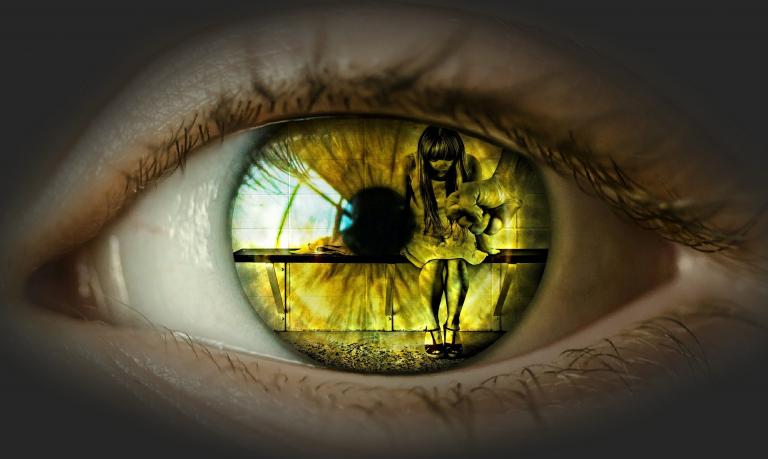
It was after the birth of my sixth child, my family had taken my other children so that I could rest and recover with the baby, and my husband was binge drinking. For days he raged about the house while I tried to take care of a newborn. When he was closer to sober, he wanted to argue about Church sexual teaching. When he was drunk enough the pretext of theological discussion fell away and he stated his demands simply: “Suck my dick.”
I was seven days postpartum, still sore from giving birth, my hormones were on a roller coaster, and I was isolated and terrified. I begged him to stop drinking but he insisted that this was impossible. He was using alcohol to deal with the unbearable sexual frustration that Catholic sexual teaching was inflicting on him, and that I was forcing him to endure by my insistence on staying faithful to the teaching.
Finally, unable to deal with the rage and the drinking, I broke down and had sex with him. I chose a position that I hoped wouldn’t cause any kind of injury and I did it “naturally” in order to avoid mortal sin.
It wasn’t until years later, when #metoo was exploding across the internet, that I was finally able to admit to myself that what happened that day was rape.
Bad Answers to Hard Questions
Catholic teaching had done very little to prepare me to think about my own needs or my own protection in a situation like this. The emphasis was always on the nature of acts, and the presumption of culpability. The Church consistently canonized women who had resisted sex to the point of death. Spousal rape was rarely discussed, and when it did come up it was usually in the context of arguments about whether it was even a real thing in the first place.
Years earlier, I had read a book that applied Catholic sexual ethics to real life situations. I’m pretty sure it was Germaine Grisez’s “The Way of the Lord Jesus: Difficult Moral Questions.” The author replied to letters from readers, showing how Catholic moral principles would apply to their particular circumstances.
One of the letters was from a woman who had very serious health reasons to avoid pregnancy, but her husband consistently pressured and coerced her to have sex during the fertile period while she was trying to practice NFP. She asked if it would be okay to use contraception since she was basically being subjected to spousal rape. The author replied that in cases of so-called spousal rape the woman usually consented, at least nominally, in order to keep the peace in marriage — and that therefore she was not really being raped.
I hope that woman ignored this disastrous advice, but I did not. The upshot was clear enough: if you were not literally being pinned to a bed and forced to have sex against your will, you were consenting and therefore you were responsible. Psychological and emotional violence were factors that you were supposed to courageously resist, and if you didn’t have the emotional resources to do so then you were culpable for whatever happened to you.
The Marriage Debt
Accompanying this, there was a huge body of Catholic tradition that severely limited a woman’s right to say “no” in the first place. A wife was the only “legitimate object of concupiscence” and she owed the “marriage debt” to her husband. If she failed to “render the debt,” then she was responsible for placing him in the way of temptation to serious sins like infidelity, pornography and masturbation.
This enables abusive men to off-load responsibility for their own lack of chastity onto their wives. I remember my husband once telling me that he was murderously angry with me because he couldn’t receive communion. We’d had a long run of abstinence because my cycles were irregular and he saw it as my fault that he’d broken down and taken matters into his own hands.
He was able to quote authorities from St. Paul to Thomas Aquinas, showing that I owed him sex, and he argued that it was selfish of me to resent this obligation. After all, the Sunday obligation to attend Mass wasn’t voluntary — but that didn’t mean that we could approach the Eucharist with resentment or reluctance. Sex was like that.
Lack of Counsel
During the years that I wrestled with this nobody, including my confessors, ever suggested to me that the problem was that my husband was mistreating me. Instead the focus was on whether or not I was sinning, and how I could avoid committing sin. Even when confessors were kindly they didn’t tell me that I needed to protect myself or start working on an exit plan.
This isn’t to say that there is nothing in Catholic teaching that addresses sexual violence in marriage. There are some veiled comments in Familiaris Consortio, couched in John Paul II’s semi-impenetrable abstract language. With the publication of Amoris Laetitia it was finally stated clearly that the interpretation of St. Paul that my husband used to bully me is actually disordered and that sexual domination is contrary to the goods of marriage.
But this is rarely discussed. It’s something that you can find buried deep in long encyclicals, but it’s not up front and centre the way that other teachings on sex are. Instead, we’re presented with the “good example” of Saintly women who saved their husbands’ souls by patiently enduring years or decades of abuse. We’re told to forgive, forgive, forgive, and that the purpose of marriage is to save our spouse’s soul.
Nor is it clear what a woman is to do in a situation where she is being pressured into unwanted sex. Most of what the Church has published on the matter makes it clear that the husband is sinning, but it gives little to no guidance to the woman who finds herself in this situation. Like my confessors, the Church acknowledges that the woman is being wronged but stops short of telling her what to do about it.
One exception, which I didn’t discover until after I had already ended my marriage, is the USCCB’s document “When I Call For Help” which I would strongly recommend to any Catholic woman who thinks that she might be in abusive marriage — and to any priest who is working with spouses (male or female) who might be the victims of sexual coercion or abuse.
The Power of Acknowledgement
This is not to say that the Church’s record is entirely horrible. In the last weeks before I finally called the police on my ex, I heard a sermon that was unlike any I’d heard before. Our local parish had changed the Mass times to accommodate some minor commemoration and I ended up going to a small mission parish to the north of us.
The priest had a rich Caribbean accent and he opened his sermon by saying that Canada is a Christian nation. Why? Because the law protects women and children. He called up my daughter, who beamed shyly at being singled out for this special attention, and he laid his hand on her shoulder “Little children like this one.”
It was the first time that I’d ever heard a sermon about domestic violence, much less one that identified laws which allow women to leave abusive marriages as a good thing. I realized how many times I’d encountered the idea that Canada was a heathen nation, and that the supports that exist to protect women and children from abuse were an attack on family values and parental rights.
That day, I felt seen in a way that I had not felt seen for years. I cried, and I went home finally feeling at peace with the idea that protecting myself and my children was actually a good, that it was Christian to protect the vulnerable and that it was okay to see myself as someone who deserved protection from violence.
That single sermon, from someone who didn’t even know me or my situation, gave me the courage to reach out to authorities and finally get help.
The Church’s Responsibility
It’s all very nice to say that the problem is not with Church teaching but with abusive men, but unless this is accompanied by practical support and counsel for women in abusive situations this is just blame-shifting. The Church needs to be proactive about this — helping women to recognize red flags before they get into abusive marriages, training confessors to recognize the signs that a penitent has internalized guilt for her victimization and is confessing her abuse as if it were her own sin.
It also needs to be recognized and acknowledged that Catholic tradition includes a lot of tropes that abusive people can use to pressure or control their victims, and that an active campaign needs to be undertaken to dismantle these toxic ideas. It’s a huge problem if a Catholic guy who is well versed in Church teaching can convince himself that masturbation is a grave sin, but pressuring his wife to have sex is not. Current documents make one of these things clear, but couch the other in terms that are ambiguous and leave room for men to excuse coercive sexual behaviour.
If Catholics are going to argue that Church teaching is concerned with protecting the dignity of women, this has to change. The dignity of a woman’s whole person has to be acknowledged above and before the dignity of her fertility. Otherwise we will continue to have a culture that leaves women feeling confused about their rights, obligated to their abusers, and guilty for their victimization.
Image by Alexas_Fotos on Pixabay
Stay in touch! Like Catholic Authenticity on Facebook:
Previous Post

March 3, 2019
PSA: NFP is Not Compatible With Alcoholism or Abuse
Next Post
March 18, 2019 Why Am I Still Writing For Patheos Catholic?
Browse Our Archives
Select a Category Abuse Beauty Charity Chastity Current Events Faith Family Feminism Fiction Humility Humour Identity Justice Perseverence Philosophy Poverty Sexuality trauma Uncategorized Virtues Wombats
Select a Month February 2020 November 2019 October 2019 August 2019 July 2019 June 2019 May 2019 April 2019 March 2019 February 2019 October 2018 September 2018 August 2018 July 2018 June 2018 May 2018 April 2018 March 2018 February 2018 January 2018 December 2017 November 2017 October 2017 September 2017 August 2017 July 2017 June 2017 May 2017 April 2017 March 2017 February 2017 January 2017 December 2016 November 2016 October 2016 September 2016 August 2016 July 2016 June 2016 May 2016 April 2016 March 2016 February 2016 January 2016 December 2015 November 2015 October 2015 September 2015 August 2015 July 2015 June 2015
Follow Us!
TAKE THE
Religious Wisdom Quiz
What did Jesus say before raising Lazarus?
Select your answer to see how you score.
"Go in peace!" "Lazarus, come out!" "Rise and walk!" "Be healed!"
Books by This Author Books by Melinda Selmys
Support this
Column


Related posts from Catholic Authenticity

Sex Positive: How I Learned To Stop Worrying...

A Biblical Account of Toxic Femininity
TRENDING AT PATHEOS Catholic

The Kingdom Of God In Ordinary Life And...
The kingdom of God is all around us; it is in us...

How Discretion Guides Us Away From Extremes
Prudence is an important virtue for all of us. While we should...

If Baptism Washes Away Sin, Why Do Catholics...
The seven sacraments stand as the foundation of Catholic ecclesial life. The...

The Power of Setting a Good Example
Remember last August when the Chicago White Sox hosted a "Pope Hat...

A Catholic Critique of Biblical Unitarianism
If the statistics are to be believed, Unitarianism is rising worldwide. Although...

How Grandma Tourism Helps Grandparents Live Their Vocation
Grandma, The New Travel Influencer What started as a nostalgia-inspired social media...
view all Catholic blogs
Ad-Free & Subscriber Log-In Subscription Support
- About Us
- 2026 Calendar
- Videos
- Podcasts
- Library of World Religions
- Faith In Media Tracker
- Advertise With Us
- Write for Us
- Privacy Policy
- Terms of Service
- Do Not Sell My Data
- Contact Us
- Radiant Digital
- Manage Newsletter Subscriptions
- Unsubscribe From Notifications
- Sitemap
Copyright 2008-2026, Patheos, part of the Radiant Digital network of media brands. All rights reserved.
Subscription Support Ad-Free & Subscriber Log-In
Follow Patheos