
BuddhistCatholicContemplativeEvangelicalGeneral ChristianHinduJewishLatter-day SaintMuslimNew VisionsProgressive Christian
Beliefs
- Buddhist
- Catholic
- Contemplative
- Evangelical
- General Christian
- Hindu
- Jewish
- Latter-day Saint
- More Voices
- Muslim
- New Visions
- Pagan
- Progressive Christian
Topics
- Religion News
- Food and Religion
- Sports and Religion
- Religious Art
- Religious Music and Entertainment
- Religious Events
- History and Religion
- Style and Religion
- Politics and Religion
- Women in Religion
- Recreation Outdoors and Religion
- Business Finance and Religion
- Careers Workplace and Religion
- Education and Religion
- Family Parenting and Religion
- Health Fitness and Religion
- Home and Religion
- Relationships and Religion
- Technology and Religion
- Travel and Religion
Columnists
- Buddhist Columnists
- Business Finance and Religion Columnists
- Careers Workplace and Religion Columnists
- Catholic Columnists
- Contemplative Columnists
- Education and Religion Columnists
- Evangelists Columnists
- Family Parenting and Religion Columnists
- General Christian Columnists
- Health Fitness and Religion Columnists
- Hindu Columnists
- History and Religion Columnists
- Home and Religion Columnists
- Jewish Columnists
- More Voices Columnists
- Latter Day Columnists
- Muslim Columnists
- New Visions Columnists
- Nonreligious Columnists
- Pagan Columnists
- Politics and Religion Columnists
- Progressive Columnists
- Recreation Outdoors and Religion Columnists
- Relationships and Religion Columnists
- Religion News Columnists
- Religious Art Columnists
- Religious Events Columnists
- Religious Music and Entertainment Columnists
- Sports and Religion Columnists
- Style and Religion Columnists
- Technology and Religion Columnists
- Travel and Religion Columnists
- Women in Religion Columnists
Resource Library
- 2026 Calendar
- Library of World Religions
- The 100 Most Holy Places on Earth
- Patheos Answers
- Podcasts
- Videos
- Faith Leaders Database
- Anglican Episcopalian
- Bahai
- Baptist
- Buddhism
- Christianity
- Confucianism
- Eastern Orthodoxy
- Hinduism
- Holiness and Pentecostal
- ISKCON
- Islam
- Judaism
- Lutheran
- Methodist
- The Church of Jesus Christ of Latter-day Saints
- New Age
- Paganism
- Presbytarian and Reformed
- Protestantism
- Religion Behind the Scenes
- Roman Catholic
- Scientology
- Shia Islam
- Sikhism
- Sufism
- Sunni Islam
- Taoism
- Zen
- See all religions
Research Tools
 Ad-Free & Subscriber Log-In Subscription Support
Ad-Free & Subscriber Log-In Subscription Support
Follow Patheos 

- Trending:
- Forgiveness
- |
- Marriage
- |
- Consciousness
- |
- Death Penalty
- |
- Election
- |
- Halloween
 Catholic Authenticity
-
Categories
- Home
- Catholic
- A Tale of Two Priests: On Authority
A Tale of Two Priests: On Authority
Last updated on: October 12, 2018 at 12:11 pm by Melinda Selmys
A Tale of Two Priests: On Authority 2018-10-12T12:11:56-04:00 Melinda Selmys
Patheos Explore the world's faith through different perspectives on religion and spirituality! Patheos has the views of the prevalent religions and spiritualities of the world.
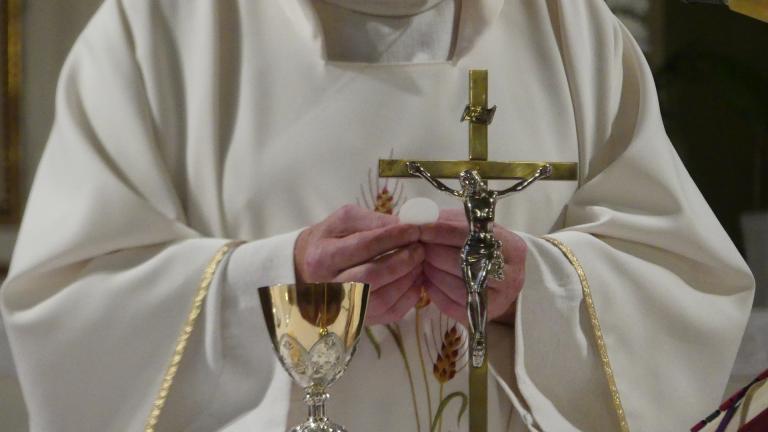
In the past two days, I received correspondence from two different Catholic priests reacting to the news that I was leaving the Roman Catholic church. One drew me closer to the church, made me more receptive to the idea that one day I might want to return. The other solidified my suspicions that members of the hierarchy use abuse tactics to secure compliance from the faithful.
The second letter was a variety of correspondence that I’ve only ever received from Catholic clergy. It’s a formal dressing down from someone who assumes a position of authority and who feels entitled to your obedience and submission to their opinion. They have certain distinctive features: a thin veneer of solicitude for your soul, a slightly menacing tone, and a detailed psychological deconstruction of how your “sins” led you to disagree with them.
Because I write a lot about sexuality and because I’m fairly liberal, it is invariably assumed that lust is among (perhaps foremost among) the sins that have led me down the garden path to hell. This is the intended “gotcha” moment where the priest accurately scries the secrets of your soul and uncovers the real ulterior motive behind your supposedly intellectual reservations.
The thing is, it’s a Barnum statement. The way that Catholic sexual morality is constructed, there is almost nobody who is able to practice it. Catholics are trained to feel deeply ashamed of this, so when they are accused of their “secret sin” it starts up a cycle of self-doubt that makes them more susceptible to authoritarian claims. I mean, what if it really does just come down to lust? What if I’m not thinking or acting in good faith, but rather trying to justify this shameful addiction to sex?
Nevermind that the “addiction” in this case is actually a natural drive which most humans have as a means of perpetuating the species. Telling someone that their natural drives are shameful and sinful is a great way to destablize their self-concept and to make them vulnerable to manipulation and abuse.
In my personal case, though, it backfires every single time. Why? Because while my orientation is primarily same-sex, I’m also borderline asexual. Going without sex doesn’t bother me particularly. I’ve studied human sexuality enough to know that if my intellectual integrity is being eroded by lust, then intellectual integrity is something that only a very small number of humans could ever hope to attain to.
I’m one of those rare exceptions where the Barnum statement falls flat because it isn’t true.
I don’t bring this up to boast. I think that my relative indifference to actually having sex — as opposed to theorizing about it, which I do enjoy — is a result of being semi-autistic. It’s not the fruit of any particular virtue on my part. The reason I mention it is to point out how this tactic works. And to reassure the people that it has worked on that nobody read their souls.
Nobody correctly identified your secret shame. You don’t need to be afraid that your ability to reason has been wholly clouded by lust, to the point where you can no longer trust yourself to think in good faith. It’s just cold reading. They told you something that is true of almost all human beings and then insinuated a spurious link between that near-universal human truth and your obligation to believe whatever they wanted to tell you about yourself and the universe. No special insight. All they have to do is assume that you have a normal human libido, and Catholic guilt will take care of the rest.
After insinuating that your mind is clouded by being human, the next step is to start talking about how the Devil has seduced you into excessive pride and self-reliance, which has caused you to abandon truth. It’s convenient: there just happens to be an invisible bogeyman that prowls the earth seeking to convince people of “lies” by exposing them to historical scholarship and rational argumentation. Whereas truth is attained solely by submitting to the authority of people who tell you that it is a sin to come to different conclusions than they have come to.
This is why I left the Church. This is clericalism. It functions through a combination of accusation, intimidation, undermining, and presumption. It demands obedience, and tells you that the only reason you could possibly have for failing to obey is that you are a bad person.
But it’s not the whole story of who the Catholic clergy are. It’s definitely not the whole story of what the Church is and what it has to offer. Yes, there are many men who are (consciously or unconsciously) drawn by the attraction of holding power over others and of being allowed to wield special authority from God. But there are others who have become priests because they want to minister to hurting people.
They want to provide pastoral care – that is, care and support for people who are dealing with the complex interplay of emotional, psychological, existential, intellectual and mystical needs that make up “spirituality.”
Here’s what that looks like.
Another priest, a man I met very briefly over a year ago at a conference, noticed at that time that I was struggling. He made no assumptions, he just reached out and asked if it would be okay for him to pray for me. And he said that if I ever wanted to talk, he was there.
Periodically, he writes and lets me know that he’s still keeping me in his prayers. He checks to see if this is wanted, or unwanted. And when he provides me with anything that is even remotely like advice, it is in response to things that I’ve chosen to disclose to him. Most of what he does is provide me with support and comfort, and guide me towards resources within the Catholic tradition that could help me with the things I’m dealing with from day to day.
This guy draws me back towards the Catholic tradition because he is able to say things that are helpful and edifying. Why? Because he bothered to ask and listen before assuming that he could judge. And you know what? Even though I’m no longer worshipping in a Catholic church I still call this priest, and others like him, “Father.” And I mean it. They are spiritual authorities who I trust because they have demonstrated that they are trustworthy.
I really think that the Catholic church in general needs to internalize this. If you claim some sort of magical authority from God – a magical authority that you possess regardless of your personal behaviour, holiness or sincerity – you will always have to rely on strong-arm tactics to secure compliance with what you teach. This works if you in fact have the might of the secular state to back you up. But if you don’t? A lot of people will eventually see through this, break free of the “mind-forged manacles” and hate you for the rest of their lives.
But there is a different kind of authority. The kind that Christ had, and the Pharisees lacked. The authority that comes from personal integrity, compassion, and love. An authority that builds trust by listening, helping, caring and binding up wounds. If you wish me to believe that you stand in persona Christi, this is the kind of authority you must project.
Image courtesy of Pixabay
Stay in touch! Like Catholic Authenticity on Facebook:
Next Post

October 12, 2018 5 Things I’m Obsessed With (Other Than Power)
Browse Our Archives
Select a Category Abuse Beauty Charity Chastity Current Events Faith Family Feminism Fiction Humility Humour Identity Justice Perseverence Philosophy Poverty Sexuality trauma Uncategorized Virtues Wombats
Select a Month February 2020 November 2019 October 2019 August 2019 July 2019 June 2019 May 2019 April 2019 March 2019 February 2019 October 2018 September 2018 August 2018 July 2018 June 2018 May 2018 April 2018 March 2018 February 2018 January 2018 December 2017 November 2017 October 2017 September 2017 August 2017 July 2017 June 2017 May 2017 April 2017 March 2017 February 2017 January 2017 December 2016 November 2016 October 2016 September 2016 August 2016 July 2016 June 2016 May 2016 April 2016 March 2016 February 2016 January 2016 December 2015 November 2015 October 2015 September 2015 August 2015 July 2015 June 2015
Follow Us!
TAKE THE
Religious Wisdom Quiz
Which Old Testament book does not mention God?
Select your answer to see how you score.
Song of Solomon Ruth Ecclesiastes Esther
Books by This Author Books by Melinda Selmys
Support this
Column


Related posts from Catholic Authenticity

Sex Positive: How I Learned To Stop Worrying...

The Lord Has Worked Marvels For Me: Open...

The Central Spiritual Struggle of Women: Open Letter,...

An Open Letter to the Young Rad-Trad Women
TRENDING AT PATHEOS Catholic

Rejecting Doom: Christian Hope And Human Action
Christianity is a religion of hope. We are to have hope and...

It’s What Comes From Within Which Matters
One of the most difficult things for us to understand is why...

Why I Choose the Eucharist Over the Sermon
Choose the Eucharist, Not the Sermon What are we supposed to get...

5 Design Elements Found in Spiritually Rooted Homes
Putting Spirituality Into Home Decor Our homes are more than our living...

Credo: A Story of God Told with the...
About 10 years ago, I began to imagine a personal "Credo" that...

The Anatomy of Divine Revelation in Catholic Thought
The claim that God has made Himself known to human beings is...
view all Catholic blogs
Ad-Free & Subscriber Log-In Subscription Support
- About Us
- 2026 Calendar
- Videos
- Podcasts
- Library of World Religions
- Faith In Media Tracker
- Advertise With Us
- Write for Us
- Privacy Policy
- Terms of Service
- Do Not Sell My Data
- Contact Us
- Radiant Digital
- Manage Newsletter Subscriptions
- Unsubscribe From Notifications
- Sitemap
Copyright 2008-2026, Patheos. All rights reserved.
Subscription Support Ad-Free & Subscriber Log-In
Follow Patheos