
BuddhistCatholicContemplativeEvangelicalGeneral ChristianHinduJewishLatter-day SaintMuslimNew VisionsProgressive Christian
Beliefs
- Buddhist
- Catholic
- Contemplative
- Evangelical
- General Christian
- Hindu
- Jewish
- Latter-day Saint
- More Voices
- Muslim
- New Visions
- Pagan
- Progressive Christian
Topics
- Religion News
- Food and Religion
- Sports and Religion
- Religious Art
- Religious Music and Entertainment
- Religious Events
- History and Religion
- Style and Religion
- Politics and Religion
- Women in Religion
- Recreation Outdoors and Religion
- Business Finance and Religion
- Careers Workplace and Religion
- Education and Religion
- Family Parenting and Religion
- Health Fitness and Religion
- Home and Religion
- Relationships and Religion
- Technology and Religion
- Travel and Religion
Columnists
- Buddhist Columnists
- Business Finance and Religion Columnists
- Careers Workplace and Religion Columnists
- Catholic Columnists
- Contemplative Columnists
- Education and Religion Columnists
- Evangelists Columnists
- Family Parenting and Religion Columnists
- General Christian Columnists
- Health Fitness and Religion Columnists
- Hindu Columnists
- History and Religion Columnists
- Home and Religion Columnists
- Jewish Columnists
- More Voices Columnists
- Latter Day Columnists
- Muslim Columnists
- New Visions Columnists
- Nonreligious Columnists
- Pagan Columnists
- Politics and Religion Columnists
- Progressive Columnists
- Recreation Outdoors and Religion Columnists
- Relationships and Religion Columnists
- Religion News Columnists
- Religious Art Columnists
- Religious Events Columnists
- Religious Music and Entertainment Columnists
- Sports and Religion Columnists
- Style and Religion Columnists
- Technology and Religion Columnists
- Travel and Religion Columnists
- Women in Religion Columnists
Resource Library
- 2026 Calendar
- Library of World Religions
- The 100 Most Holy Places on Earth
- Patheos Answers
- Podcasts
- Videos
- Faith Leaders Database
- Anglican Episcopalian
- Bahai
- Baptist
- Buddhism
- Christianity
- Confucianism
- Eastern Orthodoxy
- Hinduism
- Holiness and Pentecostal
- ISKCON
- Islam
- Judaism
- Lutheran
- Methodist
- The Church of Jesus Christ of Latter-day Saints
- New Age
- Paganism
- Presbytarian and Reformed
- Protestantism
- Religion Behind the Scenes
- Roman Catholic
- Scientology
- Shia Islam
- Sikhism
- Sufism
- Sunni Islam
- Taoism
- Zen
- See all religions
Research Tools
 Ad-Free & Subscriber Log-In Subscription Support
Ad-Free & Subscriber Log-In Subscription Support
Follow Patheos 

- Trending:
- Forgiveness
- |
- Marriage
- |
- Consciousness
- |
- Death Penalty
- |
- Election
- |
- Halloween
 Catholic Authenticity
-
Categories
- Home
- Catholic
- The Democratization of the Faith
The Democratization of the Faith
Last updated on: June 1, 2018 at 9:45 am by Melinda Selmys
The Democratization of the Faith 2018-06-01T09:45:52-04:00 Melinda Selmys
Patheos Explore the world's faith through different perspectives on religion and spirituality! Patheos has the views of the prevalent religions and spiritualities of the world.
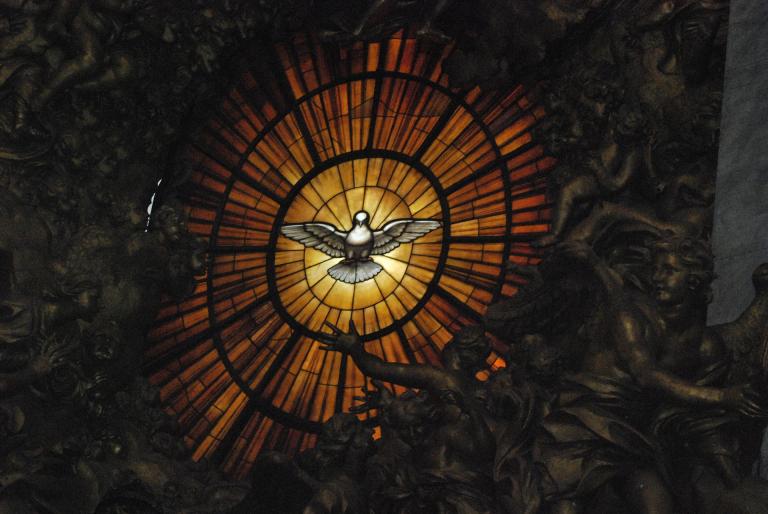
Since Vatican II, there has been a great fear among orthodox Catholics that a focus on the sensus fidelium would lead to a collapse in the central authority of the Church. Doctrine would cease to be defined by Scripture, Tradition and the Magisterium and would instead be subject to the caprices of the popular vote.
This has in fact happened. But not in the way that people feared.
I wasn’t around for Vatican II, or in the years that immediately followed, so I can’t speak to the changes that swept through the laity at that time. I have been around for a more recent change, one that has been just as corrosive to the integrity of the Catholic faith.
It happened at about the time when print media started to decline, and publications moved on-line. Prior to that point, the criteria for getting an article published in any of the newspapers or magazines that prided themselves on fidelity to Church teaching was simple. You quoted from Scripture, Papal statements and Vatican documents to show that what you saying had a solid foundation and was consistent with Catholic tradition.
Editors were general happy to work with any material that was in-line with Catholic teaching, even if it addressed the aspects of doctrine that are often associated with the political left. In many cases, they were even willing to accept pieces that challenged their own preconceptions – provided you could demonstrate that they were consistent with orthodoxy.
That changed, quite rapidly, as publications began to move on-line. There was a shift in Catholic publishing that was very noticeable if you worked in the industry. Suddenly, editorial boards (and perhaps more importantly, marketing departments) could see which individual articles were having the most success. That is, which were getting clicks, and shares, and positive comments.
The goal of Catholic publishing changed as a result. Editors could no longer focus on putting together a paper or a magazine that would help Catholics to grow in all aspects of their faith, because people no longer read that way.
On the internet, people tend to read and share individual articles from a variety of sources, rather than reading a variety of articles from a single source. This means, in effect, that readers tend to camp out on particular issues that interest them, and that the market is more immediately responsive to the tastes and preferences of its readership.
I’m not saying that’s an entirely bad thing – just that it’s problematic if people are using on-line media as their primary source for adult faith-formation.
The practical consequence of a like-and-share market is that it puts pressure on Catholic publications to produce content that suits the prejudices of readers. In effect, it democratizes Catholic teaching – or rather, it democratizes what is being taught in practice.
Over a very short period of time, as on-line content started to take precedence over print, there was a noticeable change in the types of articles that were accepted and printed by most of the Catholic publications that claimed fidelity to the Magisterium. In many cases, there was an actual turn-over of editorial staff as the new standards were coming into effect.
It was no longer sufficient for a piece to reflect the teaching of the Church. At this point fidelity to Church teaching was still mostly expected, but articles that got accepted for publication tended to be those which presented aspects of Church teaching that confirmed the political biases of the readership.
Readers were increasingly intolerant of content that challenged them to explore aspects of the faith that didn’t dovetail neatly with American political categories. What had happened to liberal publications many years earlier (perhaps in the wake of Vatican II, or perhaps as a result of previous changes in the media environment), now happened to conservative publications. The agenda no longer primarily served Rome, but Washington.
This has meant that slowly, over the course of several years, “orthodox” publications have moved from preferring material which highlights the more conservative aspects of the faith to printing material that, in many cases, outright attacks the faith in the name of right-wing dogma. The vicious hatred of Pope Francis is largely a product of this populist Catholic culture.
Nor is it just a matter of what is published on-line. As people increasingly turn to social media in order to seek Catholic community, the media environment has become a primary nexus of faith-formation. Even when Catholics get together face-to-face, it’s normal for discussions to feature the ideas, and often the names, of prominent Catholic media figures. Even homilies, which should serve to assert the faith over the din of populist internet chatter, are often influenced by what our Priests are reading on FaceBook.
This has led, I would argue, to a crisis of catechesis every bit as serious as the crisis that followed the sexual revolution. Increasingly, Catholics who pride themselves on their faithfulness to Catholic teaching are completely ignorant of what the Church actually teaches concerning social justice, economics, immigration, environmental responsibility, and many other issues where Catholic Tradition indicts the policies of the American Republican party.
Pope Francis is thus seen as a heretic, a liberal, and a socialist when he asserts points of doctrine that have been part of Magisterial teaching for decades, centuries, millennia. The problem is not that the Pope has suddenly departed from the timeless teaching of the Church. Rather, the problem is that Catholic culture, at least in America, has abandoned the more unpopular aspects of that teaching in favour of a more politically acceptable narrative that brings in the clicks.
Image courtesy of Pixabay
Stay in touch! Like Catholic Authenticity on Facebook:
Previous Post

May 15, 2018
The Abuses of Hell
Next Post
June 6, 2018 Victim Blaming Explained (with bears)
Browse Our Archives
Select a Category Abuse Beauty Charity Chastity Current Events Faith Family Feminism Fiction Humility Humour Identity Justice Perseverence Philosophy Poverty Sexuality trauma Uncategorized Virtues Wombats
Select a Month February 2020 November 2019 October 2019 August 2019 July 2019 June 2019 May 2019 April 2019 March 2019 February 2019 October 2018 September 2018 August 2018 July 2018 June 2018 May 2018 April 2018 March 2018 February 2018 January 2018 December 2017 November 2017 October 2017 September 2017 August 2017 July 2017 June 2017 May 2017 April 2017 March 2017 February 2017 January 2017 December 2016 November 2016 October 2016 September 2016 August 2016 July 2016 June 2016 May 2016 April 2016 March 2016 February 2016 January 2016 December 2015 November 2015 October 2015 September 2015 August 2015 July 2015 June 2015
Follow Us!
TAKE THE
Religious Wisdom Quiz
True or False: 3 John commends Diotrephes for his hospitality and love for the brethren.
Select your answer to see how you score.
TRUE FALSE
Books by This Author Books by Melinda Selmys
Support this
Column


Related posts from Catholic Authenticity

The Lord Has Worked Marvels For Me: Open...

The Central Spiritual Struggle of Women: Open Letter,...

An Open Letter to the Young Rad-Trad Women

Maybe It's Okay That Man Should Be Alone
TRENDING AT PATHEOS Catholic

Rejecting Doom: Christian Hope And Human Action
Christianity is a religion of hope. We are to have hope and...

It’s What Comes From Within Which Matters
One of the most difficult things for us to understand is why...

Why I Choose the Eucharist Over the Sermon
Choose the Eucharist, Not the Sermon What are we supposed to get...

5 Design Elements Found in Spiritually Rooted Homes
Putting Spirituality Into Home Decor Our homes are more than our living...

Credo: A Story of God Told with the...
About 10 years ago, I began to imagine a personal "Credo" that...

The Anatomy of Divine Revelation in Catholic Thought
The claim that God has made Himself known to human beings is...
view all Catholic blogs
Ad-Free & Subscriber Log-In Subscription Support
- About Us
- 2026 Calendar
- Videos
- Podcasts
- Library of World Religions
- Faith In Media Tracker
- Advertise With Us
- Write for Us
- Privacy Policy
- Terms of Service
- Do Not Sell My Data
- Contact Us
- Radiant Digital
- Manage Newsletter Subscriptions
- Unsubscribe From Notifications
- Sitemap
Copyright 2008-2026, Patheos. All rights reserved.
Subscription Support Ad-Free & Subscriber Log-In
Follow Patheos