
BuddhistCatholicContemplativeEvangelicalGeneral ChristianHinduJewishLatter-day SaintMuslimNew VisionsProgressive Christian
Beliefs
- Buddhist
- Catholic
- Contemplative
- Evangelical
- General Christian
- Hindu
- Jewish
- Latter-day Saint
- More Voices
- Muslim
- New Visions
- Pagan
- Progressive Christian
Topics
- Religion News
- Food and Religion
- Sports and Religion
- Religious Art
- Religious Music and Entertainment
- Religious Events
- History and Religion
- Style and Religion
- Politics and Religion
- Women in Religion
- Recreation Outdoors and Religion
- Business Finance and Religion
- Careers Workplace and Religion
- Education and Religion
- Family Parenting and Religion
- Health Fitness and Religion
- Home and Religion
- Relationships and Religion
- Technology and Religion
- Travel and Religion
Columnists
- Buddhist Columnists
- Business Finance and Religion Columnists
- Careers Workplace and Religion Columnists
- Catholic Columnists
- Contemplative Columnists
- Education and Religion Columnists
- Evangelists Columnists
- Family Parenting and Religion Columnists
- General Christian Columnists
- Health Fitness and Religion Columnists
- Hindu Columnists
- History and Religion Columnists
- Home and Religion Columnists
- Jewish Columnists
- More Voices Columnists
- Latter Day Columnists
- Muslim Columnists
- New Visions Columnists
- Nonreligious Columnists
- Pagan Columnists
- Politics and Religion Columnists
- Progressive Columnists
- Recreation Outdoors and Religion Columnists
- Relationships and Religion Columnists
- Religion News Columnists
- Religious Art Columnists
- Religious Events Columnists
- Religious Music and Entertainment Columnists
- Sports and Religion Columnists
- Style and Religion Columnists
- Technology and Religion Columnists
- Travel and Religion Columnists
- Women in Religion Columnists
Resource Library
- 2026 Calendar
- Library of World Religions
- The 100 Most Holy Places on Earth
- Patheos Answers
- Podcasts
- Videos
- Faith Leaders Database
- Anglican Episcopalian
- Bahai
- Baptist
- Buddhism
- Christianity
- Confucianism
- Eastern Orthodoxy
- Hinduism
- Holiness and Pentecostal
- ISKCON
- Islam
- Judaism
- Lutheran
- Methodist
- The Church of Jesus Christ of Latter-day Saints
- New Age
- Paganism
- Presbytarian and Reformed
- Protestantism
- Religion Behind the Scenes
- Roman Catholic
- Scientology
- Shia Islam
- Sikhism
- Sufism
- Sunni Islam
- Taoism
- Zen
- See all religions
Research Tools
 Ad-Free & Subscriber Log-In Subscription Support
Ad-Free & Subscriber Log-In Subscription Support
Follow Patheos 

- Trending:
- Forgiveness
- |
- Marriage
- |
- Consciousness
- |
- Death Penalty
- |
- Election
- |
- Halloween
 Catholic Authenticity
-
Categories
- Home
- Catholic
- Privilege Does Not Mean You Are Bad
Privilege Does Not Mean You Are Bad
Last updated on: June 7, 2018 at 12:03 pm by Melinda Selmys
Privilege Does Not Mean You Are Bad 2018-06-07T12:03:23-04:00 Melinda Selmys
Patheos Explore the world's faith through different perspectives on religion and spirituality! Patheos has the views of the prevalent religions and spiritualities of the world.
Alright, so you’re white. And also male. You’re successful, but you’ve worked hard all your life. Growing up there were obstacles that you had to overcome, and you worked to overcome them. Your parents weren’t rich. They weren’t poor, but certainly nobody bought you a car when you were sixteen. Now you’re sick of everybody telling you that the reason you’re successful is that you have something called “privilege,” and you’re tired of being told you need to be ashamed of your sex and your race.
Alright, so up front I think it’s important that there really are people of colour who are just angry at white people, and there really are women who are just angry at men. They make up a minority, even in social justice circles, but they are often a loud and abrasive minority so I understand that it’s unpleasant to run into them.
But privilege is not the idea that white males are bad people, or that you haven’t worked hard for your successes. Privilege is the idea that some people enjoy cultural, or even natural advantages that other people do not enjoy and that if you have those advantages you will be able to achieve more success with less work than somebody who doesn’t have them.
I’ll try to illustrate this first with some examples that have nothing to do with race or sex.
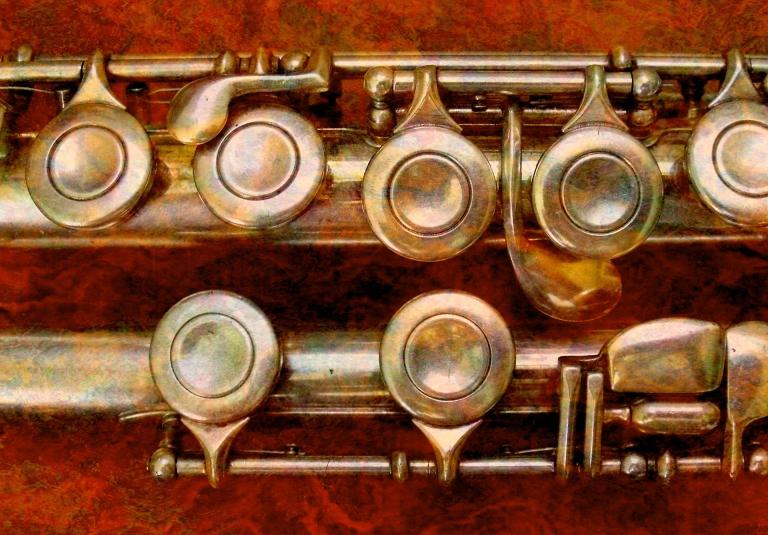
A long time ago, I decided that I wanted to play the flute in our school band. Everybody paid a set fee to buy an instrument from the school, and the instruments were purchased and distributed to the students.
I really struggled to play the flute. Just getting a sound out of the thing was exhausting and difficult. When I did manage to play a note, it usually squeaked. It was really hard to get my fingers to move fast enough to get from one note to the next in time. Since it was deeply unrewarding and frustrating, I admit I found it hard to motivate myself to practice. But I stuck with it.
Then one day, there was a test in music class and I had forgotten my instrument at home. The teacher asked if one of the other students would lend me a flute, and as it happened the best flautist in the class volunteered. I have never played like I played that day. Her flute was a dream. You could get the keys to entirely stopper the gaps with the lightest pressure. They didn’t stick or squeak. You could produce a steady, sonorous sound with a relaxed embouchure and only a moderate expenditure of breath.
On her flute, I was actually a reasonable competent player. If I had owned a flute like that, I might even have liked practising – it was a joy to play. I got the best mark I’d ever gotten in band class… And then of course I had to give it back. I struggled on for a few more years with my sticky-keyed flute and then dropped out of band and took vocal jazz instead.
On the other hand, in English class I was the star student. One day, I showed up to school and one of my friends worriedly asked if I was ready for my presentation. We’d been assigned to do an oral essay, a new form that none of us had tried before. She’d been working on hers all week, but she was nervous about it.
I had not started. I had totally forgotten about the assignment. I mean, I’d read the book because it interested me, but that had been weeks ago. Now I had to throw something together over the lunch break and hope for the best.
But then when lunch came around, my friends were playing RPGs in the cafeteria and I didn’t want to let the party down. So I thought, “Okay, I’ll play a bit and then do my essay.” Next thing, I looked up at the clock and realized that English class was starting in fifteen minutes. I jotted down some mostly random quotes from the text and cobbled together an argument that linked them in a reasonably coherent way. And then I winged it.
I got 100%. At the end of the class my teacher made an embarrassing speech about how the other students should imitate my work habits.
Obviously, my success in this was not the result of hard work, diligence and personal responsibility. Sure, I put in a lot of hours reading and writing to get to the point where I could jot down an A++ oral essay on a gum-wrapper. But – and I think this is crucial – I didn’t do that because of some sort of forward-thinking industrious virtue-ethic. I didn’t sit down one day and say “Alright, reading is tough work but if I put my nose to the grindstone one day it’s going to pay off.”
I read because it was easy, fun and rewarding. When I was little, both of my parents read me stories every night (and often multiple times in the same day in the case of my poor mother). My dad did silly voices and listening to him read was one of my favourite things.
Mom taught me to read when I was four, and there were always books around the house. Books everywhere, in all kinds of genres. Dad used to blaze through a novel every evening, and if I became interested in any subject suddenly an avalanche of books would appear. I didn’t have to convince my parents to take me to the library, or remember to return my books, they were just there. To this day, there is a bookshelf in literally every room of my house apart from one of the bathrooms.
I read all the time because it was normal, and I loved to do it. Once I learned how to write, and realized that I could make new books out of the ideas in my head, nothing could stop me. I didn’t write because I wanted to work hard and get good grades. I wrote because words are the most fun toy in the universe, even funner than Legos.
Alright, so let’s get back to the point. In both of these cases, the formula was not “hard work = success.” There is another term, equally important, “hard work + advantage = success.” The best flautist in my middle-school band had a hidden advantage: a really good instrument. In English, I had a hidden advantage: early literacy and easy access to books.
This advantage didn’t just mean that we had a leg up, it also meant that when we did work hard, we were more likely to find it rewarding. In general, if someone tries, and tries, and tries and doesn’t get anywhere they either give up completely, or (if that’s not an option) they become despondent. We will naturally tend to work harder if working harder produces better results – and most of us will find it hard to motivate ourselves if we sink a lot of work into something that never pays off.
This is what privilege is about. It’s not about being ashamed that you have advantages that you didn’t earn, it’s about acknowledging that you have them. It doesn’t mean that you didn’t work hard for your successes, it does mean letting go of the delusion that success is always the fruit of hard work.
There’s nothing wrong with being the kid who was given a good flute. There’s nothing shameful about being the kid who started reading encyclopedias at six. These things are good in themselves – they only become a problem if they cause you to feel superior, to look down on others, or to sabotage other people’s efforts in order to maintain your advantage.
In the same way, you do you have to be ashamed of Anglo-American culture to acknowledge the ways in which that culture advantages people of white Anglo-American descent. You don’t have to hate masculinity to realize that a lot of aspects of social organization were developed by men, for men, and that this makes it easier for men to succeed.
It only becomes wrong if you try to take personal credit for advantages that you did not earn, if you assume that people who don’t have those advantages just need to try harder, and if you choose to perpetuate practices that make life easier for you at the expense of others.
Image courtesy of Pixabay.
Stay in touch! Like Catholic Authenticity on Facebook:
Previous Post

June 6, 2018
Victim Blaming Explained (with bears)
Next Post
June 18, 2018 The Myth of the Self-Made Man
Browse Our Archives
Select a Category Abuse Beauty Charity Chastity Current Events Faith Family Feminism Fiction Humility Humour Identity Justice Perseverence Philosophy Poverty Sexuality trauma Uncategorized Virtues Wombats
Select a Month February 2020 November 2019 October 2019 August 2019 July 2019 June 2019 May 2019 April 2019 March 2019 February 2019 October 2018 September 2018 August 2018 July 2018 June 2018 May 2018 April 2018 March 2018 February 2018 January 2018 December 2017 November 2017 October 2017 September 2017 August 2017 July 2017 June 2017 May 2017 April 2017 March 2017 February 2017 January 2017 December 2016 November 2016 October 2016 September 2016 August 2016 July 2016 June 2016 May 2016 April 2016 March 2016 February 2016 January 2016 December 2015 November 2015 October 2015 September 2015 August 2015 July 2015 June 2015
Follow Us!
TAKE THE
Religious Wisdom Quiz
What traveling companion of Paul was a physician and historian, writing two New Testament books?
Select your answer to see how you score.
Mark Luke Barnabas Silas
Books by This Author Books by Melinda Selmys
Support this
Column


Related posts from Catholic Authenticity


Maybe It's Okay That Man Should Be Alone

A Biblical Account of Toxic Femininity

Fault on His Side: Addiction and Culpability Pt...
TRENDING AT PATHEOS Catholic

Rejecting Doom: Christian Hope And Human Action
Christianity is a religion of hope. We are to have hope and...

It’s What Comes From Within Which Matters
One of the most difficult things for us to understand is why...

Why I Choose the Eucharist Over the Sermon
Choose the Eucharist, Not the Sermon What are we supposed to get...

5 Design Elements Found in Spiritually Rooted Homes
Putting Spirituality Into Home Decor Our homes are more than our living...

Credo: A Story of God Told with the...
About 10 years ago, I began to imagine a personal "Credo" that...

The Anatomy of Divine Revelation in Catholic Thought
The claim that God has made Himself known to human beings is...
view all Catholic blogs
Ad-Free & Subscriber Log-In Subscription Support
- About Us
- 2026 Calendar
- Videos
- Podcasts
- Library of World Religions
- Faith In Media Tracker
- Advertise With Us
- Write for Us
- Privacy Policy
- Terms of Service
- Do Not Sell My Data
- Contact Us
- Radiant Digital
- Manage Newsletter Subscriptions
- Unsubscribe From Notifications
- Sitemap
Copyright 2008-2026, Patheos. All rights reserved.
Subscription Support Ad-Free & Subscriber Log-In
Follow Patheos