
BuddhistCatholicContemplativeEvangelicalGeneral ChristianHinduJewishLatter-day SaintMuslimNew VisionsProgressive Christian
Beliefs
- Buddhist
- Catholic
- Contemplative
- Evangelical
- General Christian
- Hindu
- Jewish
- Latter-day Saint
- More Voices
- Muslim
- New Visions
- Pagan
- Progressive Christian
Topics
- Religion News
- Food and Religion
- Sports and Religion
- Religious Art
- Religious Music and Entertainment
- Religious Events
- History and Religion
- Style and Religion
- Politics and Religion
- Women in Religion
- Recreation Outdoors and Religion
- Business Finance and Religion
- Careers Workplace and Religion
- Education and Religion
- Family Parenting and Religion
- Health Fitness and Religion
- Home and Religion
- Relationships and Religion
- Technology and Religion
- Travel and Religion
Columnists
- Buddhist Columnists
- Business Finance and Religion Columnists
- Careers Workplace and Religion Columnists
- Catholic Columnists
- Contemplative Columnists
- Education and Religion Columnists
- Evangelists Columnists
- Family Parenting and Religion Columnists
- General Christian Columnists
- Health Fitness and Religion Columnists
- Hindu Columnists
- History and Religion Columnists
- Home and Religion Columnists
- Jewish Columnists
- More Voices Columnists
- Latter Day Columnists
- Muslim Columnists
- New Visions Columnists
- Nonreligious Columnists
- Pagan Columnists
- Politics and Religion Columnists
- Progressive Columnists
- Recreation Outdoors and Religion Columnists
- Relationships and Religion Columnists
- Religion News Columnists
- Religious Art Columnists
- Religious Events Columnists
- Religious Music and Entertainment Columnists
- Sports and Religion Columnists
- Style and Religion Columnists
- Technology and Religion Columnists
- Travel and Religion Columnists
- Women in Religion Columnists
Resource Library
- 2026 Calendar
- Library of World Religions
- The 100 Most Holy Places on Earth
- Patheos Answers
- Podcasts
- Videos
- Faith Leaders Database
- Anglican Episcopalian
- Bahai
- Baptist
- Buddhism
- Christianity
- Confucianism
- Eastern Orthodoxy
- Hinduism
- Holiness and Pentecostal
- ISKCON
- Islam
- Judaism
- Lutheran
- Methodist
- The Church of Jesus Christ of Latter-day Saints
- New Age
- Paganism
- Presbytarian and Reformed
- Protestantism
- Religion Behind the Scenes
- Roman Catholic
- Scientology
- Shia Islam
- Sikhism
- Sufism
- Sunni Islam
- Taoism
- Zen
- See all religions
Research Tools
 Ad-Free & Subscriber Log-In Subscription Support
Ad-Free & Subscriber Log-In Subscription Support
Follow Patheos 

- Trending:
- Forgiveness
- |
- Marriage
- |
- Consciousness
- |
- Death Penalty
- |
- Election
- |
- Halloween
 Catholic Authenticity
-
Categories
- Home
- Catholic
- Nightmare on Estrogen Street: Frequently Unanswered Questions about NFP Chapter 1
Nightmare on Estrogen Street: Frequently Unanswered Questions about NFP Chapter 1
Last updated on: November 2, 2017 at 2:30 pm by Melinda Selmys
Nightmare on Estrogen Street: Frequently Unanswered Questions about NFP Chapter 1 2017-11-02T14:30:30-04:00 Melinda Selmys
Patheos Explore the world's faith through different perspectives on religion and spirituality! Patheos has the views of the prevalent religions and spiritualities of the world.
Why NFP and Why not ABC?
I want to approach this in terms of my personal experience first, and then, in the next section, I’ll talk about how that experience relates to broader trends and to the ethical issues surrounding birth control.
I’ve written in the past about my frustrations with natural family planning, my repeated failures to actually avoid pregnancy while using it, and the problems that I have with a lot of NFP culture. I’ve written less about my experiences with artificial birth control, so I want to cover that here.
I’ll start with my mother’s one-line sex-ed course: “The first thing you need to know is, birth control doesn’t work.” My mother’s record as far as pregnancy goes is pretty similar to my own: repeated pregnancies about two years apart for most of her fertile life. The difference is, she used contraception whereas I used NFP. So far as I know she mostly used barrier methods, though one of my sisters famously shared the womb with an IUD. At a certain point my mom’s body became too exhausted to carry most of her pregnancies to term, and after the birth of her eighth she told my father “miscarriage is not a form of birth control” and insisted that he get snipped.
So, I think it’s important to state up-front that while NFP hasn’t worked for me there is reason to think that hyper-fertility may be a contributing factor. Most women just won’t have eleven pregnancies while using contraception…but my mother did. Given my own track record, I suspect that I inherited her fertility.
Okay, okay, but there are pills for that. Most of the time when we’re talking about birth control we’re talking about hormonal contraception, not barriers. As my sister, a midwife, once quipped “When a couple tells me they’re using condoms, I expect to see them back in my office soon.” Everyone knows that barrier methods are really not super effective at preventing pregnancy, and mostly they’re used by teens who don’t have access to more effective methods, folks who are using them to prevent STD transmission, or couples who want a break between births but are open to having another baby in the relatively near future.
Most people want more effective birth control, so they go on the Pill. Or a hormone-loaded IUD. Or the Ring. Or the Shot. Or the Patch. Basically, a variety of birth control that suppresses a woman’s fertility using some combination of estrogen and progestin.
My own experience with this has not been good. A number of years ago, before I miscarried, I had severely irregular cycles. I was bleeding frequently, and a lot. After repeated trips to a gynecologist to try to figure out what was wrong, she reported that it wasn’t cancer. “Okay,” I said, glad for the intel, “that’s great. So what is it?” “Something hormonal, probably,” she said vaguely. “But if you’re not willing to go on the Pill, there’s nothing I can do for you.”
What I didn’t know at the time was that, as a Catholic, I actually could have gone on the Pill at that point – it would have been considered a lawful use of therepeutic medicine that happened, as a foreseen but not intended consequence, to suppress ovulation. I had been told differently by pro-lifers, so instead I tried and failed to practice NFP and I got pregnant and lost the baby.
But what I also didn’t know at the time, is that I am one of those women for whom hormonal contraception is an absolutely terrible, terrible idea.
After the birth of my most recent child I ended up having similar problems again. I had a severe post-partum hemorrhage that left me severely anemic, and then, about a month later, I started having the same kind of crazy, heavy, two-and-a-half to three-week cycles that I’d had before the miscarriage. There was no way that my body could handle the blood loss. My baby wasn’t gaining as fast as he was supposed to be, and my midwife was concerned that anemia might be contributing to a lack of breast-milk. I could conceive of no more reasonable, pro-life rationale for going on the Pill and I decided that I wasn’t going to make the same stupid mistake as I had last time.
I went to the doctor and got a prescription. I did, however, mention a concern that I had: “My sister says that she had to go off the Pill because it caused severe mood disruptions. I’m kind of concerned because we have a similar history of Seasonal Affective Disorder and depression.” The doctor just barely managed not to roll her eyes, and replied, “Well, if you think that it’s going to upset your moods, thinking that can cause it to happen.” In other words “The Pill doesn’t really have negative mental health effects…it’s just psychosomatic.”
So I went on the Pill. And to my immense relief it did not cause any significant changes in the way that I felt. It made my vision go a little wonky, and I started to think that I might need glasses, but as far as my mental health was concerned I felt normal. It also gave me a break from blood-loss. My hemoglobin levels rose, and my breast-milk supply increased. As an unexpected bonus, my levels of gender dysphoria hit an almost record low. Plus, and I won’t pretend this wasn’t a plus, it meant that I didn’t have to worry about trying to chart postpartum cycles that were probably, but not necessarily, anovulatory.
Except, then it hit October. This is when SAD usually starts to become a problem for me. And this time it hit with a vengeance. Unfortunately, because I had already been on the Pill for a number of months with no ill effects I was no longer paying attention to the possibility that it might be affecting my mood. So when suddenly I started to feel record levels of depression I figured that it was because the stresses in my life had simply become too much. I’d hit a breaking point. I could no longer handle things, and the combination of this stress plus the grey October days was causing me to lose my mind.
For three months my mental health went from bad to horrific. By mid December I was thinking about suicide and self-harm literally all the time. I mean, it was at the point where I would have a really good day, where everything was going right and there was practically no stress and plenty to be happy about… on a day like that I would only casually think about driving into an oncoming Mack truck like two or three times. On a bad day, my brain would literally do nothing except present me with images of gruesome ways that I could kill/maim myself, and/or be killed/maimed by someone else. I would look at an object, like for example a lamp-post, or a cow, or a hydro meter, and my mind would instantly come up with a way that it could be used in a deadly scenario starring me.
But like I said, it never occurred to me that the artificial hormones might have something to do with it.
Until, fortunately, I forgot to take the pills with me when I went to my mom’s for Christmas. My mood improved almost immediately, but that was expected: I mean, it was Christmas. I was away from the usual stresses of life. Surrounded by my numerous relations. Everyone was happy. Of course I felt better. When I got home, I wasn’t supposed to start taking the pills again until I had completed a cycle and could start on day one with a new pack. So I wasn’t on the Pill. And while the stresses of ordinary life returned, my mood stayed normal. No suicidal ideation. No random impulses to kill myself. No nightmarish scenarios playing on repeat-loop in my brain. I felt… human.
It was so different from how I had felt the last three months, and so unexpected, that for like two weeks I was practically in shock, dazzled by the incredible, almost unbelievable wonder of feeling this way. Feeling, just for the record, the way that I would normally feel in the dead of winter – a state that, in any other year, I would have described as “depressed.”
Needless to say, I did not go back on the Pill.
Alright, but that’s one experience. An experience that can’t just be ignored, of course, but a marginal experience, right…?
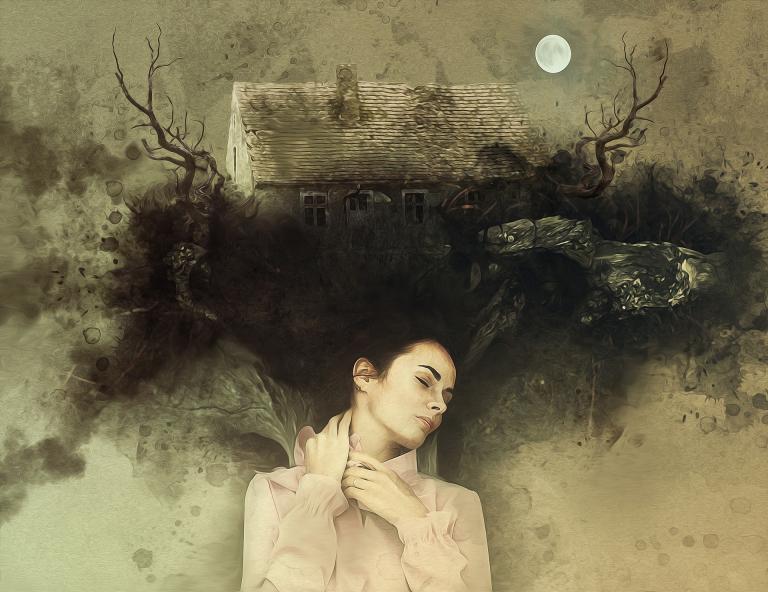
Image courtesy of Pixabay
Stay in touch! Like Catholic Authenticity on Facebook:
Previous Post

October 26, 2017
Traditional Marriage: A Cure For Rape Culture?
Next Post

November 7, 2017 The One Question I Always Get
Browse Our Archives
Select a Category Abuse Beauty Charity Chastity Current Events Faith Family Feminism Fiction Humility Humour Identity Justice Perseverence Philosophy Poverty Sexuality trauma Uncategorized Virtues Wombats
Select a Month February 2020 November 2019 October 2019 August 2019 July 2019 June 2019 May 2019 April 2019 March 2019 February 2019 October 2018 September 2018 August 2018 July 2018 June 2018 May 2018 April 2018 March 2018 February 2018 January 2018 December 2017 November 2017 October 2017 September 2017 August 2017 July 2017 June 2017 May 2017 April 2017 March 2017 February 2017 January 2017 December 2016 November 2016 October 2016 September 2016 August 2016 July 2016 June 2016 May 2016 April 2016 March 2016 February 2016 January 2016 December 2015 November 2015 October 2015 September 2015 August 2015 July 2015 June 2015
Follow Us!
TAKE THE
Religious Wisdom Quiz
What book contains the "Suffering Servant" prophecy?
Select your answer to see how you score.
Lamentations Zechariah Isaiah Jeremiah
Books by This Author Books by Melinda Selmys
Support this
Column


Related posts from Catholic Authenticity

Sex Positive: How I Learned To Stop Worrying...

The Central Spiritual Struggle of Women: Open Letter,...


A Biblical Account of Toxic Femininity
TRENDING AT PATHEOS Catholic

Rejecting Doom: Christian Hope And Human Action
Christianity is a religion of hope. We are to have hope and...

It’s What Comes From Within Which Matters
One of the most difficult things for us to understand is why...

Why I Choose the Eucharist Over the Sermon
Choose the Eucharist, Not the Sermon What are we supposed to get...

5 Design Elements Found in Spiritually Rooted Homes
Putting Spirituality Into Home Decor Our homes are more than our living...

Credo: A Story of God Told with the...
About 10 years ago, I began to imagine a personal "Credo" that...

The Anatomy of Divine Revelation in Catholic Thought
The claim that God has made Himself known to human beings is...
view all Catholic blogs
Ad-Free & Subscriber Log-In Subscription Support
- About Us
- 2026 Calendar
- Videos
- Podcasts
- Library of World Religions
- Faith In Media Tracker
- Advertise With Us
- Write for Us
- Privacy Policy
- Terms of Service
- Do Not Sell My Data
- Contact Us
- Radiant Digital
- Manage Newsletter Subscriptions
- Unsubscribe From Notifications
- Sitemap
Copyright 2008-2026, Patheos. All rights reserved.
Subscription Support Ad-Free & Subscriber Log-In
Follow Patheos