
BuddhistCatholicContemplativeEvangelicalGeneral ChristianHinduJewishLatter-day SaintMuslimNew VisionsProgressive Christian
Beliefs
- Buddhist
- Catholic
- Contemplative
- Evangelical
- General Christian
- Hindu
- Jewish
- Latter-day Saint
- More Voices
- Muslim
- New Visions
- Pagan
- Progressive Christian
Topics
- Religion News
- Food and Religion
- Sports and Religion
- Religious Art
- Religious Music and Entertainment
- Religious Events
- History and Religion
- Style and Religion
- Politics and Religion
- Women in Religion
- Recreation Outdoors and Religion
- Business Finance and Religion
- Careers Workplace and Religion
- Education and Religion
- Family Parenting and Religion
- Health Fitness and Religion
- Home and Religion
- Relationships and Religion
- Technology and Religion
- Travel and Religion
Columnists
- Buddhist Columnists
- Business Finance and Religion Columnists
- Careers Workplace and Religion Columnists
- Catholic Columnists
- Contemplative Columnists
- Education and Religion Columnists
- Evangelists Columnists
- Family Parenting and Religion Columnists
- General Christian Columnists
- Health Fitness and Religion Columnists
- Hindu Columnists
- History and Religion Columnists
- Home and Religion Columnists
- Jewish Columnists
- More Voices Columnists
- Latter Day Columnists
- Muslim Columnists
- New Visions Columnists
- Nonreligious Columnists
- Pagan Columnists
- Politics and Religion Columnists
- Progressive Columnists
- Recreation Outdoors and Religion Columnists
- Relationships and Religion Columnists
- Religion News Columnists
- Religious Art Columnists
- Religious Events Columnists
- Religious Music and Entertainment Columnists
- Sports and Religion Columnists
- Style and Religion Columnists
- Technology and Religion Columnists
- Travel and Religion Columnists
- Women in Religion Columnists
Resource Library
- 2026 Calendar
- Library of World Religions
- The 100 Most Holy Places on Earth
- Patheos Answers
- Podcasts
- Videos
- Faith Leaders Database
- Anglican Episcopalian
- Bahai
- Baptist
- Buddhism
- Christianity
- Confucianism
- Eastern Orthodoxy
- Hinduism
- Holiness and Pentecostal
- ISKCON
- Islam
- Judaism
- Lutheran
- Methodist
- The Church of Jesus Christ of Latter-day Saints
- New Age
- Paganism
- Presbytarian and Reformed
- Protestantism
- Religion Behind the Scenes
- Roman Catholic
- Scientology
- Shia Islam
- Sikhism
- Sufism
- Sunni Islam
- Taoism
- Zen
- See all religions
Research Tools
 Ad-Free & Subscriber Log-In Subscription Support
Ad-Free & Subscriber Log-In Subscription Support
Follow Patheos 

- Trending:
- Forgiveness
- |
- Marriage
- |
- Consciousness
- |
- Death Penalty
- |
- Election
- |
- Halloween
 Catholic Authenticity
-
Categories
- Home
- Catholic
- Frog Out of Water
Frog Out of Water
Last updated on: September 16, 2017 at 7:56 pm by Melinda Selmys
Frog Out of Water 2017-09-16T19:56:59-04:00 Melinda Selmys
Patheos Explore the world's faith through different perspectives on religion and spirituality! Patheos has the views of the prevalent religions and spiritualities of the world.
I was preparing to give a short talk on gender dysphoria, and was trying to figure out how to say something meaningful in nine minutes. My audience would be composed almost entirely of Christians who are cisgender (that is, they don’t experience a conflict between their gender identity and their sexual biology.) I needed to somehow quickly address whatever the biggest misunderstandings were. So I asked my husband, “What’s the hardest thing for you to understand about gender dysphoria?”
“You seem to have ‘awareness of gender’ as part of your sensorium,” he said “I don’t. I can’t tell you how male or female I feel at any given moment because I have always felt the same and have no basis for comparison.”
I stared at him, trying to work out what on earth he was talking about. I mean, how could you not have a sense of gender? What would that even mean?
And that was the point where I realized that his experience, and the experience (so far as I can tell) of the vast majority of people is sufficiently different from the experience of people with gender dysphoria that it’s hard even to find a way of talking about it.
He’s not the only person who I’ve ever heard this from. I see it all the time in articles and com-boxes from Christians who are arguing that gender isn’t even a real thing, that trans people are mentally ill, that it’s all just made up and imaginary. But it was the first time that I heard it from someone who had made a sincere attempt to understand gender dysphoria. Someone who was trans-inclusive. Someone who had read, edited and approved pretty much every thing I had ever said about gender.
It was the first time I realized that the disconnect is not ideological, but experiential.
For people who are cisgender, the experience of gender identity is either non-existent or it’s tied to the performance of gender roles. So a woman might feel “more feminine” when she’s wearing a nice dress and make-up, but that doesn’t mean that she feels “masculine” when she’s bumming around the house in a flannel shirt or fixing the plumbing. She’s just less consciously aware of her femininity than when she’s deliberately drawing attention to it.
Now, if your feelings of femininity or masculinity are tied to specific types of gender-stereotypical behaviour obviously you’re going to assume that what a person means when they say they feel that there is a disconnect between their gender identity and their sexual biology is that the person is uncomfortable with traditional gender roles. Maybe they’re a guy who wants to wear pretty dresses and make-up. Or a tom-boy who wants to clomp around in combat boots and bizz things with power tools.
But those things are not being masculine or feminine. Those are gender roles. Stereotypes. Social constructs. Feminism, particularly, has gone to great lengths to deny that there is any fundamental connection between womanhood and performative femininity. We’ve fought tooth and nail against the idea that a woman who likes hard logic or mixed martial arts, who despises make-up and rom-coms, is somehow less of a woman than one who enjoys tea-parties, bra-shopping and Precious Moments.
Trans women, then, are seen as a threat to feminism because they are perceived as cementing a relationship between femininity and the performance of gender roles. A guy in a skirt is not a woman any more than a woman in pants is a man. What makes a woman a woman is her sex, regardless of how she chooses to behave.
What this line of argumentation misses is that gender is actually more than just the performance of gender specific activities.
It misses it for the most understandable reason: namely, that gender isn’t something that you’re really aware of unless your gender identity is somehow misaligned. It’s kind of like if a water-breathing alien life-form showed up and asked you “What is it like to breathe air?” You’ve never breathed anything else. You can’t compare it to breathing water because you have no experience of being able to breathe water — only, perhaps, an experience of being underwater and not able to breathe at all. Breathing air doesn’t really feel like anything. It just feels normal.
And yet it has an impact on everything that we do. If you increase or decrease the oxygen concentration in your environment, it changes how you feel, how you think, how you operate. An intelligent water-breathing life-form would almost certainly have significantly different experiences, different neurology, and different culture as a result of breathing water. It’s not superficial. Air-breathing has a substantial impact on our identities, our selves, even though we never really think about it. And we can’t imagine being water-breathing except through rather cartoonish fantasies involving folks who somehow forge tridents without the aid of fire.
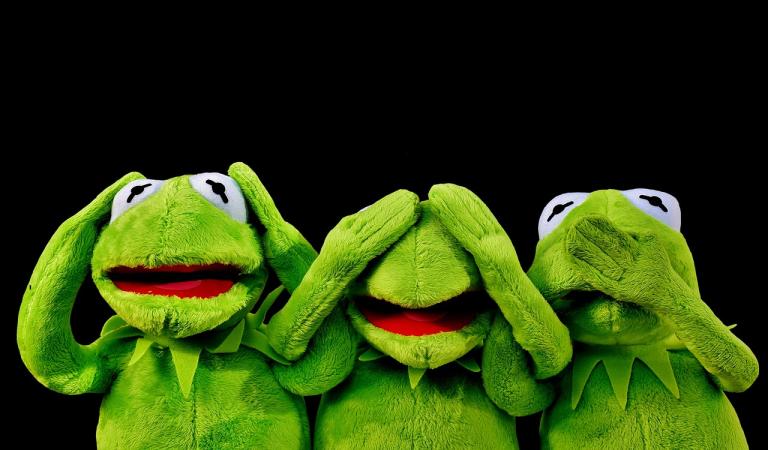
But if you could sit down with a sophisticated and intelligent salamander, or a frog who happened to be a phenomenologist, they might very well be able to talk about the existential difference between breathing water and breathing air. Whether they could do so in a way that would be accessible to either mammals or fish is, of course, another question.
When it comes to gender, though, we’re looking at something where the difference is more familiar. There are humans who are male, and also humans who are female. And increasingly, as we come to understand how sexuality works on a biological level, we’re aware that there are actually quite a lot of humans who are intersex to one degree or another.
And we know, from the experience of intersex folks who were assigned the wrong gender at birth, that gender identity is not as simple as outward appearance, social conditioning, and behaviour. If you take a boy with ambiguous genitalia, surgically correct him to look and function like a girl, give him female hormones, and a female name, raise him as a daughter, and never tell him what happened…more than likely he will have a crisis at some point because he feels like a boy.
We also know that there is no single biological factor that causes a person’s gender identity to be masculine or feminine. Women with complete androgen insensitivity don’t generally have uteruses, do generally have undescended testes, and have XY chromosomes — but they are phenotypically female and almost invariably have feminine gender identities. Even if they prefer typically “masculine” pursuits.
What we call gender identity, then, is something that is different from gender role, and it’s distinct from both genital sex and chromosomal sex. It’s its own thing. It’s a thing that most people never notice, and never distinguish from their socialization and sex because it is continuous with those things. There’s no contrast, so it’s like trying to pick out the proverbial black cat in the proverbial dark room.
But for someone with GD, it stands out precisely because there is a contrast. As one trans friend put it, “Even if I am playing with a sword, I feel like Joan of Arc.” In other words, when she is doing a stereotypically masculine thing she still feels feminine. My experience is similar. Sometimes I will throw my bow-saw over my shoulder and head out to chop down trees feeling like I’m a fierce Amazon doing battle against tree-flesh. But, as I’ve quipped before, sometimes I feel “masculine” when I’m giving birth.
It’s not simply a matter of how you dress, or how you act, what roles you choose to play, or what body you inhabit. I’m not entirely sure what gender identity is, or where it comes from, or why in some people it is at odds with their obvious biological features, or why in my case it seems to fluctuate with my hormones, sleep levels, and some other set of mysterious factors. All I know is that it is a distinct and real thing, not just something we’re making up.
Image credit: pixabay
Stay in touch! Like Catholic Authenticity on Facebook:
Previous Post

September 16, 2017
Too Tired to Pray

Browse Our Archives
Select a Category Abuse Beauty Charity Chastity Current Events Faith Family Feminism Fiction Humility Humour Identity Justice Perseverence Philosophy Poverty Sexuality trauma Uncategorized Virtues Wombats
Select a Month February 2020 November 2019 October 2019 August 2019 July 2019 June 2019 May 2019 April 2019 March 2019 February 2019 October 2018 September 2018 August 2018 July 2018 June 2018 May 2018 April 2018 March 2018 February 2018 January 2018 December 2017 November 2017 October 2017 September 2017 August 2017 July 2017 June 2017 May 2017 April 2017 March 2017 February 2017 January 2017 December 2016 November 2016 October 2016 September 2016 August 2016 July 2016 June 2016 May 2016 April 2016 March 2016 February 2016 January 2016 December 2015 November 2015 October 2015 September 2015 August 2015 July 2015 June 2015
Follow Us!
TAKE THE
Religious Wisdom Quiz
True or False: 3 John commends Diotrephes for his hospitality and love for the brethren.
Select your answer to see how you score.
TRUE FALSE
Books by This Author Books by Melinda Selmys
Support this
Column


Related posts from Catholic Authenticity

Sex Positive: How I Learned To Stop Worrying...


The Central Spiritual Struggle of Women: Open Letter,...

An Open Letter to the Young Rad-Trad Women
TRENDING AT PATHEOS Catholic

Rejecting Doom: Christian Hope And Human Action
Christianity is a religion of hope. We are to have hope and...

It’s What Comes From Within Which Matters
One of the most difficult things for us to understand is why...

Why I Choose the Eucharist Over the Sermon
Choose the Eucharist, Not the Sermon What are we supposed to get...

5 Design Elements Found in Spiritually Rooted Homes
Putting Spirituality Into Home Decor Our homes are more than our living...

Credo: A Story of God Told with the...
About 10 years ago, I began to imagine a personal "Credo" that...

The Anatomy of Divine Revelation in Catholic Thought
The claim that God has made Himself known to human beings is...
view all Catholic blogs
Ad-Free & Subscriber Log-In Subscription Support
- About Us
- 2026 Calendar
- Videos
- Podcasts
- Library of World Religions
- Faith In Media Tracker
- Advertise With Us
- Write for Us
- Privacy Policy
- Terms of Service
- Do Not Sell My Data
- Contact Us
- Radiant Digital
- Manage Newsletter Subscriptions
- Unsubscribe From Notifications
- Sitemap
Copyright 2008-2026, Patheos. All rights reserved.
Subscription Support Ad-Free & Subscriber Log-In
Follow Patheos