
BuddhistCatholicContemplativeEvangelicalGeneral ChristianHinduJewishLatter-day SaintMuslimNew VisionsProgressive Christian
Beliefs
- Buddhist
- Catholic
- Contemplative
- Evangelical
- General Christian
- Hindu
- Jewish
- Latter-day Saint
- More Voices
- Muslim
- New Visions
- Pagan
- Progressive Christian
Topics
- Religion News
- Food and Religion
- Sports and Religion
- Religious Art
- Religious Music and Entertainment
- Religious Events
- History and Religion
- Style and Religion
- Politics and Religion
- Women in Religion
- Recreation Outdoors and Religion
- Business Finance and Religion
- Careers Workplace and Religion
- Education and Religion
- Family Parenting and Religion
- Health Fitness and Religion
- Home and Religion
- Relationships and Religion
- Technology and Religion
- Travel and Religion
Columnists
- Buddhist Columnists
- Business Finance and Religion Columnists
- Careers Workplace and Religion Columnists
- Catholic Columnists
- Contemplative Columnists
- Education and Religion Columnists
- Evangelists Columnists
- Family Parenting and Religion Columnists
- General Christian Columnists
- Health Fitness and Religion Columnists
- Hindu Columnists
- History and Religion Columnists
- Home and Religion Columnists
- Jewish Columnists
- More Voices Columnists
- Latter Day Columnists
- Muslim Columnists
- New Visions Columnists
- Nonreligious Columnists
- Pagan Columnists
- Politics and Religion Columnists
- Progressive Columnists
- Recreation Outdoors and Religion Columnists
- Relationships and Religion Columnists
- Religion News Columnists
- Religious Art Columnists
- Religious Events Columnists
- Religious Music and Entertainment Columnists
- Sports and Religion Columnists
- Style and Religion Columnists
- Technology and Religion Columnists
- Travel and Religion Columnists
- Women in Religion Columnists
Resource Library
- 2026 Calendar
- Library of World Religions
- The 100 Most Holy Places on Earth
- Patheos Answers
- Podcasts
- Videos
- Faith Leaders Database
- Anglican Episcopalian
- Bahai
- Baptist
- Buddhism
- Christianity
- Confucianism
- Eastern Orthodoxy
- Hinduism
- Holiness and Pentecostal
- ISKCON
- Islam
- Judaism
- Lutheran
- Methodist
- The Church of Jesus Christ of Latter-day Saints
- New Age
- Paganism
- Presbytarian and Reformed
- Protestantism
- Religion Behind the Scenes
- Roman Catholic
- Scientology
- Shia Islam
- Sikhism
- Sufism
- Sunni Islam
- Taoism
- Zen
- See all religions
Research Tools
 Ad-Free & Subscriber Log-In Subscription Support
Ad-Free & Subscriber Log-In Subscription Support
Follow Patheos 

- Trending:
- Forgiveness
- |
- Marriage
- |
- Consciousness
- |
- Death Penalty
- |
- Election
- |
- Halloween
 Catholic Authenticity
-
Categories
- Home
- Catholic
- Sanctimony Wars
Sanctimony Wars
Last updated on: April 11, 2017 at 2:16 pm by Melinda Selmys
Sanctimony Wars 2017-04-11T14:16:59-04:00 Melinda Selmys
Patheos Explore the world's faith through different perspectives on religion and spirituality! Patheos has the views of the prevalent religions and spiritualities of the world.

Mary Pezzulo over at Steel Magnificat has written an excellent piece about the problem with name-calling, contentiousness, and point-scoring in the name of “apologetics.” I agree completely with what she says, and I recommend reading her post.
I also want to offer a few thoughts from the other side of the aisle, as it were. If you spend a lot of time in ideologically motivated communities, you’re going to encounter a lot of sanctimony and self-righteousness. It doesn’t matter whether you’re a member of 300 different Catholic FaceBook groups, or you are deeply involved in the vegan community, or you made the mistake of going to a mom’s group in an upscale neighbourhood; the basic practices are the same.
A group of people gather together and someone makes an assertion that is basically intended to signal how virtuous, well-informed, intelligent, hip, woke, or generally awesome they are. Others jump in. Some just ante-up by agreeing with the original statement and affirming it’s sagacity. Others up the stakes by making a claim that builds on the original assertion, showing that they not only equal the first speaker but actually exceed them. And so it goes around the table until suddenly somebody calls.
This could take the form of a direct call-out – accusing one of the speakers of hypocrisy or bad behaviour, or showing that actually they’re exaggerating their accomplishments or commitments. It could involve pointing out a contradiction in one of the statements. It could be a flat denial of some dubious truth claim. Or it might be a pointed ‘Socratic’ question designed to expose the flaws in someone’s thinking without openly telling them that they’re an idiot.
At this point, the game becomes tense. The person who has been called has to show their hand. So, for example, the challenger might say, “I don’t know if what you’re saying about traditional indigenous spirituality is really true. I mean, so much of what you read is really just a made-up product of cultural appropriation, and that sounds kind of like it could have been invented by a white kindergarten teacher.”
Now, maybe the first person really has the goods, “Huh. Well I find that offensive, because actually I am a person of indigenous descent and I spent four years living in the Arctic practicing the traditional lifeways of my people, and this is something I was told directly by an elder of our tribe.” BOOM. Mittful of aces. The victor gathers up their social winnings, and the person who called them out goes home in shame (unless they’re really, really drunk, in which case they might try to argue that in their version of Texas Hold-em, two-pairs secretly beats a royal flush.)
More commonly, though, it turns out that a certain amount of bluffing was involved. And this is where things have the capacity to get ugly, because in social situations there aren’t the same kind of clear hierarchies as in poker: there’s not a rule-book that you can appeal to determine whether hearing Jesus speaking to you in your heart carries more, or less, weight than having discussed the question in a private audience with the Archbishop.
So it descends into bickering, and depending on how high the stakes are the arguments can go on for hours, or days, or months… or years… or decades. If institutional bodies get involved, a good squabble can last for centuries. The pretext is always the same: both sides insist that they are actually concerned with truth, or justice, the correction of error, or the protection of the weak. But to any onlooker with even a shred of objectivity, it’s clear that actually what’s at stake is the need to win back whatever social currency was put on the table. People’s pride, prestige, honour or reputations are at stake and so they feel that they can’t just walk away.
The more hurtful the situation becomes, the more invested people are. So they’ll stay, even if they are being bullied, name-called, shamed, or directly threatened – because all of these things cause the stakes to go further up, and up, and up. Backing down means walking away and leaving your winnings behind (you always think of the winnings as yours, even if it’s far from clear that they rightfully belong to you).
Okay, so it’s very easy to point and laugh at people who are behaving this way – and I’m not even going to argue that it’s wrong to do so. Part of the social process by which we learn that ridiculous behaviours are ridiculous is by finding that we have become an object of ridicule. When you’ve been wounded in some com-box dust-up, and instead of rushing around to sympathize, people laugh and start singing “Let it Go!” it’s unpleasant for sure…but in retrospect, these are often the moments when we learn humility.
Besides, if everybody behaved as if these absurd exchanges were actually legitimate contests being fought for important reasons, we would end up like the nobility of the 17th century: monumentally stupid slights would result in actual bloodshed, and there would be real debates over questions like whether a monk’s “right” to defend his honour justified his participation in duels.
However, it’s important to lace our laughter with at least a touch of self-derision. Whether your response is to roll your eyes and scroll past, or grab a bag of popcorn and sit back to watch the fur fly, maybe also take a moment to say a little mea culpa. Because in one way or another, this is something we all do.
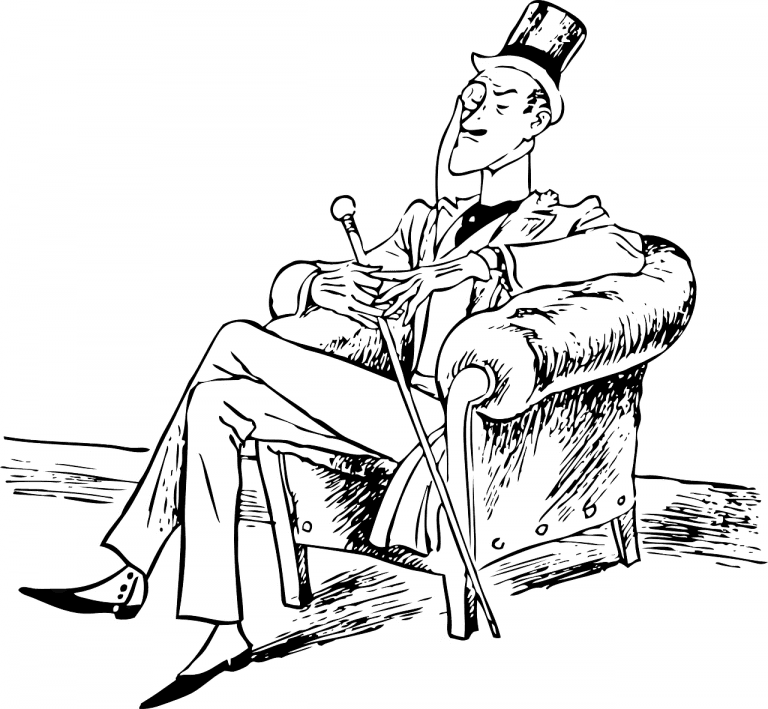
Image courtesy of Pixabay.
Stay in touch! Like Catholic Authenticity on Facebook:

Next Post

April 11, 2017 For Chechnya: a prayer
Browse Our Archives
Select a Category Abuse Beauty Charity Chastity Current Events Faith Family Feminism Fiction Humility Humour Identity Justice Perseverence Philosophy Poverty Sexuality trauma Uncategorized Virtues Wombats
Select a Month February 2020 November 2019 October 2019 August 2019 July 2019 June 2019 May 2019 April 2019 March 2019 February 2019 October 2018 September 2018 August 2018 July 2018 June 2018 May 2018 April 2018 March 2018 February 2018 January 2018 December 2017 November 2017 October 2017 September 2017 August 2017 July 2017 June 2017 May 2017 April 2017 March 2017 February 2017 January 2017 December 2016 November 2016 October 2016 September 2016 August 2016 July 2016 June 2016 May 2016 April 2016 March 2016 February 2016 January 2016 December 2015 November 2015 October 2015 September 2015 August 2015 July 2015 June 2015
Follow Us!
TAKE THE
Religious Wisdom Quiz
In the New Testament what is the last book?
Select your answer to see how you score.
Titus Matthew Luke Revelation
Books by This Author Books by Melinda Selmys
Support this
Column


Related posts from Catholic Authenticity

Maybe It's Okay That Man Should Be Alone

The Seductive Illusion of Objectivity

Is It A Sin to be Scandalized by...
TRENDING AT PATHEOS Catholic

Rejecting Doom: Christian Hope And Human Action
Christianity is a religion of hope. We are to have hope and...

It’s What Comes From Within Which Matters
One of the most difficult things for us to understand is why...

Why I Choose the Eucharist Over the Sermon
Choose the Eucharist, Not the Sermon What are we supposed to get...

5 Design Elements Found in Spiritually Rooted Homes
Putting Spirituality Into Home Decor Our homes are more than our living...

Credo: A Story of God Told with the...
About 10 years ago, I began to imagine a personal "Credo" that...

The Anatomy of Divine Revelation in Catholic Thought
The claim that God has made Himself known to human beings is...
view all Catholic blogs
Ad-Free & Subscriber Log-In Subscription Support
- About Us
- 2026 Calendar
- Videos
- Podcasts
- Library of World Religions
- Faith In Media Tracker
- Advertise With Us
- Write for Us
- Privacy Policy
- Terms of Service
- Do Not Sell My Data
- Contact Us
- Radiant Digital
- Manage Newsletter Subscriptions
- Unsubscribe From Notifications
- Sitemap
Copyright 2008-2026, Patheos. All rights reserved.
Subscription Support Ad-Free & Subscriber Log-In
Follow Patheos