
BuddhistCatholicContemplativeEvangelicalGeneral ChristianHinduJewishLatter-day SaintMuslimNew VisionsProgressive Christian
Beliefs
- Buddhist
- Catholic
- Contemplative
- Evangelical
- General Christian
- Hindu
- Jewish
- Latter-day Saint
- More Voices
- Muslim
- New Visions
- Pagan
- Progressive Christian
Topics
- Religion News
- Food and Religion
- Sports and Religion
- Religious Art
- Religious Music and Entertainment
- Religious Events
- History and Religion
- Style and Religion
- Politics and Religion
- Women in Religion
- Recreation Outdoors and Religion
- Business Finance and Religion
- Careers Workplace and Religion
- Education and Religion
- Family Parenting and Religion
- Health Fitness and Religion
- Home and Religion
- Relationships and Religion
- Technology and Religion
- Travel and Religion
Columnists
- Buddhist Columnists
- Business Finance and Religion Columnists
- Careers Workplace and Religion Columnists
- Catholic Columnists
- Contemplative Columnists
- Education and Religion Columnists
- Evangelists Columnists
- Family Parenting and Religion Columnists
- General Christian Columnists
- Health Fitness and Religion Columnists
- Hindu Columnists
- History and Religion Columnists
- Home and Religion Columnists
- Jewish Columnists
- More Voices Columnists
- Latter Day Columnists
- Muslim Columnists
- New Visions Columnists
- Nonreligious Columnists
- Pagan Columnists
- Politics and Religion Columnists
- Progressive Columnists
- Recreation Outdoors and Religion Columnists
- Relationships and Religion Columnists
- Religion News Columnists
- Religious Art Columnists
- Religious Events Columnists
- Religious Music and Entertainment Columnists
- Sports and Religion Columnists
- Style and Religion Columnists
- Technology and Religion Columnists
- Travel and Religion Columnists
- Women in Religion Columnists
Resource Library
- 2026 Calendar
- Library of World Religions
- The 100 Most Holy Places on Earth
- Patheos Answers
- Podcasts
- Videos
- Faith Leaders Database
- Anglican Episcopalian
- Bahai
- Baptist
- Buddhism
- Christianity
- Confucianism
- Eastern Orthodoxy
- Hinduism
- Holiness and Pentecostal
- ISKCON
- Islam
- Judaism
- Lutheran
- Methodist
- The Church of Jesus Christ of Latter-day Saints
- New Age
- Paganism
- Presbytarian and Reformed
- Protestantism
- Religion Behind the Scenes
- Roman Catholic
- Scientology
- Shia Islam
- Sikhism
- Sufism
- Sunni Islam
- Taoism
- Zen
- See all religions
Research Tools
 Ad-Free & Subscriber Log-In Subscription Support
Ad-Free & Subscriber Log-In Subscription Support
Follow Patheos 

- Trending:
- Forgiveness
- |
- Marriage
- |
- Consciousness
- |
- Death Penalty
- |
- Election
- |
- Halloween
 Catholic Authenticity
-
Categories
- Home
- Catholic
- It’s Lent, American Civilization is Crumbling, Let’s Talk About Zombies
It’s Lent, American Civilization is Crumbling, Let’s Talk About Zombies
Last updated on: March 9, 2017 at 9:15 pm by Melinda Selmys
It’s Lent, American Civilization is Crumbling, Let’s Talk About Zombies 2017-03-09T21:15:55-04:00 Melinda Selmys
Patheos Explore the world's faith through different perspectives on religion and spirituality! Patheos has the views of the prevalent religions and spiritualities of the world.
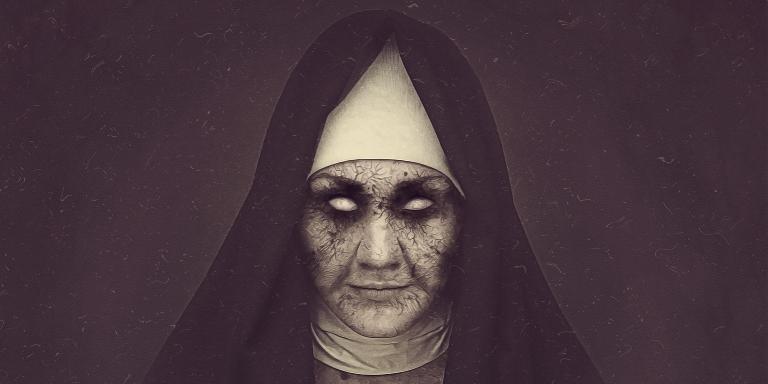
Today, while watching a horde of crazy children, trying to conquer the laundry monster, and providing seemingly non-stop milk-on-tap to a toddler who thinks sitting on my head is a great nursing position, I’ve also been defending the zombie genre on FaceBook. Because, you know, one does.
I’m not only a horror fan, I’m also a horror writer. I even wrote a somewhat ridiculous Platonic dialogue about the ethics of having one’s face devoured by the undead. I like zombies. Not indiscriminately — I could only put up with so much of the souped up melodrama on The Walking Dead, and I thought Shaun of the Dead was frankly dumb (in spite of being a fan if both zombies and British humour). But zombies as a concept, I’m all for.
Now, as a Catholic I find that it’s pretty common to encounter people who are completely baffled by the idea that anybody would enjoy watching or reading contemporary horror. Some of these folks will make an exception for religious horror: blood, guts, vomit and demon-possessed children are all okay provided that by the end a priest shows up to do battle with the devil. Often, they have no problem with old horror: ghost stories, the original Dracula, Mary Shelley’s Frankenstein, Victorian gothic novels where white-clad virgins are locked up in decaying old mansions by creepy sadistic uncles. Provided the horror is burnished with a thick coating of dust and ideally a few specks of candle-wax, there’s no cause for suspicion.
Contemporary horror, on the other hand, must be explained. And armchair sociological theories about the popularity of zombies abound. For the most part, they go like this:
Step one – Identify whatever cultural trend is your biggest personal pet bugaboo.
Step two – Find some way that zombies could be a metaphor or symbol for this problem.
Step three – Explain the popularity of zombies as a symptom of cultural decay.
It’s easy. For example, say that you really hate pornography. Okay, well zombies are death porn: the culture is exhausted with erotic imagery, so it turns to thanatos instead. Abortion? Zombies are our collective nightmare of all of the children that have been murdered coming back to life and devouring the mothers that devoured them. Consumerism? Zombies are exactly like people on Black Friday soullessly fighting over children’s toys – they even “consume” brains and there was that one zombie movie that was even set in a mall. Rugged individualism? Well, the entire zombie genre is really a way of justifying the feeling that one is in a survivalist struggle against innumerable others who aren’t really human.
You can do it with pretty much anything. Xenophobia. Misogyny. Racism. Promiscuity. Drug culture. You name it. Give it a try, it’s kind of fun.
Of course, these explanations really just amount to “I hate zombie fiction, and I also hate x. Zombies are popular right now, and so is x. Coincidence? I think not!” They have no actual explanatory power because they’re more about the person who comes up with the theory (generally someone who has a pretty limited knowledge of the zombie genre) than with the actual motivations of horror fans.
In reality, the reasons why people like zombies are pretty varied. I talked a bit about my own theory (which is largely based on why I watch zombie movies) in a previous post. But the truth is that zombies are actually popular because they successfully integrate a number of timeless horror tropes into a single iconic monster.
1. The Dead Return: The fear that the dead will come back, overrun the living, and wreak terrible destruction on all of us is hardly new. The ritual placation of ancestral spirits is a nearly ubiquitous feature of older human societies, and in many cultures you have rituals to prevent the dead from coming into the world of the living and causing havoc on particular days. Stories of the dire fate that awaits those who go abroad, or fail to make the correct offerings have always abounded.
2. The Face of Death: Anthropomorphised images of death are perennially popular. Whether in the form of an animate skeleton, or a soulless vampire, or a disembodied ghost, undead creatures who attack, frighten or prey upon the living are pretty much standard fare in horror. We find them in myths, legends, fairy tales, paintings, novels, and of course now also in movies and on TV. When represented in this way, death is almost invariably difficult or impossible to stop or contain, it’s relentless, and even when it is defeated the defeat is always temporary and conditional.
3. Undead Hordes: The idea of being completely overrun by dangerous and irrational creatures against whom you have no defense is scary. For obvious reasons.
4. Dead Flesh: Cannibalism has been a central part of our most horrific stories going back (at least) to when Tantalus fed Pelops to the gods. From the tragedies of Seneca, to Shakespeare’s Titus Andronicus, to The Silence of the Lambs, humans (or humanoids) eating manflesh have been creeping us out for millennia.
5. Apocalypse of the Dead: Finally, the idea of the complete destruction of an entire civilization, and of having to try to survive amid the ruins, has a lot of horrific crunch. We know that things like this have happened in the past: the destruction of Jerusalem by Vespasian, the repeated sackings of Western Europe by the Vikings, the smallpox epidemic that swept through indigenous North American communities, etc. We know it’s happened in the past, and we have a very natural fear of it happening again.
Of course fear is the essence of the horror genre. Through horror we confront our fears, we grapple with them, we maybe make peace with them, and to a certain extent we revel in them. Like any other emotion, fear is actually quite pleasurable provided we get to enjoy it in a safe, controlled way. For some people a ride on a Ferris wheel, a walk across a dark field at night, or a ghost story around the campfire on a chilly evening is sufficient. Horror fans prefer their adrenaline in somewhat higher doses.
And zombies deliver. Not only do they appeal to all of the distinct fears that I mentioned above, but they are also quite versatile in terms of the types of dread that they can be used to evoke. A well done zombie movie can include everything from jump scares, creeping horror and visceral revulsion to existential dread and moral terror. Basically, it’s a complex fear cocktail with a lot of different ingredients that work together to (ideally) leave you feeling shaky, hyper-alert and deliciously creeped out.
Image credit: pixabay
Stay in touch! Like Catholic Authenticity on Facebook:
Previous Post

March 1, 2017
I'm Gonna Give Up Being Right for Lent
Next Post

March 13, 2017 Pregnancy, Gender Dysphoria, and the Pill
Browse Our Archives
Select a Category Abuse Beauty Charity Chastity Current Events Faith Family Feminism Fiction Humility Humour Identity Justice Perseverence Philosophy Poverty Sexuality trauma Uncategorized Virtues Wombats
Select a Month February 2020 November 2019 October 2019 August 2019 July 2019 June 2019 May 2019 April 2019 March 2019 February 2019 October 2018 September 2018 August 2018 July 2018 June 2018 May 2018 April 2018 March 2018 February 2018 January 2018 December 2017 November 2017 October 2017 September 2017 August 2017 July 2017 June 2017 May 2017 April 2017 March 2017 February 2017 January 2017 December 2016 November 2016 October 2016 September 2016 August 2016 July 2016 June 2016 May 2016 April 2016 March 2016 February 2016 January 2016 December 2015 November 2015 October 2015 September 2015 August 2015 July 2015 June 2015
Follow Us!
TAKE THE
Religious Wisdom Quiz
I asked for wisdom above all else, and God granted me riches and honor as well. Who am I?
Select your answer to see how you score.
Solomon Hezekiah Josiah David
Books by This Author Books by Melinda Selmys
Support this
Column


Related posts from Catholic Authenticity

28 Guaranteed Ways to Drive Any Man in...

Victim Blaming Explained (with bears)

Is Contraception the New Usury?
TRENDING AT PATHEOS Catholic

Rejecting Doom: Christian Hope And Human Action
Christianity is a religion of hope. We are to have hope and...

It’s What Comes From Within Which Matters
One of the most difficult things for us to understand is why...

Why I Choose the Eucharist Over the Sermon
Choose the Eucharist, Not the Sermon What are we supposed to get...

5 Design Elements Found in Spiritually Rooted Homes
Putting Spirituality Into Home Decor Our homes are more than our living...

Credo: A Story of God Told with the...
About 10 years ago, I began to imagine a personal "Credo" that...

The Anatomy of Divine Revelation in Catholic Thought
The claim that God has made Himself known to human beings is...
view all Catholic blogs
Ad-Free & Subscriber Log-In Subscription Support
- About Us
- 2026 Calendar
- Videos
- Podcasts
- Library of World Religions
- Faith In Media Tracker
- Advertise With Us
- Write for Us
- Privacy Policy
- Terms of Service
- Do Not Sell My Data
- Contact Us
- Radiant Digital
- Manage Newsletter Subscriptions
- Unsubscribe From Notifications
- Sitemap
Copyright 2008-2026, Patheos. All rights reserved.
Subscription Support Ad-Free & Subscriber Log-In
Follow Patheos