
BuddhistCatholicContemplativeEvangelicalGeneral ChristianHinduJewishLatter-day SaintMuslimNew VisionsProgressive Christian
Beliefs
- Buddhist
- Catholic
- Contemplative
- Evangelical
- General Christian
- Hindu
- Jewish
- Latter-day Saint
- More Voices
- Muslim
- New Visions
- Pagan
- Progressive Christian
Topics
- Religion News
- Food and Religion
- Sports and Religion
- Religious Art
- Religious Music and Entertainment
- Religious Events
- History and Religion
- Style and Religion
- Politics and Religion
- Women in Religion
- Recreation Outdoors and Religion
- Business Finance and Religion
- Careers Workplace and Religion
- Education and Religion
- Family Parenting and Religion
- Health Fitness and Religion
- Home and Religion
- Relationships and Religion
- Technology and Religion
- Travel and Religion
Columnists
- Buddhist Columnists
- Business Finance and Religion Columnists
- Careers Workplace and Religion Columnists
- Catholic Columnists
- Contemplative Columnists
- Education and Religion Columnists
- Evangelists Columnists
- Family Parenting and Religion Columnists
- General Christian Columnists
- Health Fitness and Religion Columnists
- Hindu Columnists
- History and Religion Columnists
- Home and Religion Columnists
- Jewish Columnists
- More Voices Columnists
- Latter Day Columnists
- Muslim Columnists
- New Visions Columnists
- Nonreligious Columnists
- Pagan Columnists
- Politics and Religion Columnists
- Progressive Columnists
- Recreation Outdoors and Religion Columnists
- Relationships and Religion Columnists
- Religion News Columnists
- Religious Art Columnists
- Religious Events Columnists
- Religious Music and Entertainment Columnists
- Sports and Religion Columnists
- Style and Religion Columnists
- Technology and Religion Columnists
- Travel and Religion Columnists
- Women in Religion Columnists
Resource Library
- 2026 Calendar
- Library of World Religions
- The 100 Most Holy Places on Earth
- Patheos Answers
- Podcasts
- Videos
- Faith Leaders Database
- Anglican Episcopalian
- Bahai
- Baptist
- Buddhism
- Christianity
- Confucianism
- Eastern Orthodoxy
- Hinduism
- Holiness and Pentecostal
- ISKCON
- Islam
- Judaism
- Lutheran
- Methodist
- The Church of Jesus Christ of Latter-day Saints
- New Age
- Paganism
- Presbytarian and Reformed
- Protestantism
- Religion Behind the Scenes
- Roman Catholic
- Scientology
- Shia Islam
- Sikhism
- Sufism
- Sunni Islam
- Taoism
- Zen
- See all religions
Research Tools
 Ad-Free & Subscriber Log-In Subscription Support
Ad-Free & Subscriber Log-In Subscription Support
Follow Patheos 

- Trending:
- Forgiveness
- |
- Marriage
- |
- Consciousness
- |
- Death Penalty
- |
- Election
- |
- Halloween
 Catholic Authenticity
-
Categories
- Home
- Catholic
- Selective Skepticism
Selective Skepticism
Last updated on: February 5, 2017 at 9:31 am by Melinda Selmys
Selective Skepticism 2017-02-05T09:31:04-04:00 Melinda Selmys
Patheos Explore the world's faith through different perspectives on religion and spirituality! Patheos has the views of the prevalent religions and spiritualities of the world.
Yesterday I read a comment by 3vil5triker on my post Is Heaven for Real? My response ended up being much longer than comment length, so here it is.
3vil5triker writes:
How come the original accounts, and the beliefs that derive from them, are not subject to the same kind of skeptical inquiry?Can you really say that the early church accounts and assurances of heaven were not bolstered and encouraged by similar financial, societal and religious incentives of the time?
And here’s the kicker, what if one of those heaven tourism books, lets say one authored by a member of the priesthood relating his near death experience who then goes on to become canonized as a saint, receives the Church stamp of approval, would you still have the same misgivings?
Just poking at your brain a little.
Okay, so the last paragraph is the easiest to answer. Basically, you’re talking about a situation where an adult has a private revelation as a result of a near death experience, and it is investigated by the Church and deemed to be in accord with faith. The two most salient differences between a situation like this and that of a child like Burpo are:
- Adults are not as easily suggestible as children, and they are less vulnerable (though obviously not completely invulnerable) to exploitation. So I don’t have the same moral reservations that I have with a child.
- There has been a process, usually a fairly extensive one, of vetting and investigating the situation conducted by an external authority. The Vatican routinely rejects supposed miracles and apparitions. This means that at least you’re not going to be dealing with a blatant hoax.
Now, that said, I’m basically agnostic about private revelations — including those that have been approved by the Church. No Catholic is required to believe the contents of an approved revelation — approval just means that believing it won’t harm your faith. It doesn’t make it part of the canon.
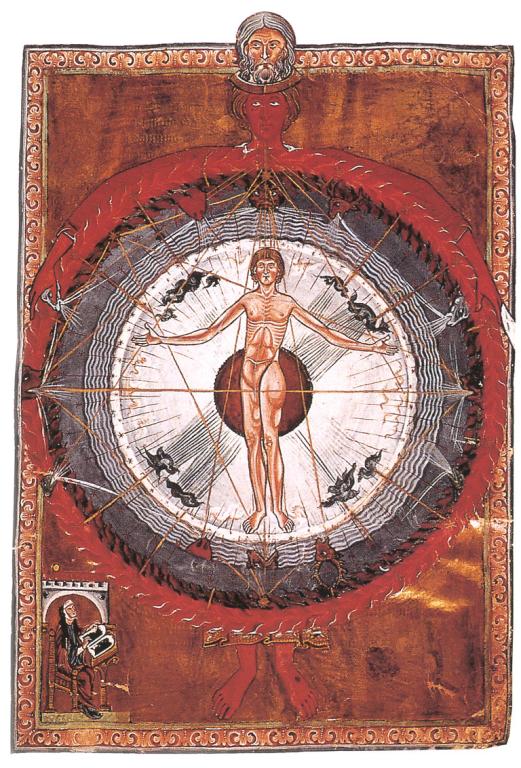
To be honest, I’m not a huge fan of private revelations generally. It’s rare that I see one that really resonates with me. Hildegard of Bingen’s visions of the cosmic egg come the closest — but at least in part that’s because they’re so obviously speaking the language of myth and symbol that nobody could possibly imagine them to be a literal portrait of an actual thing or event.
Personally, I think private revelations, visions and the like are manifestations of some power outside of the conscious self delivering to consciousness a series of images, locutions, what have you, that are deeply personally meaningful and which convey some kind of important spiritual insight. Whether the active principle is the subconscious, or the Holy Spirit, or some other spiritual being (a guardian angel, e. g.), or some combination of the above I don’t pretend to know.
Definitely they sometimes have the quality of intuition, revealing things that could not be known through logical processes — but again, the question of whether intuition is a genuine revelation from outside the self, or a manifestation of the unconscious mind putting together information that the conscious self is unaware of remains unknown. Both of theses are ultimately just models for explaining a poorly understood phenomenon using different foundational axioms.
In any case, it’s clear enough that in so far as God reveals Himself in these experiences it is generally grace acting through nature. The store of images and ideas are always concordant with the time and place of the visionary. So while people might opine that when St. John sees locusts come out of the smoke and descend to earth with a sting like a scorpion (cf. Rev 9:3), he’s really seeing modern stealth fighters, the fact is he describes locusts. Medieval visionaries see visions of heaven and hell that are chock full of imagery taken from contemporaneous art — but which most people now find somewhat cartoonish.
Meaning, if God is communicating He is interacting with the imagination, drawing on familiar imagery, in much the same way that when He speaks to a person He uses language that is known to them. But as to the question of whether this involves a direct divine intervention, or just the mind itself in a state of prayer perceiving spiritual realities through symbolic language, I don’t know.
To a certain degree, I’m not even sure that the distinction can be made, or that its a real distinction: I live and move and have my being in God, and He dwells in me. Or, as St. John of the Cross says, love transforms the lover into the beloved one. So ideally, the goal of the spiritual life is for that distinction between the self and God to dwindle as you become conformed to the image of God — as love becomes your innermost truth.
As far as the possibility of financial reasons, power, desire for fame, etc. influencing people in the early Church — yes, of course it did. Scripture itself records this. I don’t believe in the Bible on the strength of the integrity of the human authors — some of them are blatant propagandists. Others are just men with normal human type weaknesses. Christ Himself notes that Moses gerrymandered the law on divorce because of pressure from his people.
What I think Scripture records is the story of a group of humans coming to know God, through their humanity and their human limitations, and also God, reciprocating by offering graces, working on individual hearts, working in history. It’s a portrait of the spiritual life, both that of the individual and also that of the community. Christ is the culmination of this, as God’s self-revelation. But then, after He returns to the Father, we’re left again with humans trying to make sense of things — but this time not as a single people, but as an ecclesia. The difference being that the encounter between the Jews and God always involved trying to make the Creator of the universe into a parochial war deity — whereas the Church (however much we struggle with this in practice) is supposed to be universal.
So my faith is not, at any point, predicated on the words or experience or claims of any one single person — with the exception of Christ. As far as He’s concerned, I think ascribing base motives to Him is just… I don’t know. It seemed tasteless to me, even when I was an atheist. I accept things He says because I trust Him. I accept the authority of the Church because I think several billion people striving communally towards truth through history as part of a continuous tradition are more likely to be right than me trying to get there all on my own efforts. But I don’t believe anything just on the basis of dreams and visions, because those can mean anything.
Image credit: Hildegard von Bingen, Public Domain, https://commons.wikimedia.org/w/index.php?curid=47047
Stay in touch! Like Catholic Authenticity on Facebook:
Previous Post

February 1, 2017
Is Heaven for Real?
Next Post

February 9, 2017 The Blood-Dimmed Tide is Loosed
Browse Our Archives
Select a Category Abuse Beauty Charity Chastity Current Events Faith Family Feminism Fiction Humility Humour Identity Justice Perseverence Philosophy Poverty Sexuality trauma Uncategorized Virtues Wombats
Select a Month February 2020 November 2019 October 2019 August 2019 July 2019 June 2019 May 2019 April 2019 March 2019 February 2019 October 2018 September 2018 August 2018 July 2018 June 2018 May 2018 April 2018 March 2018 February 2018 January 2018 December 2017 November 2017 October 2017 September 2017 August 2017 July 2017 June 2017 May 2017 April 2017 March 2017 February 2017 January 2017 December 2016 November 2016 October 2016 September 2016 August 2016 July 2016 June 2016 May 2016 April 2016 March 2016 February 2016 January 2016 December 2015 November 2015 October 2015 September 2015 August 2015 July 2015 June 2015
Follow Us!
TAKE THE
Religious Wisdom Quiz
I am twelve men sent to explore the Promised Land, but only two gave a good report. Who are we?
Select your answer to see how you score.
Explorers The twelve spies Leaders of Israel Messengers
Books by This Author Books by Melinda Selmys
Support this
Column


Related posts from Catholic Authenticity

The Lord Has Worked Marvels For Me: Open...

The Central Spiritual Struggle of Women: Open Letter,...

An Open Letter to the Young Rad-Trad Women

Maybe It's Okay That Man Should Be Alone
TRENDING AT PATHEOS Catholic

Rejecting Doom: Christian Hope And Human Action
Christianity is a religion of hope. We are to have hope and...

It’s What Comes From Within Which Matters
One of the most difficult things for us to understand is why...

Why I Choose the Eucharist Over the Sermon
Choose the Eucharist, Not the Sermon What are we supposed to get...

5 Design Elements Found in Spiritually Rooted Homes
Putting Spirituality Into Home Decor Our homes are more than our living...

Credo: A Story of God Told with the...
About 10 years ago, I began to imagine a personal "Credo" that...

The Anatomy of Divine Revelation in Catholic Thought
The claim that God has made Himself known to human beings is...
view all Catholic blogs
Ad-Free & Subscriber Log-In Subscription Support
- About Us
- 2026 Calendar
- Videos
- Podcasts
- Library of World Religions
- Faith In Media Tracker
- Advertise With Us
- Write for Us
- Privacy Policy
- Terms of Service
- Do Not Sell My Data
- Contact Us
- Radiant Digital
- Manage Newsletter Subscriptions
- Unsubscribe From Notifications
- Sitemap
Copyright 2008-2026, Patheos. All rights reserved.
Subscription Support Ad-Free & Subscriber Log-In
Follow Patheos