
BuddhistCatholicContemplativeEvangelicalGeneral ChristianHinduJewishLatter-day SaintMuslimNew VisionsProgressive Christian
Beliefs
- Buddhist
- Catholic
- Contemplative
- Evangelical
- General Christian
- Hindu
- Jewish
- Latter-day Saint
- More Voices
- Muslim
- New Visions
- Pagan
- Progressive Christian
Topics
- Religion News
- Food and Religion
- Sports and Religion
- Religious Art
- Religious Music and Entertainment
- Religious Events
- History and Religion
- Style and Religion
- Politics and Religion
- Women in Religion
- Recreation Outdoors and Religion
- Business Finance and Religion
- Careers Workplace and Religion
- Education and Religion
- Family Parenting and Religion
- Health Fitness and Religion
- Home and Religion
- Relationships and Religion
- Technology and Religion
- Travel and Religion
Columnists
- Buddhist Columnists
- Business Finance and Religion Columnists
- Careers Workplace and Religion Columnists
- Catholic Columnists
- Contemplative Columnists
- Education and Religion Columnists
- Evangelists Columnists
- Family Parenting and Religion Columnists
- General Christian Columnists
- Health Fitness and Religion Columnists
- Hindu Columnists
- History and Religion Columnists
- Home and Religion Columnists
- Jewish Columnists
- More Voices Columnists
- Latter Day Columnists
- Muslim Columnists
- New Visions Columnists
- Nonreligious Columnists
- Pagan Columnists
- Politics and Religion Columnists
- Progressive Columnists
- Recreation Outdoors and Religion Columnists
- Relationships and Religion Columnists
- Religion News Columnists
- Religious Art Columnists
- Religious Events Columnists
- Religious Music and Entertainment Columnists
- Sports and Religion Columnists
- Style and Religion Columnists
- Technology and Religion Columnists
- Travel and Religion Columnists
- Women in Religion Columnists
Resource Library
- 2026 Calendar
- Library of World Religions
- The 100 Most Holy Places on Earth
- Patheos Answers
- Podcasts
- Videos
- Faith Leaders Database
- Anglican Episcopalian
- Bahai
- Baptist
- Buddhism
- Christianity
- Confucianism
- Eastern Orthodoxy
- Hinduism
- Holiness and Pentecostal
- ISKCON
- Islam
- Judaism
- Lutheran
- Methodist
- The Church of Jesus Christ of Latter-day Saints
- New Age
- Paganism
- Presbytarian and Reformed
- Protestantism
- Religion Behind the Scenes
- Roman Catholic
- Scientology
- Shia Islam
- Sikhism
- Sufism
- Sunni Islam
- Taoism
- Zen
- See all religions
Research Tools
 Ad-Free & Subscriber Log-In Subscription Support
Ad-Free & Subscriber Log-In Subscription Support
Follow Patheos 

- Trending:
- Forgiveness
- |
- Marriage
- |
- Consciousness
- |
- Death Penalty
- |
- Election
- |
- Halloween
 Catholic Authenticity
-
Categories
- Home
- Catholic
- Open Wombs, Closed Borders?
Open Wombs, Closed Borders?
Last updated on: February 1, 2017 at 1:09 pm by Melinda Selmys
Open Wombs, Closed Borders? 2017-02-01T13:09:52-04:00 Melinda Selmys
Patheos Explore the world's faith through different perspectives on religion and spirituality! Patheos has the views of the prevalent religions and spiritualities of the world.
There are basically three reasons I know of why a person is likely to be pro-life. The first is a devotion to traditional sexual ethics, and in particular a commitment to the patriarchal nuclear family as the ideal for human society. Within this worldview, abortion is wrong because it takes the life of a child — but also because it does away with the consequences sex and enables feminism.
The second is a nationalist ethic in which abortion is wrong because it weakens the state and makes immigration necessary to achieve population stability. This kind of anti-abortion stance need not be pro-life in any sense, and it often accommodates abortion for eugenic reasons.
Finally, one might be pro-life out of a belief that human life is always sacred in all forms from conception until natural death. Such an ethic precludes neglect of the hungry, the poor, the homeless, the imprisoned, the abandoned, the marginalized, and the foreigner.
The latter is the kind of pro-life ethic that is featured in the gospels. In fact, neither abortion nor contraception is ever mentioned explicitly in the Bible — the belief that we must show reverence for life in its early stages, and that we must even show reverence for the act through which life is conceived, flows from our conviction that God sees an immeasurable value in human life. A value which He expressed through a forceful command to care for those who were abandoned and despised.
This is why within Catholic teaching, the gospel of life is always presented as being a consistent ethic which includes both those concerns that are usually classed as “pro-life” and those that are usually classed as “social justice.” The point that the popes make repeatedly is that these are not separable: abortion is a social justice issue, social justice is a pro-life issue; hence the discussion of social justice in JPII’s pro-life encyclical Evangelium Vitae, and the discussion of abortion in Benedict’s social justice encyclical Caritas in Veritate.
Trump’s “pro-life” ethic is not of this sort — and scandalously, many pro-life Catholics seem happy, even eager, to support the truncated gospel of today’s GOP.
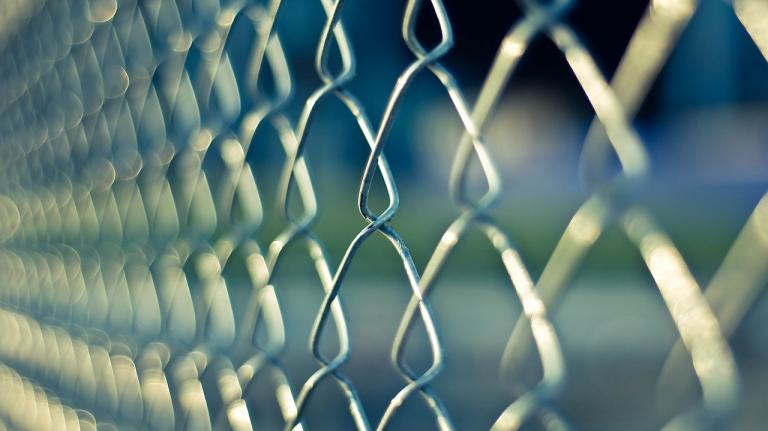
In Trump’s world it is acceptable to put an indefinite hold on refugee applications from Syria. This means that Syrians who have already qualified for refugee status will be left in conditions of poverty and peril until Trump decides they are safe — an eventuality which might not come to pass. Some of these people will die as a result. The elderly, children, and pregnant women — the very groups that pro-lifers are most concerned about on American soil — will be the most likely to suffer.
Catholics who claim that this is justifiable appeal to the “threat of terrorism” and speak of “prudential discernment.”
Here is my question to those Catholics: why is it that a woman cannot appeal to “prudential judgement” in order to justify closing her womb to life? Since new vetting protocols were introduced after 9/11, the risk of dying in a terror attack has fallen to about 10 Americans per year, on average. Many of these incidents involve domestic terrorists. None have involved refugees. The number of American women who die in childbirth each year is 600. Yet even high risk women are expected to be open to life.
So why is it reasonable to expect women (including those who conceive as a result of rape) to accept this risk — but not reasonable to expect Americans to accept a much lower rate of risk to ensure the right to life of Syrian refugees? Why is it intrinsically evil for a sexual assault victim to deny food and shelter to an embryo by taking Plan B, but prudent for an American president to deny the same basic goods to people who will die in the Middle East because of unnecessary barriers at the border?
The Pope and the USCCB answer this in a consistent way: it is not Christian to look at a Syrian refugee and see first a possible terrorist. We must look at both the refugee and the unborn child and see Christ. We must also remember that Christ said “Depart from me, you who are cursed, into the eternal fire prepared for the devil and his angels.”(Matt 25:41) to those who did not welcome Him when He was a stranger. This is consistent. It demands sacrifice, yes, but it expects that all Christians will share in the willingness to accept risks in order to practice mercy.
When the gospel of life is reduced solely to a condemnation of contraception and abortion, those risks fall disproportionately on sexually active women. And it is a scandal: when a woman sees a male or a celibate who appeals to “prudence” in order to justify protectionist policies which will lead to the deaths of innocent Muslims and which may not even save even a single actual American life, it is natural for her to conclude that something other than a commitment to the sanctity of life is motivating the pro-life rhetoric.
The arguments that pro-choicers use to dismiss pro-life claims are not merely evidence of hardness of heart. They are also the footprint of this scandal. It’s not accidental that many pro-choice people believe that Christian pro-lifers are actually motivated by a desire to control women’s bodies or to punish women for having sex. That they think we only really believe that white, Christian life is sacred. That they see our moral convictions about abortion as a kind of puritanical legalism.
These accusations become supportable when pro-lifers do not actually promote a consistent pro-life ethic. The inconsistencies in the pro-life ideology of the Right too often suggest that opposition to abortion is not actually based on a good faith belief in the universal value and dignity of all life. When people who march for the lives of unborn Americans make excuses for policies that will turn away Muslim mothers, leaving them to bear their precious unborn children in conditions of squalor, poverty, and hunger, without adequate water or medical care, it really is not surprising that the pro-life message comes across as hypocrisy.
Scripture does not go easy on those who enjoy wealth and safety while turning away the poor and the stranger. Indeed, when Christ explicitly names the type of behaviour that will result in eternal damnation, He describes people like the rich man in the story of Lazarus, who have enjoyed plenty and who have made excuses for neglecting those in need. In the Old Testament, Ezekiel warns “this was the sin of your sister Sodom: She and her daughters were arrogant, overfed and unconcerned; they did not help the poor and needy…Therefore I did away with them as you have seen.” (Ez 16:49-50)
The Catechism and the documents of the Church may not place the kind of clear guidelines on social justice that they do on sexual morality. This is not because social justice is more optional, or it’s neglect less damnable, but rather because there is no objective point at which we can say “Now I am fulfilling the law of love. Now I can rest secure.” The demands of charity are supposed to be more onerous and more pressing, than the demands of chastity — that’s why we cannot draw a line and say “This will suffice.” It is not to give us leeway to make excuses for laws that put a barricade across the doors of mercy.
Image credit: pixabay
Stay in touch! Like Catholic Authenticity on Facebook:
Next Post

February 1, 2017 Is Heaven for Real?
Browse Our Archives
Select a Category Abuse Beauty Charity Chastity Current Events Faith Family Feminism Fiction Humility Humour Identity Justice Perseverence Philosophy Poverty Sexuality trauma Uncategorized Virtues Wombats
Select a Month February 2020 November 2019 October 2019 August 2019 July 2019 June 2019 May 2019 April 2019 March 2019 February 2019 October 2018 September 2018 August 2018 July 2018 June 2018 May 2018 April 2018 March 2018 February 2018 January 2018 December 2017 November 2017 October 2017 September 2017 August 2017 July 2017 June 2017 May 2017 April 2017 March 2017 February 2017 January 2017 December 2016 November 2016 October 2016 September 2016 August 2016 July 2016 June 2016 May 2016 April 2016 March 2016 February 2016 January 2016 December 2015 November 2015 October 2015 September 2015 August 2015 July 2015 June 2015
Follow Us!
TAKE THE
Religious Wisdom Quiz
What did God send to feed Elijah during the drought?
Select your answer to see how you score.
Camels Ravens Serpent Sheep
Books by This Author Books by Melinda Selmys
Support this
Column


Related posts from Catholic Authenticity


Fault on His Side: Addiction and Culpability Pt...

Fault on My Side: How Alcoholism and Abuse...

Enabling Abusers: On Divorce and Remarriage
TRENDING AT PATHEOS Catholic

Rejecting Doom: Christian Hope And Human Action
Christianity is a religion of hope. We are to have hope and...

It’s What Comes From Within Which Matters
One of the most difficult things for us to understand is why...

Why I Choose the Eucharist Over the Sermon
Choose the Eucharist, Not the Sermon What are we supposed to get...

5 Design Elements Found in Spiritually Rooted Homes
Putting Spirituality Into Home Decor Our homes are more than our living...

Credo: A Story of God Told with the...
About 10 years ago, I began to imagine a personal "Credo" that...

The Anatomy of Divine Revelation in Catholic Thought
The claim that God has made Himself known to human beings is...
view all Catholic blogs
Ad-Free & Subscriber Log-In Subscription Support
- About Us
- 2026 Calendar
- Videos
- Podcasts
- Library of World Religions
- Faith In Media Tracker
- Advertise With Us
- Write for Us
- Privacy Policy
- Terms of Service
- Do Not Sell My Data
- Contact Us
- Radiant Digital
- Manage Newsletter Subscriptions
- Unsubscribe From Notifications
- Sitemap
Copyright 2008-2026, Patheos. All rights reserved.
Subscription Support Ad-Free & Subscriber Log-In
Follow Patheos