
BuddhistCatholicContemplativeEvangelicalGeneral ChristianHinduJewishLatter-day SaintMuslimNew VisionsProgressive Christian
Beliefs
- Buddhist
- Catholic
- Contemplative
- Evangelical
- General Christian
- Hindu
- Jewish
- Latter-day Saint
- More Voices
- Muslim
- New Visions
- Pagan
- Progressive Christian
Topics
- Religion News
- Food and Religion
- Sports and Religion
- Religious Art
- Religious Music and Entertainment
- Religious Events
- History and Religion
- Style and Religion
- Politics and Religion
- Women in Religion
- Recreation Outdoors and Religion
- Business Finance and Religion
- Careers Workplace and Religion
- Education and Religion
- Family Parenting and Religion
- Health Fitness and Religion
- Home and Religion
- Relationships and Religion
- Technology and Religion
- Travel and Religion
Columnists
- Buddhist Columnists
- Business Finance and Religion Columnists
- Careers Workplace and Religion Columnists
- Catholic Columnists
- Contemplative Columnists
- Education and Religion Columnists
- Evangelists Columnists
- Family Parenting and Religion Columnists
- General Christian Columnists
- Health Fitness and Religion Columnists
- Hindu Columnists
- History and Religion Columnists
- Home and Religion Columnists
- Jewish Columnists
- More Voices Columnists
- Latter Day Columnists
- Muslim Columnists
- New Visions Columnists
- Nonreligious Columnists
- Pagan Columnists
- Politics and Religion Columnists
- Progressive Columnists
- Recreation Outdoors and Religion Columnists
- Relationships and Religion Columnists
- Religion News Columnists
- Religious Art Columnists
- Religious Events Columnists
- Religious Music and Entertainment Columnists
- Sports and Religion Columnists
- Style and Religion Columnists
- Technology and Religion Columnists
- Travel and Religion Columnists
- Women in Religion Columnists
Resource Library
- 2026 Calendar
- Library of World Religions
- The 100 Most Holy Places on Earth
- Patheos Answers
- Podcasts
- Videos
- Faith Leaders Database
- Anglican Episcopalian
- Bahai
- Baptist
- Buddhism
- Christianity
- Confucianism
- Eastern Orthodoxy
- Hinduism
- Holiness and Pentecostal
- ISKCON
- Islam
- Judaism
- Lutheran
- Methodist
- The Church of Jesus Christ of Latter-day Saints
- New Age
- Paganism
- Presbytarian and Reformed
- Protestantism
- Religion Behind the Scenes
- Roman Catholic
- Scientology
- Shia Islam
- Sikhism
- Sufism
- Sunni Islam
- Taoism
- Zen
- See all religions
Research Tools
 Ad-Free & Subscriber Log-In Subscription Support
Ad-Free & Subscriber Log-In Subscription Support
Follow Patheos 

- Trending:
- Forgiveness
- |
- Marriage
- |
- Consciousness
- |
- Death Penalty
- |
- Election
- |
- Halloween
 Catholic Authenticity
-
Categories
- Home
- Catholic
- Conservatives vs. Liberals: Who Are the Real Catholics?
Conservatives vs. Liberals: Who Are the Real Catholics?
Last updated on: July 12, 2017 at 2:21 pm by Melinda Selmys
Conservatives vs. Liberals: Who Are the Real Catholics? 2017-07-12T14:21:07-04:00 Melinda Selmys
Patheos Explore the world's faith through different perspectives on religion and spirituality! Patheos has the views of the prevalent religions and spiritualities of the world.
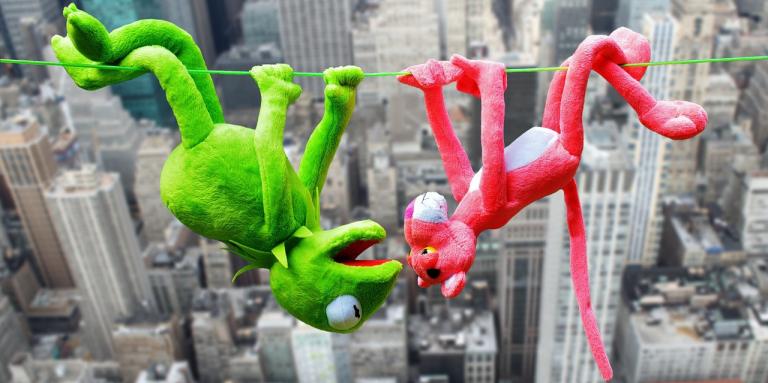
Several years ago, I was involved in a frustrating and interminable exchange about Catholic sexual morality over e-mail. At some point in the conversation my interlocutor sent me a copy of the entire chapter of the Catechism that covers the sixth commandment, heavily highlighted to show the errors in my position.
I recall reading it and being not so much alarmed as angry. I had read that chapter dozens of times, and yet the text that I was now reading seemed almost unrecognizable. Was this really what the Church taught? Was the teaching actually just way more rigid and out of touch with human reality than I thought it was?
I stopped. Took a deep breath, pulled my own copy of the Catechism off the shelf and read the chapter again without the highlighting. Immediately, it reverted to being the familiar text, which has always come across to me as a difficult but ultimately sane attempt to seek balance between a high moral standard and the challenges that human beings actually face.
This experience brought into relief one of the problems that we all face in trying to come to an understanding of truth. My interlocutor and I were both reading the same text, but we were selecting (mentally highlighting) different aspects of that text as we went. Specifically, we both gave greater weight to those passages which supported our own pre-existing beliefs about human sexuality.
The technical term for this is “confirmation bias.” Confirmation bias is the tendency of human beings to seek out and prefer information that bolsters their own beliefs, and to avoid contradictory data or view it with suspicion. We all do this. It’s not a matter of how intelligent we are, how faithful we are, or of whether we’re on the left or right end of the political spectrum.
Changing our beliefs, especially if it involves having to publicly retract previous statements or admit that we were wrong, is a very psychologically troubling experience. If the belief is deeply entrenched, especially if it’s a conviction that has significantly shaped the way we live, the mental and emotional costs of challenging that belief can be very steep, even traumatic. For example, someone who leaves a valid marriage because it has become abusive and then remarries in order to be able to support her children must pay a high psychological price to see the abusive marriage as real, and the loving marriage as adulterous. Similarly, someone who permanently alienated their own child as a result of homophobic behaviour may have a strong emotional motivation for rejecting a document like “Always Our Children”; questioning whether their actions were really required by the Church would involve accepting a painful burden of guilt. Like other adverse stimuli, we tend to avoid or defend ourselves against information that calls our deeply held convictions into question.
Understanding how confirmation bias works is, I think, essential in understanding the tensions that exist between “liberals” and “conservatives” in the Church. The common supposition is that one’s own side understands Catholic teaching more deeply and fully than the other, and that one’s opponents are “cafeteria Catholics,” deliberately selecting only those aspects of Scripture, Tradition and Magisterial Teaching that happen to support their own view and blithely ignoring the parts that they find inconvenient. We assume that we are acting in good faith, and that those who disagree with us are acting in bad faith.
I would like to suggest that these tensions can be understood much better, and much more charitably, if we first understand how confirmation bias functions and particularly how it interacts with large data sets.
Researchers found that if you give people a brief summary of research that challenges their opinion about an emotionally charged issue, they are likely to falter somewhat in their conviction and move towards a position of greater openness towards the opposite conclusion. However, if you then provide those same people with the full text of the contradictory research, they will tend to move back towards their original belief and perhaps even become more certain in their convictions.
Why? Basically because the larger a data set is, the more opportunity there is to privilege those aspects of the data that support one’s own opinions. As is usually the case in real life, the (fictitious) research papers used in the study presented ambiguities whereas the brief summaries suggested clear findings. The more complete text therefore provided more, and better opportunities for study participants to find evidence that could be used to corroborate their beliefs.
In the case of Vatican documents, we have a data set that is absolutely ideal fodder for rampant confirmation bias. First of all, it’s an absolutely enormous body of text; much larger than any single human being can possibly read, retain and correlate. This means that right from the get-go even the most educated Catholics are going to be making decisions about which documents to read carefully, which documents to skim, and which documents to ignore.
Research suggests that, generally, people are more likely to read documents which confirm their beliefs (presumably for the simple reason that reading agreeable things is more pleasurable). We’re more likely to hastily peruse less agreeable documents, to rely on secondary sources to learn their contents, or to simply not familiarize ourselves with them at all. Of course, when we look to secondary sources we’re more likely to seek out those which will interpret or even dismiss problematic documents in a way that is palatable to our existing belief structure.
Secondly, Vatican documents tend to be written or at the very least edited by committee. Anyone who has ever participated in the production of a committee-written document will understand the problem such a process presents: you can’t say anything unless it has approval of the whole. This means that the more vague and multivalent a statement is, the more likely it is to be included in the document. It also means that contradictory considerations are often presented side-by-side in a non-conclusive way using formulae like “The council is aware of…” or “It must be considered that…”
The result is that the moral and practical considerations that are most important to both sides of any particular debate are likely to be reflected in the documents while rulings concerning which of those considerations are paramount may be couched in more ambiguous terms.
For any given reader those paragraphs, sentences, or even sentence fragments which most conform to their own presuppositions will seem the most resonant, the most important. This is not a conscious process – nobody “decides” to “ignore” the aspects of the text that are inconvenient, rather we are unconsciously attracted to the parts of the text that integrate smoothly with our current views.
Being aware that this is something that we all do, that it is a function of how human brains prioritize information rather than a matter of deliberate malice or bad will, can help us to be more compassionate in our disagreements. It can aid us in being more open to the other, more humble before truth, and more willing to accept that a diversity of opinions may authentically manifest Catholic fidelity.
Image courtesy of Pixabay.
Stay in touch! Like Catholic Authenticity on Facebook:
Previous Post

February 13, 2017
8 Ways to Tell When Someone Is Playing the Victim
Next Post

February 25, 2017 Loving Milo Yiannopoulos
Browse Our Archives
Select a Category Abuse Beauty Charity Chastity Current Events Faith Family Feminism Fiction Humility Humour Identity Justice Perseverence Philosophy Poverty Sexuality trauma Uncategorized Virtues Wombats
Select a Month February 2020 November 2019 October 2019 August 2019 July 2019 June 2019 May 2019 April 2019 March 2019 February 2019 October 2018 September 2018 August 2018 July 2018 June 2018 May 2018 April 2018 March 2018 February 2018 January 2018 December 2017 November 2017 October 2017 September 2017 August 2017 July 2017 June 2017 May 2017 April 2017 March 2017 February 2017 January 2017 December 2016 November 2016 October 2016 September 2016 August 2016 July 2016 June 2016 May 2016 April 2016 March 2016 February 2016 January 2016 December 2015 November 2015 October 2015 September 2015 August 2015 July 2015 June 2015
Follow Us!
TAKE THE
Religious Wisdom Quiz
I am twelve men sent to explore the Promised Land, but only two gave a good report. Who are we?
Select your answer to see how you score.
Explorers The twelve spies Leaders of Israel Messengers
Books by This Author Books by Melinda Selmys
Support this
Column


Related posts from Catholic Authenticity

The Lord Has Worked Marvels For Me: Open...

The Central Spiritual Struggle of Women: Open Letter,...

An Open Letter to the Young Rad-Trad Women

Maybe It's Okay That Man Should Be Alone
TRENDING AT PATHEOS Catholic

Rejecting Doom: Christian Hope And Human Action
Christianity is a religion of hope. We are to have hope and...

It’s What Comes From Within Which Matters
One of the most difficult things for us to understand is why...

Why I Choose the Eucharist Over the Sermon
Choose the Eucharist, Not the Sermon What are we supposed to get...

5 Design Elements Found in Spiritually Rooted Homes
Putting Spirituality Into Home Decor Our homes are more than our living...

Credo: A Story of God Told with the...
About 10 years ago, I began to imagine a personal "Credo" that...

The Anatomy of Divine Revelation in Catholic Thought
The claim that God has made Himself known to human beings is...
view all Catholic blogs
Ad-Free & Subscriber Log-In Subscription Support
- About Us
- 2026 Calendar
- Videos
- Podcasts
- Library of World Religions
- Faith In Media Tracker
- Advertise With Us
- Write for Us
- Privacy Policy
- Terms of Service
- Do Not Sell My Data
- Contact Us
- Radiant Digital
- Manage Newsletter Subscriptions
- Unsubscribe From Notifications
- Sitemap
Copyright 2008-2026, Patheos. All rights reserved.
Subscription Support Ad-Free & Subscriber Log-In
Follow Patheos