
BuddhistCatholicContemplativeEvangelicalGeneral ChristianHinduJewishLatter-day SaintMuslimNew VisionsProgressive Christian
Beliefs
- Buddhist
- Catholic
- Contemplative
- Evangelical
- General Christian
- Hindu
- Jewish
- Latter-day Saint
- More Voices
- Muslim
- New Visions
- Pagan
- Progressive Christian
Topics
- Religion News
- Food and Religion
- Sports and Religion
- Religious Art
- Religious Music and Entertainment
- Religious Events
- History and Religion
- Style and Religion
- Politics and Religion
- Women in Religion
- Recreation Outdoors and Religion
- Business Finance and Religion
- Careers Workplace and Religion
- Education and Religion
- Family Parenting and Religion
- Health Fitness and Religion
- Home and Religion
- Relationships and Religion
- Technology and Religion
- Travel and Religion
Columnists
- Buddhist Columnists
- Business Finance and Religion Columnists
- Careers Workplace and Religion Columnists
- Catholic Columnists
- Contemplative Columnists
- Education and Religion Columnists
- Evangelists Columnists
- Family Parenting and Religion Columnists
- General Christian Columnists
- Health Fitness and Religion Columnists
- Hindu Columnists
- History and Religion Columnists
- Home and Religion Columnists
- Jewish Columnists
- More Voices Columnists
- Latter Day Columnists
- Muslim Columnists
- New Visions Columnists
- Nonreligious Columnists
- Pagan Columnists
- Politics and Religion Columnists
- Progressive Columnists
- Recreation Outdoors and Religion Columnists
- Relationships and Religion Columnists
- Religion News Columnists
- Religious Art Columnists
- Religious Events Columnists
- Religious Music and Entertainment Columnists
- Sports and Religion Columnists
- Style and Religion Columnists
- Technology and Religion Columnists
- Travel and Religion Columnists
- Women in Religion Columnists
Resource Library
- 2026 Calendar
- Library of World Religions
- The 100 Most Holy Places on Earth
- Patheos Answers
- Podcasts
- Videos
- Faith Leaders Database
- Anglican Episcopalian
- Bahai
- Baptist
- Buddhism
- Christianity
- Confucianism
- Eastern Orthodoxy
- Hinduism
- Holiness and Pentecostal
- ISKCON
- Islam
- Judaism
- Lutheran
- Methodist
- The Church of Jesus Christ of Latter-day Saints
- New Age
- Paganism
- Presbytarian and Reformed
- Protestantism
- Religion Behind the Scenes
- Roman Catholic
- Scientology
- Shia Islam
- Sikhism
- Sufism
- Sunni Islam
- Taoism
- Zen
- See all religions
Research Tools
 Ad-Free & Subscriber Log-In Subscription Support
Ad-Free & Subscriber Log-In Subscription Support
Follow Patheos 

- Trending:
- Forgiveness
- |
- Marriage
- |
- Consciousness
- |
- Death Penalty
- |
- Election
- |
- Halloween
 Catholic Authenticity
-
Categories
- Home
- Catholic
- Fear and Loathing in 1984: Why Catholics Must Oppose Trump’s Immigration Policy
Fear and Loathing in 1984: Why Catholics Must Oppose Trump’s Immigration Policy
Last updated on: January 31, 2017 at 4:23 pm by Melinda Selmys
Fear and Loathing in 1984: Why Catholics Must Oppose Trump’s Immigration Policy 2017-01-31T16:23:04-04:00 Melinda Selmys
Patheos Explore the world's faith through different perspectives on religion and spirituality! Patheos has the views of the prevalent religions and spiritualities of the world.
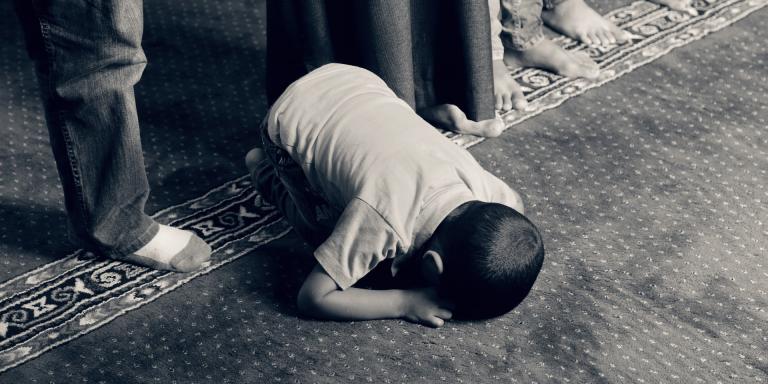
One of the most frustrating things over the past couple of days has been watching leaders within the pro-life movement offering arguments for why, basically, we can ignore the statements that Pope Francis and the USCCB have made concerning the dangers of immigration policies informed by isolationism, nationalism and religious intolerance.
The problem is not that I think every casual statement made by a Pope or a Bishop’s council ought to have the stamp of law: there is definitely room for legitimate criticism and disagreement, especially with statements that are issued at lower levels of authority. My problem is the ease with which so many pro-life people seem to be able to ignore the fact that Trump’s immigration policies arise out of an ethic of fear and prejudice that is contrary to the Gospel, the teaching of the Church, and to the belief that all human life is sacred.
If you look at the full text of Trump’s recent executive order, the mindset that animates it is laid out in some detail in the first paragraphs. He references 9/11 and notes that the protocols of the State Department prevented adequate scrutiny of the visa applications of some of the men involved in that attack. Then he acknowledges that actually the system was changed after 9/11 to prevent that from happening again. But, he says, there are still “numerous” terror attacks being committed against US citizens by foreign nationals.
This last statement, it’s just not true. If you look at a graph of the terror attacks that have taken place on US soil over the last 20 years, you can easily see that the regulations put into place after 9/11 have reduced both the severity and the frequency of deadly attacks. (It should also be noted that the attacks listed include domestic terrorists.) In other words, the system is working quite well and Trump’s extraordinary measures to exclude immigrants, refugees and visitors to the US are not warranted by any actual national emergency. If Trump believes that the process would benefit from even greater refinements that may be just – but there’s no reason why such refinements can’t be implemented in a normal, non-disruptive way.
Trump’s executive order is worded in a way that implies a concern for all Americans, especially women, religious minorities, and even for sexual minorities. (The rich irony in this will be appreciated by my feminist and LGBTQ readers.) But the language of protecting Americans and offering sanctuary to foreign religious minorities is a very thin and rather transparent veneer over a program that is clearly targeting Muslims.
There is no suggestion of a need to protect Muslims as a religious minority in America – rather, it is the “religious minorities” (read, Christians) in the Middle East who are to be exempted from Trump’s exclusionary policies. When he says “the United States should not admit those who engage in acts of bigotry or hatred (including “honor” killings, other forms of violence against women, or the persecution of those who practice religions different from their own)” it’s really obvious that he is referring to Muslims, and that he’s drawing on Americans’ fears that Muslims might come over and start raping the women and mowing down the infidels.
Now, it is true that there are real issues that need to be discussed in terms of how to integrate Muslim immigrants into Western cultures so that you don’t end up with culture clash problems. However, having grown up in a neighbourhood with a very large Muslim population, I have to say that the fears are often overblown. The issues tend to be problems within the Muslim population itself – conflicts, for example, over the fact that Muslim women living in North America often wish to be treated with the same kind of dignity and respect as their neighbours, and that Muslim men are not always keen for this to happen.
The kind of “honor killings” which Trump references, for example, almost invariably occur within the family – and they are rare. The Canadian Justice Department reports a dozen known cases over a ten year period in Canada. This means that we’re talking about an absolutely trivial slice of the problem posed by domestic violence against women – a problem that occurs across all demographics. This doesn’t mean that honour killings don’t matter, but rather that they are poor excuse for banning entire populations from entry into the US. When you consider that women who are at risk of honour killing are substantially safer living in a country where the authorities are not sympathetic to this type of crime, the rhetoric of protecting women starts to look like a sick joke.
In other words, Trump is playing a 1984 type language game. He uses the language of protection for religious minorities in order to justify creating policies which will discriminate against one of the most vulnerable religious minorities in America. He uses the rhetoric of protecting women to justify refusing haven to women who are trying to get out of countries where they have very few rights.
This, however, is not the thing that troubles me most as a pro-life Catholic. Religious stereotyping and discrimination is always ugly, but it has an unfortunately long history in Christian tradition. Indefinitely suspending the US’s commitments to shelter Syrians left homeless by the biggest refugee crisis since World War II, however, is directly opposed to the principle that all life is sacred. We’ll talk about that next time.
Previous Post
January 30, 2017
The Measure of a Life: In Memory of My Sister
Next Post

February 1, 2017 Open Wombs, Closed Borders?
Browse Our Archives
Select a Category Abuse Beauty Charity Chastity Current Events Faith Family Feminism Fiction Humility Humour Identity Justice Perseverence Philosophy Poverty Sexuality trauma Uncategorized Virtues Wombats
Select a Month February 2020 November 2019 October 2019 August 2019 July 2019 June 2019 May 2019 April 2019 March 2019 February 2019 October 2018 September 2018 August 2018 July 2018 June 2018 May 2018 April 2018 March 2018 February 2018 January 2018 December 2017 November 2017 October 2017 September 2017 August 2017 July 2017 June 2017 May 2017 April 2017 March 2017 February 2017 January 2017 December 2016 November 2016 October 2016 September 2016 August 2016 July 2016 June 2016 May 2016 April 2016 March 2016 February 2016 January 2016 December 2015 November 2015 October 2015 September 2015 August 2015 July 2015 June 2015
Follow Us!
TAKE THE
Religious Wisdom Quiz
Who betrayed Jesus for 30 pieces of silver?
Select your answer to see how you score.
Judas Iscariot Barabbas James Peter
Books by This Author Books by Melinda Selmys
Support this
Column


Related posts from Catholic Authenticity

Is There A Gay Problem in the Priesthood?
Humanae Vitae, What Have You Wrought?
The Democratization of the Faith
Breastfeeding in Public and Women's Equality
TRENDING AT PATHEOS Catholic

Rejecting Doom: Christian Hope And Human Action
Christianity is a religion of hope. We are to have hope and...

It’s What Comes From Within Which Matters
One of the most difficult things for us to understand is why...

Why I Choose the Eucharist Over the Sermon
Choose the Eucharist, Not the Sermon What are we supposed to get...

5 Design Elements Found in Spiritually Rooted Homes
Putting Spirituality Into Home Decor Our homes are more than our living...

Credo: A Story of God Told with the...
About 10 years ago, I began to imagine a personal "Credo" that...

The Anatomy of Divine Revelation in Catholic Thought
The claim that God has made Himself known to human beings is...
view all Catholic blogs
Ad-Free & Subscriber Log-In Subscription Support
- About Us
- 2026 Calendar
- Videos
- Podcasts
- Library of World Religions
- Faith In Media Tracker
- Advertise With Us
- Write for Us
- Privacy Policy
- Terms of Service
- Do Not Sell My Data
- Contact Us
- Radiant Digital
- Manage Newsletter Subscriptions
- Unsubscribe From Notifications
- Sitemap
Copyright 2008-2026, Patheos. All rights reserved.
Subscription Support Ad-Free & Subscriber Log-In
Follow Patheos