
BuddhistCatholicContemplativeEvangelicalGeneral ChristianHinduJewishLatter-day SaintMuslimNew VisionsProgressive Christian
Beliefs
- Buddhist
- Catholic
- Contemplative
- Evangelical
- General Christian
- Hindu
- Jewish
- Latter-day Saint
- More Voices
- Muslim
- New Visions
- Pagan
- Progressive Christian
Topics
- Religion News
- Food and Religion
- Sports and Religion
- Religious Art
- Religious Music and Entertainment
- Religious Events
- History and Religion
- Style and Religion
- Politics and Religion
- Women in Religion
- Recreation Outdoors and Religion
- Business Finance and Religion
- Careers Workplace and Religion
- Education and Religion
- Family Parenting and Religion
- Health Fitness and Religion
- Home and Religion
- Relationships and Religion
- Technology and Religion
- Travel and Religion
Columnists
- Buddhist Columnists
- Business Finance and Religion Columnists
- Careers Workplace and Religion Columnists
- Catholic Columnists
- Contemplative Columnists
- Education and Religion Columnists
- Evangelists Columnists
- Family Parenting and Religion Columnists
- General Christian Columnists
- Health Fitness and Religion Columnists
- Hindu Columnists
- History and Religion Columnists
- Home and Religion Columnists
- Jewish Columnists
- More Voices Columnists
- Latter Day Columnists
- Muslim Columnists
- New Visions Columnists
- Nonreligious Columnists
- Pagan Columnists
- Politics and Religion Columnists
- Progressive Columnists
- Recreation Outdoors and Religion Columnists
- Relationships and Religion Columnists
- Religion News Columnists
- Religious Art Columnists
- Religious Events Columnists
- Religious Music and Entertainment Columnists
- Sports and Religion Columnists
- Style and Religion Columnists
- Technology and Religion Columnists
- Travel and Religion Columnists
- Women in Religion Columnists
Resource Library
- 2026 Calendar
- Library of World Religions
- The 100 Most Holy Places on Earth
- Patheos Answers
- Podcasts
- Videos
- Faith Leaders Database
- Anglican Episcopalian
- Bahai
- Baptist
- Buddhism
- Christianity
- Confucianism
- Eastern Orthodoxy
- Hinduism
- Holiness and Pentecostal
- ISKCON
- Islam
- Judaism
- Lutheran
- Methodist
- The Church of Jesus Christ of Latter-day Saints
- New Age
- Paganism
- Presbytarian and Reformed
- Protestantism
- Religion Behind the Scenes
- Roman Catholic
- Scientology
- Shia Islam
- Sikhism
- Sufism
- Sunni Islam
- Taoism
- Zen
- See all religions
Research Tools
 Ad-Free & Subscriber Log-In Subscription Support
Ad-Free & Subscriber Log-In Subscription Support
Follow Patheos 

- Trending:
- Forgiveness
- |
- Marriage
- |
- Consciousness
- |
- Death Penalty
- |
- Election
- |
- Halloween
 Catholic Authenticity
-
Categories
- Home
- Catholic
- Tradition Unbound – Part II
Tradition Unbound – Part II
Last updated on: December 5, 2016 at 4:34 pm by Melinda Selmys
Tradition Unbound – Part II 2016-12-05T16:34:17-04:00 Melinda Selmys
Patheos Explore the world's faith through different perspectives on religion and spirituality! Patheos has the views of the prevalent religions and spiritualities of the world.
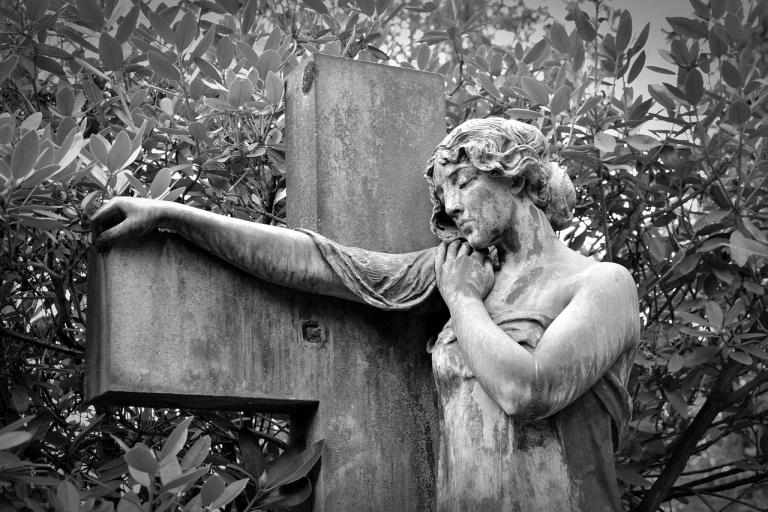
Last time on Catholic Authenticity, we were talking about development of doctrine, specifically in reference to the fear that many conservatives have that Pope Francis is undermining eternal, changeless Church teaching in an unprecedented way. A lot of this fear seems to stem from an unduly rigid sense of how doctrine ought to be promulgated, taught, and applied. It’s a fear that I can well understand: I remember the first time that I realized that development of doctrine can actually involve pretty radical change in terms of the practice of the faith. I felt like my faith was being shaken to the core, and I didn’t know what to believe anymore. So I do have sympathy for the people for whom the footnote about communion for the divorced and remarriage in Amoris Laetitia is like a fault line opening up in the Earth underneath their house.
As a way of calming these anxieties, I’ve been working through another change in the Church’s teaching on marriage – one which I think is actually much more radical than the possibility of the Church slightly relaxing her discipline regarding communion for the divorced and remarried: the change in the teaching on male headship within the family.
We’d gotten as far as Mulieris Dignitatem. To illustrate the difference in Church teaching that took place over the course of a little over a century, I’d like to put the teaching about Ephesians 5 as it is expressed by John Paul II in a side-by-side with the teaching about Ephesians 5 as expressed by Leo XIII:
“The husband is the chief of the family and the head of the wife. The woman, because she is flesh of his flesh, and bone of his bone, must be subject to her husband and obey him; not, indeed, as a servant, but as a companion, so that her obedience shall be wanting in neither honor nor dignity. Since the husband represents Christ, and since the wife represents the Church, let there always be, both in him who commands and in her who obeys, a heaven-born love guiding both in their respective duties. For “the husband is the head of the wife; as Christ is the head of the Church. . . Therefore, as the Church is subject to Christ, so also let wives be to their husbands in all things.”
– Leo XIII, Arcanum Divinae
The author of the Letter to the Ephesians sees no contradiction between an exhortation formulated in this way and the words: “Wives, be subject to your husbands, as to the Lord. For the husband is the head of the wife” (5:22-23). The author knows that this way of speaking, so profoundly rooted in the customs and religious tradition of the time, is to be understood and carried out in a new way: as a “mutual subjection out of reverence for Christ” (cf. Eph 5:21). This is especially true because the husband is called the “head” of the wife as Christ is the head of the Church; he is so in order to give “himself up for her” (Eph 5:25), and giving himself up for her means giving up even his own life. However, whereas in the relationship between Christ and the Church the subjection is only on the part of the Church, in the relationship between husband and wife the “subjection” is not one-sided but mutual.”
– John Paul II, Mulieris Dignitatem
Any good Catholic apologist will point out that there is an essential continuity between these two teachings, and it’s true, from a theological perspective, there is. But from a practical perspective, in terms of the actual politics of the household and the application of discipline within the parish or the confessional, they are night and day. The older form of the teaching demands “willing obedience” of wives: a woman can rightly disobey her husband only in cases where his directives are contrary to right reason (i.e. he commands her to do something which is immoral), or contrary to the dignity of wives (a euphemistic phrase: if you read other documents from the period, it’s clear that this refers mostly to cases where a husband demands sexual satisfaction contra naturem.) In this schema the husband takes the role of Christ, the woman takes the role of Church: she is to be subject to him.
In John Paul II’s theology there is a much greater emphasis on the freedom and dignity of woman, and a vastly greater appreciation for the degree to which males, on account of concupiscence, are at risk of abusing power if it is granted to them unilaterally. Mulieris Dignitatem gives a succinct formulation of a theology of reciprocity, complementarity and mutual subjection which is developed in much more detail in Theology of the Body. Here John Paul II expands at some length on the dangers that face marriage as a result of the Fall, and he discusses at some length the ways in which male domination of women comes about because of the curse spoken in Genesis 3 “Your desire shall be for your husband, and he will lord it over you.” By moving the focus from the obedience that wives owe to husbands towards the subjection which both spouses owe to each other, John Paul II provides a theological framework that is technically in continuity with the tradition, but which in practice justifies the dynamics of the modern family.
What this does is overturn nearly two millenia of tradition concerning the natural inferiority of woman and God’s intention for the order of the family. You need only a passing knowledge of history to know that Ephesians 5 was routinely used as a justification for the expectation that a good Christian wife would quietly to submit to her husband’s judgment, trusting in his supposedly greater rationality. According to this tradition, harmony within the home was maintained by a proper hierarchical order in which the husband did his best to make decisions that would benefit everyone, and the wife did her best to accept his decisions – even if she disagreed. It would have been normal for a husband to receive the support of his pastor if he complained that his wife was willful or that she talked back to much, and female penitents would have been encouraged to routinely scour their consciences to see if they had been disobedient without just cause.
Outside of extremely conservative circles, nobody today believes in this now. Instead the norm is for couples to engage in mutual decision-making: seeking consensus, consulting one another, talking things over as equals, and occasionally seeking third party advice or counseling if an issue cannot be settled equitably. A man who complained to his priest that his wife wasn’t obeying him would most likely get an earful, and a woman who confessed to being a disobedient wife would be gently counseled in the virtue of self-respect. John Paul II’s marital theology provides a framework in which such practices of mutuality become a restoration of God’s original plan rather than a perversion of the natural order of the family.
The alteration in the teaching on women’s involvement in the work-force that took place between Casti Connubii and Familiaris Consortio is equally striking:
“The same false teachers who try to dim the luster of conjugal faith and purity do not scruple to do away with the honorable and trusting obedience which the woman owes to the man. Many of them even go further and assert that such a subjection of one party to the other is unworthy of human dignity, that the rights of husband and wife are equal; wherefore, they boldly proclaim the emancipation of women has been or ought to be effected. This emancipation in their ideas must be threefold, in the ruling of the domestic society, in the administration of family affairs and in the rearing of the children. It must be social, economic, physiological: – physiological, that is to say, the woman is to be freed at her own good pleasure from the burdensome duties properly belonging to a wife as companion and mother (We have already said that this is not an emancipation but a crime); social, inasmuch as the wife being freed from the cares of children and family, should, to the neglect of these, be able to follow her own bent and devote herself to business and even public affairs; finally economic, whereby the woman even without the knowledge and against the wish of her husband may be at liberty to conduct and administer her own affairs, giving her attention chiefly to these rather than to children, husband and family.”
– Pius XI, Casti Connubii
“…one cannot but observe that in the specific area of family life a widespread social and cultural tradition has considered women’s role to be exclusively that of wife and mother, without adequate access to public functions which have generally been reserved for men.
There is no doubt that the equal dignity and responsibility of men and women fully justifies women’s access to public functions. On the other hand the true advancement of women requires that clear recognition be given to the value of their maternal and family role, by comparison with all other public roles and all other professions. Furthermore, these roles and professions should be harmoniously combined, if we wish the evolution of society and culture to be truly and fully human.”
– John Paul II, Familiaris Consortio
Again, any apologist worth their salt can argue that Pius XI was only decrying women’s involvement in public affairs in those cases where this caused women to neglect their husband and children, and will point out that John Paul II shares his concerns about the preservation of the domestic sphere. But unless you’re willing to engage in some serious mental contortionism in order to maintain the belief that the teaching has been single, clear, unchanging, and unaffected by social and cultural values, it’s obvious that there has been a significant shift. Pius XI clearly sees women’s emancipation primarily as a threat to the family and to the “essential order of the domestic society.” John Paul II not only celebrates women’s participation in every aspect of cultural and political life, but actually goes so far as to apologize for the role that members of the Church have played in limiting women’s progress.
As with male headship, the shift in emphasis may be a small step for theology, but it’s a giant leap in terms of the practical application of doctrine in the lives of actual Christian women.
If you look at the development of doctrine from the 19th to the late 20th century, there’s no question that a dramatic change took place. This change did not alter the fundamental continuity of Christian teaching, but it certainly resulted in a markedly different application of Christian precepts, with different elements of the teaching being emphasized, taught, and enforced.
The shift in discipline that would be implied if divorced-and-remarried people were sometimes, in exceptional circumstances, under the guidance of a competent director, allowed to receive Communion provided that, due to exculpating factors, they are not in a state of mortal sin even though they are living more uxorio – this shift would be absolutely trivial compared to the shifts that we’ve just been discussing. Such a change in the discipline of the Church would affect far fewer people in a much less radical way, and would require no substantive revisions to the existing theology. Only someone caught up in the vicissitudes of the news cycle, and the excitement of the newest trumped-up Pope Francis scandal, could possibly fail to see this.
Which is why we need to have perspective. The development of doctrine places us within a historical process where our understanding of the truth is constantly being refined and perfected. This is not relativism, but it does require a certain humility before truth: a recognition that although the Church is called to the fullness of truth, the truth (who is Christ) is always seen “as in a glass, dimly” (1 Cor 13:12). The Spirit leads us into all truth, not all at once, but slowly. Without this understanding, every little shift in the practice of the Church causes uncertainty, fear, and instability – like Peter, looking around him at the water, we waver and feel ourselves sinking.
Yet Christ tells us not to fear, but to have faith. Yes, there will be waves but it has always been so, and we can have confidence that the Church will continue, steadfastly, in her progress towards the holiness to which she is called – even if the latest headlines tell us that the barque is about to capsize.
Image credit: pixabay
Stay in touch! Like Catholic Authenticity on Facebook:
Previous Post

December 2, 2016
An Immodest Proposal
Next Post

December 6, 2016 When a Yes or No Question is Not a Yes or No Question
Browse Our Archives
Select a Category Abuse Beauty Charity Chastity Current Events Faith Family Feminism Fiction Humility Humour Identity Justice Perseverence Philosophy Poverty Sexuality trauma Uncategorized Virtues Wombats
Select a Month February 2020 November 2019 October 2019 August 2019 July 2019 June 2019 May 2019 April 2019 March 2019 February 2019 October 2018 September 2018 August 2018 July 2018 June 2018 May 2018 April 2018 March 2018 February 2018 January 2018 December 2017 November 2017 October 2017 September 2017 August 2017 July 2017 June 2017 May 2017 April 2017 March 2017 February 2017 January 2017 December 2016 November 2016 October 2016 September 2016 August 2016 July 2016 June 2016 May 2016 April 2016 March 2016 February 2016 January 2016 December 2015 November 2015 October 2015 September 2015 August 2015 July 2015 June 2015
Follow Us!
TAKE THE
Religious Wisdom Quiz
I asked for wisdom above all else, and God granted me riches and honor as well. Who am I?
Select your answer to see how you score.
Solomon Hezekiah Josiah David
Books by This Author Books by Melinda Selmys
Support this
Column


Related posts from Catholic Authenticity

Get Behind Me, Tony Esolen: Stop Making Marriage...

8 Ways Catholics May Enable Domestic Abuse

Sexual Coercion and Spousal Rape: What the Church...

PSA: NFP is Not Compatible With Alcoholism or...
TRENDING AT PATHEOS Catholic

Rejecting Doom: Christian Hope And Human Action
Christianity is a religion of hope. We are to have hope and...

It’s What Comes From Within Which Matters
One of the most difficult things for us to understand is why...

Why I Choose the Eucharist Over the Sermon
Choose the Eucharist, Not the Sermon What are we supposed to get...

5 Design Elements Found in Spiritually Rooted Homes
Putting Spirituality Into Home Decor Our homes are more than our living...

Credo: A Story of God Told with the...
About 10 years ago, I began to imagine a personal "Credo" that...

The Anatomy of Divine Revelation in Catholic Thought
The claim that God has made Himself known to human beings is...
view all Catholic blogs
Ad-Free & Subscriber Log-In Subscription Support
- About Us
- 2026 Calendar
- Videos
- Podcasts
- Library of World Religions
- Faith In Media Tracker
- Advertise With Us
- Write for Us
- Privacy Policy
- Terms of Service
- Do Not Sell My Data
- Contact Us
- Radiant Digital
- Manage Newsletter Subscriptions
- Unsubscribe From Notifications
- Sitemap
Copyright 2008-2026, Patheos. All rights reserved.
Subscription Support Ad-Free & Subscriber Log-In
Follow Patheos