
BuddhistCatholicContemplativeEvangelicalGeneral ChristianHinduJewishLatter-day SaintMuslimNew VisionsProgressive Christian
Beliefs
- Buddhist
- Catholic
- Contemplative
- Evangelical
- General Christian
- Hindu
- Jewish
- Latter-day Saint
- More Voices
- Muslim
- New Visions
- Pagan
- Progressive Christian
Topics
- Religion News
- Food and Religion
- Sports and Religion
- Religious Art
- Religious Music and Entertainment
- Religious Events
- History and Religion
- Style and Religion
- Politics and Religion
- Women in Religion
- Recreation Outdoors and Religion
- Business Finance and Religion
- Careers Workplace and Religion
- Education and Religion
- Family Parenting and Religion
- Health Fitness and Religion
- Home and Religion
- Relationships and Religion
- Technology and Religion
- Travel and Religion
Columnists
- Buddhist Columnists
- Business Finance and Religion Columnists
- Careers Workplace and Religion Columnists
- Catholic Columnists
- Contemplative Columnists
- Education and Religion Columnists
- Evangelists Columnists
- Family Parenting and Religion Columnists
- General Christian Columnists
- Health Fitness and Religion Columnists
- Hindu Columnists
- History and Religion Columnists
- Home and Religion Columnists
- Jewish Columnists
- More Voices Columnists
- Latter Day Columnists
- Muslim Columnists
- New Visions Columnists
- Nonreligious Columnists
- Pagan Columnists
- Politics and Religion Columnists
- Progressive Columnists
- Recreation Outdoors and Religion Columnists
- Relationships and Religion Columnists
- Religion News Columnists
- Religious Art Columnists
- Religious Events Columnists
- Religious Music and Entertainment Columnists
- Sports and Religion Columnists
- Style and Religion Columnists
- Technology and Religion Columnists
- Travel and Religion Columnists
- Women in Religion Columnists
Resource Library
- 2026 Calendar
- Library of World Religions
- The 100 Most Holy Places on Earth
- Patheos Answers
- Podcasts
- Videos
- Faith Leaders Database
- Anglican Episcopalian
- Bahai
- Baptist
- Buddhism
- Christianity
- Confucianism
- Eastern Orthodoxy
- Hinduism
- Holiness and Pentecostal
- ISKCON
- Islam
- Judaism
- Lutheran
- Methodist
- The Church of Jesus Christ of Latter-day Saints
- New Age
- Paganism
- Presbytarian and Reformed
- Protestantism
- Religion Behind the Scenes
- Roman Catholic
- Scientology
- Shia Islam
- Sikhism
- Sufism
- Sunni Islam
- Taoism
- Zen
- See all religions
Research Tools
 Ad-Free & Subscriber Log-In Subscription Support
Ad-Free & Subscriber Log-In Subscription Support
Follow Patheos 

- Trending:
- Forgiveness
- |
- Marriage
- |
- Consciousness
- |
- Death Penalty
- |
- Election
- |
- Halloween
 Catholic Authenticity
-
Categories
- Home
- Catholic
- Don’t Grieve Like That
Don’t Grieve Like That
Last updated on: November 12, 2016 at 6:32 pm by Melinda Selmys
Don’t Grieve Like That 2016-11-12T18:32:25-04:00 Melinda Selmys
Patheos Explore the world's faith through different perspectives on religion and spirituality! Patheos has the views of the prevalent religions and spiritualities of the world.

Over the past week I’ve seen a lot of discussion about grief – most of it centered on the grief that many people are feeling about the election of Donald Trump. Most of what I’ve seen takes two basic forms:
a) “I just. can’t. even. with people saying (x) anymore! If you’re not willing to say/do (y) just shut up already!”
b) “I just. can’t. even. with these special snowflakes that melt at the first sign of adversity. What’s wrong with this generation? Back when I suffered (z)….”
This is, in microcosm, characteristic of a discourse that I’ve seen develop surrounding grief over the past couple of years.
On the one hand you have a group of people who insist that the vast majority of things that most people do or say to comfort the afflicted are, in fact, not only ineffective but actually discompassionate. You’re not supposed to say, for example, that things will get better. Or to talk about a time when you experienced something similar and describe how you got through it. Or discuss how the suffering might have meaning or purpose. Or encourage the other person to pick themselves up and move on. Or…
According to this group, the only thing that’s really acceptable is to listen. Find out what the person wants, and do that. Validate their feelings. Sit with them in their suffering. Don’t claim to understand. Just be a soft place where the grieving person can land.
On the other hand you have people who find this approach odious and self-indulgent. They will generally talk about how they soldiered on through their own sufferings, and how it would have done them no good if they’d been encouraged to wallow in their feelings. Instead, they say, people need to be helped to find the moral and psychological fortitude to get through their grief and get back to living normally.
Here’s my problem with both of these philosophies: they assume, prima facie, that there is really only one valid way to support a person who is grieving. They assume that all grieving people basically need the same thing, and that if you provide something other than that, there’s a problem.
In actual fact, different personalities process grief in different ways. There are, from what I’ve observed, five basic types of support that people need:
1. Comforting and reassurance – “It gets better,” “You’ll be okay,” and “Time will heal” are typical of the sentiments that are helpful to types who crave comfort and reassurance. They also tend to appreciate hugs, jokes, the idea that the loved one is “in a better place,” and fond remembrances.
2. Venting and validation – Some people heal by having others just listen while they emotion dump. These folks want others to affirm whatever they say, and to agree without turning the spotlight on themselves.
3. Sense and meaning – Thoughts like “This is part of God’s plan,” “This suffering has meaning even if I don’t see it now,” or “Death and pain are a necessary part of the human condition,” are among the kind of ideas that may be helpful to people who need to restore a sense of order following a loss.
4. Space and silence – There are some people who want to deal with their grief alone. They don’t want you to talk to them. They don’t want to talk to you. Maybe you can make them a casserole if you drop it off quietly.
5. Succor and encouragement – Some people grieve by taking action. They want to do something immediately that will honour the person they lost, or fix the injustice they suffered. They want their support people to help them have the courage and fortitude necessary to get on with it.
Different people will need different types of support to differing degrees depending on their temperament, their life situation, the gravity of the grief, their faith convictions, their relationship to the person or thing that they are greiving, and so on.
The difficulty is that if you offer a person the wrong kind of support, most people find this intensely irritating. I remember, for example, after my sister died in a car crash I went on-line to try to find grief support resources. Almost everything that I found was basically directed towards the “vent and validate” crowd – and it all made me viscerally angry. I didn’t want to be told that it was okay for me to feel whatever I was feeling, and that I should find safe people that I could talk about it with. I hate emotion dumping. I find it super-stressful, and there are few things that leave me feeling more drained than telling my problems to someone only to have them say things like “That’s so hard,” or “I can really imagine what you’re feeling.” If I’ve come to you with a problem, I want you say something helpful, damn it. Not affirm that what I’m feeling is okay – if it were okay I would be dealing with it myself and you’d never have heard about it.
Of course, it would be entirely ridiculous for me to suggest that, therefore, people who offer validation are being insensitive, that they’re mouthing useless platitudes, or that they are don’t sympathize with my suffering. Obviously the reason why people offer that kind of support is that many people do in fact find it helpful.
And for many of those people, the things that I find helpful are irritating and make them viscerally angry. I’m a “sense and meaning” kind of gal. When I’m grieving I want to make sense of my situation. I find poetry helpful because it tends to move away from the specific towards the horizon of the universal. I find Stoic exercises, like picturing the triviality of my own life in relation to the broader order of the universe, really comforting.
The first time I had a miscarriage I was very happy that the only bed they had available at the hospital was in maternity. Seeing other women caring for their newborns, thinking about how life and death are part of the same current, reading a biography of Mother Theresa, offering my sorrows up in union with the Cross, and turning my unborn child over to the care of Our Lady. Those were the things that helped. When I miscarried the second time, the thing that prolonged my grief was not a lack of people to validate my feelings, it was that I had to painfully rework my world-view in order for the loss to make sense.
There isn’t one approach to grief that is the “right” one, and narratives that vilify or censure certain types of support are damaging to those who need to be supported in that way. When we say “don’t do (x), only do (y)” we create a cultural system that is only capable of helping specific types of mourners. David Foster Wallace spoofs this in a darkly humorous passage in Infinite Jest where Hal Incandenza tries to figure out how to “pass” his grief counseling after his father’s suicide: in the end, he has an emotional outburst that convinces the therapist that he’s achieved some kind of catharsis or acceptance – but that Hal himself only finds helpful in so far as it gets him out of further therapy.
Finally, there’s no reason to judge others for processing grief differently. Everybody hurts, and everybody needs to be allowed to mourn and to be comforted in a way that works for them.
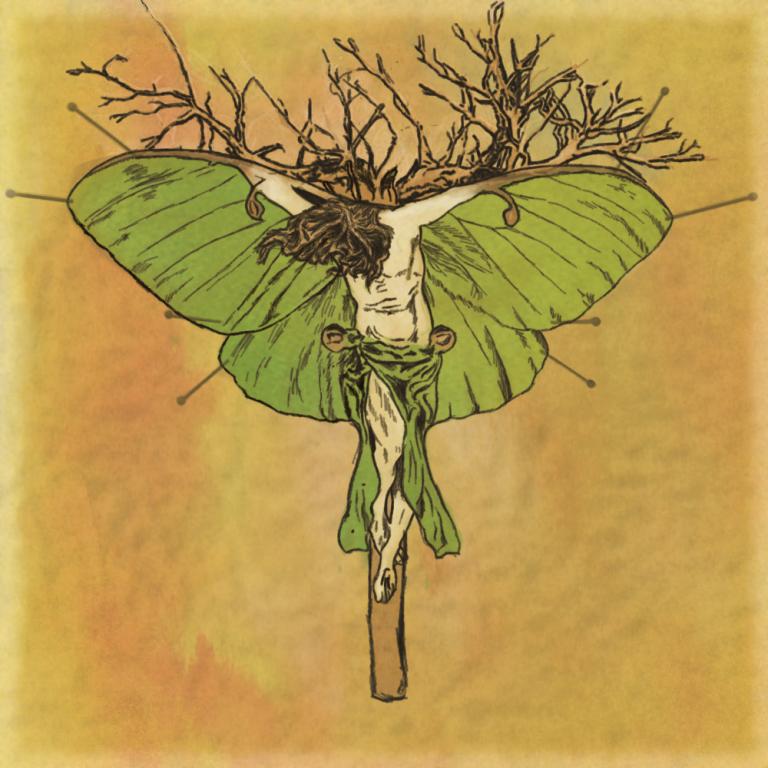
Image credit: pixabay
Stay in touch! Like Catholic Authenticity on Facebook:
Previous Post

November 11, 2016
Closing Time: For Leonard Cohen
Next Post

November 12, 2016 An Elaborate Live Action Role Playing Game
Browse Our Archives
Select a Category Abuse Beauty Charity Chastity Current Events Faith Family Feminism Fiction Humility Humour Identity Justice Perseverence Philosophy Poverty Sexuality trauma Uncategorized Virtues Wombats
Select a Month February 2020 November 2019 October 2019 August 2019 July 2019 June 2019 May 2019 April 2019 March 2019 February 2019 October 2018 September 2018 August 2018 July 2018 June 2018 May 2018 April 2018 March 2018 February 2018 January 2018 December 2017 November 2017 October 2017 September 2017 August 2017 July 2017 June 2017 May 2017 April 2017 March 2017 February 2017 January 2017 December 2016 November 2016 October 2016 September 2016 August 2016 July 2016 June 2016 May 2016 April 2016 March 2016 February 2016 January 2016 December 2015 November 2015 October 2015 September 2015 August 2015 July 2015 June 2015
Follow Us!
TAKE THE
Religious Wisdom Quiz
Who was the king of Babylon during the exile of the Israelites?
Select your answer to see how you score.
Nebuchadnezzar Cyrus Belshazzar Darius
Books by This Author Books by Melinda Selmys
Support this
Column


Related posts from Catholic Authenticity

The Powerlessness of Prayer: On Detaching with Love

The Power of Negative Thinking: On Trauma and...

The Seductive Illusion of Objectivity
TRENDING AT PATHEOS Catholic

Rejecting Doom: Christian Hope And Human Action
Christianity is a religion of hope. We are to have hope and...

It’s What Comes From Within Which Matters
One of the most difficult things for us to understand is why...

Why I Choose the Eucharist Over the Sermon
Choose the Eucharist, Not the Sermon What are we supposed to get...

5 Design Elements Found in Spiritually Rooted Homes
Putting Spirituality Into Home Decor Our homes are more than our living...

Credo: A Story of God Told with the...
About 10 years ago, I began to imagine a personal "Credo" that...

The Anatomy of Divine Revelation in Catholic Thought
The claim that God has made Himself known to human beings is...
view all Catholic blogs
Ad-Free & Subscriber Log-In Subscription Support
- About Us
- 2026 Calendar
- Videos
- Podcasts
- Library of World Religions
- Faith In Media Tracker
- Advertise With Us
- Write for Us
- Privacy Policy
- Terms of Service
- Do Not Sell My Data
- Contact Us
- Radiant Digital
- Manage Newsletter Subscriptions
- Unsubscribe From Notifications
- Sitemap
Copyright 2008-2026, Patheos. All rights reserved.
Subscription Support Ad-Free & Subscriber Log-In
Follow Patheos