
BuddhistCatholicContemplativeEvangelicalGeneral ChristianHinduJewishLatter-day SaintMuslimNew VisionsProgressive Christian
Beliefs
- Buddhist
- Catholic
- Contemplative
- Evangelical
- General Christian
- Hindu
- Jewish
- Latter-day Saint
- More Voices
- Muslim
- New Visions
- Pagan
- Progressive Christian
Topics
- Religion News
- Food and Religion
- Sports and Religion
- Religious Art
- Religious Music and Entertainment
- Religious Events
- History and Religion
- Style and Religion
- Politics and Religion
- Women in Religion
- Recreation Outdoors and Religion
- Business Finance and Religion
- Careers Workplace and Religion
- Education and Religion
- Family Parenting and Religion
- Health Fitness and Religion
- Home and Religion
- Relationships and Religion
- Technology and Religion
- Travel and Religion
Columnists
- Buddhist Columnists
- Business Finance and Religion Columnists
- Careers Workplace and Religion Columnists
- Catholic Columnists
- Contemplative Columnists
- Education and Religion Columnists
- Evangelists Columnists
- Family Parenting and Religion Columnists
- General Christian Columnists
- Health Fitness and Religion Columnists
- Hindu Columnists
- History and Religion Columnists
- Home and Religion Columnists
- Jewish Columnists
- More Voices Columnists
- Latter Day Columnists
- Muslim Columnists
- New Visions Columnists
- Nonreligious Columnists
- Pagan Columnists
- Politics and Religion Columnists
- Progressive Columnists
- Recreation Outdoors and Religion Columnists
- Relationships and Religion Columnists
- Religion News Columnists
- Religious Art Columnists
- Religious Events Columnists
- Religious Music and Entertainment Columnists
- Sports and Religion Columnists
- Style and Religion Columnists
- Technology and Religion Columnists
- Travel and Religion Columnists
- Women in Religion Columnists
Resource Library
- 2026 Calendar
- Library of World Religions
- The 100 Most Holy Places on Earth
- Patheos Answers
- Podcasts
- Videos
- Faith Leaders Database
- Anglican Episcopalian
- Bahai
- Baptist
- Buddhism
- Christianity
- Confucianism
- Eastern Orthodoxy
- Hinduism
- Holiness and Pentecostal
- ISKCON
- Islam
- Judaism
- Lutheran
- Methodist
- The Church of Jesus Christ of Latter-day Saints
- New Age
- Paganism
- Presbytarian and Reformed
- Protestantism
- Religion Behind the Scenes
- Roman Catholic
- Scientology
- Shia Islam
- Sikhism
- Sufism
- Sunni Islam
- Taoism
- Zen
- See all religions
Research Tools
 Ad-Free & Subscriber Log-In Subscription Support
Ad-Free & Subscriber Log-In Subscription Support
Follow Patheos 

- Trending:
- Forgiveness
- |
- Marriage
- |
- Consciousness
- |
- Death Penalty
- |
- Election
- |
- Halloween
 Catholic Authenticity
-
Categories
- Home
- Catholic
- Pope on a Plane: Gender Ideology
Pope on a Plane: Gender Ideology
Last updated on: October 7, 2016 at 2:03 pm by Melinda Selmys
Pope on a Plane: Gender Ideology 2016-10-07T14:03:14-04:00 Melinda Selmys
Patheos Explore the world's faith through different perspectives on religion and spirituality! Patheos has the views of the prevalent religions and spiritualities of the world.
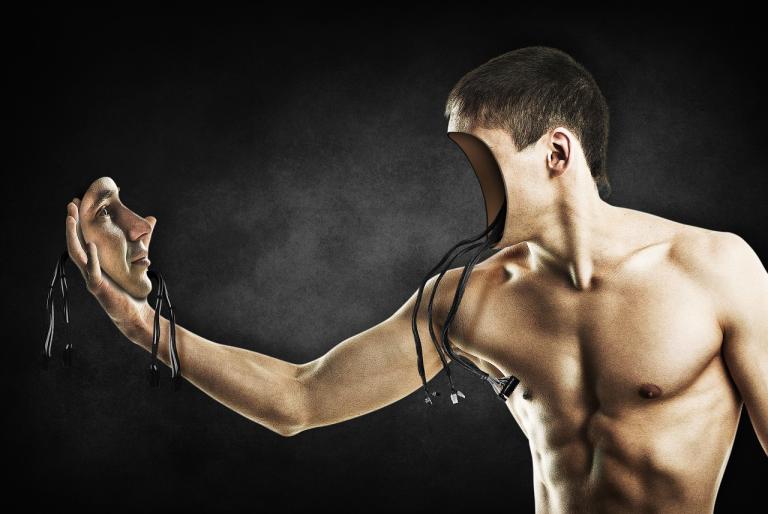
There have been a couple of recent statements from Pope Francis about gender ideology. He calls it a form of “ideological colonization,” a “demonic” plan to destroy the family, and has even likened it to nuclear weapons. At the same time, he welcomed a trans man to the Vatican, and he privately praised the work of a nun who cares for trans women, saying that “‘In Jesus’ time, the lepers were rejected like that. They [the trans women] are the lepers of these times.”
(It may not sound like a flattering comparison, but within the Christian tradition the figure of the leper is the figure of a person who is marginalized, someone who is outcast of the community and treated with disdain, especially by religious leaders. Christ’s reversal of the treatment of lepers (who were formally excluded in the Old Covenant) is one of the paradigmatic images for the New Covenant. The leper ceases to be a symbol of divine punishment, a diseased person who must be quarantined for the sake of the whole community, and becomes instead a person to be loved, welcomed, accepted.)
The question has been how to reconcile, on the one hand, the Pope’s very harsh sayings about gender ideology with his apparent care for trans people. I’ve had my own opinion on how he reconciles those things, but I didn’t want to speculate or put words in the Pope’s mouth. Now I don’t have to, because he’s spoken about it himself.
To understand the divide between pastoral care of trans people, on the one hand, and the condemnation of gender ideology, on the other, it’s important to understand what gender ideology is and why the Church objects to it. One difficulty is that the term “gender ideology” is one that is almost never used outside of relatively conservative Catholic circles. It’s precise meaning is not obvious, and it tends to get applied in a slap-dash way to any number of competing contemporary theories about gender and sexuality.
The closest that I’ve been able to find to a clear definition of what is meant by gender ideology is the definition of gender theory given by Pope Benedict XVI in his Christmas address to the Roman Curia, shortly before he stepped down as pope:
The Chief Rabbi of France, Gilles Bernheim, has shown in a very detailed and profoundly moving study that the attack we are currently experiencing on the true structure of the family, made up of father, mother, and child, goes much deeper. While up to now we regarded a false understanding of the nature of human freedom as one cause of the crisis of the family, it is now becoming clear that the very notion of being – of what being human really means – is being called into question. He quotes the famous saying of Simone de Beauvoir: “one is not born a woman, one becomes so” (on ne naît pas femme, on le devient). These words lay the foundation for what is put forward today under the term “gender” as a new philosophy of sexuality. According to this philosophy, sex is no longer a given element of nature, that man has to accept and personally make sense of: it is a social role that we choose for ourselves, while in the past it was chosen for us by society. The profound falsehood of this theory and of the anthropological revolution contained within it is obvious. People dispute the idea that they have a nature, given by their bodily identity, that serves as a defining element of the human being. They deny their nature and decide that it is not something previously given to them, but that they make it for themselves. According to the biblical creation account, being created by God as male and female pertains to the essence of the human creature. This duality is an essential aspect of what being human is all about, as ordained by God. This very duality as something previously given is what is now disputed. The words of the creation account: “male and female he created them” (Gen 1:27) no longer apply. No, what applies now is this: it was not God who created them male and female – hitherto society did this, now we decide for ourselves. Man and woman as created realities, as the nature of the human being, no longer exist. Man calls his nature into question. From now on he is merely spirit and will.
There are three basic elements in what the Church refers to as “gender ideology” that are troubling from a Catholic perspective.
The first is the decoupling of sexuality from procreation. When gender replaces sex, or when sex is conceived of as an essentially socially constructed phenomenon (usually on the basis that a very small minority of people do not have an easily distinguishable biological sex), the effect is that the reproductive purpose of human sexuality is sidelined, retreating often to the point of near invisibility. It’s not that uncommon, in contemporary sexual discourses, to find that pregnancy appears only in so far as it’s a danger to be avoided. The practical consequences of this are neither imaginary nor doubtful: we now have a culture in which not only do large numbers of men consider it perfectly legitimate to use women for sex and then abandon them to deal with the consequences, but women are routinely told that being used in this way is “liberating” and that if we don’t buy it we’re repressed or “sex-negative.” Reducing pregnancy to an accidental side-effect of human sexuality actually decentres the female body even more than the old phallocentric moralities – a feat which I wouldn’t have thought possible if I hadn’t seen it.
The second is the denial of the divine prerogative in Creation. People “deny their nature and decide that it is not something previously given to them, but that they make it for themselves.” Those familiar with Benedict’s thought will understand immediately what he’s referring to: a set of concerns that extend not only to gender and reproduction, but also to the natural ecology and our relationship with technology. For Benedict, there is a continuity between the modern technocratic vision of the natural world as a set of resources to be exploited and manipulated, and the modern vision of the body as a kind of vehicle or machine which we inhabit, and which we can freely modify in accordance with our will. In Benedict’s theology both the natural world and the body are living systems, infused with divine Creativity, possessed of an innate order and beauty. We receive our bodies, and through our bodies we receive the world. Both are to be used in ways that respect their unique integrity and the originality of God’s design. The reduction of sexuality to a social construct removes God from the equation and asserts in His place a disordered notion of human autonomy. Here Benedict perceives the great tragedy of our age: that for the most part those who are able to see how technological hubris is damaging to the planet are unable to see how it is also damaging to human bodies, and those who are able to see how it is damaging to human bodies are unwilling to accept that it is also damaging the planet.
Thirdly, and finally, Benedict perceives that to divorce sexual identity from embodied reality, it is necessary to divorce the body from the spirit. “From now on [man] is merely spirit and will.” This is actually a very old belief, and one that has persisted more or less continuously throughout human history. The mind/reason/spirit/soul/intellect/will is seen to be the true person, whereas the body and its functions are seen as accidental or debased. Again, the consequences of this philosophy are not negligible. If the body is irrelevant to personhood, then abortion and infanticide (where pre-rational bodies are destroyed) become morally palatable, and suicide becomes a natural right of the human person.
In terms of their widespread effect on human cultures and human moralities, these are not marginal concerns. It’s actually not an exaggeration to say that such a philosophy, taken to its logical conclusion, would entail the destruction of the individual, society, the human race, and the planet. That’s why Pope Francis says that it is demonic: because a deeply destructive notion of human autonomy is hidden behind a moral demand for inclusivity, compassion and acceptance.
But…
The alternative error is just as much an error. A trans person is not a walking embodiment of gender theory. When we reduce any human person, any human body (including a trans body), to a symbol of an ideology we subject it to a reductive assault on the integrity of the person.
So tomorrow, I’ll talk about the other side of the coin: why legitimate objections to gender ideology are not an excuse for shaming, marginalizing or excluding trans people.
Image courtesy of Pixabay.
Previous Post

September 28, 2016
Donald Trump: Make Pro-Life Irrelevant Again
Next Post

October 8, 2016 Pope on a Plane II: Gender Minorities
Browse Our Archives
Select a Category Abuse Beauty Charity Chastity Current Events Faith Family Feminism Fiction Humility Humour Identity Justice Perseverence Philosophy Poverty Sexuality trauma Uncategorized Virtues Wombats
Select a Month February 2020 November 2019 October 2019 August 2019 July 2019 June 2019 May 2019 April 2019 March 2019 February 2019 October 2018 September 2018 August 2018 July 2018 June 2018 May 2018 April 2018 March 2018 February 2018 January 2018 December 2017 November 2017 October 2017 September 2017 August 2017 July 2017 June 2017 May 2017 April 2017 March 2017 February 2017 January 2017 December 2016 November 2016 October 2016 September 2016 August 2016 July 2016 June 2016 May 2016 April 2016 March 2016 February 2016 January 2016 December 2015 November 2015 October 2015 September 2015 August 2015 July 2015 June 2015
Follow Us!
TAKE THE
Religious Wisdom Quiz
Blessed are the poor in spirit, for theirs is the kingdom of ____.
Select your answer to see how you score.
God Heaven Grace Truth
Books by This Author Books by Melinda Selmys
Support this
Column


Related posts from Catholic Authenticity

Sex Positive: How I Learned To Stop Worrying...


A Biblical Account of Toxic Femininity

TRENDING AT PATHEOS Catholic

Rejecting Doom: Christian Hope And Human Action
Christianity is a religion of hope. We are to have hope and...

It’s What Comes From Within Which Matters
One of the most difficult things for us to understand is why...

Why I Choose the Eucharist Over the Sermon
Choose the Eucharist, Not the Sermon What are we supposed to get...

5 Design Elements Found in Spiritually Rooted Homes
Putting Spirituality Into Home Decor Our homes are more than our living...

Credo: A Story of God Told with the...
About 10 years ago, I began to imagine a personal "Credo" that...

The Anatomy of Divine Revelation in Catholic Thought
The claim that God has made Himself known to human beings is...
view all Catholic blogs
Ad-Free & Subscriber Log-In Subscription Support
- About Us
- 2026 Calendar
- Videos
- Podcasts
- Library of World Religions
- Faith In Media Tracker
- Advertise With Us
- Write for Us
- Privacy Policy
- Terms of Service
- Do Not Sell My Data
- Contact Us
- Radiant Digital
- Manage Newsletter Subscriptions
- Unsubscribe From Notifications
- Sitemap
Copyright 2008-2026, Patheos. All rights reserved.
Subscription Support Ad-Free & Subscriber Log-In
Follow Patheos