
BuddhistCatholicContemplativeEvangelicalGeneral ChristianHinduJewishLatter-day SaintMuslimNew VisionsProgressive Christian
Beliefs
- Buddhist
- Catholic
- Contemplative
- Evangelical
- General Christian
- Hindu
- Jewish
- Latter-day Saint
- More Voices
- Muslim
- New Visions
- Pagan
- Progressive Christian
Topics
- Religion News
- Food and Religion
- Sports and Religion
- Religious Art
- Religious Music and Entertainment
- Religious Events
- History and Religion
- Style and Religion
- Politics and Religion
- Women in Religion
- Recreation Outdoors and Religion
- Business Finance and Religion
- Careers Workplace and Religion
- Education and Religion
- Family Parenting and Religion
- Health Fitness and Religion
- Home and Religion
- Relationships and Religion
- Technology and Religion
- Travel and Religion
Columnists
- Buddhist Columnists
- Business Finance and Religion Columnists
- Careers Workplace and Religion Columnists
- Catholic Columnists
- Contemplative Columnists
- Education and Religion Columnists
- Evangelists Columnists
- Family Parenting and Religion Columnists
- General Christian Columnists
- Health Fitness and Religion Columnists
- Hindu Columnists
- History and Religion Columnists
- Home and Religion Columnists
- Jewish Columnists
- More Voices Columnists
- Latter Day Columnists
- Muslim Columnists
- New Visions Columnists
- Nonreligious Columnists
- Pagan Columnists
- Politics and Religion Columnists
- Progressive Columnists
- Recreation Outdoors and Religion Columnists
- Relationships and Religion Columnists
- Religion News Columnists
- Religious Art Columnists
- Religious Events Columnists
- Religious Music and Entertainment Columnists
- Sports and Religion Columnists
- Style and Religion Columnists
- Technology and Religion Columnists
- Travel and Religion Columnists
- Women in Religion Columnists
Resource Library
- 2026 Calendar
- Library of World Religions
- The 100 Most Holy Places on Earth
- Patheos Answers
- Podcasts
- Videos
- Faith Leaders Database
- Anglican Episcopalian
- Bahai
- Baptist
- Buddhism
- Christianity
- Confucianism
- Eastern Orthodoxy
- Hinduism
- Holiness and Pentecostal
- ISKCON
- Islam
- Judaism
- Lutheran
- Methodist
- The Church of Jesus Christ of Latter-day Saints
- New Age
- Paganism
- Presbytarian and Reformed
- Protestantism
- Religion Behind the Scenes
- Roman Catholic
- Scientology
- Shia Islam
- Sikhism
- Sufism
- Sunni Islam
- Taoism
- Zen
- See all religions
Research Tools
 Ad-Free & Subscriber Log-In Subscription Support
Ad-Free & Subscriber Log-In Subscription Support
Follow Patheos 

- Trending:
- Forgiveness
- |
- Marriage
- |
- Consciousness
- |
- Death Penalty
- |
- Election
- |
- Halloween
 Catholic Authenticity
-
Categories
- Home
- Catholic
- Why I Need Atheism
Why I Need Atheism
Last updated on: August 3, 2016 at 11:27 am by Melinda Selmys
Why I Need Atheism 2016-08-03T11:27:44-04:00 Melinda Selmys
Patheos Explore the world's faith through different perspectives on religion and spirituality! Patheos has the views of the prevalent religions and spiritualities of the world.
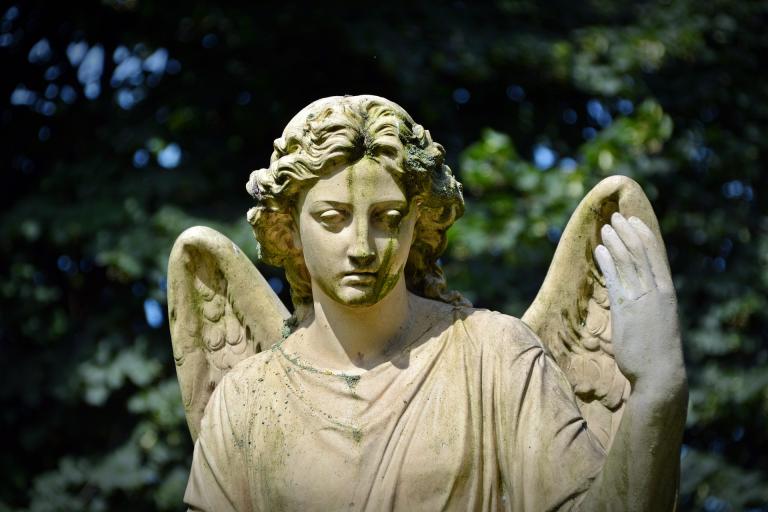
On a recent post, 3vil5triker asked whether all ideas of God are not a form of idolatry that leads us to accept authority in defiance of reason and conscience.
I like this question, mostly because it illustrates the very important sense in which atheism is a kind of faithfulness to God. I don’t mean this as an appropriation of atheists into my own belief structure, but rather as a nod of respect to my atheist siblings and to the good that they bring to the table in our search for truth.
The answer to the question is, in a sense, yes. All concepts of God are essentially constructs. They have the capacity to serve as icons, illuminating or at least pointing in the direction of a mystery. They also all have the capacity to function as idols, as a replacement for the radical Otherness of divinity.
This Otherness is really difficult to keep a handle on, because we want to make God our own – but God will not be constrained in this way. The Bible, for example, is basically the story of a massive tug-of-war between the Jewish people (who want God to be their tribal war god) and God, who wants to assert a fundamentally more inclusive identity as the author of all Creation. This tension between our desire to appropriate God as a means to our own, usually fairly petty, ends and our desire to know God qua God is at the heart of all spiritual experience, and it is the essence of the First Commandment.
I recall, several years ago, there came a day when I was completely frustrated with certain aspects of Catholicism as I had received it. I said in my heart, “I’m finished. I think that I’m an atheist.” There was a tremendous relief associated with this realization, as though I had just laid down a massive and wholly unnecessary burden. I did not believe. All was well.
A small, quiet voice within replied, “Why?”
I paused for a moment, breathing, feeling the lightness of my own surrender. “So that I can worship the Good, the Beautiful and the True for no reason except that it is Good, Beautiful and True.”
God, with a small laugh, replied, “And who is the Good, the Beautiful and the True?”
It was one of those moments of wry tenderness that I treasure most in my relationship with God. So of course I went on believing.
But not in the same way.
What my fifteen seconds of atheism taught me was that I cannot allow a religious system to take the place of God. If I arrive at a point where dogma becomes an obstacle to the exercise of reason and conscience, I’ve made an error: I’m no longer worshiping God, I’m worshiping a system of theology and a system of morality which – though good – are ultimately the “work of human hands.” This work has to be repeatedly sacrificed on the altar of mystery or else it becomes a kind of stagnant intellectual wealth that ultimately enslaves and condemns the soul.
The great risk in all religion is the tendency of human beings to break the second commandment, to “take the name of the Lord in vain” by invoking it to champion their own worldly causes. God gets called in, more or less constantly, to support everything from private revelations, to political candidates, to academic theories. God is thus appropriated and reduced to a particular system, practice or agenda.
Atheism resists this. Not all atheisms – it is perfectly possible to be an atheist for petty or evil reasons – but at its noblest, atheism is a refusal to see God mocked by the self-important casuistries of worldly religion.
Image credit: pixabay
Stay in touch! Like Catholic Authenticity on Facebook:
Previous Post

July 30, 2016
Aquinas, Zhaozhou, and Derrida Walk Into a Bar...
Next Post

August 4, 2016 What Trump Has Done For My Faith
Browse Our Archives
Select a Category Abuse Beauty Charity Chastity Current Events Faith Family Feminism Fiction Humility Humour Identity Justice Perseverence Philosophy Poverty Sexuality trauma Uncategorized Virtues Wombats
Select a Month February 2020 November 2019 October 2019 August 2019 July 2019 June 2019 May 2019 April 2019 March 2019 February 2019 October 2018 September 2018 August 2018 July 2018 June 2018 May 2018 April 2018 March 2018 February 2018 January 2018 December 2017 November 2017 October 2017 September 2017 August 2017 July 2017 June 2017 May 2017 April 2017 March 2017 February 2017 January 2017 December 2016 November 2016 October 2016 September 2016 August 2016 July 2016 June 2016 May 2016 April 2016 March 2016 February 2016 January 2016 December 2015 November 2015 October 2015 September 2015 August 2015 July 2015 June 2015
Follow Us!
TAKE THE
Religious Wisdom Quiz
I am twelve men sent to explore the Promised Land, but only two gave a good report. Who are we?
Select your answer to see how you score.
Explorers The twelve spies Leaders of Israel Messengers
Books by This Author Books by Melinda Selmys
Support this
Column


Related posts from Catholic Authenticity

The Lord Has Worked Marvels For Me: Open...

The Central Spiritual Struggle of Women: Open Letter,...

An Open Letter to the Young Rad-Trad Women

Maybe It's Okay That Man Should Be Alone
TRENDING AT PATHEOS Catholic

Rejecting Doom: Christian Hope And Human Action
Christianity is a religion of hope. We are to have hope and...

It’s What Comes From Within Which Matters
One of the most difficult things for us to understand is why...

Why I Choose the Eucharist Over the Sermon
Choose the Eucharist, Not the Sermon What are we supposed to get...

5 Design Elements Found in Spiritually Rooted Homes
Putting Spirituality Into Home Decor Our homes are more than our living...

Credo: A Story of God Told with the...
About 10 years ago, I began to imagine a personal "Credo" that...

The Anatomy of Divine Revelation in Catholic Thought
The claim that God has made Himself known to human beings is...
view all Catholic blogs
Ad-Free & Subscriber Log-In Subscription Support
- About Us
- 2026 Calendar
- Videos
- Podcasts
- Library of World Religions
- Faith In Media Tracker
- Advertise With Us
- Write for Us
- Privacy Policy
- Terms of Service
- Do Not Sell My Data
- Contact Us
- Radiant Digital
- Manage Newsletter Subscriptions
- Unsubscribe From Notifications
- Sitemap
Copyright 2008-2026, Patheos. All rights reserved.
Subscription Support Ad-Free & Subscriber Log-In
Follow Patheos