
BuddhistCatholicContemplativeEvangelicalGeneral ChristianHinduJewishLatter-day SaintMuslimNew VisionsProgressive Christian
Beliefs
- Buddhist
- Catholic
- Contemplative
- Evangelical
- General Christian
- Hindu
- Jewish
- Latter-day Saint
- More Voices
- Muslim
- New Visions
- Pagan
- Progressive Christian
Topics
- Religion News
- Food and Religion
- Sports and Religion
- Religious Art
- Religious Music and Entertainment
- Religious Events
- History and Religion
- Style and Religion
- Politics and Religion
- Women in Religion
- Recreation Outdoors and Religion
- Business Finance and Religion
- Careers Workplace and Religion
- Education and Religion
- Family Parenting and Religion
- Health Fitness and Religion
- Home and Religion
- Relationships and Religion
- Technology and Religion
- Travel and Religion
Columnists
- Buddhist Columnists
- Business Finance and Religion Columnists
- Careers Workplace and Religion Columnists
- Catholic Columnists
- Contemplative Columnists
- Education and Religion Columnists
- Evangelists Columnists
- Family Parenting and Religion Columnists
- General Christian Columnists
- Health Fitness and Religion Columnists
- Hindu Columnists
- History and Religion Columnists
- Home and Religion Columnists
- Jewish Columnists
- More Voices Columnists
- Latter Day Columnists
- Muslim Columnists
- New Visions Columnists
- Nonreligious Columnists
- Pagan Columnists
- Politics and Religion Columnists
- Progressive Columnists
- Recreation Outdoors and Religion Columnists
- Relationships and Religion Columnists
- Religion News Columnists
- Religious Art Columnists
- Religious Events Columnists
- Religious Music and Entertainment Columnists
- Sports and Religion Columnists
- Style and Religion Columnists
- Technology and Religion Columnists
- Travel and Religion Columnists
- Women in Religion Columnists
Resource Library
- 2026 Calendar
- Library of World Religions
- The 100 Most Holy Places on Earth
- Patheos Answers
- Podcasts
- Videos
- Faith Leaders Database
- Anglican Episcopalian
- Bahai
- Baptist
- Buddhism
- Christianity
- Confucianism
- Eastern Orthodoxy
- Hinduism
- Holiness and Pentecostal
- ISKCON
- Islam
- Judaism
- Lutheran
- Methodist
- The Church of Jesus Christ of Latter-day Saints
- New Age
- Paganism
- Presbytarian and Reformed
- Protestantism
- Religion Behind the Scenes
- Roman Catholic
- Scientology
- Shia Islam
- Sikhism
- Sufism
- Sunni Islam
- Taoism
- Zen
- See all religions
Research Tools
 Ad-Free & Subscriber Log-In Subscription Support
Ad-Free & Subscriber Log-In Subscription Support
Follow Patheos 

- Trending:
- Forgiveness
- |
- Marriage
- |
- Consciousness
- |
- Death Penalty
- |
- Election
- |
- Halloween
 Catholic Authenticity
-
Categories
- Home
- Catholic
- The Social Justice Movement’s Modest Proposal
The Social Justice Movement’s Modest Proposal
Last updated on: May 28, 2016 at 12:39 pm by Melinda Selmys
The Social Justice Movement’s Modest Proposal 2016-05-28T12:39:48-04:00 Melinda Selmys
Patheos Explore the world's faith through different perspectives on religion and spirituality! Patheos has the views of the prevalent religions and spiritualities of the world.
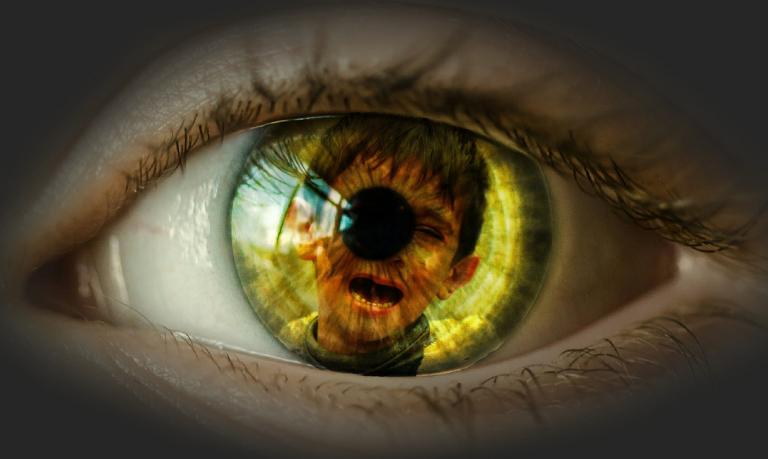
Yesterday, I talked about the failure of the pro-life movement in upholding the sanctity of life after birth. Today, I want to talk about the other side of the problem: how the social justice movement betrays the poor. I’ll start with a story, set in a dystopian near-future world that is more or less exactly the same as the world is now.
It concerns a woman, we’ll call her Lisa. She has three children, and she’s desperately poor. She works, but she isn’t paid enough to make a basic living. People tell her that she needs a better education, but the fact is that she’s a victim of a tacit assumption: that everybody has the set of abilities required to make it in college. Lisa did, after several attempts, manage to scrape together an SAT score high enough to get into her local state school, and she still carries the student debt that she accumulated before she flunked out. People assume that she was lazy, that she didn’t try hard enough, and she is left with the crushing shame of knowing the truth: that she tried her best and it wasn’t good enough.
Maybe if she’d been black or had a diagnosed disability she’d have been given help. Someone would have cut her some slack. Someone would have advocated for her, or pointed out that it was racist to expect her to be a fluent in a Standard White English that Lisa and her folks have never spoken. Someone would have made allowances for the effects of intergenerational poverty and systemic discrimination. But she’s “white trash.” A demographic more or less universally reviled. She is reviled by the right because she is an unmarried mother with three children by two different fathers, and she relies on food stamps to feed her kids. She’s reviled by the left because she is a white Bible-believing Christian with a hillbilly accent. When she tries to tell her story on social media, instead of inviting her voice into the conversation, centering her narrative, respecting her culture, the defenders of social justice mock her for her religious beliefs and deride her for having bad grammar and being unable to spell.
Until recently, Lisa has been scraping by. Her current boyfriend is an alcoholic, he’s sometimes abusive and he’s in and out of her life but at least he has a job and pays child support for the two kids that are his. (The other baby daddy is long gone, she doesn’t even know how she would try to track him down.) One night, her boyfriend shows up and tells her to drive him to the liquor store. It’s late, she tells him it will be closed but he insists it will be open. They get there, and it looks closed to her. He’s gone for a while and then comes back with a crate that he stashes in the trunk. How could he afford that? Big win at the betting shop. Now shut up and drive.
The police show up the next morning. The DA is not completely convinced by her story, that she didn’t realize she was a getaway driver. But there’s a plea bargain and she ends up with a fine and some community service. Mercy, right? Except that now her boyfriend is in prison, she has no way to pay the fine and nobody that she can leave the kids with while she does her community service.
She’s desperate. So she goes to a local organization that’s been set up to help women in crisis, and she explains her situation. A very kindly, but wealthy looking woman smiles and nods and eventually says, “Well, it seems like you can’t really afford to support the children that you have.” She adds up the childcare costs, the rent, the cost of basic necessities. “But that’s okay,” she says with great compassion. “I see that one of your children is too young to talk. And a baby doesn’t really become a person in any meaningful moral sense until it acquires the capacity for language. So here’s a clinic that you can go to, and they’ll just put the baby to sleep. It’s very easy, and it’ll mean that you have the time and the resources to care properly for your other two children.”
Okay, so obviously this is not science fiction. It’s just reality. For millions of mothers, the reality is that the social justice movement has sold them out. Instead of offering them the support that they desperately need, it offers them the hideous opportunity to destroy their children so that they won’t have to suffer the economic burdens of motherhood.
For a lot of these women, this is not a liberating “choice.” It’s no choice at all. They endure the anguish of trying to come up with a way to make it work, of knowing that they are destroying a life, and then they try to convince themselves that what the nice, rich woman said is true. That their unborn child is not really a child. But they don’t really believe it and they carry the guilt for the rest of their life.
This is a shameful failure, not on the part of poor women, but on the part of the social justice movement. Abortion is not merely offered as an option for women who don’t want to be pregnant, it is offered – quite explicitly in many cases – as a final solution for the poor. Instead of alleviating the root causes of poverty, or providing immediate material aid, we address poverty by eliminating the poor before they are born. This is right there in the rhetoric: by reducing the number of hungry mouths, we make it possible to feed those who are already born. The fact that what we are actually doing is killing children in order to obviate our responsibility to feed them gets shuffled out of the picture by a shift of focus towards a woman’s right to autonomy over her own body. The fact that many women, given meaningful autonomy over their own bodies would choose not to have their wombs turned into killing fields is ignored. The fact that there is a massive conflict of interest between this idea of “safeguarding women’s autonomy” and this idea of “reducing excess population” is never acknowledged.
And the reality is, overwhelmingly, that the people who “choose” abortion are the desperate poor: women who functionally do not have a choice. The easy out of abortion allows the social justice movement to offer a “compassionate” solution that costs the wealthy and the complacent nothing. It enables our society to perpetuate systems of increasingly dire economic injustice by literally destroying the evidence in the form of invisible human lives.
What we need is an integrated pro-life/social justice movement. A movement that actually believes in the value, dignity, and worth of human life at all stages, in all conditions. Popes have observed the intimate connection between the right-to-life in the womb and the right to economic justice going back at least as far as Evangelium Vitae. Yet consistently Catholics have chosen to betray either one or the other of these essential tenets of Christian moral theology – either dismissing social justice concerns in a myopic war against abortion, or throwing unborn children under the bus in the name of social justice.
Image credit: pixabay
Stay in touch! Like Catholic Authenticity on Facebook:
Previous Post

May 27, 2016
The Decline and Fall of the Pro-Life Movement
Next Post

May 28, 2016 Life Lessons I've Learned From My Characters: Juvenal
Browse Our Archives
Select a Category Abuse Beauty Charity Chastity Current Events Faith Family Feminism Fiction Humility Humour Identity Justice Perseverence Philosophy Poverty Sexuality trauma Uncategorized Virtues Wombats
Select a Month February 2020 November 2019 October 2019 August 2019 July 2019 June 2019 May 2019 April 2019 March 2019 February 2019 October 2018 September 2018 August 2018 July 2018 June 2018 May 2018 April 2018 March 2018 February 2018 January 2018 December 2017 November 2017 October 2017 September 2017 August 2017 July 2017 June 2017 May 2017 April 2017 March 2017 February 2017 January 2017 December 2016 November 2016 October 2016 September 2016 August 2016 July 2016 June 2016 May 2016 April 2016 March 2016 February 2016 January 2016 December 2015 November 2015 October 2015 September 2015 August 2015 July 2015 June 2015
Follow Us!
TAKE THE
Religious Wisdom Quiz
I asked for wisdom above all else, and God granted me riches and honor as well. Who am I?
Select your answer to see how you score.
Solomon Hezekiah Josiah David
Books by This Author Books by Melinda Selmys
Support this
Column


Related posts from Catholic Authenticity


Get Behind Me, Tony Esolen: Stop Making Marriage...
8 Ways Catholics May Enable Domestic Abuse
Sexual Coercion and Spousal Rape: What the Church...
TRENDING AT PATHEOS Catholic

Rejecting Doom: Christian Hope And Human Action
Christianity is a religion of hope. We are to have hope and...

It’s What Comes From Within Which Matters
One of the most difficult things for us to understand is why...

Why I Choose the Eucharist Over the Sermon
Choose the Eucharist, Not the Sermon What are we supposed to get...

5 Design Elements Found in Spiritually Rooted Homes
Putting Spirituality Into Home Decor Our homes are more than our living...

Credo: A Story of God Told with the...
About 10 years ago, I began to imagine a personal "Credo" that...

The Anatomy of Divine Revelation in Catholic Thought
The claim that God has made Himself known to human beings is...
view all Catholic blogs
Ad-Free & Subscriber Log-In Subscription Support
- About Us
- 2026 Calendar
- Videos
- Podcasts
- Library of World Religions
- Faith In Media Tracker
- Advertise With Us
- Write for Us
- Privacy Policy
- Terms of Service
- Do Not Sell My Data
- Contact Us
- Radiant Digital
- Manage Newsletter Subscriptions
- Unsubscribe From Notifications
- Sitemap
Copyright 2008-2026, Patheos. All rights reserved.
Subscription Support Ad-Free & Subscriber Log-In
Follow Patheos