
BuddhistCatholicContemplativeEvangelicalGeneral ChristianHinduJewishLatter-day SaintMuslimNew VisionsProgressive Christian
Beliefs
- Buddhist
- Catholic
- Contemplative
- Evangelical
- General Christian
- Hindu
- Jewish
- Latter-day Saint
- More Voices
- Muslim
- New Visions
- Pagan
- Progressive Christian
Topics
- Religion News
- Food and Religion
- Sports and Religion
- Religious Art
- Religious Music and Entertainment
- Religious Events
- History and Religion
- Style and Religion
- Politics and Religion
- Women in Religion
- Recreation Outdoors and Religion
- Business Finance and Religion
- Careers Workplace and Religion
- Education and Religion
- Family Parenting and Religion
- Health Fitness and Religion
- Home and Religion
- Relationships and Religion
- Technology and Religion
- Travel and Religion
Columnists
- Buddhist Columnists
- Business Finance and Religion Columnists
- Careers Workplace and Religion Columnists
- Catholic Columnists
- Contemplative Columnists
- Education and Religion Columnists
- Evangelists Columnists
- Family Parenting and Religion Columnists
- General Christian Columnists
- Health Fitness and Religion Columnists
- Hindu Columnists
- History and Religion Columnists
- Home and Religion Columnists
- Jewish Columnists
- More Voices Columnists
- Latter Day Columnists
- Muslim Columnists
- New Visions Columnists
- Nonreligious Columnists
- Pagan Columnists
- Politics and Religion Columnists
- Progressive Columnists
- Recreation Outdoors and Religion Columnists
- Relationships and Religion Columnists
- Religion News Columnists
- Religious Art Columnists
- Religious Events Columnists
- Religious Music and Entertainment Columnists
- Sports and Religion Columnists
- Style and Religion Columnists
- Technology and Religion Columnists
- Travel and Religion Columnists
- Women in Religion Columnists
Resource Library
- 2026 Calendar
- Library of World Religions
- The 100 Most Holy Places on Earth
- Patheos Answers
- Podcasts
- Videos
- Faith Leaders Database
- Anglican Episcopalian
- Bahai
- Baptist
- Buddhism
- Christianity
- Confucianism
- Eastern Orthodoxy
- Hinduism
- Holiness and Pentecostal
- ISKCON
- Islam
- Judaism
- Lutheran
- Methodist
- The Church of Jesus Christ of Latter-day Saints
- New Age
- Paganism
- Presbytarian and Reformed
- Protestantism
- Religion Behind the Scenes
- Roman Catholic
- Scientology
- Shia Islam
- Sikhism
- Sufism
- Sunni Islam
- Taoism
- Zen
- See all religions
Research Tools
 Ad-Free & Subscriber Log-In Subscription Support
Ad-Free & Subscriber Log-In Subscription Support
Follow Patheos 

- Trending:
- Forgiveness
- |
- Marriage
- |
- Consciousness
- |
- Death Penalty
- |
- Election
- |
- Halloween
 Catholic Authenticity
-
Categories
- Home
- Catholic
- Vocation of Forgiveness
Vocation of Forgiveness
Last updated on: April 13, 2016 at 2:58 pm by Melinda Selmys
Vocation of Forgiveness 2016-04-13T14:58:03-04:00 Melinda Selmys
Patheos Explore the world's faith through different perspectives on religion and spirituality! Patheos has the views of the prevalent religions and spiritualities of the world.
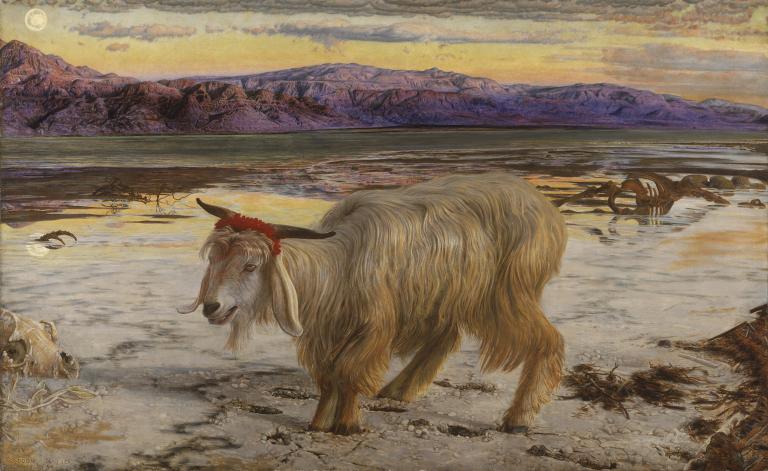
William Holman Hunt: The Scapegoat, 1854.
“He is to lay both hands on the head of the live goat and confess over it all the wickedness and rebellion of the Israelites—all their sins—and put them on the goat’s head. He shall send the goat away into the wilderness in the care of someone appointed for the task. The goat will carry on itself all their sins to a remote place; and the man shall release it in the wilderness.” (Lev 16:21-22)
When I was a young atheist one of the emotions that I was most suspicious of was guilt. I think that on some deep, visceral level I sensed that there is a huge destructive capacity latent in the human ability to feel bad about things that we’ve done in the past. Since I didn’t have a religion, and I subscribed to an existentialist philosophy that placed supreme moral responsibility on the individual, there wasn’t really a way of expiating these feelings. I believed very strongly in the goodness of regret (which I defined as a rational acknowledgment of having done something wrong, coupled with a determination to try to do better in the future.) I believed in taking responsibility for my own mistakes, apologizing for them when appropriate, and making amends if possible. But guilt seemed to be something stronger and more perilous than that.
It’s something that I’ve continued to grapple with as a Catholic. Basically, my atheistic intuitions about guilt seem to be more or less accurate: if I’ve done something that I regret, even if I’ve said sorry, and have done my best to fix the situation, and have made a sincere resolution to do better in the future, there is still a residual negative feeling. On some level I’m aware that all of my best attempts to make things better are insufficient. There are consequences that linger and that I cannot take away.
While it’s true that feeling bad about residual guilt is not productive, merely trying to repress guilt feelings is also unhealthy. My own attempts to completely eradicate guilt from my psyche never actually resulted in a release from feelings of inadequacy, they just pushed those feelings deeper into myself. I felt momentarily liberated, and then quickly found myself labouring under the weight of a thick, inscrutable cloud of existential dread.
Ritual atonement is a way of expiating the guilt that haunts us after we have made amends for our sins. In the modern world, we tend to have a pretty negative view of this practice. Scapegoating, as we see it, is a way of escaping from our own responsibilities by offloading them on to others. We take our feelings of guilt and we project them onto some other person or group of people. So, for example, the vilification of poor urban black communities serves as a way for poor rural white communities to offload their fear that they have brought about their own poverty through sloth or profligacy. The demonization of LGBTQ people allows Christian communities to do away with feelings of guilt over widespread divorce, pornography and other sexual sins. Contempt for the Christian Right allows liberals to expiate their own responsibility for sins of judgment and intolerance.
In one way or another, the Other becomes an icon of everything that we, ourselves, are doing wrong. In heaping abuse on the heads of those people over there, we are able to feel relief from our own inadequacies.
Ritual scapegoating performed, I think, the precise opposite function. In the ritual the entire community came together and their sins were spoken over the goat before it was driven out into the wilderness. In other words, everyone involved in the ritual had an opportunity to quietly, in communion with everyone else there, admit their own faults. They were also reminded that these faults were common: no particular individual or group of individuals within the community was singled out. Everyone heard their own sins spoken alongside the sins that they had not personally committed. And then all of these sins, together, were driven out into the wilderness.
Editors’ Note: This article is part of the Patheos Public Square on Sacrifice: Religions and the Role of the Scapegoat. Read other perspectives here.
Image Credit: “The Scapegoat” By William Holman Hunt – Козёл отпущения, Public Domain, https://commons.wikimedia.org/w/index.php?curid=6053842
Previous Post
April 10, 2016
Amoris Laetitia Needs to Give Sinners More Stick, Less Carrot, Yeah?

Browse Our Archives
Select a Category Abuse Beauty Charity Chastity Current Events Faith Family Feminism Fiction Humility Humour Identity Justice Perseverence Philosophy Poverty Sexuality trauma Uncategorized Virtues Wombats
Select a Month February 2020 November 2019 October 2019 August 2019 July 2019 June 2019 May 2019 April 2019 March 2019 February 2019 October 2018 September 2018 August 2018 July 2018 June 2018 May 2018 April 2018 March 2018 February 2018 January 2018 December 2017 November 2017 October 2017 September 2017 August 2017 July 2017 June 2017 May 2017 April 2017 March 2017 February 2017 January 2017 December 2016 November 2016 October 2016 September 2016 August 2016 July 2016 June 2016 May 2016 April 2016 March 2016 February 2016 January 2016 December 2015 November 2015 October 2015 September 2015 August 2015 July 2015 June 2015
Follow Us!
TAKE THE
Religious Wisdom Quiz
What does Hebrews say we have as an anchor for the soul?
Select your answer to see how you score.
The word of God Faith Love Hope
Books by This Author Books by Melinda Selmys
Support this
Column


Related posts from Catholic Authenticity

The Lord Has Worked Marvels For Me: Open...

The Central Spiritual Struggle of Women: Open Letter,...

An Open Letter to the Young Rad-Trad Women

Maybe It's Okay That Man Should Be Alone
TRENDING AT PATHEOS Catholic

Rejecting Doom: Christian Hope And Human Action
Christianity is a religion of hope. We are to have hope and...

It’s What Comes From Within Which Matters
One of the most difficult things for us to understand is why...

Why I Choose the Eucharist Over the Sermon
Choose the Eucharist, Not the Sermon What are we supposed to get...

5 Design Elements Found in Spiritually Rooted Homes
Putting Spirituality Into Home Decor Our homes are more than our living...

Credo: A Story of God Told with the...
About 10 years ago, I began to imagine a personal "Credo" that...

The Anatomy of Divine Revelation in Catholic Thought
The claim that God has made Himself known to human beings is...
view all Catholic blogs
Ad-Free & Subscriber Log-In Subscription Support
- About Us
- 2026 Calendar
- Videos
- Podcasts
- Library of World Religions
- Faith In Media Tracker
- Advertise With Us
- Write for Us
- Privacy Policy
- Terms of Service
- Do Not Sell My Data
- Contact Us
- Radiant Digital
- Manage Newsletter Subscriptions
- Unsubscribe From Notifications
- Sitemap
Copyright 2008-2026, Patheos. All rights reserved.
Subscription Support Ad-Free & Subscriber Log-In
Follow Patheos