
BuddhistCatholicContemplativeEvangelicalGeneral ChristianHinduJewishLatter-day SaintMuslimNew VisionsProgressive Christian
Beliefs
- Buddhist
- Catholic
- Contemplative
- Evangelical
- General Christian
- Hindu
- Jewish
- Latter-day Saint
- More Voices
- Muslim
- New Visions
- Pagan
- Progressive Christian
Topics
- Religion News
- Food and Religion
- Sports and Religion
- Religious Art
- Religious Music and Entertainment
- Religious Events
- History and Religion
- Style and Religion
- Politics and Religion
- Women in Religion
- Recreation Outdoors and Religion
- Business Finance and Religion
- Careers Workplace and Religion
- Education and Religion
- Family Parenting and Religion
- Health Fitness and Religion
- Home and Religion
- Relationships and Religion
- Technology and Religion
- Travel and Religion
Columnists
- Buddhist Columnists
- Business Finance and Religion Columnists
- Careers Workplace and Religion Columnists
- Catholic Columnists
- Contemplative Columnists
- Education and Religion Columnists
- Evangelists Columnists
- Family Parenting and Religion Columnists
- General Christian Columnists
- Health Fitness and Religion Columnists
- Hindu Columnists
- History and Religion Columnists
- Home and Religion Columnists
- Jewish Columnists
- More Voices Columnists
- Latter Day Columnists
- Muslim Columnists
- New Visions Columnists
- Nonreligious Columnists
- Pagan Columnists
- Politics and Religion Columnists
- Progressive Columnists
- Recreation Outdoors and Religion Columnists
- Relationships and Religion Columnists
- Religion News Columnists
- Religious Art Columnists
- Religious Events Columnists
- Religious Music and Entertainment Columnists
- Sports and Religion Columnists
- Style and Religion Columnists
- Technology and Religion Columnists
- Travel and Religion Columnists
- Women in Religion Columnists
Resource Library
- 2026 Calendar
- Library of World Religions
- The 100 Most Holy Places on Earth
- Patheos Answers
- Podcasts
- Videos
- Faith Leaders Database
- Anglican Episcopalian
- Bahai
- Baptist
- Buddhism
- Christianity
- Confucianism
- Eastern Orthodoxy
- Hinduism
- Holiness and Pentecostal
- ISKCON
- Islam
- Judaism
- Lutheran
- Methodist
- The Church of Jesus Christ of Latter-day Saints
- New Age
- Paganism
- Presbytarian and Reformed
- Protestantism
- Religion Behind the Scenes
- Roman Catholic
- Scientology
- Shia Islam
- Sikhism
- Sufism
- Sunni Islam
- Taoism
- Zen
- See all religions
Research Tools
 Ad-Free & Subscriber Log-In Subscription Support
Ad-Free & Subscriber Log-In Subscription Support
Follow Patheos 

- Trending:
- Forgiveness
- |
- Marriage
- |
- Consciousness
- |
- Death Penalty
- |
- Election
- |
- Halloween
 Catholic Authenticity
-
Categories
- Home
- Catholic
- You’re Not Pro-Life if You’re Not Pro-Child
You’re Not Pro-Life if You’re Not Pro-Child
Last updated on: March 18, 2016 at 3:53 pm by Melinda Selmys
You’re Not Pro-Life if You’re Not Pro-Child 2016-03-18T15:53:07-04:00 Melinda Selmys
Patheos Explore the world's faith through different perspectives on religion and spirituality! Patheos has the views of the prevalent religions and spiritualities of the world.
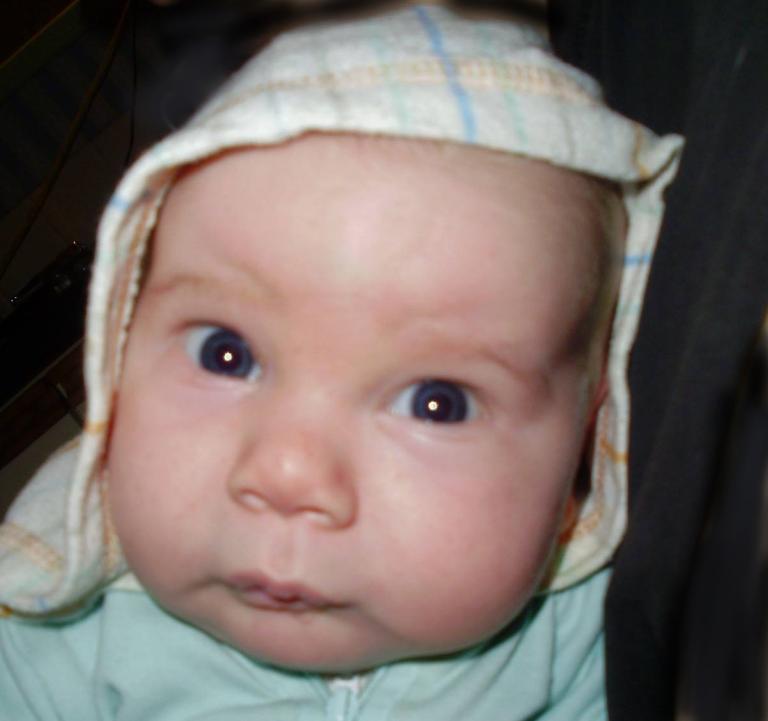
Today, the back-payment came for my Canada Child Tax Benefit for Malachi, and out of gratitude towards my polis I thought that I might write about how supports for low-income families can work in ways that are not humiliating or degrading.
Letitia Adams wrote an excellent post the other day, talking about how difficult it has been for her to access social assistance when in need. She discusses her frustrations with the fact that the security net which is supposed to help people who are trapped in generational cycles actually makes it depressingly difficult to get help. The process embarrasses and often fails those who need it. Moreover, there’s a social worker scrutinizing your life and looking for reasons to deny you help.
Rebecca Bratten Weiss also reminded me of an older post of hers in which she discusses the connection between abortion and poverty. One of her commenters on FaceBook kindly provided the statistics:
Forty-two percent of women obtaining abortions have incomes below 100% of the federal poverty level ($10,830 for a single woman with no children).
Twenty-seven percent of women obtaining abortions have incomes between 100 and 199% of the federal poverty level.
The overwhelming majority of women having abortions give more than one reason for doing so. Three-fourths of women having abortions cite concern for or responsibility to other individuals; three-fourths say they cannot afford a child; three-fourths say that having a baby would interfere with work, school or the ability to care for dependents; and half say they do not want to be a single parent or are having problems with their husband or partner.
Clearly poverty drives abortion. Many of these women are not killing their unborn children because they’ve bought into the pro-choice lie. They’re having abortions because they feel that they have no choice. While Letitia’s suggestion that individuals should be more generous in reaching out to those around them is definitely a good one, it’s not enough (a point which she acknowledges – calling for a “both/and” approach to the private charity vs. public welfare question.)
The truth is that a lot of people living in poverty only know other people who are also living in poverty. Our society is organized so that the poor are often segregated from the wealthy. Zoning by-laws in many cities are written in such a way that the well-to-do need never encounter the poor. High-density, low-income housing is placed in depressed areas of the city, out of sight except to those who live in it. The poor have their own schools, their own churches, their own social networks – and within those social networks nobody has any money. Indeed, one of the difficulties for people trying to get out of poverty is that as soon as you experience any success suddenly you have a network of friends and relations who are desperately in need knocking at your door. Often, instead of being lifted up by the community people who grow up in poverty are dragged back down by it.
In the case of poor people trying to raise children, the costs can be devastating. As Rebecca points out, American society sends the message that babies are good and beautiful and valuable – only provided they are born under the right, convenient circumstances. The pro-life movement values all babies in theory, but in practice allies itself with a political party that harps on the theme of “personal responsibility” – a term which is usually code for “I am not my brother’s keeper.”
Yet many of the people who stand most to benefit from social security programs are suspicious of them. Understandably so: if you’ve had the experience of laying yourself bare in your most vulnerable hour to an uncaring bureaucrat whose only desire is to try to make sure that the government doesn’t have to shell out to help you, you’re probably not going to see that as a very positive approach to alleviating poverty. When you consider that there are also punitive measures sometimes attached to receiving aid (as in the case of this proposed law which would prevent aid recipients in Alabama from owning vehicles), it’s not hard to see why so many lower-class Americans are loathe to see the government put more money towards social welfare. Why would anyone want to pay into a system that won’t actually help them when they need it?
When folks from countries with better social programs look at America (as we do) in consternation it’s because our experience of receiving support from the government looks very different. In many countries, like Canada and most parts of Europe, there are government benefits for low-income people who are raising children – like the CCTB, which I mentioned above.
The difference is that, unlike in the States where the assumption is that everyone is responsible for their own kids and that relying on public help is evidence of failure or laziness, in other Western countries there’s a perception that children are a contribution to the common good. A mother is providing something of worth to society. A child is part of our collective future, no matter how poor his or her parents happen to be. Alleviating child poverty is thus seen as a universal responsibility, and public assistance is seen as an entitlement. (That is literally the language used by the Canada Revenue Agency.)
A mother who receives tax benefits is not “living on the dole.” She’s not a “welfare queen.” She’s a contributing member of society, doing important work for the benefit of all, and if she needs financial help to do it then everyone should pitch in.
Since these benefits are seen in this way, they are not difficult to access. There’s no humiliating process where you’re scrutinized by a social worker who will find any possible reason to deny you. The application process is as follows: when you register your child’s birth, you tick a box authorizing the registrar’s office to inform Canada Revenue of the birth of your child. Provided you submit a tax return every year, Canada Revenue calculates your entitlement and deposits it in your account. It’s that painless.
It’s not enough to live on, but it is enough to cushion the costs of having another person in your household. When you combine this with paid maternity and paternity leave and subsidized child-care for low-income families, you create a situation in which women who get pregnant while living in poverty have much more genuine choice.
Does this prevent abortion? It depends. Most statistics agree that in Canada outside of Quebec, the abortion rate is significantly lower than in the United States. This in spite of the fact that we have a much more pro-choice culture in general. This strongly suggests that having adequate social supports for poor families does, in fact, reduce the pressure to abort and that it really does save the lives of many, many babies.
The case of Quebec, however, tells us that the abortion question cannot be reduced to economics. Social and cultural forces also play a role. A society that rejects religious values and does not value traditional families will have a soaring abortion rate no matter how much money the government sinks into pro-child incentives. But it’s not a matter of arguing over which approach is better: the one that promotes a pro-life ideology, or the one that promotes a pro-child economy. An effective pro-life strategy must involve both.
Image of Malachi, courtesy of the author.
Stay in touch! Like Catholic Authenticity on Facebook:
Previous Post

March 14, 2016
Memento Mori: Zombies in the Collective Unconscious
Next Post

March 19, 2016 Do Pediatricians Believe that Transgender Affirmation is Child Abuse?
Browse Our Archives
Select a Category Abuse Beauty Charity Chastity Current Events Faith Family Feminism Fiction Humility Humour Identity Justice Perseverence Philosophy Poverty Sexuality trauma Uncategorized Virtues Wombats
Select a Month February 2020 November 2019 October 2019 August 2019 July 2019 June 2019 May 2019 April 2019 March 2019 February 2019 October 2018 September 2018 August 2018 July 2018 June 2018 May 2018 April 2018 March 2018 February 2018 January 2018 December 2017 November 2017 October 2017 September 2017 August 2017 July 2017 June 2017 May 2017 April 2017 March 2017 February 2017 January 2017 December 2016 November 2016 October 2016 September 2016 August 2016 July 2016 June 2016 May 2016 April 2016 March 2016 February 2016 January 2016 December 2015 November 2015 October 2015 September 2015 August 2015 July 2015 June 2015
Follow Us!
TAKE THE
Religious Wisdom Quiz
I asked for wisdom above all else, and God granted me riches and honor as well. Who am I?
Select your answer to see how you score.
Solomon Hezekiah Josiah David
Books by This Author Books by Melinda Selmys
Support this
Column


Related posts from Catholic Authenticity


Fault on His Side: Addiction and Culpability Pt...

Fault on My Side: How Alcoholism and Abuse...

Enabling Abusers: On Divorce and Remarriage
TRENDING AT PATHEOS Catholic

Rejecting Doom: Christian Hope And Human Action
Christianity is a religion of hope. We are to have hope and...

It’s What Comes From Within Which Matters
One of the most difficult things for us to understand is why...

Why I Choose the Eucharist Over the Sermon
Choose the Eucharist, Not the Sermon What are we supposed to get...

5 Design Elements Found in Spiritually Rooted Homes
Putting Spirituality Into Home Decor Our homes are more than our living...

Credo: A Story of God Told with the...
About 10 years ago, I began to imagine a personal "Credo" that...

The Anatomy of Divine Revelation in Catholic Thought
The claim that God has made Himself known to human beings is...
view all Catholic blogs
Ad-Free & Subscriber Log-In Subscription Support
- About Us
- 2026 Calendar
- Videos
- Podcasts
- Library of World Religions
- Faith In Media Tracker
- Advertise With Us
- Write for Us
- Privacy Policy
- Terms of Service
- Do Not Sell My Data
- Contact Us
- Radiant Digital
- Manage Newsletter Subscriptions
- Unsubscribe From Notifications
- Sitemap
Copyright 2008-2026, Patheos. All rights reserved.
Subscription Support Ad-Free & Subscriber Log-In
Follow Patheos