
BuddhistCatholicContemplativeEvangelicalGeneral ChristianHinduJewishLatter-day SaintMuslimNew VisionsProgressive Christian
Beliefs
- Buddhist
- Catholic
- Contemplative
- Evangelical
- General Christian
- Hindu
- Jewish
- Latter-day Saint
- More Voices
- Muslim
- New Visions
- Pagan
- Progressive Christian
Topics
- Religion News
- Food and Religion
- Sports and Religion
- Religious Art
- Religious Music and Entertainment
- Religious Events
- History and Religion
- Style and Religion
- Politics and Religion
- Women in Religion
- Recreation Outdoors and Religion
- Business Finance and Religion
- Careers Workplace and Religion
- Education and Religion
- Family Parenting and Religion
- Health Fitness and Religion
- Home and Religion
- Relationships and Religion
- Technology and Religion
- Travel and Religion
Columnists
- Buddhist Columnists
- Business Finance and Religion Columnists
- Careers Workplace and Religion Columnists
- Catholic Columnists
- Contemplative Columnists
- Education and Religion Columnists
- Evangelists Columnists
- Family Parenting and Religion Columnists
- General Christian Columnists
- Health Fitness and Religion Columnists
- Hindu Columnists
- History and Religion Columnists
- Home and Religion Columnists
- Jewish Columnists
- More Voices Columnists
- Latter Day Columnists
- Muslim Columnists
- New Visions Columnists
- Nonreligious Columnists
- Pagan Columnists
- Politics and Religion Columnists
- Progressive Columnists
- Recreation Outdoors and Religion Columnists
- Relationships and Religion Columnists
- Religion News Columnists
- Religious Art Columnists
- Religious Events Columnists
- Religious Music and Entertainment Columnists
- Sports and Religion Columnists
- Style and Religion Columnists
- Technology and Religion Columnists
- Travel and Religion Columnists
- Women in Religion Columnists
Resource Library
- 2026 Calendar
- Library of World Religions
- The 100 Most Holy Places on Earth
- Patheos Answers
- Podcasts
- Videos
- Faith Leaders Database
- Anglican Episcopalian
- Bahai
- Baptist
- Buddhism
- Christianity
- Confucianism
- Eastern Orthodoxy
- Hinduism
- Holiness and Pentecostal
- ISKCON
- Islam
- Judaism
- Lutheran
- Methodist
- The Church of Jesus Christ of Latter-day Saints
- New Age
- Paganism
- Presbytarian and Reformed
- Protestantism
- Religion Behind the Scenes
- Roman Catholic
- Scientology
- Shia Islam
- Sikhism
- Sufism
- Sunni Islam
- Taoism
- Zen
- See all religions
Research Tools
 Ad-Free & Subscriber Log-In Subscription Support
Ad-Free & Subscriber Log-In Subscription Support
Follow Patheos 

- Trending:
- Forgiveness
- |
- Marriage
- |
- Consciousness
- |
- Death Penalty
- |
- Election
- |
- Halloween
 Catholic Authenticity
-
Categories
- Home
- Catholic
- A World Without Evil
A World Without Evil
Last updated on: February 15, 2016 at 6:13 pm by Melinda Selmys
A World Without Evil 2016-02-15T18:13:55-04:00 Melinda Selmys
Patheos Explore the world's faith through different perspectives on religion and spirituality! Patheos has the views of the prevalent religions and spiritualities of the world.

One of my correspondents recently asked me about the problem of suffering, specifically as it relates to people who aren’t capable of understanding or deriving meaning from their own suffering – infants or people with mental incapacities, for example.
A complete resolution of this question would involve stepping so far outside of any possible human paradigm that it’s laughable to think we will ever understand if in full. However, I do have some observations about suffering and its place in the universe that might, perhaps, point us towards an answer.
Obviously, we can’t get to the problem of the pain of innocents without first addressing the more general problem of suffering as such, so we’ll start with that.
Usually when we’re looking at the problem of pain, we’re looking at it from a human perspective: “If God is all powerful,” we think, “then surely He could prevent this.“ In our own lives, the prevention of suffering – especially of other people’s suffering – forms the basis of most moral action. If someone gave us the power to wave a magic wand over a child with cancer, or an abused infant, of course we would wave the wand. Anything less would imply a profound and disturbing lack of compassion.
It seems, then, that there’s a serious problem with a God who, having the power to create any kind of world that He wanted to, produced one in which innocents would be subjected to suffering.
What happens, though, if we turn the problem upside-down? Or rather, if we turn it right-side-up. What if we ask the question from a Divine perspective: how would you go about creating the world-without-suffering? Is it possible? What would it look like?
My own sense is that the dream of world in which innocence never suffers falls into the same category as the old paradox about God creating a boulder so heavy that He cannot move it. The paradox is based on a false premise – namely that omnipotence includes the ability to do things that are logically impossible.
So let’s do the thought experiment. Let’s say that you want to create a world in which there is no suffering. I can see two approaches that might work. First, you can create a world in which there are no beings that have moral freedom. Simple. The only problem is that moral autonomy is a precondition for any authentic form of love, so in order to eliminate suffering you must (in this case) create an inferior world – basically, you have to introduce a huge foundational privation into the system in order to prevent a host of lesser privations.
A second possibility is to try to have moral free will without suffering. This would involve creating beings that are capable of doing evil but that don’t experience evil as evil. To me, this seems like it’s probably incoherent. Think, for example, of the angels: the idea is that these are creatures without bodies, they don’t experience pain or emotional suffering the way that we do, and yet when the angels under the leadership of Lucifer chose to reject God, chose evil, they entered into a permanent and irredeemable state of existential suffering.
Moral freedom is fundamentally concerned with the ability to choose non-existence, to deprive either oneself or others of what it objectively good. If you want to have beings that don’t suffer as a result of their evil choices, you basically have to have beings that cannot value the good. The problem is that a being that cannot value the good also cannot benefit from the good. You can’t have your cake and eat it: in order to derive joy, delight or happiness from the possession of goods (both interior and exterior) you have to experience the loss, or privation, of those goods as evil. This experience of evil is the essence of suffering.
Another possible tack would be to create creatures with free will, but only allow those who choose good in every case to go on existing. The moment that a created being chooses evil it ceases to exist. Simple enough solution. The problem with it is that it basically amounts to choosing the greater evil: rather than supporting, maintaining and upholding the good that still exists within your creature you destroy it entirely. Again, you’re allowing suffering to trump being.
Suffering, then, shouldn’t be understood as evil in itself but rather as a good, healthy, response to the possibility of evil. Suffering allows us the possibility of choosing evil while at the same time guaranteeing our right to existence. Since both freedom and being are high level goods, God’s decision to tolerate evil in order to secure them makes sense in the context of His benevolence.
If you do the thought experiment you find that at each step of the way you have to make a decision: will you eliminate a particular kind of being in order to avoid the possibility of suffering. Put another way, will you allow the risk of privation and non-being to have the final say, to blackmail the creative potentials of reality. Any being that is actually omnibenevolent, and actually omniscient, is going to see beyond the rather parochial human fixation on the experience of pain as the ultimate evil. From a divine perspective, non-existence, non-being, is a much greater evil than existence with suffering, so suffering is therefore tolerable in the service of higher goods.
This gets us as far as “why allow suffering,” but it doesn’t deal with the particular problem of suffering innocents. I would, however, like to offer readers the opportunity to do the thought experiment for themselves – to try to come up with a compelling and coherent vision of a universe in which all possible goods are preserved without allowing for the possibility of pain. Feel free to post your thoughts on that in the com-box – or if you have a blog of your own, go ahead and paste a link.
I’ll cover the particular issue of suffering and innocence next time.
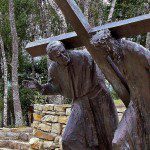
Image credit: pixabay
Stay in touch! Like Catholic Authenticity on Facebook:
Previous Post

February 15, 2016
How to Practice the Seven Spiritual Works of Mercy Online
Next Post
February 15, 2016 John Paul II, Intimate Friendship, and the Fluidity of Philia and Eros
Browse Our Archives
Select a Category Abuse Beauty Charity Chastity Current Events Faith Family Feminism Fiction Humility Humour Identity Justice Perseverence Philosophy Poverty Sexuality trauma Uncategorized Virtues Wombats
Select a Month February 2020 November 2019 October 2019 August 2019 July 2019 June 2019 May 2019 April 2019 March 2019 February 2019 October 2018 September 2018 August 2018 July 2018 June 2018 May 2018 April 2018 March 2018 February 2018 January 2018 December 2017 November 2017 October 2017 September 2017 August 2017 July 2017 June 2017 May 2017 April 2017 March 2017 February 2017 January 2017 December 2016 November 2016 October 2016 September 2016 August 2016 July 2016 June 2016 May 2016 April 2016 March 2016 February 2016 January 2016 December 2015 November 2015 October 2015 September 2015 August 2015 July 2015 June 2015
Follow Us!
TAKE THE
Religious Wisdom Quiz
What did God send to feed Elijah during the drought?
Select your answer to see how you score.
Camels Ravens Serpent Sheep
Books by This Author Books by Melinda Selmys
Support this
Column


Related posts from Catholic Authenticity

The Lord Has Worked Marvels For Me: Open...

The Central Spiritual Struggle of Women: Open Letter,...

An Open Letter to the Young Rad-Trad Women

Maybe It's Okay That Man Should Be Alone
TRENDING AT PATHEOS Catholic

Rejecting Doom: Christian Hope And Human Action
Christianity is a religion of hope. We are to have hope and...

It’s What Comes From Within Which Matters
One of the most difficult things for us to understand is why...

Why I Choose the Eucharist Over the Sermon
Choose the Eucharist, Not the Sermon What are we supposed to get...

5 Design Elements Found in Spiritually Rooted Homes
Putting Spirituality Into Home Decor Our homes are more than our living...

Credo: A Story of God Told with the...
About 10 years ago, I began to imagine a personal "Credo" that...

The Anatomy of Divine Revelation in Catholic Thought
The claim that God has made Himself known to human beings is...
view all Catholic blogs
Ad-Free & Subscriber Log-In Subscription Support
- About Us
- 2026 Calendar
- Videos
- Podcasts
- Library of World Religions
- Faith In Media Tracker
- Advertise With Us
- Write for Us
- Privacy Policy
- Terms of Service
- Do Not Sell My Data
- Contact Us
- Radiant Digital
- Manage Newsletter Subscriptions
- Unsubscribe From Notifications
- Sitemap
Copyright 2008-2026, Patheos. All rights reserved.
Subscription Support Ad-Free & Subscriber Log-In
Follow Patheos