
BuddhistCatholicContemplativeEvangelicalGeneral ChristianHinduJewishLatter-day SaintMuslimNew VisionsProgressive Christian
Beliefs
- Buddhist
- Catholic
- Contemplative
- Evangelical
- General Christian
- Hindu
- Jewish
- Latter-day Saint
- More Voices
- Muslim
- New Visions
- Pagan
- Progressive Christian
Topics
- Religion News
- Food and Religion
- Sports and Religion
- Religious Art
- Religious Music and Entertainment
- Religious Events
- History and Religion
- Style and Religion
- Politics and Religion
- Women in Religion
- Recreation Outdoors and Religion
- Business Finance and Religion
- Careers Workplace and Religion
- Education and Religion
- Family Parenting and Religion
- Health Fitness and Religion
- Home and Religion
- Relationships and Religion
- Technology and Religion
- Travel and Religion
Columnists
- Buddhist Columnists
- Business Finance and Religion Columnists
- Careers Workplace and Religion Columnists
- Catholic Columnists
- Contemplative Columnists
- Education and Religion Columnists
- Evangelists Columnists
- Family Parenting and Religion Columnists
- General Christian Columnists
- Health Fitness and Religion Columnists
- Hindu Columnists
- History and Religion Columnists
- Home and Religion Columnists
- Jewish Columnists
- More Voices Columnists
- Latter Day Columnists
- Muslim Columnists
- New Visions Columnists
- Nonreligious Columnists
- Pagan Columnists
- Politics and Religion Columnists
- Progressive Columnists
- Recreation Outdoors and Religion Columnists
- Relationships and Religion Columnists
- Religion News Columnists
- Religious Art Columnists
- Religious Events Columnists
- Religious Music and Entertainment Columnists
- Sports and Religion Columnists
- Style and Religion Columnists
- Technology and Religion Columnists
- Travel and Religion Columnists
- Women in Religion Columnists
Resource Library
- 2026 Calendar
- Library of World Religions
- The 100 Most Holy Places on Earth
- Patheos Answers
- Podcasts
- Videos
- Faith Leaders Database
- Anglican Episcopalian
- Bahai
- Baptist
- Buddhism
- Christianity
- Confucianism
- Eastern Orthodoxy
- Hinduism
- Holiness and Pentecostal
- ISKCON
- Islam
- Judaism
- Lutheran
- Methodist
- The Church of Jesus Christ of Latter-day Saints
- New Age
- Paganism
- Presbytarian and Reformed
- Protestantism
- Religion Behind the Scenes
- Roman Catholic
- Scientology
- Shia Islam
- Sikhism
- Sufism
- Sunni Islam
- Taoism
- Zen
- See all religions
Research Tools
 Ad-Free & Subscriber Log-In Subscription Support
Ad-Free & Subscriber Log-In Subscription Support
Follow Patheos 

- Trending:
- Forgiveness
- |
- Marriage
- |
- Consciousness
- |
- Death Penalty
- |
- Election
- |
- Halloween
 Catholic Authenticity
-
Categories
- Home
- Catholic
- Till Pregnant Women Have Faces
Till Pregnant Women Have Faces
Last updated on: January 8, 2016 at 2:25 pm by Melinda Selmys
Till Pregnant Women Have Faces 2016-01-08T14:25:14-04:00 Melinda Selmys
Patheos Explore the world's faith through different perspectives on religion and spirituality! Patheos has the views of the prevalent religions and spiritualities of the world.
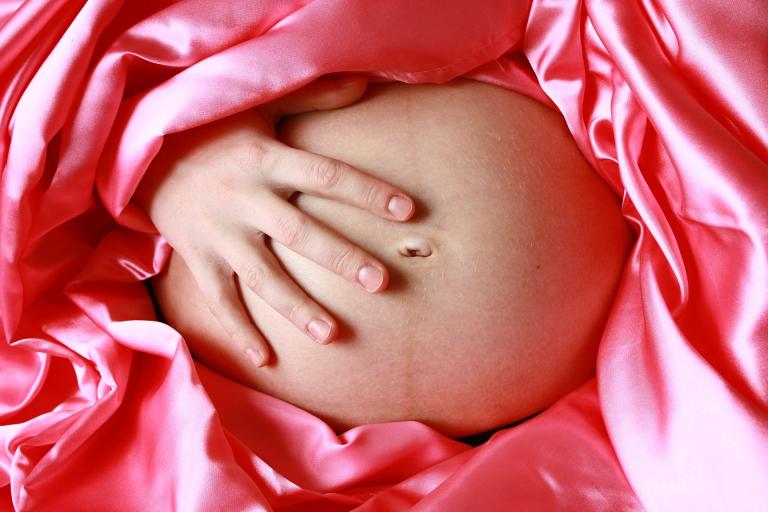
I’ve been having lots of weird, really vibrant dreams (I usually don’t dream or don’t remember my dreams or they’re really dull.) The latest was that I was going to make a birth pilgrimage where I would be walking in silence across country to the place where I would give birth. My face was going to be veiled because in the dream women’s faces become plasticized and cartoonish during pregnancy. I was walking with a woman who I was supposed to pretend was my grandmother, even though she wasn’t, and the entire thing was a weird mish-mash of cultural detritus: the veils were Muslim, the “grandmother” was dedicating the quest to some pantheistic lightning god, and to make things look good the anthropology department that was sponsoring the pilgrimage had decided they needed someone high profile to walk with us – so they’d gotten St. Augustine. The only problem being that St. Augustine is dead, and therefore was just an empty chair with a bowl-full of clover sitting in front of it.
There were all of these weird dinners at the University to celebrate this and various other projects of the department, in which I was expected to follow precise protocols. Failure to do so meant that I didn’t get my strawberries, which bothered me because I was actually hungry and legit needed to eat good food. Also, they’d supplied a “traditional birthing herb” that I could add to my food, but nobody had bothered to research it beyond the fact that it was traditionally used in birthing and when I read the label it turned out it was an emetic. The congratulations were all very superficial, and while they wanted to televise our project nobody really wanted to talk about it.
So I’ve been thinking about this dream, and I think that it’s basically my subconscious wrestling with the lack of an adequate anthropology of the pregnant and birthing woman within Catholic theology. Giving birth – the capacity of the human body to produce a new living being – is the theoretical centre of our sexual morality and yet there’s a kind of weird and uncomfortable silence surrounding it. On the one hand pregnancy and birth are often placed on a pedestal, but on the other there’s a tendency to shrink back from the biological realities involved.
Tradition tells us, for example, that Mary laboured without pain and that miraculously the process of giving birth had so little impact on her body that even her hymen was preserved intact. This idealized birth is one in which the physical exactions of labour and delivery are entirely absent – yet it is the only birth that is treated with any regularity in the theological canon.
Male reproduction, of course, is treated in great detail. We’re told with sometimes weird and obsessive precision how, and when, and under what circumstances a man is supposed to spill his seed – but then everything that happens after that kind of gets swept up in these vague generalizations: words like “generosity,” “fecundity” and “procreation” that completely abstract the reality of the female body and its processes out of the equation. So extreme is the phallocentric thrust of this approach that the term “procreative act” does not refer to conception and gestation, which take place within the female body, but rather to the act of a male ejaculating in a “procreative type” way.
The pregnant and birthing body thus becomes a sort of glaring and embarrassing lacuna in the account of sexual morality; highly honoured in theory, but rarely discussed in any concrete sense.
A big part of the problem, of course, stems from the simple fact that the overwhelming majority of the orthodox Catholic theological tradition is dominated by celibate men – men who don’t even have the experience of living with a pregnant wife or being present at a birth. The few women who have been admitted into the canon are, for the most part, virgins. This means that, at best, theological engagement with birth and pregnancy takes place on the basis of second and third hand reporting, or (worse) purely theoretical speculation.
This would be okay if it weren’t for the fact that males who write about sexual morality often seem to be uncomfortable with discussions of the concrete details of reproduction from a feminine perspective. As a woman who writes about sex and theology, I more or less take it for granted that I am going to hear a lot about the male perspective, and that this will involve be exposed to discussions of spontaneous erections, wet dreams, blue balls and other biological inconveniences of male sexuality.
The reverse assumption is not, however, true. If a male theologian is uncomfortable with discussions of the biological aspects of birth and pregnancy he will find it very easy to simply avoid these subjects. The discourse is formed in such a way that it’s quite possible to spend an entire career thinking and writing about human sexuality and the moral imperatives involved in the procreative act without ever having to to concern oneself with dilating cervixes, prolapsed uteri or retained products of conception.
This is severely problematic, first of all because it means that Catholic sexual discourse tends to focus on lust as the primarily obstacle to living out Catholic sexual morality. The desire to get off is generally treated with greater precision, greater concern, and greater frequency than the desire to avoid the potentially perilous rigors of childbirth.
Humanae Vitae, for example, discusses the problems of self-mastery and of man’s objectification of women in some detail but glosses over physical threats to a woman’s health as a result of pregnancy, referring only to “difficulties” which men and women might face. Love and Responsibility does at least address concerns particular to women, but conflates the fear of pregnancy with a lack of generosity and a neurotic fear of having a child. Neither text deals adequately with the rational fear that a woman might have of leaving her children orphan when repeated pregnancies involve significant risks to her health.
The failure to address the physical costs of pregnancy seems, to me, to be an extension of a larger silence surrounding female reproduction after conception.
Even John Paul II, who is generally much better about representing women’s experience than most of his predecessors, gives relatively scant attention to this aspect of human embodiment. In Theology of the Body the word “pregnant” appears only once – in a metaphor referring to a text that is “pregnant” with meaning. “Pregnancy” does not appear at all. “Birth” is slightly better represented: there are a couple of places where the text refers tangentially to some of the biblical passages that would be relevant to a theology of the pregnant body, and there is a single paragraph (21:6) which provides a possible first step towards the formulation of such a theology. However, the pregnant body is never given anything like the intensive analysis that we get in respect to male concupiscence or celibacy for the sake of the Kingdom.
In general, the canon deals with birth and pregnancy almost exclusively in terms of the morality of avoiding or terminating. So long as the fundamental point is the rejection of contraception or abortion, the pregnant state is lauded, praised, valued. But as soon conception has been acheived and the child in the womb accepted, the pregnant, labouring, birthing and nursing female body disappears.
Previous Post
January 5, 2016
I'm in Love...Again
Next Post

January 11, 2016 Don't Panic! You Don't Need Thousands of Dollars Worth of Baby Stuff
Browse Our Archives
Select a Category Abuse Beauty Charity Chastity Current Events Faith Family Feminism Fiction Humility Humour Identity Justice Perseverence Philosophy Poverty Sexuality trauma Uncategorized Virtues Wombats
Select a Month February 2020 November 2019 October 2019 August 2019 July 2019 June 2019 May 2019 April 2019 March 2019 February 2019 October 2018 September 2018 August 2018 July 2018 June 2018 May 2018 April 2018 March 2018 February 2018 January 2018 December 2017 November 2017 October 2017 September 2017 August 2017 July 2017 June 2017 May 2017 April 2017 March 2017 February 2017 January 2017 December 2016 November 2016 October 2016 September 2016 August 2016 July 2016 June 2016 May 2016 April 2016 March 2016 February 2016 January 2016 December 2015 November 2015 October 2015 September 2015 August 2015 July 2015 June 2015
Follow Us!
TAKE THE
Religious Wisdom Quiz
What does "Nebuchadnezzar" mean in Akkadian?
Select your answer to see how you score.
Chosen by the gods King of Babylon O Nabu, protect my heir The Lord reigns
Books by This Author Books by Melinda Selmys
Support this
Column


Related posts from Catholic Authenticity

Sex Positive: How I Learned To Stop Worrying...


The Central Spiritual Struggle of Women: Open Letter,...

An Open Letter to the Young Rad-Trad Women
TRENDING AT PATHEOS Catholic

Rejecting Doom: Christian Hope And Human Action
Christianity is a religion of hope. We are to have hope and...

It’s What Comes From Within Which Matters
One of the most difficult things for us to understand is why...

Why I Choose the Eucharist Over the Sermon
Choose the Eucharist, Not the Sermon What are we supposed to get...

5 Design Elements Found in Spiritually Rooted Homes
Putting Spirituality Into Home Decor Our homes are more than our living...

Credo: A Story of God Told with the...
About 10 years ago, I began to imagine a personal "Credo" that...

The Anatomy of Divine Revelation in Catholic Thought
The claim that God has made Himself known to human beings is...
view all Catholic blogs
Ad-Free & Subscriber Log-In Subscription Support
- About Us
- 2026 Calendar
- Videos
- Podcasts
- Library of World Religions
- Faith In Media Tracker
- Advertise With Us
- Write for Us
- Privacy Policy
- Terms of Service
- Do Not Sell My Data
- Contact Us
- Radiant Digital
- Manage Newsletter Subscriptions
- Unsubscribe From Notifications
- Sitemap
Copyright 2008-2026, Patheos. All rights reserved.
Subscription Support Ad-Free & Subscriber Log-In
Follow Patheos