
BuddhistCatholicContemplativeEvangelicalGeneral ChristianHinduJewishLatter-day SaintMuslimNew VisionsProgressive Christian
Beliefs
- Buddhist
- Catholic
- Contemplative
- Evangelical
- General Christian
- Hindu
- Jewish
- Latter-day Saint
- More Voices
- Muslim
- New Visions
- Pagan
- Progressive Christian
Topics
- Religion News
- Food and Religion
- Sports and Religion
- Religious Art
- Religious Music and Entertainment
- Religious Events
- History and Religion
- Style and Religion
- Politics and Religion
- Women in Religion
- Recreation Outdoors and Religion
- Business Finance and Religion
- Careers Workplace and Religion
- Education and Religion
- Family Parenting and Religion
- Health Fitness and Religion
- Home and Religion
- Relationships and Religion
- Technology and Religion
- Travel and Religion
Columnists
- Buddhist Columnists
- Business Finance and Religion Columnists
- Careers Workplace and Religion Columnists
- Catholic Columnists
- Contemplative Columnists
- Education and Religion Columnists
- Evangelists Columnists
- Family Parenting and Religion Columnists
- General Christian Columnists
- Health Fitness and Religion Columnists
- Hindu Columnists
- History and Religion Columnists
- Home and Religion Columnists
- Jewish Columnists
- More Voices Columnists
- Latter Day Columnists
- Muslim Columnists
- New Visions Columnists
- Nonreligious Columnists
- Pagan Columnists
- Politics and Religion Columnists
- Progressive Columnists
- Recreation Outdoors and Religion Columnists
- Relationships and Religion Columnists
- Religion News Columnists
- Religious Art Columnists
- Religious Events Columnists
- Religious Music and Entertainment Columnists
- Sports and Religion Columnists
- Style and Religion Columnists
- Technology and Religion Columnists
- Travel and Religion Columnists
- Women in Religion Columnists
Resource Library
- 2026 Calendar
- Library of World Religions
- The 100 Most Holy Places on Earth
- Patheos Answers
- Podcasts
- Videos
- Faith Leaders Database
- Anglican Episcopalian
- Bahai
- Baptist
- Buddhism
- Christianity
- Confucianism
- Eastern Orthodoxy
- Hinduism
- Holiness and Pentecostal
- ISKCON
- Islam
- Judaism
- Lutheran
- Methodist
- The Church of Jesus Christ of Latter-day Saints
- New Age
- Paganism
- Presbytarian and Reformed
- Protestantism
- Religion Behind the Scenes
- Roman Catholic
- Scientology
- Shia Islam
- Sikhism
- Sufism
- Sunni Islam
- Taoism
- Zen
- See all religions
Research Tools
 Ad-Free & Subscriber Log-In Subscription Support
Ad-Free & Subscriber Log-In Subscription Support
Follow Patheos 

- Trending:
- Forgiveness
- |
- Marriage
- |
- Consciousness
- |
- Death Penalty
- |
- Election
- |
- Halloween
 Catholic Authenticity
-
Categories
- Home
- Catholic
- 18 Horrifying Things I’ve Dredged Up from My Subconscious in the Last 12 Years
18 Horrifying Things I’ve Dredged Up from My Subconscious in the Last 12 Years
Last updated on: November 17, 2015 at 10:08 pm by Melinda Selmys
18 Horrifying Things I’ve Dredged Up from My Subconscious in the Last 12 Years 2015-11-17T22:08:51-04:00 Melinda Selmys
Patheos Explore the world's faith through different perspectives on religion and spirituality! Patheos has the views of the prevalent religions and spiritualities of the world.
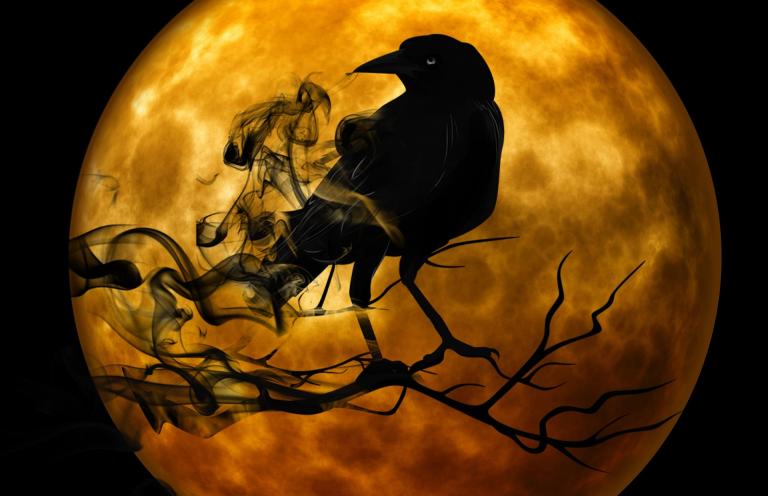
I’ve spent the day proof-reading a collection of my own stories – most of them horror. It’s an interesting experience, to see what things have been pulled up from the depths of my mind over the years.
Apparently, the obsessions of my life as a Catholic blogger are not entirely different from my obsessions as a horror writer. I’m slightly amazed by the number of horror stories that I’ve written that either features artists as main characters, or that are specifically about art. Especially the stories that are really gut-churningly horrific. Those pretty much invariably have art as their theme. For some reason the idea of finding beauty in the perverse seems to strike a deeper chord of dread in me than pretty much anything else and apparently I draw on that whenever I write a truly harrowing piece.
I also have a thing about the attraction of death. Seriously, melancholic teenagers should never be allowed to read Wuthering Heights or Romantic poetry. I actually had to cut one of my quotations from “Ode to a Nightingale” because I was like, “No. I’ve already quoted this poem in too many of these stories. People are going to think that I’m obsessed.”
Apart from that, the recurring themes are pretty straightforward. A number of my stories are feminist. Several of my heroes are queer. There are frequent references to philosophy, and Ancient Greece pops up an awful lot.
There’s also a lot of religious content, though very little of it is Catholic. With few exceptions, I usually find explicit Catholic content in horror to be unconvincing and kind of hackneyed. There are only two ways that you can really go with it: you can present the faith as horrific, which almost always comes out blasphemous, or you can present the faith as an anodyne to the horror, which I dislike because it tends to turn horror stories into morality tales.
Horror, in my opinion, should not be ostentatiously moral. Wilde’s dictum that “morality in art is an unforgivable mannerism of style” applies especially to stories that deal with our deepest and most sinister fears. As soon as you have some kind of deus ex machina, you’ve compromised the genre. You evade the confrontation with evil, with dread, and provide the reader with a kind of superficial reassurance that ultimately everything is going to be okay.
That’s not really what horror is about. Horror is fundamentally, I think, about the need for redemption. It’s very rare that it’s possible to actually show the redemption itself without the story turning into cheese. This is because the genre tends to pose the question “What if God were dead?” It doesn’t matter, really, whether it’s a story of human evil, a serial killer who plays out the horrific consequences of an amoral philosophy. Or whether it’s a about a vampire, a creature condemned to immortality but deprived of beatitude. Or a Lovecraftian vision of a universe haunted by inchoate hungers and malevolent powers. The point is that it illustrates the need for salvation by showing the alternative in terrible detail.
This is why so few good horror stories actually end with the villains defeated. The heroes rarely triumph. At best, they survive. Ironically, the stories where the heroes do triumph, and the evil is vanquished, tend to be less satisfying. The reason for this, I think, is simple: the evil that horror confronts is the kind of evil that can only be addressed by the Cross. Since you can’t actually have the crucifixion as the climax of your story, any other form of happy ending usually seems implausible and strained.
My horror does not, generally, deviate from this pattern. Several of the stories are explicitly Lovecraftian. A lot of them deal with dark and predatory gods. A couple play with the ultra-classic horror monsters. There’s one that’s mostly a comic philosophical dialogue about the ontology of zombies. Another gives a portrait of a vampire caught up in the human evil of the Soviet gulag.
In a couple of places, I’ve played with genre. Horror is interesting, in that it’s often seen as a modern phenomenon, with the earliest examples emerging in the 19th century – Dracula, Uncle Silas, Frankenstein. But actually horror stories have always been a part of the human cultural experience. From Seneca’s plays, to Shakespeare’s Titus Andronicus, from ancient Japanese ghost stories to like half of the tales of the Brothers Grimm, we’ve been telling ourselves stories of monsters and hideous punishments, bloodthirsty tyrants, irredeemable crimes, supernatural evils and savage violence for pretty much as long as human beings have been around. So it was kind of fun, for example, to write a straight-up horror story in the form and style of traditional North American folklore.
Anyway, I have one more story to read and edit before I’m done for the day. Hopefully the collection will be ready to go in a week or so. I’m calling it “Against Nature and Other Abominations”. It contains a mixture of stuff that’s been published before but is hard to find now, and stories that I love and have never found a home. So watch out. Because the dark creatures of Melinda’s imagination will be coming soon to an amazon.com near you, and nothing says “Merry Christmas” like a transwoman battling Cthulhu’s mother, or a pretentious nihilist deliberately getting himself martyred to no cause.
Image: It came from Pixabay.
Previous Post

November 16, 2015
The NFP Catholic's Guide to Pregnancy
Next Post

November 21, 2015 Trans Women are From Pluto
Browse Our Archives
Select a Category Abuse Beauty Charity Chastity Current Events Faith Family Feminism Fiction Humility Humour Identity Justice Perseverence Philosophy Poverty Sexuality trauma Uncategorized Virtues Wombats
Select a Month February 2020 November 2019 October 2019 August 2019 July 2019 June 2019 May 2019 April 2019 March 2019 February 2019 October 2018 September 2018 August 2018 July 2018 June 2018 May 2018 April 2018 March 2018 February 2018 January 2018 December 2017 November 2017 October 2017 September 2017 August 2017 July 2017 June 2017 May 2017 April 2017 March 2017 February 2017 January 2017 December 2016 November 2016 October 2016 September 2016 August 2016 July 2016 June 2016 May 2016 April 2016 March 2016 February 2016 January 2016 December 2015 November 2015 October 2015 September 2015 August 2015 July 2015 June 2015
Follow Us!
TAKE THE
Religious Wisdom Quiz
What does "Sheol," often found in Psalms, mean?
Select your answer to see how you score.
Eternal light Above the mountain Blessing The grave or abode of the dead
Books by This Author Books by Melinda Selmys
Support this
Column


Related posts from Catholic Authenticity
Do We Really Need Another Book About NFP?
A Conservative Journalist, a Junior Hockey Star and...
In the Beginning there were the Waters
20 Reasons Why You Need to Drop Everything...
TRENDING AT PATHEOS Catholic

Rejecting Doom: Christian Hope And Human Action
Christianity is a religion of hope. We are to have hope and...

It’s What Comes From Within Which Matters
One of the most difficult things for us to understand is why...

Why I Choose the Eucharist Over the Sermon
Choose the Eucharist, Not the Sermon What are we supposed to get...

5 Design Elements Found in Spiritually Rooted Homes
Putting Spirituality Into Home Decor Our homes are more than our living...

Credo: A Story of God Told with the...
About 10 years ago, I began to imagine a personal "Credo" that...

The Anatomy of Divine Revelation in Catholic Thought
The claim that God has made Himself known to human beings is...
view all Catholic blogs
Ad-Free & Subscriber Log-In Subscription Support
- About Us
- 2026 Calendar
- Videos
- Podcasts
- Library of World Religions
- Faith In Media Tracker
- Advertise With Us
- Write for Us
- Privacy Policy
- Terms of Service
- Do Not Sell My Data
- Contact Us
- Radiant Digital
- Manage Newsletter Subscriptions
- Unsubscribe From Notifications
- Sitemap
Copyright 2008-2026, Patheos. All rights reserved.
Subscription Support Ad-Free & Subscriber Log-In
Follow Patheos